
2026 Best Gas Purifiers for Semiconductor Manufacturing?

Time:2026-11-13 Author:Ethan
0%

In 2026, choosing a gas purifier for semiconductor manufacturing is a process decision, not a catalogue exercise. Tiny contaminants can affect sensitive deposition, etch, and other fab operations. The best unit depends on gas chemistry, required outlet purity, flow rate, pressure drop, and maintenance needs. Details matter.

SEMI’s 2024 World Fab Forecast projected global fab equipment spending of about $110 billion in 2025 and $126 billion in 2026. That investment signals expanding production capacity, but it does not directly measure purifier demand. SEMI also reported that worldwide semiconductor materials revenue reached $67.5 billion in 2024. These figures provide context, not a purchasing specification. For this guide, SEMI industry leader Ajit Manocha’s broader emphasis on semiconductor manufacturing growth is paraphrased as a reminder: greater capacity makes process control more important. This is not a verbatim quotation about purifiers, and it should not be mistaken for one. A practical comparison must still examine gas-specific compatibility, purifier capacity, monitoring, changeout procedures, and supplier support. A clean datasheet is not enough. In real fabs, maintenance windows are tight, gas panels are crowded, and a small pressure drop can complicate an otherwise sound process. This guide compares leading Gas Purifiers Semiconductor options against those operational demands. Some product claims are difficult to compare directly. That deserves scrutiny. The right choice is the one whose documented performance fits the application, with room for verification and review.
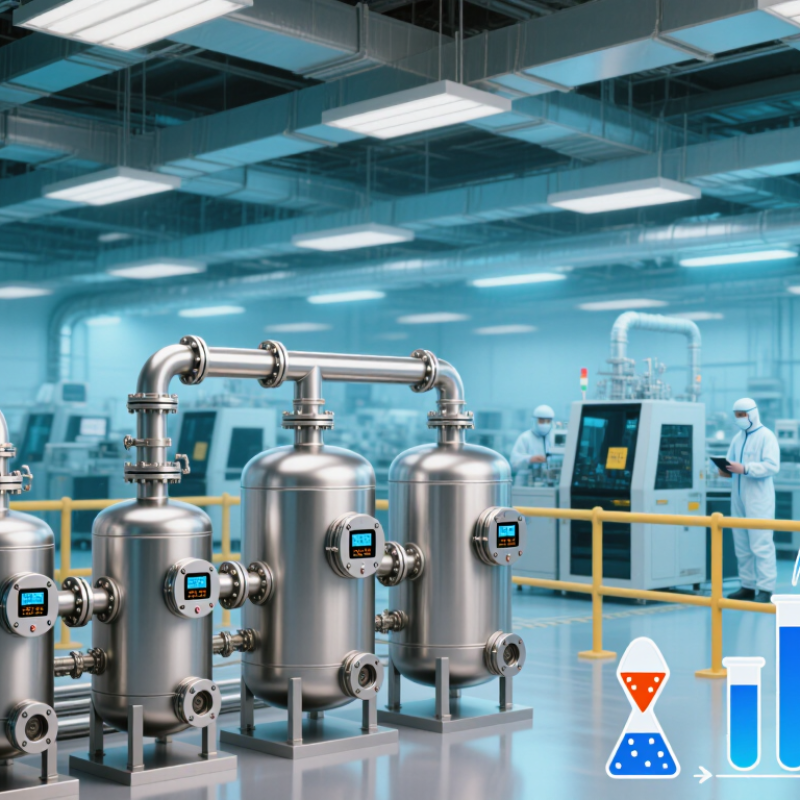
2026 Best Gas Purifiers for Semiconductor Manufacturing?

Gas Purifiers and Their Role in Semiconductor Manufacturing

Semiconductor manufacturing depends on process gases arriving with tightly controlled purity. Even trace moisture, oxygen, hydrocarbons, or particles can affect sensitive steps such as deposition and etching. Gas purifiers reduce selected contaminants before gases reach tools. Not every gas needs the same treatment. The right approach depends on the gas, process, flow rate, and required outlet purity.

For example, moisture-sensitive processes may require a purifier designed to remove water vapor, while other applications target oxygen or metallic impurities. A purifier must also be compatible with the gas and operating conditions. Stainless-steel tubing, suitable seals, and careful installation help prevent contamination after purification. Point-of-use units can limit exposure along the final gas line. Small details matter.

Performance should be verified with appropriate monitoring and scheduled maintenance, not assumed from equipment specifications alone. Operators can track purifier service life, pressure changes, and gas quality at relevant sampling points. A low outlet reading is useful, but sampling methods and instrument limits matter too. One easy mistake is treating a purifier as a substitute for clean piping; it is not. Selection is rarely perfect on paper, and real process conditions may reveal gaps that need review.

Gas Purifiers and Their Role in Semiconductor Manufacturing

Nominal gas purity grades provide a useful reference when evaluating process-gas purification needs. The chart shows the theoretical total impurity limit implied by each grade; it is not a guaranteed purifier outlet specification.

Purifier selection depends on the gas and contaminant species, required flow and pressure, materials compatibility, and the process’s allowable impurity levels. Confirm performance requirements with gas and equipment specifications.

Purity Requirements for Semiconductor Process Gases

Purity requirements for semiconductor process gases are specific to each gas and tool. SEMI C3 gas specifications list impurity limits, rather than relying on one universal purity figure. In practice, many high-purity gases are supplied at 99.9999% (6N) or higher. That nominally leaves no more than one part per million of total impurities. Yet a tiny amount of moisture, oxygen, or hydrocarbons can still disrupt a sensitive process. The purity number alone is not enough.

Ask for a certificate of analysis showing limits for the contaminants that matter to your process. Check how samples are taken, and whether the stated values describe the cylinder, delivery line, or point of use. A 2024 International Roadmap for Devices and Systems (IRDS) roadmap highlights the growing challenge of controlling process variation as device features shrink. Small contamination risks deserve careful attention. In a fab, a gas may meet its cylinder specification but pick up moisture from a poorly conditioned line. I have seen teams focus too much on the headline grade; that is an easy mistake.

Tips: Specify impurity limits in ppb where needed, not just “6N.” Verify moisture and oxygen readings at the point of use, then trend them over time. A single passing test is useful, but trends can reveal a slow leak or a failing purifier.

Key Gas Purifier Technologies and Performance Factors

2026 Best Gas Purifiers for Semiconductor Manufacturing?

Key Gas Purifier Technologies and Performance Factors

Gas purifier performance depends on the impurity, gas chemistry, and operating conditions. Adsorption media can capture moisture and some oxygen compounds. Heated getter systems remove reactive contaminants, while catalytic units target specific impurities through chemical reactions. No technology handles every gas equally well. Selection should follow the incoming gas profile and the process tool’s tolerance limits.

Check outlet purity under actual flow and pressure, not only at a supplier’s best-case test point. Capacity matters too: a purifier nearing saturation may allow contaminants to rise before a scheduled change. Consider pressure drop, particle generation, seals, and dead volume. These details affect both delivery stability and maintenance. A perfect specification sheet does not guarantee perfect performance.

Tips: Compare inlet and outlet readings for moisture, oxygen, and relevant hydrocarbons. Confirm gas compatibility, flow range, and replacement criteria. Small details matter. Keep sampling lines short and clean; otherwise, measurements may reflect the line rather than the purifier. It is easy to overlook that. Recheck performance after installation, since fittings and handling can introduce contamination.

How to Evaluate Gas Purifiers for 2026 Manufacturing Needs

Choosing a gas purifier for 2026 manufacturing needs starts with the process, not a broad purity claim. List each gas, expected inlet contaminants, peak flow, operating pressure, and the tool’s allowable impurity levels. Compare purifier performance against those conditions, including moisture, oxygen, particles, and relevant metallic contaminants. Ask for test methods and data at realistic flow rates; a number without its test conditions is hard to use. Small details matter.

Check pressure drop and materials compatibility, especially when supply conditions change during startup or a tool switches recipes. Review how the unit signals breakthrough, how often it needs service, and whether replacement can be planned without disrupting production. Where practical, verify performance with sampling near the point of use, not only at the purifier outlet. Keep records of baseline readings and maintenance. A polished datasheet can still leave gaps. I would also question whether the monitoring plan catches gradual drift, since a purifier may appear fine until a sensitive process shows variation. Compare options against documented process limits, then confirm the selected configuration with qualified engineering and supplier support.

2026 Best Gas Purifiers for Semiconductor Manufacturing? — How to Evaluate Gas Purifiers for 2026 Manufacturing Needs
Gas or service Purifier approach to evaluate Typical impurities of concern Best-fit manufacturing need What to compare in 2026 Verification before purchase
Bulk nitrogen, argon, helium, or other inert gas Gas-compatible getter, adsorbent, or combined purifier selected for the incoming impurity profile Moisture, oxygen, hydrogen, carbon monoxide, carbon dioxide, and hydrocarbons High-purity utility or process-gas supply where trace contamination can affect yield Guaranteed outlet limits for each impurity; rated flow and pressure; pressure drop; capacity; changeout interval; bypass and monitoring options Request performance data at the actual inlet conditions and flow range; confirm outlet purity using an agreed analytical method
Hydrogen Purifier specifically qualified for hydrogen service, using a compatible getter or other validated process Moisture, oxygen, and other trace contaminants specified by the process Hydrogen-fed processes that require controlled, repeatable gas quality Hydrogen compatibility; impurity-removal guarantees; operating temperature and pressure; regeneration or replacement requirements Review gas-specific qualification, materials compatibility, safety provisions, and measured outlet results
Reactive or corrosive specialty gases Dedicated purifier designed and qualified for the exact gas; do not assume an inert-gas purifier is compatible Gas-specific moisture, oxygen, particles, or other specified contaminants Process-gas cabinets and delivery systems using gases such as ammonia or halogen-containing gases Compatibility with the exact gas and concentration; removal performance; corrosion resistance; service and containment provisions Obtain written gas-compatibility confirmation and process-specific performance data; assess applicable safety requirements
Point-of-use gas line Compact purifier installed close to the tool, selected for the gas and contaminant load Trace contaminants introduced or released downstream of bulk purification Tools with stringent local purity requirements or long distribution paths Outlet purity at tool flow; response to flow changes; footprint; connections; pressure drop; maintenance access Measure purity at the relevant sampling point and confirm the complete delivery path is clean and leak-tight
Bulk gas distribution system Central purifier or purification train, potentially combined with point-of-use polishing Incoming supply impurities and contamination from distribution-system materials or maintenance Facilities serving multiple tools or high, steady gas demand Peak and turndown flow; total capacity; system pressure drop; redundancy; alarms; changeout strategy Evaluate performance under representative operating conditions, including startup, peak demand, and maintenance scenarios
Any semiconductor gas service Technology chosen only after confirming gas compatibility and contaminant-removal requirements Specified molecular contaminants and, where relevant, particles New tool installations, capacity expansions, and upgrades targeting stable process performance Independent impurity guarantees; materials and seal compatibility; qualification records; lifecycle cost; serviceability Set acceptance limits and sampling methods in advance; verify installation cleanliness, leak integrity, and performance after commissioning

Selection note: There is no universally best purifier. Required purity, purifier performance, and service life depend on the gas, inlet contaminants, flow, pressure, materials, and process limits. Treat outlet specifications and capacity figures as application-specific and confirm them with documented test data.

Installation, Monitoring, and Maintenance Considerations

A gas purifier is only as reliable as its installation.

Before selecting a location, check gas compatibility, operating pressure, flow range, and service clearance. Confirm the piping materials and seals suit the process gas. Keep connections clean and capped until assembly; a small particle can become a costly process problem. Small details matter. During commissioning, verify leak integrity and confirm that readings match the purifier’s specified operating range. Record baseline pressure and purity values for later comparison.

Monitoring should track both gas quality and purifier performance. Use suitable sampling points upstream and downstream, and account for analyzer response time and calibration. Trend outlet purity, pressure drop, and alarm events rather than relying on one reading. A drifting value deserves investigation, not an immediate assumption that the purifier has failed.

Maintenance plans should follow the equipment documentation and actual process conditions. Replace consumable elements using approved procedures, with the process safely isolated and contamination controls in place. Keep service records, including dates, readings, and any unusual observations. A maintenance interval copied from another line is a weak starting point. Conditions vary, and operating data may challenge the original plan. That is worth revisiting.

FAQS

Why are gas purifiers used in semiconductor manufacturing?

They reduce selected contaminants before process gases reach sensitive tools. Trace moisture, oxygen, hydrocarbons, or particles can affect deposition and etching.

Do all process gases need the same purifier?

No. The choice depends on gas chemistry, incoming impurities, flow rate, and required outlet purity.

Which purifier technologies remove common impurities?

Adsorption media can capture moisture and some oxygen compounds. Heated getter systems remove reactive contaminants, while catalytic units target specific impurities. No single technology handles everything.

How can purifier performance be checked?

Compare upstream and downstream readings under actual flow and pressure. Track outlet purity, pressure changes, and alarm events over time. One reading is not enough.

What installation details help prevent contamination?

Use compatible piping and seals. Keep connections clean and capped until assembly, then check for leaks during commissioning. Small details matter.

Can a purifier replace clean gas piping?

No. Contamination can enter downstream through fittings or handling. A clean purifier cannot fix dirty piping.

What should operators consider when sampling gas?

Use suitable sampling points and account for analyzer response and calibration. Keep sampling lines short and clean. It is easy to miss.

How should maintenance intervals be set?

Follow equipment documentation, process conditions, and service records. Monitor capacity and replacement criteria; a schedule copied from another line may not fit. Recheck the plan.

Conclusion

This article examines why gas purifiers are essential to semiconductor manufacturing, where trace contaminants in process gases can affect equipment performance, production consistency, and device quality. It outlines how purity requirements vary by gas type and process application, and explains the importance of selecting purification methods that address specific contaminants while maintaining suitable flow, pressure, and operating conditions. The phrase Gas Purifiers Semiconductor reflects the close connection between reliable gas purification and the demands of modern chip production.

For 2026 manufacturing needs, the article presents practical factors for evaluating purifier performance, including contaminant removal capability, capacity, system compatibility, and long-term reliability. It also discusses planning for installation, monitoring purifier performance over time, and following appropriate maintenance procedures. Together, these considerations help manufacturers build a dependable gas management approach that supports stable processes, reduces avoidable interruptions, and adapts to evolving production requirements.

Ethan

Ethan

Ethan is a seasoned marketing professional with a deep expertise in our company's innovative product line. With a passion for sharing knowledge and insights, he takes the lead in regularly updating our corporate blog, where he explores industry trends, product features, and effective marketing......