
Top Metal Organic Frameworks Manufacturers in China?

Time:2026-11-13 Author:Isabella
0%

China’s Metal Organic Frameworks market is moving from laboratory discovery toward practical production. Buyers now compare more than catalog prices. They examine batch consistency, pore structure, available sample data, and technical support. A powder sample may look uniform in a vial, yet small differences in moisture or particle size can affect downstream testing. Details matter.

Omar M. Yaghi, a pioneer of reticular chemistry, has described MOFs as “molecular sponges.” That image is useful, but incomplete: each framework has distinct pores, chemistry, and operating limits. This guide examines Chinese manufacturers through those practical differences, not unsupported claims of a single “best” supplier. It considers product range, production capabilities, quality documentation, customization, and communication. These checks help researchers and procurement teams form a clearer shortlist. Still, public information can be uneven, and a polished website is not proof of reliable scale-up. Ask for recent specifications, test methods, and representative batch records. The comparison is not perfect. Some suppliers disclose more than others, so readers should verify critical claims directly before making a purchasing decision.
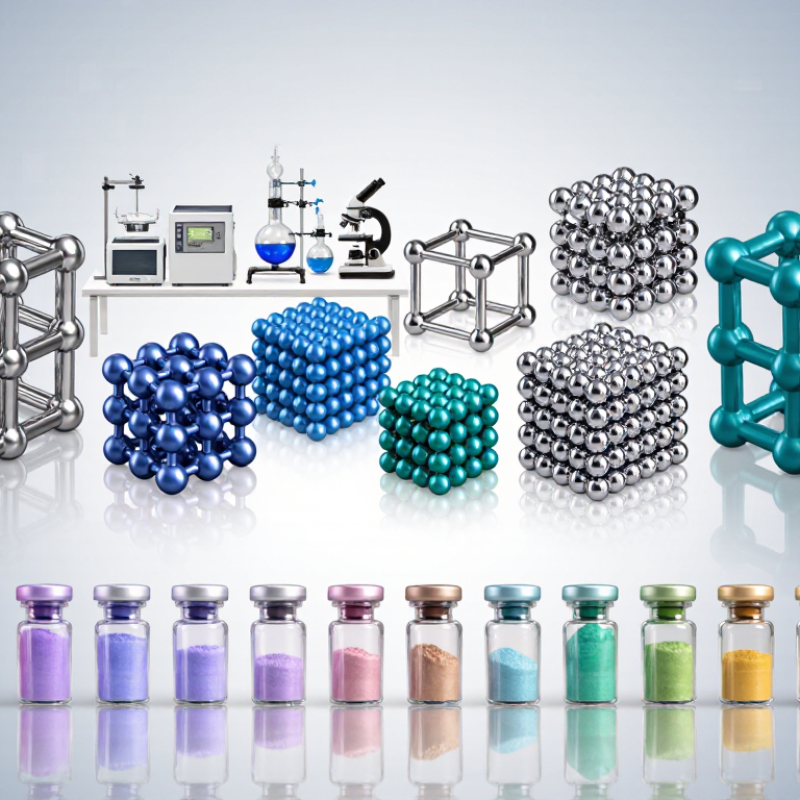
Top Metal Organic Frameworks Manufacturers in China?

Understanding Metal–Organic Frameworks and Their Applications

Metal–organic frameworks (MOFs) are porous crystals built from metal nodes connected by organic linkers. Their pore size and chemistry can be adjusted for different tasks. This flexibility makes MOFs promising for gas separation, carbon capture, hydrogen storage, moisture control, and chemical sensing. Think of a sponge with carefully designed openings. Small pores matter.

The International Energy Agency reported that global energy-related CO₂ emissions reached 37.4 billion tonnes in 2023 (CO₂ Emissions in 2023). That figure is not a MOF market estimate; it shows why improved carbon-capture materials attract attention. In practice, researchers assess adsorption capacity, selectivity, moisture tolerance, regeneration energy, and stability over repeated cycles. A high laboratory result alone does not prove economical industrial performance. Some frameworks can degrade in humid or acidic conditions, and that limitation deserves honest attention.

Tips: Match the framework to the gas mixture and operating humidity. Check whether it keeps working after many adsorption and regeneration cycles. Ask for test conditions, not just a headline capacity. For manufacturers in China, compare documented performance and batch consistency; impressive specifications still need independent verification.

Understanding Metal–Organic Frameworks and Their Applications

Representative reported BET surface areas of selected MOFs

High surface area can support uses such as gas storage, separation, and catalysis. Values are approximate literature-reported examples; results vary with synthesis and activation conditions.

Overview of China’s MOF Manufacturing Industry

China’s MOF manufacturing industry spans university spin-offs, specialty chemical producers, and larger materials companies. Their capabilities vary widely. Some focus on gram-scale research powders, while others operate pilot lines designed to test repeatable production.

Metal-organic frameworks are porous materials built from metal nodes and organic linkers. Their properties depend on both ingredients and process conditions. Manufacturers monitor factors such as phase purity, particle size, pore volume, and residual solvent. A sample may look uniform yet perform differently after activation or exposure to moisture. Scale matters. So does storage.

Moving from laboratory synthesis to commercial batches is not straightforward. Mixing, heating, and drying must remain consistent as vessel size increases. Water use, solvent recovery, and waste handling also affect production costs and environmental performance. Buyers should compare application-specific test data, not rely only on a headline surface-area figure. Useful questions include whether results come from repeated batches and how the material is packaged. Small inconsistencies can matter. China’s supplier base is developing, but available evidence may be uneven, and published specifications do not always predict performance in a customer’s process. Reliable evaluation often requires a sample and testing under realistic operating conditions.

Key Criteria for Evaluating MOF Manufacturers

Choosing a MOF manufacturer in China requires more than comparing quoted surface areas. The International Energy Agency’s Global Critical Minerals Outlook 2024 reports that China leads refining for 19 of 20 energy-related strategic minerals, with an average share of about 70%. This makes precursor traceability and supply continuity useful checks. Local access alone, however, does not guarantee consistent product quality.

Ask for batch-specific powder X-ray diffraction results, BET surface-area measurements, thermogravimetric data, and adsorption isotherms. Check how samples were activated before testing; different pretreatment can produce very different results. Small details matter. Request certificates for several production batches, not just a showcase sample, and compare particle size, moisture, and residual solvent data. For scale-up, ask whether pilot batches retain the same pore structure and performance. A polished specification sheet is helpful, but it is not proof. I would also check how deviations are recorded and investigated.

Tips: Request a small trial batch and agree on test methods before ordering. Keep the raw results, not only summary values. No single checklist predicts every production issue.

Leading Metal–Organic Framework Manufacturers in China

China’s leading metal–organic framework manufacturers are best assessed by more than production capacity. Buyers should examine synthesis control, pore-size consistency, moisture stability, and the supplier’s ability to reproduce a sample at larger scale. These details matter in gas separation, adsorption, and catalyst applications. Small differences can change performance.

MarketsandMarkets estimated the global MOF market at about US$200 million in 2023, with a forecast of US$1.1 billion by 2028. This is a market projection, not verified sales from Chinese factories. Still, it signals growing commercial interest. China’s manufacturing strengths include established chemical supply chains and access to process equipment, but scale alone does not prove dependable quality.

A practical supplier review should request batch-to-batch test data, not just a polished specification sheet. Check surface area measurements, pore distribution, residual solvent, and stability after humidity exposure. Ask how the company handles kilogram-scale production and rejects inconsistent batches. No checklist is perfect. I would also compare independent test results with the supplier’s own figures; that extra step can reveal gaps a catalogue will not show.

How to Choose a MOF Manufacturer for Your Needs

Top Metal Organic Frameworks Manufacturers in China?

How to Choose a MOF Manufacturer for Your Needs

Choosing a MOF manufacturer starts with your application, not a catalog headline. For gas adsorption, request adsorption isotherms measured at your actual temperature and pressure. For water capture, ask how humidity cycling affects capacity and regeneration energy. The IEA’s 2024 CCUS project data indicate announced carbon-capture capacity could reach about 435 million tonnes annually by 2030. That figure signals growing interest, not guaranteed demand for any particular MOF. Ask suppliers to explain how their material performs under realistic operating conditions.

Check batch-to-batch consistency, not just a single impressive sample. Request certificates showing phase purity, surface area, particle-size distribution, and residual solvent levels. Ask for replicate results from at least three production batches, plus a clear scale-up plan. A laboratory sample may behave differently in a packed bed or coating. A polished data sheet is useful, but it can hide gaps; confirm test methods and, where possible, have an independent laboratory verify key results.

Tips: Send the same written specification to each candidate. Include target capacity, operating conditions, acceptable variation, sample quantity, and delivery schedule. Ask for a small pilot batch before committing. If a supplier cannot explain a weak result plainly, pause and investigate.

FAQS

Why should I look beyond a MOF’s listed surface area?

Surface area alone does not show how a material performs in use. Check adsorption data, pore structure, and test conditions.

Which test results should I request?

Ask for batch-specific diffraction, surface-area, thermal, and adsorption results. Request raw data, not only a summary sheet.

Why do activation methods matter?

Different pretreatment can change measured performance. Ask how each sample was activated before testing.

How can I check batch consistency?

Compare certificates from at least three production batches. Review particle size, moisture, phase purity, and residual solvent levels. Small differences matter.

Should testing match my application?

Yes. For gas capture, request measurements at your expected temperature and pressure. For water capture, ask about humidity cycling and regeneration energy.

Can laboratory results predict scale-up performance?

Not reliably. Ask whether pilot batches retain their pore structure and performance in a packed bed or coating. Scale-up can be messy.

Is an independent laboratory check worthwhile?

It can help verify important results. Agree on test methods first, then compare independent measurements with the supplier’s data.

What should I include in a trial-batch request?

Send written targets for capacity, operating conditions, acceptable variation, sample quantity, and delivery timing. Keep the raw results. A small trial helps, but proves little on its own.

Conclusion

This article introduces Metal Organic Frameworks (MOFs), explaining how their porous structures and adjustable properties support applications such as gas storage, separation, catalysis, sensing, and environmental management. It also outlines China’s MOF manufacturing industry, where research capabilities, production capacity, quality control, and the ability to scale materials from laboratory development to commercial supply are important considerations.

Readers will learn how to assess manufacturers by examining product consistency, technical expertise, customization options, testing and documentation, production reliability, and customer support. The article also reviews the types of leading manufacturers found in China without focusing on individual brands, then offers practical guidance for matching a supplier’s capabilities to a project’s material specifications, required quantities, budget, and timeline. These criteria can help buyers make a more informed choice for research or industrial applications.

Isabella

Isabella

Isabella is a dedicated marketing professional with a sharp focus on driving brand growth and engagement through strategic content creation. With an extensive background in digital marketing, she combines her passion for storytelling with her keen understanding of industry trends to deliver......