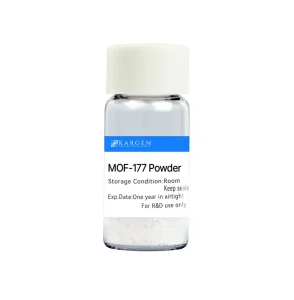
High-Performance Gas Adsorption & Separation Products
Explore our foundational Metal-Organic Framework (MOF) materials engineered for ultra-high purity gas separation, noble gas capture, and moisture management.





Global Noble Gas Market Snapshot
Quantitative benchmarks defining supply dynamics, CAGR projections, and purity standards across key industrial sectors.
1. Executive Summary & Market Architecture
The global Noble Gas Market—encompassing Helium (He), Neon (Ne), Argon (Ar), Krypton (Kr), Xenon (Xe), and Radon (Rn)—is undergoing a structural transformation. Historically treated as commoditized byproducts of large-scale Air Separation Units (ASUs) and natural gas extraction, noble gases have evolved into critical strategic assets. Their chemical inertness, unique spectral emissions, extreme boiling points, and quantum physical properties make them irreplaceable in sub-3nm semiconductor manufacturing, deep-space ion propulsion, advanced medical imaging, and nuclear energy systems.
As geopolitical shifts and supply disruptions highlight vulnerabilities in traditional cryogenic distillation pathways, global industrial buyers are prioritizing supply security, purity verification, and energy-efficient separation technologies. This whitepaper analyzes the current commercial realities of the noble gas sector, highlighting advanced separation paradigms like Metal-Organic Frameworks (MOFs) and evaluating the competitive cost-and-scale advantages offered by Chinese manufacturing infrastructure.
Information Gain Insight: Cryogenic distillation accounts for over 80% of energy consumption in noble gas refining. Integrating nanoporous adsorptive media such as ZIF-8, KAUST-7, and HKUST-1 allows selective kinetic and thermodynamic separation of Xenon/Krypton mixtures at ambient temperatures, reducing capital expenditures for gas purifiers by up to 45%.
2. Advanced Separation Technologies: Cryogenics vs. Nanoporous MOF Adsorption
Achieving semiconductor grade (6N to 7N purity, corresponding to 99.9999% and 99.99999%) requires eliminating trace contaminants such as nitrogen, oxygen, hydrocarbons, and moisture down to sub-parts-per-billion (ppb) levels. Traditionally, this is accomplished through multi-stage fractional cryogenic distillation columns operating at temperatures below 80 Kelvin. However, modern nanotechnology has introduced breakthrough solid-state sorbents:
- Helium (He) Extraction & Purification: Recovered primarily from natural gas reserves. Membrane separation paired with zeolite or MOF pressure swing adsorption (PSA) units isolates He from CH₄ and N₂ with high thermal efficiency.
- Neon (Ne) & Crude Air Separation: Produced during atmospheric air liquefaction (air contains ~18 ppm Neon). High-purity Neon is indispensable for DUV/EUV excimer laser gas mixtures (ArF/KrF lasers).
- Krypton (Kr) & Xenon (Xe) Co-recovery: Present in minute quantities (Kr ~1.1 ppm, Xe ~0.09 ppm in air), making their recovery exceptionally capital-intensive. Custom MOFs like KAUST-7 exhibit tailored pore apertures (~3.6 to 4.2 Å) that match the van der Waals radii of Xenon, enabling precise molecular sieving from Krypton without cryogenic refrigeration.
| Noble Gas | Atmospheric Conc. (ppm) | Primary Industrial Application | Standard Commercial Grade | Advanced Separation Sorbent |
|---|---|---|---|---|
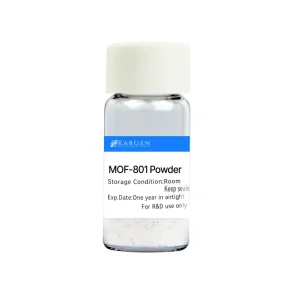
| Helium (He) | 5.24 ppm | Cryogenic cooling (MRI), Leak Detection, Aerospace | Grade 5.0 (99.999%) - Grade 6.0 | MOF-801 / Zeolite 5A |
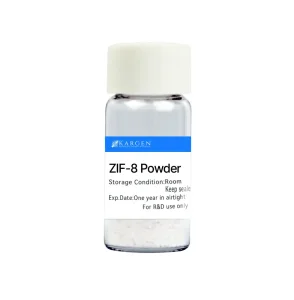
| Neon (Ne) | 18.18 ppm | Semiconductor Lithography Lasers (193nm/248nm) | Grade 5.0 (99.999%) | ZIF-8 / Modified Carbon Sorbents |
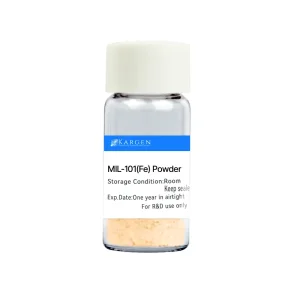
| Argon (Ar) | 9,340 ppm | Inert Shielding Gas, Wafer Processing, Metallurgy | Grade 5.5 - Grade 7.0 (Ultra-Pure) | MIL-101(Fe) / Cryogenic Distillation |
| Krypton (Kr) | 1.14 ppm | Insulated Electronics, Excimer Lasers, Satellites | Grade 5.0 (99.999%) | UIO-66 / HKUST-1 |
| Xenon (Xe) | 0.087 ppm | Aerospace Ion Thrusters, Medical Anesthesia | Grade 5.5 - Grade 6.0 | KAUST-7 / ZIF-67 Nanostructures |
3. China's Operational & Supply Chain Advantage
China has emerged as a dominant global hub for noble gas processing, refining, and specialized material manufacturing. The country's industrial eco-system offers distinct operational efficiencies for international buyers seeking stable, long-term procurement agreements:
- Integrated Air Separation Infrastructure: China operates some of the world's largest mega-ASU facilities aligned with mega-steel plants and petrochemical complexes. This massive scale provides a continuous supply of crude Neon, Krypton, and Xenon mixtures at lower unit extraction costs.
- Downstream Nanomaterial & Synthesizer Synergies: Local access to raw organic linkers and metal salts enables low-cost, ton-scale synthesis of MOFs (such as ZIF-8, HKUST-1, and MIL series). These advanced materials directly feed next-generation gas purification apparatuses within domestic factories.
- Flexible Packaging & Global Logistics: Chinese suppliers offer diverse packaging solutions ranging from high-pressure dot-cylinder bundles to large-scale ISO tube trailers, supported by rigorous ISO 9001 quality management and UN/DOT transportation compliance.
4. Localized Application Scenarios & Procurement Drivers
The strategic value of noble gases varies substantially across localized industrial sectors. Procurement teams must tailor their quality verification protocols to specific application requirements:
A. Semiconductor Wafer Fabrication & Photolithography
In advanced semiconductor fabs, Neon and Krypton act as buffer and active media in ArF/KrF excimer lasers used for deep ultraviolet (DUV) immersion lithography. Ultra-pure Argon is utilized as an inert purging gas during crystal pulling (Czochralski process) and plasma etching. Even single-digit ppb organic or moisture contamination can ruin multi-million-dollar wafer lots.
B. Aerospace & Electric Satellite Propulsion
Xenon and Krypton serve as propellants for Hall-effect thrusters in modern satellite constellations and deep-space probes. Xenon's high atomic mass and low ionization energy maximize thrust efficiency per unit fuel mass. Reliable supply pipelines and strict moisture specifications (<1 ppm H₂O) are critical to prevent thruster cathode degradation.
C. Medical Diagnostics & Specialized Healthcare
Liquid Helium is vital for keeping superconducting magnets cold in Magnetic Resonance Imaging (MRI) systems, operating at ~4.2 Kelvin. Additionally, hyperpolarized Xenon-129 is emerging as a novel functional MRI contrast agent for pulmonary imaging, requiring pharmaceutical-grade gas purity compliance.
5. Future Industry Trends (2026–2032)
Strategic decision-makers should monitor three major technical trends reshaping the noble gas market over the next decade:
- Closed-Loop On-Site Gas Recycling: Fabs and aerospace test centers are implementing closed-loop gas recovery systems. Integrating specialized MOF beds enables on-site capture of exhausted Xenon and Neon, reducing raw gas procurement needs by 60–80%.
- Nanoporous Gas Delivery Systems: Storing volatile or high-value gases inside MOF matrices at low pressure significantly improves transport safety while increasing cylinder volumetric storage density.
- Geographical Supply Diversification: Enterprise buyers are establishing multi-region sourcing strategies, balancing domestic reserves with high-capacity suppliers in China, Southeast Asia, and the Middle East to hedge against regional energy crises.
Why Partner with Advanced Chinese Material & Gas Suppliers
Key strategic capabilities supporting global enterprise buyers in securing noble gas supply chains.
6N+ Purity Guarantee
Analytical testing via Gas Chromatography-Mass Spectrometry (GC-MS) and Trace Analytical Reduction Gas Analyzers to guarantee sub-ppb impurity thresholds.
Proprietary MOF Sorbents
Direct integration of next-generation MOF substrates (ZIF-8, HKUST-1, MOF-801) providing customized kinetic gas separation tailored to buyer requirements.
Flexible Global Logistics
End-to-end management of hazardous gas transportation across sea, air, and land featuring certified ISO tank fleets and DOT/TPED compliant cylinders.
Noble Gas Procurement & Technical FAQ
Expert insights addressing key commercial, quality, and technical evaluation criteria for global sourcing managers.
What are the key purity specifications required for noble gases in semiconductor fabs?
Semiconductor fabrication standardly mandates Grade 6.0 (99.9999%) or Grade 7.0 (99.99999%) purity. Critical impurities such as moisture (H₂O), oxygen (O₂), carbon monoxide (CO), carbon dioxide (CO₂), and total hydrocarbons (THC) must individually remain below 10 to 100 parts per billion (ppb). Advanced MOF-based gas purification beds are often installed at the Point of Use (POU) to maintain these stringent limits.
How do Metal-Organic Frameworks (MOFs) improve noble gas recovery compared to traditional cryogenic distillation?
Cryogenic distillation requires cooling gases down to liquid temperatures, consuming massive amounts of electrical power. MOFs feature highly customizable pore dimensions and open metal sites that selectively adsorb specific noble gas molecules (like Xenon over Krypton) at ambient temperatures and moderate pressures. This reduces energy usage by up to 65% and enables compact, modular purification systems.
Why is China a competitive source for high-purity noble gases and gas separation media?
China operates an extensive network of large-capacity Air Separation Units (ASUs) integrated with robust chemical synthesis clusters. This infrastructure ensures a continuous supply of crude rare gases alongside low-cost production of synthetic adsorbents like MOFs (ZIF-8, HKUST-1, UIO-66). Combining raw gas volume with domestic nanotechnology manufacturing results in significant cost savings for international buyers.
What packaging options are standard for international noble gas shipments?
Noble gases are shipped in various configurations depending on volume: 10L to 50L seamless steel or aluminum gas cylinders for laboratory/small-batch usage; 12-cylinder or 16-cylinder bundles for medium-scale operations; and high-pressure ISO tube trailers for industrial bulk supply. All packaging conforms to international DOT, TPED, and ISO 11120 standards.
How can buyers verify the quality and origin of imported noble gas supplies?
Reputable suppliers provide lot-specific Certificates of Analysis (COA) generated via calibrated GC-MS, cavity ring-down spectroscopy (CRDS), and mass spectrometry instruments. Furthermore, leading Chinese factories provide third-party verification from international testing agencies (such as SGS or TÜV) upon request.
Explore Additional Advanced Framework Materials
Comprehensive solid sorbents engineered for gas separation, catalyst support, and industrial purification applications.