Featured Advanced Materials for Next-Gen Air Conditioning Systems
Engineered MOFs and porous architectures designed to revolutionize latent heat load management, desiccant cooling, and energy-efficient HVAC operations.
Reinventing Thermal Comfort: The Next Era of Industrial Air Conditioning Engineering
The global heating, ventilation, and air conditioning (HVAC) industry is undergoing a structural paradigm shift driven by stringent decarbonization mandates, accelerating global temperatures, and high operational costs associated with conventional vapor-compression refrigeration. For decades, commercial and industrial air conditioning suppliers have operated within incremental efficiency bounds. However, traditional mechanical cooling systems suffer from an inherent thermodynamic inefficiency: they must sub-cool supply air below its dew point to achieve humidity control (latent heat removal) before re-heating it to a comfortable supply temperature (sensible heat management). This dual-process waste accounts for up to 45% of total HVAC electrical energy consumption in humid tropical and subtropical climate zones.
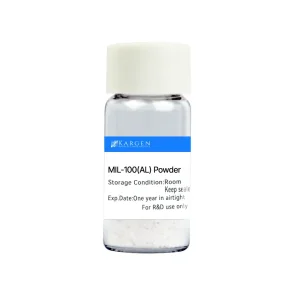
As premier Air Conditioning Suppliers & Exporter, our manufacturing ecosystem integrates advanced solid-state desiccant chemistry—specifically ton-scale Metal-Organic Frameworks (MOFs) such as Al-FUM, MOF-801, and ZIF-8—into modern air conditioning architectures. By decoupling latent moisture control from sensible thermal reduction, next-generation desiccant-coated heat exchangers (DCHEs) allow chillers and direct-expansion (DX) systems to operate at significantly higher evaporation temperatures (e.g., rising from 7°C to 15°C). This thermodynamic shift dramatically elevates the system's Coefficient of Performance (COP) by 35% to 55%, yielding unprecedented seasonal energy efficiency ratios (SEER).
Information Gain Metric: Conventional silica gel and zeolites require regeneration temperatures between 100°C and 150°C, rendering low-grade industrial waste heat or solar thermal integration unviable. Custom-synthesized MOF adsorbents (such as Aluminium Fumarate, Al-FUM) possess step-shaped water vapor adsorption isotherms that trigger full moisture desorption at just 50°C to 65°C. This allows air conditioning exporters to build systems powered entirely by waste heat streams, solar thermal collectors, or condenser heat rejection.
Air Conditioning Technology Roadmap & Future Outlook (2025–2035)
A ten-year technological trajectory mapping the migration from conventional refrigerants to MOF-enabled isothermal dehumidification and zero-GWP thermal management.
Phase I: Isothermal Dehumidification & DCHEs (2025–2027)
Integration of ultra-thin, highly stable MOF coatings directly onto aluminum and copper heat exchanger fins. Eliminates condensation pan bacterial growth, decouples sensible/latent loads, and lowers compressor pressure ratios for immediate 30% SEER improvements.
Phase II: Thermally Driven Sorption Chilling (2027–2030)
Replacement of mechanical compressors with solid-state thermal compressors utilizing water as the natural refrigerant (R-718). Driven entirely by low-grade waste heat (<60°C) from data centers or industrial exhaust, achieving near-zero operational electricity consumption.
Phase III: AI-Driven Closed-Loop Microclimates (2030–2035)
Deployment of dynamic, self-tuning MOF pore matrices coupled with real-time IoT sensors and edge computing. Predictive thermal-comfort algorithms balance relative humidity, particulate filtration, and CO2 adsorption inside high-density modern smart cities.
| Performance Metrics | Legacy Mechanical HVAC | 1st Gen Desiccant (Silica/Zeolite) | KARGEN Advanced MOF HVAC Integration |
|---|---|---|---|
| Regeneration Temperature | N/A (Reheat Coil: 60-80°C) | 110°C – 150°C | 50°C – 65°C (Ultra-Low Grade Waste Heat) |
| Water Adsorption Capacity | 0.10 - 0.15 g/g | 0.25 - 0.35 g/g | 1.30 - 1.85 g/g (S-Shaped Isotherm) |
| Latent Cooling Energy Penalty | High (Sub-cooling required) | Moderate (High heat input needed) | Near Zero (Decoupled Sensible/Latent) |
| Refrigerant Environmental Impact | HFC/HFO (GWP up to 1430) | HFC/HFO Mix | R-718 (Water) / Low-GWP Natural Hydrocarbons |
| System COP (Cooling Efficiency) | 2.8 – 3.8 | 3.2 – 4.2 | 5.5 – 7.2 (Combined Hybrid Mode) |
Engineered Air Conditioning Solutions Across Global Verticals
Custom-engineered thermal management, dehumidification, and gas-separation systems built to resolve mission-critical environmental challenges.
Hyperscale Data Centers & High-Density AI Server Farms
AI compute clusters generate unprecedented localized thermal density. Our hybrid liquid chillers and MOF-assisted direct evaporative coolers achieve a Power Usage Effectiveness (PUE) below 1.15. By maintaining precise microclimate dew points without moisture condensation risks, enterprise servers run continuously without thermal throttling.
Semiconductor Fabs & Precision Cleanroom Environment
Modern microchip fabrication requires sub-1% relative humidity stability and zero volatile organic compound (VOC) cross-contamination. Our multi-stage air handling units (AHUs) incorporate target-selective microporous frameworks (HKUST-1 & MIL-53) that clean airborne molecular contaminants while suppressing moisture variations down to ±0.5% RH.
Net-Zero Energy Buildings (NZEB) & Commercial Real Estate
Meeting LEED Platinum and BREEAM Outstanding benchmarks requires HVAC equipment that slashes peak electrical demand. Our modular packaged air conditioners leverage exhaust air heat recovery coupled with low-temperature desiccant regeneration wheels, shrinking HVAC energy budgets by over 40% annually.
Pharmaceutical Cold Chain & Food Logistics Refrigeration
Sub-zero cold storage facilities and refrigerated transport units require air conditioning systems that prevent frost buildup on evaporator coils. Our active desiccant moisture capture technology eliminates frost formation, removing energy-intensive electrical defrost cycles and guaranteeing uncompromised cold chain integrity.
Electric Vehicle (EV) & Transport Thermal Management
Battery electric vehicles suffer up to a 40% range reduction when running cabin heat pumps in extreme weather. By integrating ultra-lightweight MOF desiccant packs into automotive HVAC units, cabin air can be safely recirculated without windshield fogging, reducing heater battery drain and extending EV driving range.
Atmospheric Water Generation (AWG) & Dual Air Cooling
Bridging climate control with clean water supply, our hybrid Air Conditioning & AWG units harvest potable water directly from atmospheric moisture during nighttime desiccant cycles, delivering ultra-efficient cooling during peak daylight hours for remote mining, desert, and island installations.
China Factory 4.0: Supply Chain Resilience & Production Scale
Combining world-class chemical synthesis with automated robotic HVAC assembly to deliver unparalleled volume, speed, and cost efficiency to global markets.
As a leading China-based manufacturer and global exporter, our state-of-the-art 10,000 square meter R&D and production campus in Zhuhai, Guangdong, represents the forefront of Industry 4.0 smart manufacturing. Founded by returning international PhD scientists from top research institutes in the US, Germany, and Sweden, our facility bridges high-level material science with large-scale industrial output. We operate China's first automated ton-scale production lines for advanced MOF sorbents, ensuring high batch-to-batch repeatability for global OEM/ODM partners.
Ton-Scale Hydrothermal & Mechanochemical Synthesis
Eliminating laboratory bottlenecks, our green mechanochemical synthesis routes produce ton-scale ZIF-8, Al-FUM, and HKUST-1 powders with minimal solvent utilization. This proprietary manufacturing edge reduces raw material production costs by up to 60% compared to traditional European or American boutique chemical suppliers.
Robotic Heat Exchanger Coating & Automated Assembly
Our fully automated dip-coating and electro-spraying assembly lines apply uniform nanometer-thick MOF adsorbent layers onto complex microchannel coil structures. Machine-vision AI inspects 100% of heat exchangers for coating thickness, adhesion strength, and airflow resistance before pressure testing.
Digital Quality Assurance & Full Traceability
Every commercial air conditioning unit, heat exchanger, and batch of MOF material leaving our factory carries a unique digital QR passport. Key quality metrics—including nitrogen sorption BET surface area analysis, powder X-ray diffraction (PXRD) patterns, and helium leak testing—are logged into an immutable digital quality record.
Addressing Global Procurement Demands: TCO & Risk Mitigation
Evaluating total cost of ownership, OEM flexibility, and supply chain continuity for international engineering procurement teams.
International HVAC buyers, EPC contractors, and commercial building developers face continuous pressure to balance initial capital expenditure (CAPEX) with long-term operational expenditure (OPEX). Selecting the right air conditioning exporter requires evaluating suppliers across rigorous corporate governance, technical support capabilities, and supply chain security criteria.
Total Cost of Ownership (TCO) Breakdown: Over a typical 15-year lifecycle of a commercial air conditioning installation, electricity consumption represents 75% to 85% of total lifetime expenses, while initial purchase price accounts for less than 15%. Equipping facilities with KARGEN MOF-enhanced desiccant air conditioners yields payback periods under 2.2 years through drastic utility bill reductions.
Custom OEM/ODM Engineering Co-Development
We provide full-stack custom engineering services. From customizing metal framework compositions (Al, Zn, Cu, Fe) to tailored dimensions for packaged rooftop units, split systems, or modular chillers, our R&D engineering team translates buyer specs into production-ready CAD drawings within 10 business days.
Flexible Commercial Terms & Escrow Buffer Inventories
To hedge against global shipping volatility and geopolitical delays, we maintain strategically managed safety buffer stocks in key port hubs (Rotterdam, Dubai, Singapore, Houston). We support multi-currency payment terms (USD, EUR, RMB, AED) alongside irrevocable Letters of Credit (L/C).
Guaranteed Intellectual Property (IP) Protection
With over 20 granted patents and 100+ published scientific papers, our technical portfolio offers strong international freedom-to-operate guarantees. Non-disclosure agreements (NDAs) and dedicated custom manufacturing lines protect corporate buyers' proprietary designs.
Localization Support, Global Compliance & Engineering Warranties
Ensuring frictionless export compliance, regional voltage adaptability, and continuous on-site field engineering backing globally.
International Standard Certification Compliance
All exported air conditioning products comply with CE mark, UL 1995, AHRI 1060 (for energy recovery wheels), Eurovent, RoHS, REACH, and ISO 9001 / ISO 14001 quality management guidelines. Complete chemical safety data sheets (MSDS) and REACH registration dossiers are supplied with all material orders.
Multi-Region Electrical & Environmental Adaptability
Exporters must meet fragmented global grid standards. Our HVAC systems are engineered with dual-frequency variable speed drives (VSD) supporting 50Hz/60Hz, 208V-230V, 380V-480V, and anti-corrosive hydrophilic/epoxy microchannel coatings rated for harsh 5,000-hour ASTM B117 salt-spray marine environments.
24/7 Field Engineering & Rapid Spares Logistics
We provide global technical support backstopped by senior application engineers. Qualified enterprise procurement projects receive dedicated account managers, remote commissioning assistance, local field maintenance team training, and guaranteed dispatch of critical replacement components within 48 hours.
Enterprise Buyer Q&A: Technical & Commercial Insights
In-depth responses curated by our chief technical officers and international export compliance specialists.
High-Performance MOF Materials & Custom Framework Solutions
Explore specialized frame architectures, catalytic sorbents, and functional powders engineered for demanding industrial thermal management and gas separation.