
High-Performance Commercial MOF Powders
Featured ton-scale synthesized Metal-Organic Frameworks engineered for industrial adsorption, catalysis, and separation.




Industrial Scale & Synthesis Excellence
Proven metrics backing global bulk export capabilities of advanced porous coordination polymers.
1. Global Procurement Dynamics & Macro Industrial MOF Demand
Metal-Organic Frameworks (MOFs)—a class of crystalline porous materials consisting of metal ions or clusters coordinated to organic ligands—have transitioned from academic synthetic chemistry into key industrial assets. Characterized by unparalleled ultra-high surface areas (exceeding 2,000 to 7,000 m²/g), tailorable pore topologies, and tuneable surface chemistry, MOFs represent a paradigm shift over traditional porous materials such as activated carbons, zeolites, and silica gels.
As global industries undergo rapid technological transformations driven by decarbonization, resource scarcity, and net-zero commitments, enterprise procurement teams across Europe, North America, and the Asia-Pacific region are increasingly seeking reliable High-Quality Metal Organic Framework Synthesis Exporters. Industrial demand is primarily dictated by five macro sectors:
- Carbon Capture, Utilization & Storage (CCUS): Point-source flue gas separation ($CO_2/N_2$) and Direct Air Capture (DAC) demand hydrothermally resilient frameworks (e.g., modified ZIF-8, MIL-101 series) capable of low-energy thermal regeneration.
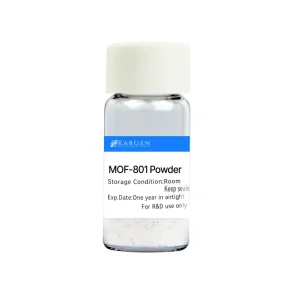
- Atmospheric Water Harvesting (AWH) & HVAC Desiccant Systems: Arid regions and energy-conscious HVAC OEMs utilize aluminium-based and zirconium-based frameworks (such as Al-FUM and MOF-801) that exhibit steep S-shaped water sorption isotherms at relative humidity levels under 30%.
- Advanced Energy Storage & Battery Technologies: Battery manufacturers are integrating MOF powders into lithium-ion battery separator coatings and solid-state electrolyte matrices to regulate ion transport, suppress lithium dendrite formation, and trap transition-metal dissolved ions.
- Ultra-Pure Gas Separation & Storage: Electronic-grade chemical processing and semiconductor manufacturing rely on open-metal-site framework exporters for high-purity separation of ethylene/acetylene mixtures, toxic gas scrubbing, and bulk safe storage of hazardous gases.
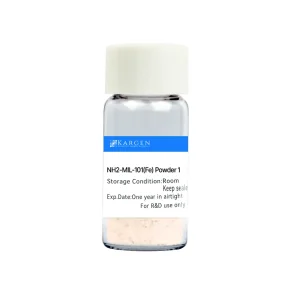
- Heterogeneous Catalysis & Organic Pollutant Remediation: Iron-based carboxylate frameworks, including $NH_2$-MIL-101(Fe) and MIL-88A(Fe), serve as eco-friendly Fenton-like catalysts for wastewater treatment and active sensing matrices.
2. Technical Synthesis Roadmaps & Scale-Up Engineering
The central technical challenge faced by industrial MOF exporters lies in translating milligram-scale laboratory solvothermal synthesis into continuous, cost-competitive, and environmentally sustainable ton-scale production. Modern MOF manufacturing employs diverse synthetic pathways, each tailored to specific framework topologies and commercial targets:
Mechanochemical Green Synthesis
Solvent-free or Liquid-Assisted Grinding (LAG) processes eliminate toxic organic solvents like DMF. Applied extensively to ZIF-8 and ZIF-67 production, yielding high space-time yields (STY) with zero volatile organic compound emissions.
Continuous Flow Solvothermal Synthesis
Microfluidic and tubular flow reactors enable precise control over residence time, temperature profiles, and mass transfer rates. Ensures tight particle size distribution (PSD) and batch-to-batch structural consistency.
Spray Drying & Granulation
Direct conversion of MOF crystallite slurries into spherical, micro-engineered granules using green binders (cellulose, polyvinyl alcohol). Solves the pressure drop issues associated with raw fine powders in industrial packed bed columns.
Comparative Synthesis Analysis Matrix
| Framework Series | Primary Synthesis Route | Typical BET Surface Area ($m^2/g$) | Thermal Stability Limit (°C) | Primary Industrial Utility |
|---|---|---|---|---|
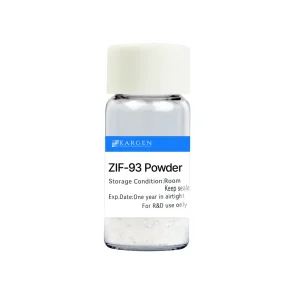
| ZIF-8 / ZIF-67 | Mechanochemical / Aqueous Room Temp | 1,300 – 1,800 | > 400 °C | $CO_2$ Capture, Li-Battery Coatings, Olefin/Paraffin Separation |
| Al-FUM / MOF-801 | Hydrothermal Continuous Flow | 900 – 1,300 | > 300 °C | Atmospheric Water Harvesting, Adsorption Chillers, Dehumidification |
| HKUST-1 (Cu-BTC) | Solvothermal / Electrochemical | 1,500 – 2,100 | ~ 250 °C | Methane/Natural Gas Storage, Specialty Gas Purification |
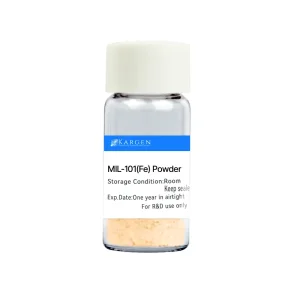
| MIL-101(Fe/Cr/Al) | High-Pressure Hydrothermal | 2,200 – 3,800 | > 320 °C | Catalytic Oxidation, Liquid Phase Adsorption, Dye Removal |
| MIL-53(Al) | Green Water-Based Solvothermal | 1,100 – 1,500 | > 450 °C | Flexible Pores ("Breathing"), VOC Adsorption, Gas Separation |
Turnkey Industrial Application Solutions
How specialized exporter capabilities translate advanced MOF chemistry into deployed engineering systems.
Flue Gas & DAC Carbon Capture Modules
Industrial power facilities and cement plants require adsorbents with high $CO_2/N_2$ selectivity under humid conditions. Custom-engineered ZIF-8 and functionalized MIL powders provide working capacities exceeding 3.5 mmol/g at standard pressure, reducing desorption energy consumption by over 35% compared to monoethanolamine (MEA) liquid amine scrubbers.
HVAC Energy Reduction & Desiccant Wheels
Traditional desiccant cooling systems consume immense electricity during high-temperature thermal reactivation (120°C–150°C). Exporter-supplied Al-FUM and MOF-801 microporous coatings can be regenerated using ultra-low-grade waste heat (under 75°C), slashing commercial building air-conditioning energy expenditure by up to 50%.
Next-Gen Lithium Battery Separators
Integrating nano-sized ZIF-8 slurries into wet-process polyethylene (PE) battery separators creates an ionic-sieve interphase layer. This layer traps detrimental heavy metal ions ($Fe^{3+}$, $Mn^{2+}$), stabilizes electrolyte decomposition, and enhances thermal shrinkage resistance up to 180°C.
3. Enterprise Supplier Evaluation Criteria & E-E-A-T Quality Standards
When evaluating global MOF manufacturing partners, corporate chemical buyers and technical leads must scrutinize critical operational and laboratory verification parameters. Sourcing porous coordination polymers involves strict adherence to chemical standardizations:
- PXRD Crystal Phase Verification: Powder X-ray Diffraction (PXRD) patterns must match theoretical Cambridge Structural Database (CSD) simulation curves to confirm 100% crystalline phase purity without unreacted metal node precipitates or amorphous linker domain collapse.
- N2 Physisorption & BET Analysis: Brunauer-Emmett-Teller (BET) surface area, pore size distribution (micropore vs. mesopore volume), and activation temperature profiles must be provided per batch via automated gas sorption analyzers.
- Thermogravimetric Analysis (TGA): Thermal stability limits, solvent retention ratios, and linker degradation thresholds are mandatory to guarantee process safety in continuous thermal cycling units.
- Particle Size Distribution (PSD) Control: Monodisperse grain size control ($d_{50}$ metrics from 100 nm to 50 $\mu m$) prevents channel clogging in packed-bed reactors and ensures uniform slurry viscosity in coating processes.
4. Regulatory Compliance, Export Logistics & Localization Support
Cross-border chemical logistics demand total alignment with international environmental and trade regulations. Enterprise exporters maintain rigid operational compliance protocols:
REACH & TSCA Compliance
Pre-registration and full REACH dossier compliance for EU imports, aligned with US EPA TSCA requirements for new substance chemical notices.
GHS & SDS Standardizations
Complete 16-section Safety Data Sheets (SDS) in multiple languages according to GHS Rev. 9 standards, detailing proper handling, transport safety, and disposal.
Moisture-Proof Inert Packaging
Vacuum-sealed, aluminum-foil barrier packaging purged with dry nitrogen ($N_2$) to prevent moisture-induced hydrolysis during long-haul sea and air freight.
5. Technology Roadmap & Future Outlook of Commercial Frameworks
The next decade of Metal-Organic Framework commercialization is moving toward core structural innovations:
1. Covalent Organic Frameworks (COFs) & MOF Hybrids: Combining metal-based nodes with metal-free covalent linkages to maximize chemical stability in strongly acidic or basic industrial wastewater streams.
2. AI-Driven Inverse Molecular Design: Utilizing machine learning algorithms to screen billions of theoretical metal-linker combinations, accelerating target formulation from years to weeks.
3. Defect Engineering & Post-Synthetic Modification (PSM): Intentionally creating missing-linker defects to generate highly active Lewis acid/base catalytic sites, enhancing reactivity in fine chemical synthesis.
Specialized & Customized Framework Portfolio
Explore our complete commercial line of engineered MOFs, structured for immediate global export and pilot testing.




Frequently Asked Questions (FAQ) & Technical Procurement Guide
In-depth responses from our application engineering team regarding MOF evaluation, custom synthesis, and bulk logistics.