
Best China Suppliers: MIL-100(Al) Powder Metal Organic Frameworks (MOFs) from Top Factory for Catalytic Applications Suppliers, Supplier
Product Description
| Product Name | MIL-100 (Al) |
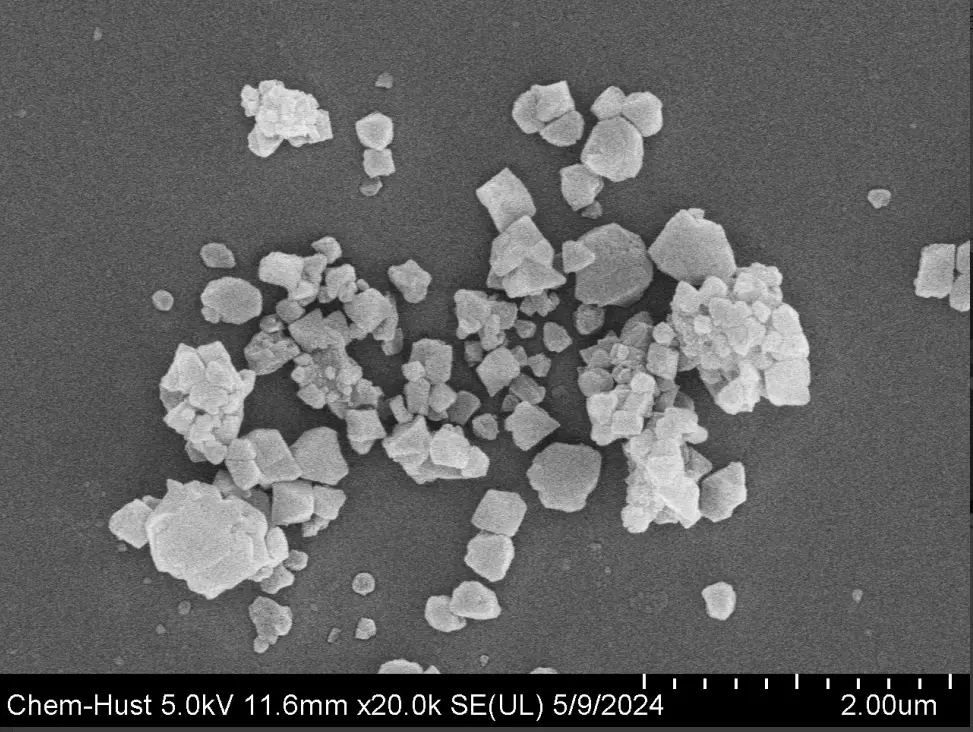
| Particle size | 0.4~0.6 μm |
| Specific surface area | ≥800 ㎡/g |
| Pore size | 0.4~1.0 mm |
MIL-100(Al), with chemical composition of Al3O(OH)(H2O)2(BTC)2·nH2O, where BTC stands for 1,3,5-benzenetricarboxylate. This MOF has garnered attention for its remarkable structural flexibility and catalytic prowess, particularly in chemical reactions such as methanol dehydration. The catalytic activity of MIL-100(Al) is underscored by a high turnover frequency (TOF) per node, which rivals that of MIL-96 and surpasses MIL-110, making it a formidable catalyst in the realm of MOFs.
The reactivity of MIL-100(Al) is attributed to its node sites, which are enriched with hydroxyl and formate groups. These functional groups not only enhance the MOF's catalytic potential but also imbue it with a degree of flexibility that is highly desirable for various chemical transformations.
The exploration of MIL-100(Al) in bimetallic systems, such as when combined with chromium, has unveiled intriguing magnetic properties. These properties, along with the synergistic interactions between different metal ions, could significantly augment the MOF's performance across a spectrum of applications.
While MIL-100(Al) has demonstrated its potential, there is a clear avenue for further research and development. Optimization of its synthesis and modification could tailor its properties to better suit specific industrial needs. For instance, enhancing its performance in catalysis and proton conduction could make it an even more valuable material, as observed in related MOFs like MIL-91(Al).
In terms of physical characteristics, MIL-100(Al) is available as a fine powder with particle sizes ranging from 2 to 5 μm. This particle size, combined with a specific surface area exceeding 700 ㎡/g, provides an expansive surface for interactions and adsorption processes. The pore size of 0.4 to 1.0 mm within the MOF's structure is another attribute that facilitates its use in applications such as gas storage and separation.
MIL-100(Al) is not just a catalyst; it is a testament to the versatility and adaptability of MOF technology. As research continues to uncover new ways to harness and refine its properties, MIL-100(Al) is poised to play a pivotal role in advancing the fields of catalysis, gas storage, and beyond, solidifying its place as a cornerstone in the ever-evolving landscape of materials science.









