
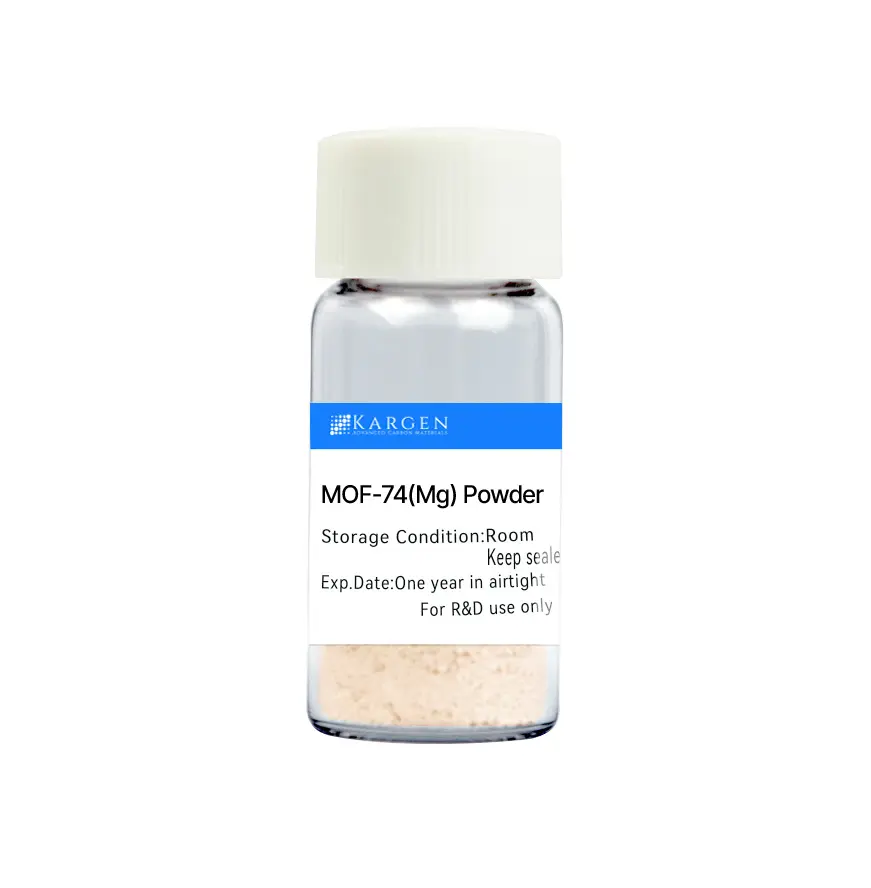
Best China Suppliers of MOF-74(Mg) Powder Metal Organic Frameworks from Reliable Factory for Enhanced Gas Adsorption Suppliers, Exporters
Product Description
| Product Name | MOF-74(Mg) |
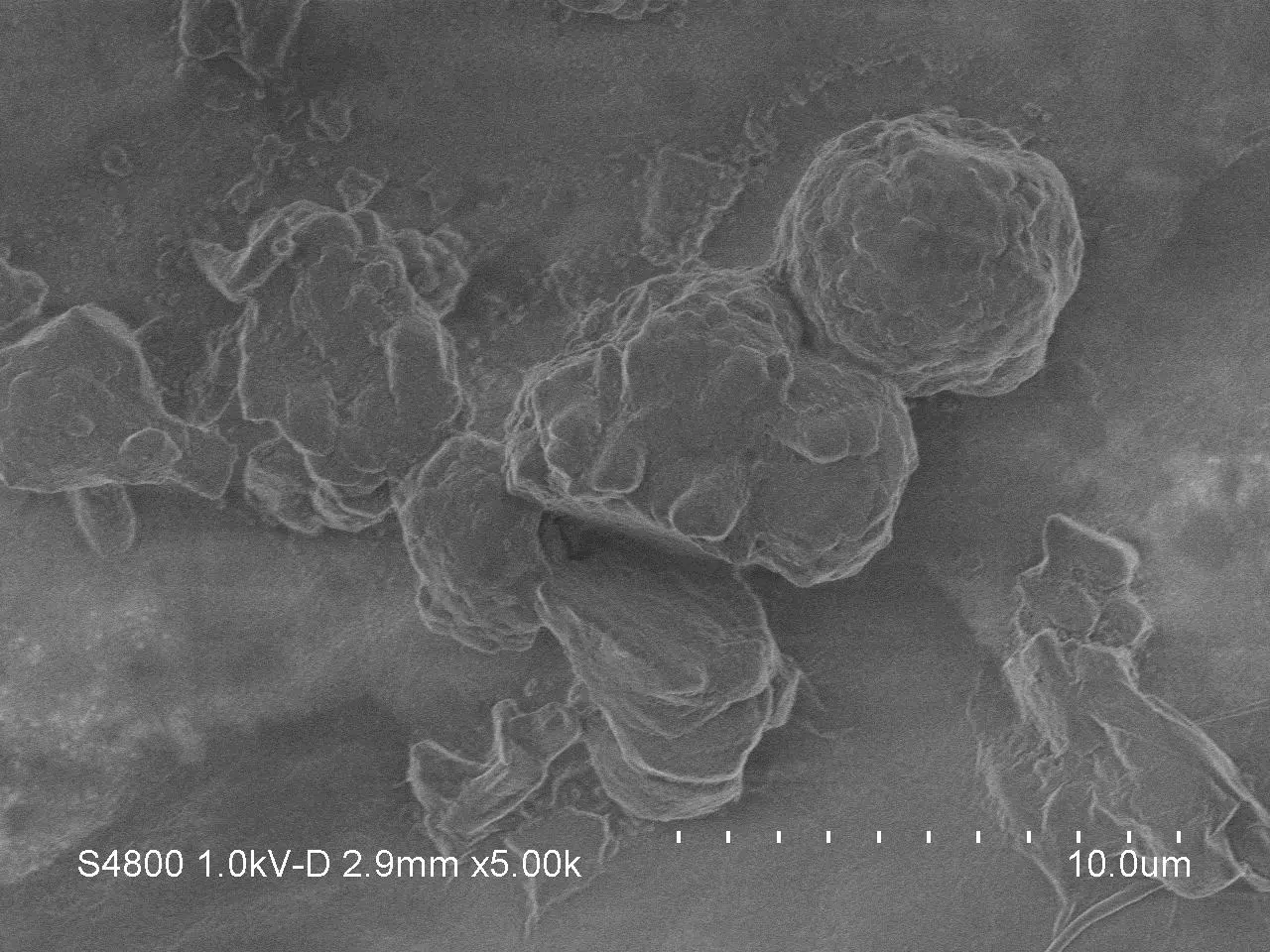
| Particle size | 3-5μm |
| Specific surface area | ≥1100㎡/g |
| Pore size | 1.2nm |
CO2 Adsorption
One of the most widely studied applications of MOF-74(Mg) is its use in CO2 adsorption. The material exhibits excellent CO2 uptake, particularly at low pressures, due to the strong interaction between CO2 molecules and the open magnesium sites. This property makes MOF-74(Mg) a promising candidate for CO2 capture and storage (CCS) technologies.
Water Adsorption
In addition to CO2 adsorption, MOF-74(Mg) has been investigated for its potential in water adsorption. The material exhibits a decent water uptake of 25.172 g/g at 1 bar, making it a promising candidate for atmospheric water harvesting (AWH). The adsorption process is influenced by the interaction between water molecules and the open metal sites, as well as the pore structure of the framework.
Electrochemical Applications
MOF-74(Mg) has also been explored for its potential in electrochemical applications, particularly in solid-state electrolytes and batteries. The material's high ionic conductivity and stability make it an attractive candidate for use in all-solid-state sodium metal batteries (ASSMBs). When used as a solid electrolyte, MOF-74(Mg) exhibits an ionic conductivity of 8.53 × 10⁻⁴ S cm−1 at 70 °C, along with a wide potential window of 1-4.3 V.
Hydrogen Storage
Hydrogen storage is another promising application of MOF-74(Mg). The material's open metal sites and porous structure enable strong interactions with hydrogen molecules, making it suitable for high-capacity hydrogen storage. When modified with defective frameworks and catalysts such as platinum (Pt), MOF-74(Mg) can achieve a reversible hydrogen storage capacity of 2.55 wt.% at 160 °C and 81 bar. This performance is further enhanced by the material's rapid hydrogen uptake/release and stable cycling capabilities.
Frequently Asked Questions
What are the key specifications of MOF-74(Mg)?
MOF-74(Mg) features a particle size of 3-5μm, a specific surface area of ≥1100㎡/g, and a pore size of 1.2nm.
Why is MOF-74(Mg) effective for CO2 capture?
MOF-74(Mg) exhibits excellent CO2 uptake, especially under low-pressure conditions, due to the strong interaction between CO2 molecules and its open magnesium sites. This makes it highly suitable for CO2 capture and storage (CCS) technologies.
How does MOF-74(Mg) perform in water adsorption applications?
The material achieves a water uptake capacity of 25.172 g/g at 1 bar, driven by the interactions between water molecules, open metal sites, and the framework's pore structure, making it a viable candidate for atmospheric water harvesting (AWH).
Can MOF-74(Mg) be used in solid-state batteries?
Yes. Because of its high ionic conductivity (8.53 × 10⁻⁴ S cm−1 at 70 °C) and a broad potential window of 1-4.3 V, it is an attractive option for use in all-solid-state sodium metal batteries (ASSMBs).
What is the hydrogen storage capacity of MOF-74(Mg)?
When modified with defective frameworks and catalysts like platinum (Pt), MOF-74(Mg) can achieve a reversible hydrogen storage capacity of 2.55 wt.% at 160 °C and 81 bar, supported by rapid uptake/release and stable cycling.









