
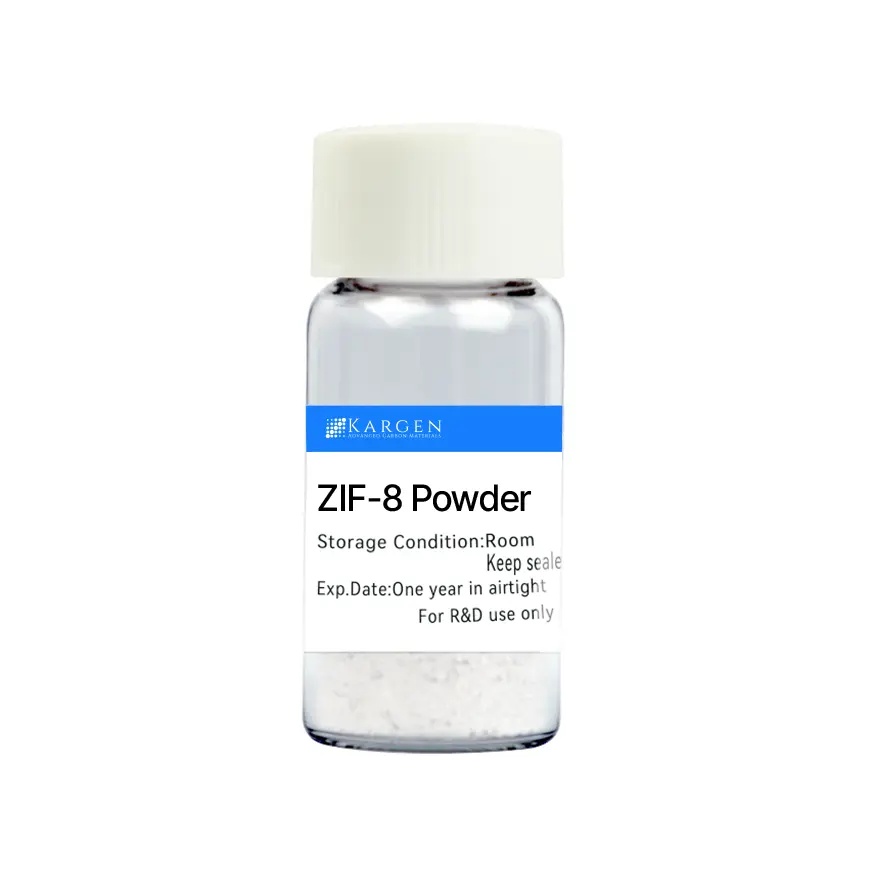
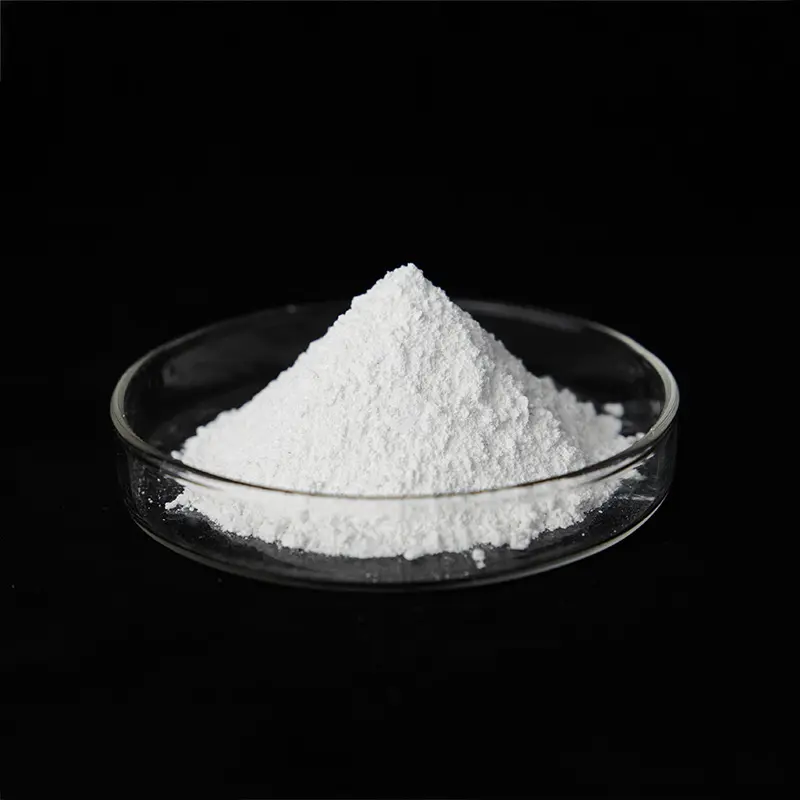
Best High-Quality ZIF-8 Powder Metal Organic Frameworks from China Suppliers and Factory for Adsorption and Catalysis Service, Supplier
Product Description
Product Specifications
| Product Name | ZIF-8 |
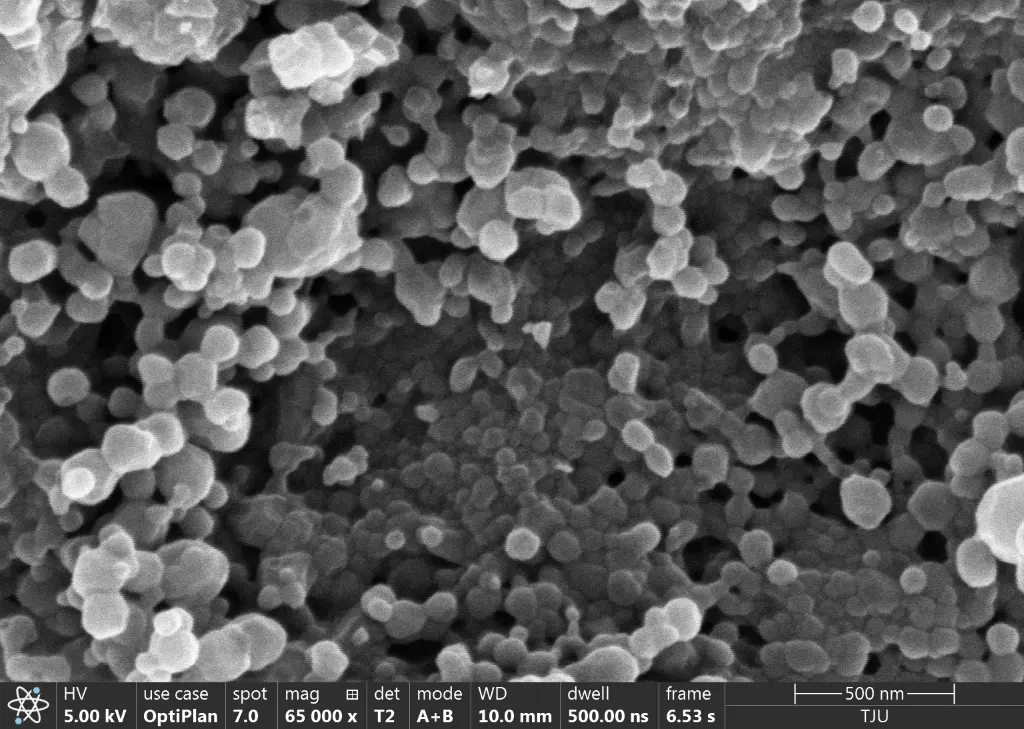
| Particle Size | 50~200 nm |
| Specific Surface Area | ≥1500 ㎡/g |
| Pore Size | 0.8~1.8 nm |
Overview & Framework Characteristics
ZIFs have advantages over zeolites such that the hybrid framework structures are expected to have more flexibility in surface modification. Among a large variety of ZIFs, ZIF-8 is the most representative one first synthesized by Chen’s group, and then systematically named by the Yaghi’s group. It can be fabricated by zinc and mIm with a sodalite structure consisting of a four- and a six-membered ring ZnN4 cluster, which has good thermal and chemical stability, especially large specific surface area, adjustable porosity and abundant active sites.
11.6 Å large β-cages interconnected by narrow 6-membered ring windows (~3.4 Å).
Exceptional chemical and thermal stability with robust ZnN4 cluster configurations.
Significant sieving efficiency in gas separation aided by narrow pores and hydrophobic behavior.
As we all know, ZIF-8 has shown up distinguished advantages and advances in adsorption, gas separation, drug delivery, catalysis and biosensor. ZIF-8 possesses the typical cubic sodalite topology with 11.6 Å large β-cages, which are connected by 6-membered ring windows (~3.4 Å). ZIF-8 and its membranes perform significant sieving advantages over ultramicroporous zeolites in selective separation of gas mixture contributing to the narrow six-membered ring pores (~3.4 Å) and hydrophobic behavior.
Product Gallery
Frequently Asked Questions (FAQ)
ZIF-8 is fabricated by zinc and 2-methylimidazole (mIm) forming a sodalite structure. Its hybrid framework consists of four- and six-membered ring ZnN4 clusters featuring 11.6 Å large β-cages connected by ~3.4 Å ring windows.
ZIF-8 features a particle size ranging from 50 to 200 nm, a high specific surface area of ≥1500 ㎡/g, and a micropore size distribution between 0.8 and 1.8 nm.
Unlike rigid zeolites, ZIF-8 hybrid framework structures offer greater flexibility in surface modification, adjustable porosity, abundant active sites, and superior chemical and thermal stability.
ZIF-8 and its membranes provide outstanding molecular sieving advantages over ultramicroporous zeolites in separating gas mixtures due to its narrow six-membered ring aperture (~3.4 Å) and intrinsic hydrophobic behavior.
ZIF-8 is widely utilized across diverse advanced fields, including gas separation, adsorption processes, drug delivery, heterogeneous catalysis, and biosensors.









