
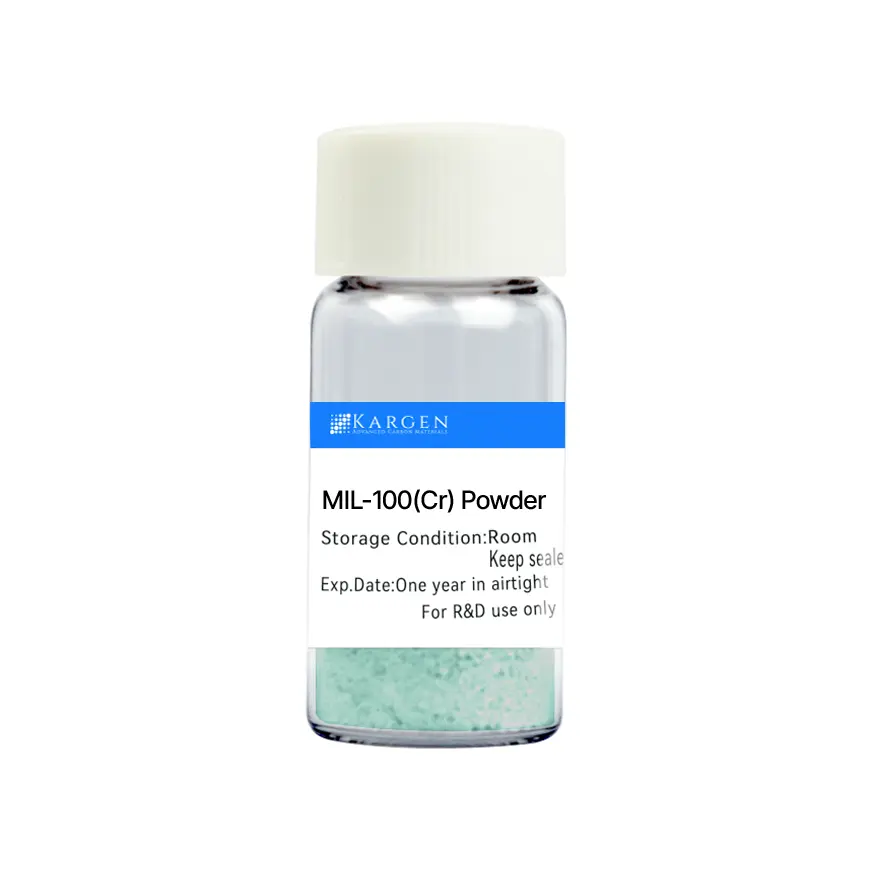
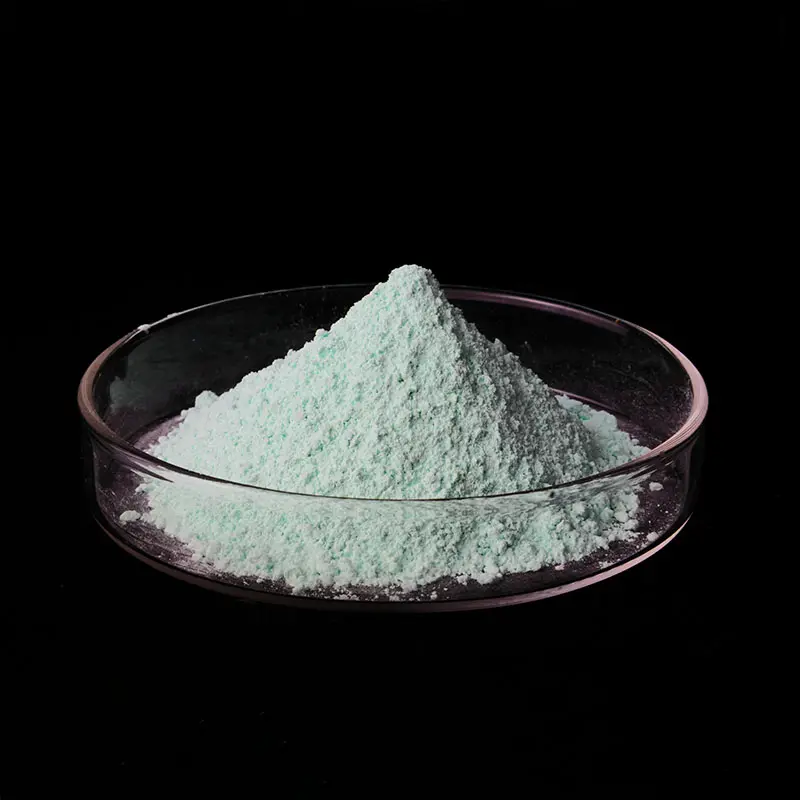
High-Quality China MIL-100(Cr) Powder Metal Organic Frameworks (MOFs) Suppliers and Factory for Gas Separation and Catalysis Suppliers, Exporter
Product Description
| Product Name | MIL-100(Cr) |
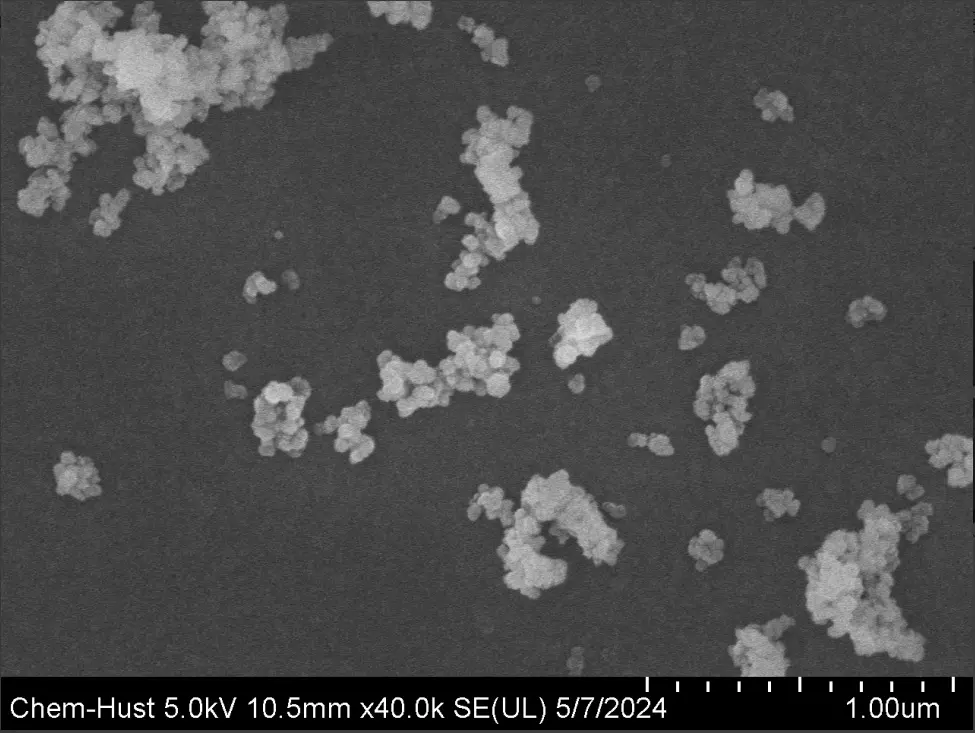
| Particle size | 0.05~0.1 μm |
| Specific surface area | ≥1200 ㎡/g |
| Pore size | 0.8~2.7 nm |
MIL-100(Cr), a green powder form of Metal Organic Frameworks (MOFs) with the chemical formula C18H10Cr3FO15, is celebrated for its distinctive structural attributes and a wide array of applications, notably in the realms of gas separation and catalysis. This MOF is distinguished by its exceptional mechanical robustness, which surpasses that of its counterparts like MIL-101(Cr). The enhanced linker connectivity in MIL-100(Cr) augments the interplay between metal nodes, thereby postponing structural degradation under stress.
Key Performance Metric: Modified MIL-100(Cr) membranes achieve impressive figures of 4638 GPU in CO2 permeance and a separation selectivity ratio of 35 for CO2/N2, presenting high efficiency in gas capture and purification.
This mechanical stability is a pivotal attribute for applications such as CO2 separation, where modified MIL-100(Cr) membranes have displayed remarkable CO2 permeance and selectivity. These membranes have achieved impressive figures of 4638 GPU in CO2 permeance and a ratio of 35 in CO2/N2 separation, marking a significant advancement in the field of gas capture and purification.
Beyond gas separation, MIL-100(Cr) has also garnered interest in catalysis. It has been particularly examined in the selective hydrogenation of nitrobenzene, where it acts as a support for bimetallic catalysts. The synergistic effects between the catalysts and the MOF's structure amplify the catalytic activity, offering a promising avenue for catalytic processes.
The exploration of MIL-100(Cr) in these capacities underscores its versatility and underscores its potential in both environmental conservation and industrial processes. However, to fully utilize its capabilities, ongoing research is essential to refine its performance across diverse applications.
MIL-100(Cr) is characterized by a particle size of 50-100 nm, which, in conjunction with a specific surface area exceeding 1200 ㎡/g, provides a substantial surface for chemical interactions. The pore size ranging from 0.8 to 2.7 nm is another key feature that facilitates its utility in gas storage and separation processes.
MIL-100(Cr) is a MOF of notable promise, with a robust structure and a broad spectrum of applications. Its ongoing development and optimization are set to cement its role as a key material in addressing contemporary environmental and industrial challenges.









