
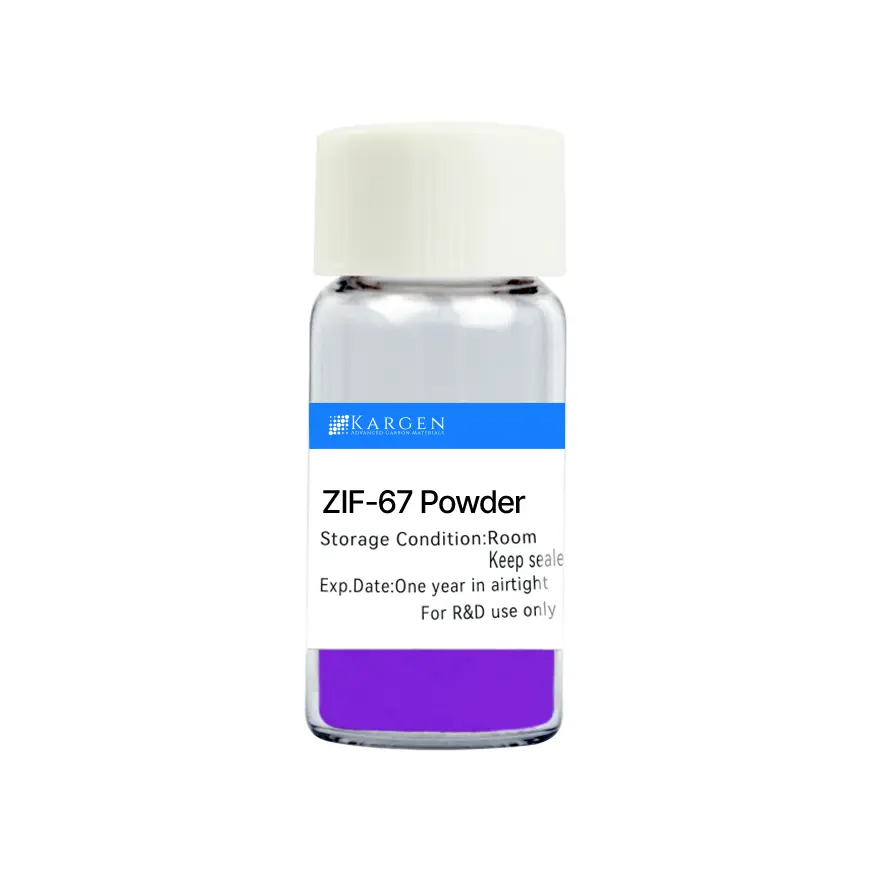
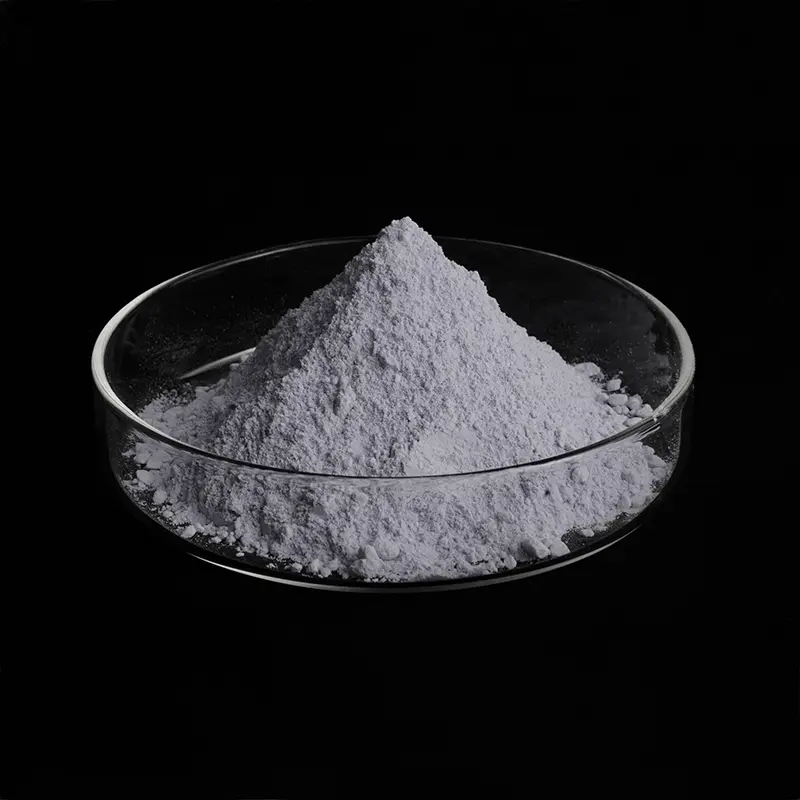
High-Quality China ZIF-67 Powder MOFs Supplier - High Surface Area Cobalt-Based Frameworks from Factory Supplier, Exporter
Product Description
| Product Name | ZIF-67 |
|---|---|
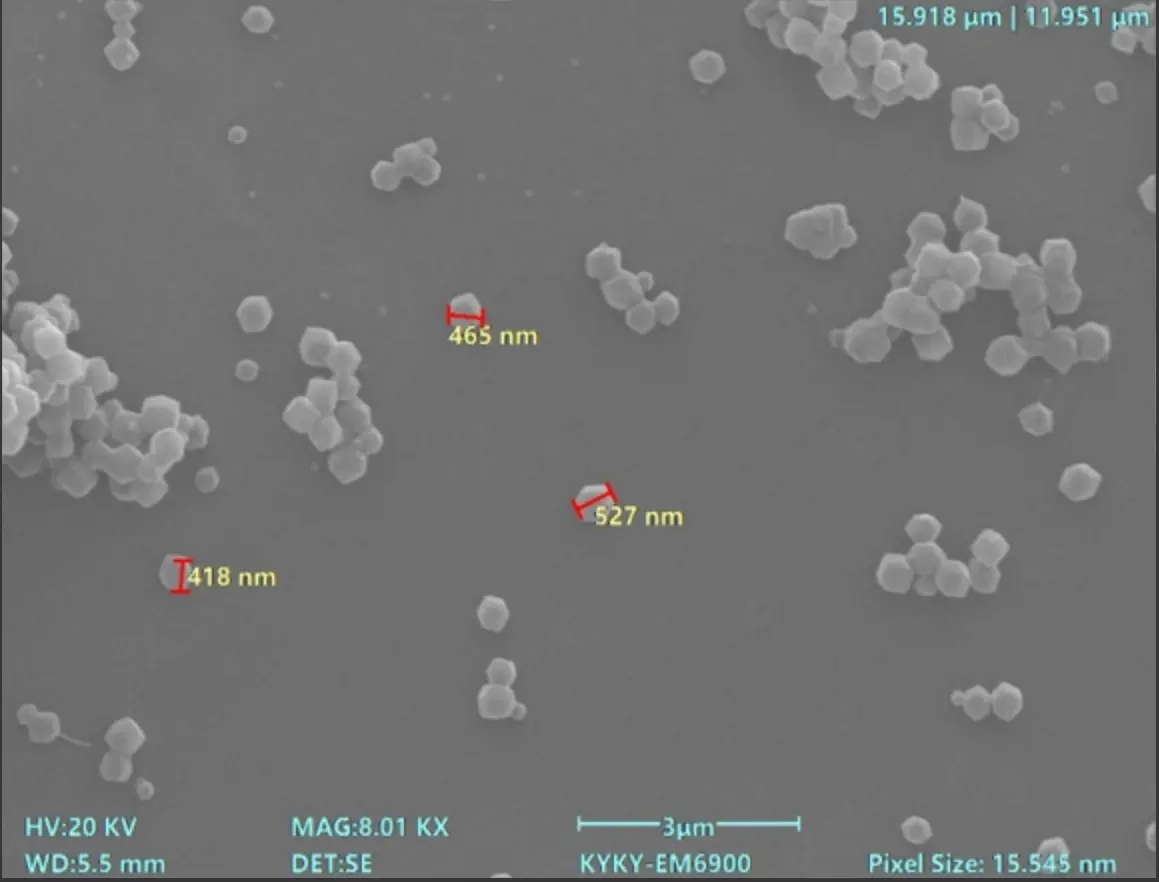
| Particle Size | 400~500 nm |
| Specific Surface Area | ≥2100 m²/g |
| Pore Size | 0.5~0.9 nm |
ZIF-67 has been employed in biosensing and disease diagnosis, where it is integrated into composites to enhance catalytic and electrocatalytic activities. It has also been studied in cement composites, where it enhances the compressive strength and microstructure of the cement. Additionally, ZIF-67 has been investigated as a catalyst for the selective catalytic reduction of NOx using CO as a reducing agent, demonstrating high activity under aerobic conditions. Furthermore, ZIF-67 has shown promise in the efficient photoreduction of CO2, delivering excellent photocatalytic performance and a high CO yield. ZIF-67 films have also been fabricated on various substrates for supercapacitor applications, exhibiting strong electrochemical properties.
Q: What are the primary structural parameters of ZIF-67?
ZIF-67 features a particle size ranging between 400 and 500 nm, a microporous pore size of 0.5 to 0.9 nm, and an exceptionally high specific surface area of ≥2100 m²/g.
Q: How is ZIF-67 utilized in biosensing and medical diagnostics?
ZIF-67 is integrated into composite materials to significantly enhance catalytic and electrocatalytic activities, making it highly effective for sensitive biosensing platforms and diagnostic assays.
Q: What catalytic capabilities does ZIF-67 offer for gas reduction?
ZIF-67 acts as an efficient catalyst for the selective catalytic reduction of NOx using CO as a reducing agent under aerobic conditions, and shows outstanding photocatalytic performance for the photoreduction of CO2 with high CO yield.
Q: Can ZIF-67 be used in energy storage devices?
Yes, ZIF-67 films can be fabricated on various substrate surfaces to serve as supercapacitor electrodes, exhibiting robust electrochemical properties and capacitance performance.
Q: How does ZIF-67 contribute to construction and cement composites?
When blended into cement composites, ZIF-67 refines the composite's microstructure and substantially improves its overall compressive strength.









