
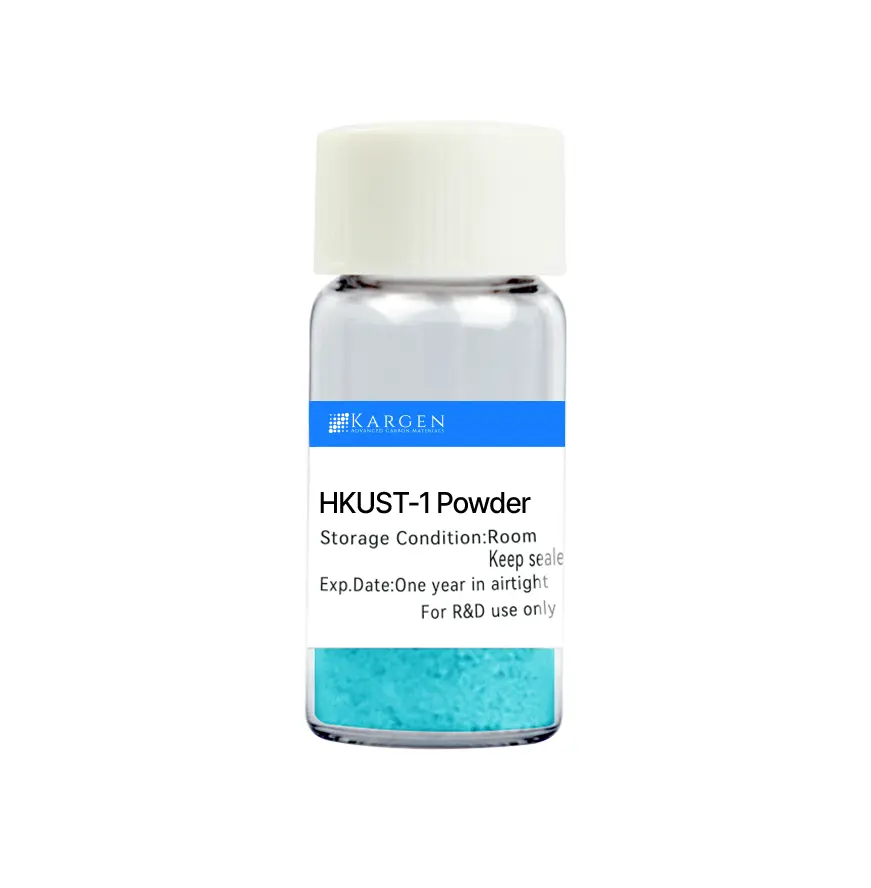
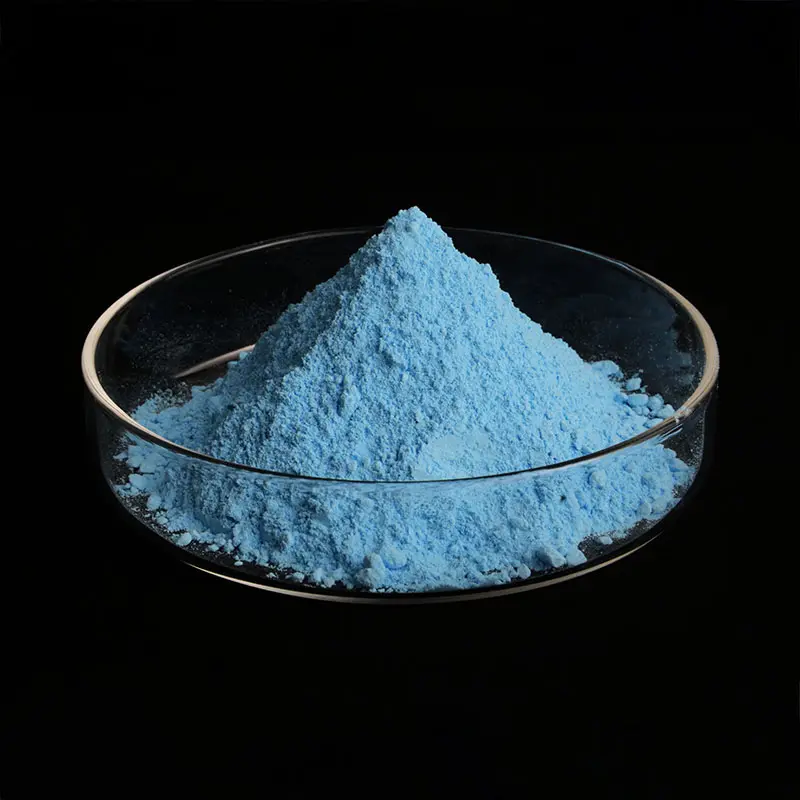
High-Quality HKUST-1 MOFs Suppliers in China - Factory Direct for Superior Gas Adsorption and Separation Solutions Service, Supplier
Product Description
HKUST-1, also named MOF-199, is a sophisticated Metal Organic Framework (MOF) that has been extensively studied for its remarkable gas adsorption and separation capabilities. Its structure is defined by the assembly of dimeric metal units bridged by benzene-1,3,5-tricarboxylate (BTC) ligands, with copper ions (Cu2+) at its core, providing a robust framework for molecular interactions.
The innovative synthesis of HKUST-1 has led to the development of monolithic forms that rival the CO2 adsorption performance of traditional powders. This advancement is pivotal for industries seeking efficient and scalable solutions for greenhouse gas capture, aligning with global efforts to combat climate change.
| Product name | HKUST-1 |
| Particle size | ≈1 μm |
| Specific surface area | ≥1600 ㎡/g |
| Pore size | 0.3~0.5 nm |
The incorporation of ionic liquids into HKUST-1's framework has been a significant breakthrough, endowing the MOF with enhanced water adsorption capabilities. This feature is particularly beneficial for waste heat recovery processes, where the selective adsorption and release of water can improve overall energy efficiency.
Moisture stability has been further enhanced through the extrusion of HKUST-1 with hydrophobic polymers. This technique not only preserves the MOF's crystalline integrity but also augments its effectiveness in gas separation, making it an ideal candidate for applications in moist or humid conditions.
Advanced computational methods, such as density functional theory, have been utilized to delve into the vibrational properties of HKUST-1. These studies have shed light on its spin-dependent behavior, which is crucial for optimizing its performance in various gas separation technologies.
The synthesis of magnetic nanocomposites that incorporate HKUST-1 has opened new avenues for environmental remediation. These composites have shown exceptional adsorption efficiency for pollutants like methylene blue and CO2, demonstrating the MOF's broad applicability in purifying the environment.
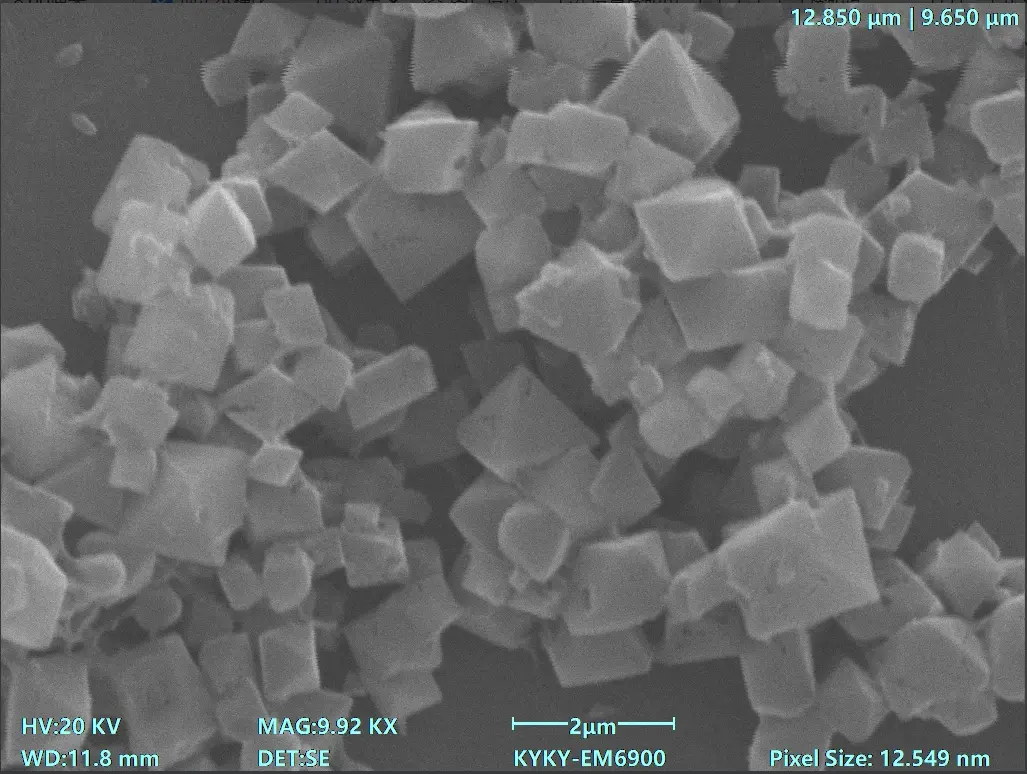
Physically, HKUST-1 is characterized by a particle size ranging from 100 to 1000 nm and a specific surface area exceeding 1000 ㎡/g. Its pore size, falling within the 0.3 to 0.5 nm range, enables precise molecular sieving, making it highly selective for gas separation processes.
The versatility and enhanced properties of HKUST-1 have positioned it as a prominent material for a spectrum of industrial applications. Its adaptability, coupled with ongoing research and development, ensures that HKUST-1 will continue to be a cornerstone in addressing contemporary challenges, particularly in the realms of environmental conservation and energy efficiency.









