
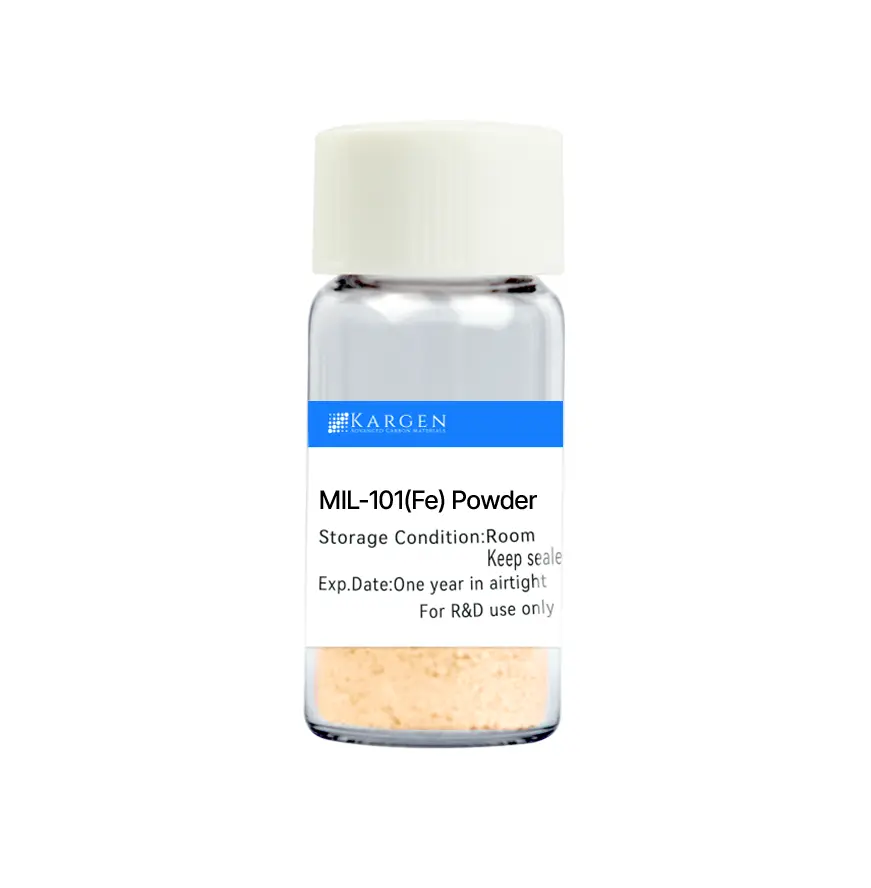
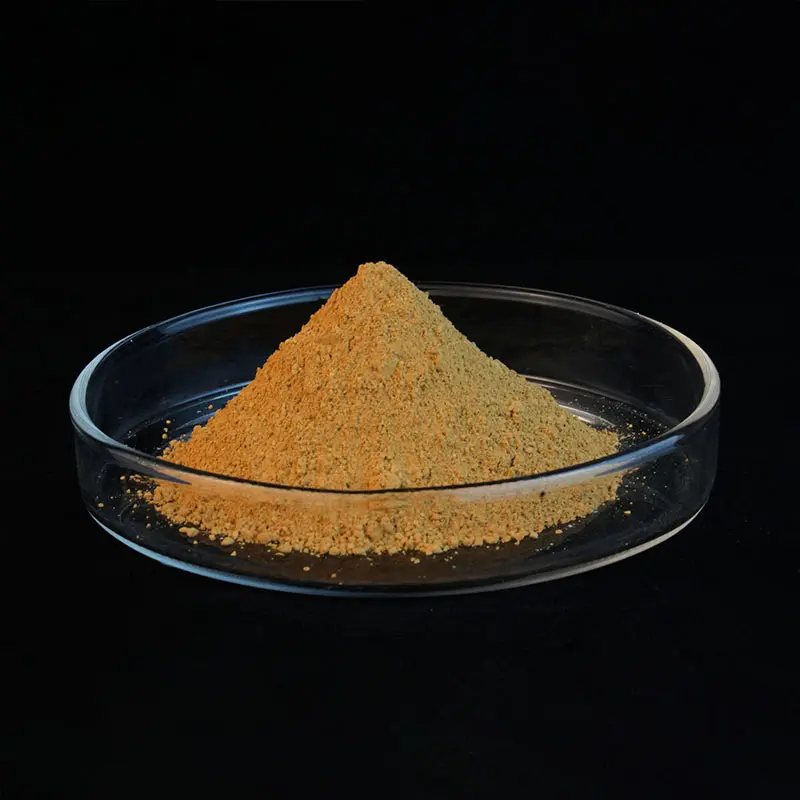
High-Quality MIL-101(Fe) Powder Metal Organic Framework MOF - China Suppliers & Factory for Adsorption, Catalysis, and Drug Delivery Service, Supplier

MIL-101(Fe) (molecular formula: Fe3O(H2O)2OH(BTC)2) is a highly regarded metal-organic framework (MOF) that is gaining traction in various industries, including adsorption, catalysis, and drug delivery. As one of the leading China suppliers and factory sources for this innovative material, we offer high-quality MIL-101(Fe) that meets the diverse needs of our clients. With its exceptional properties and versatility, MIL-101(Fe) is an excellent choice for businesses looking to enhance their processes and applications. Explore the benefits of partnering with us for your MOF needs and discover why we stand out among top suppliers in the market

Product Description

Technical Specifications
Product Name MIL-101(Fe)
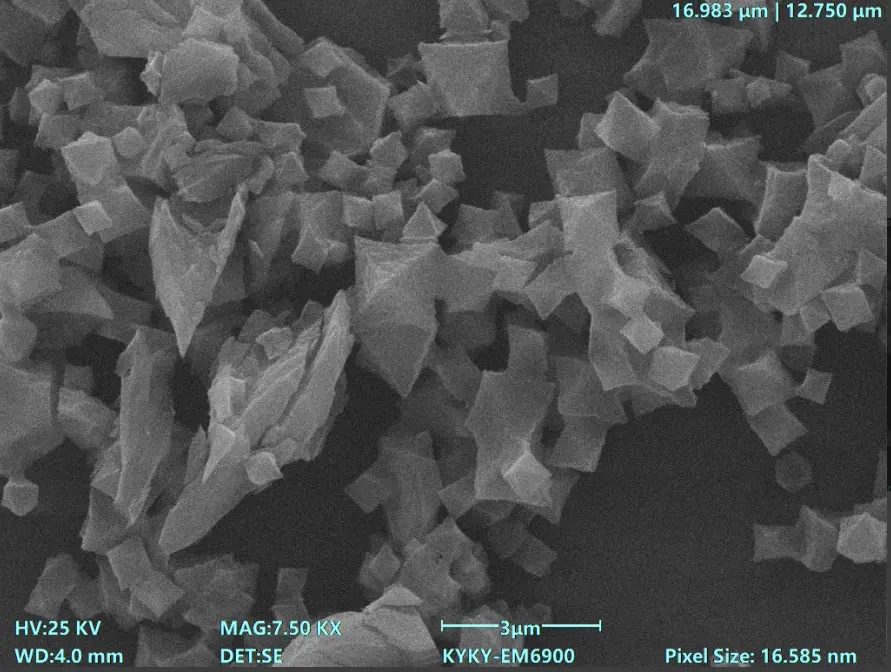
Particle Size 1-3 μm
Specific Surface Area ≥1000 ㎡/g
Pore Size 0.3 ~ 2.0 nm

MIL-101(Fe) is a metal-organic framework (MOF) primarily composed of iron (Fe) ions coordinated with organic ligands, specifically 1,4-benzenedicarboxylic acid (BDC). This structure provides high porosity and surface area, making it suitable for various applications, including pollutant remediation and energy storage.

The framework is based on iron ions (Fe3+) which are pivotal for its structural integrity and functionality (Chen et al., 2024). The BDC ligands form a robust coordination network with the iron ions, contributing to the stability and porosity of the MOF (Liu et al., 2024).

MIL-101(Fe) has been effectively utilized for the simultaneous removal of heavy metals like Pb²⁺, Cd²⁺, and Cu²⁺ from contaminated water and soil, achieving low residual concentrations (Wang et al., 2025). It also serves as a photocatalyst for degrading crude oil in wastewater, demonstrating a remarkable 94.73% removal efficiency under optimized conditions (Wang et al., 2024).

The framework has been modified to create efficient electrocatalysts for rechargeable Zn-air batteries, showcasing high performance in oxygen evolution and reduction reactions (Hao et al., 2024). Additionally, MIL-101(Fe) composites with iron nanoparticles have been developed for supercapacitor applications, achieving a capacitance of 1305 F g⁻¹ (Mahajan et al., 2024).

While MIL-101(Fe) shows promise in these applications, challenges such as scalability and long-term stability in practical environments remain areas for further research.

Frequently Asked Questions
Q1 What are the primary components of MIL-101(Fe)?
MIL-101(Fe) is a metal-organic framework (MOF) composed of iron (Fe³⁺) ions coordinated with organic ligands, specifically 1,4-benzenedicarboxylic acid (BDC).
Q2 What are the key structural specifications of MIL-101(Fe)?
Key specifications include a particle size of 1-3 μm, a specific surface area of ≥1000 ㎡/g, and a pore size ranging from 0.3 to 2.0 nm.
Q3 How is MIL-101(Fe) used in environmental pollutant remediation?
It is effectively used for the simultaneous removal of heavy metals like Pb²⁺, Cd²⁺, and Cu²⁺ from contaminated water and soil. Additionally, it functions as a photocatalyst for degrading crude oil in wastewater, achieving up to 94.73% removal efficiency.
Q4 What energy storage applications exist for MIL-101(Fe)?
MIL-101(Fe) can be modified into electrocatalysts for rechargeable Zn-air batteries, or combined with iron nanoparticles for supercapacitors, reaching a capacitance of 1305 F g⁻¹.
Q5 What structural features contribute to the performance of MIL-101(Fe)?
The iron ions (Fe³⁺) form a robust coordination network with 1,4-benzenedicarboxylic acid (BDC) ligands, providing high structural integrity, stability, and high porosity.
Q6 What are the main practical challenges limiting MIL-101(Fe)?
While highly promising, key challenges such as scalability of production and long-term stability in practical real-world environments remain areas requiring further research.

Related Products








