
Top-Rated Heat Air Unit & Sorptive Nanomaterial Products (Part 1)
Explore our foundational baseline products powering advanced Heat Air Units, desiccants, thermal recovery coils, and atmospheric heat exchange systems.
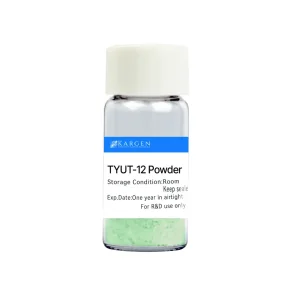
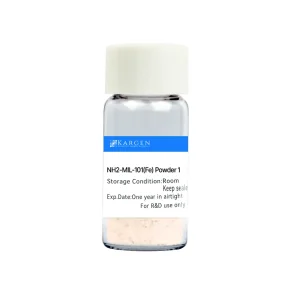
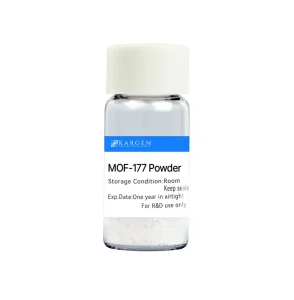
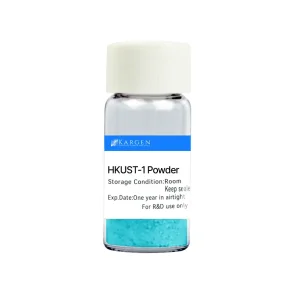
Executive Whitepaper: Re-Engineering Heat Air Units for Net-Zero Climate Control
Transitioning from mechanical vapor compression to solid-state sorptive heat pumps and MOF-coated thermal handling units.
Selecting the best Heat Air Unit suppliers and supplier ecosystem requires an in-depth evaluation of thermodynamic innovation, material durability, and industrial scalability. Modern commercial and industrial HVAC infrastructures face an unprecedented dual challenge: managing mounting internal heat loads from high-density processing equipment while strictly complying with international carbon-neutrality directives (such as the EU Energy Efficiency Directive and ASHRAE Standard 90.1-2022).
Traditional Heat Air Units rely almost exclusively on standard mechanical vapor-compression cycles. While effective for sensible cooling, these legacy systems perform poorly when handling latent heat loads (moisture removal). They require deep overcooling of process air below its dew point, followed by energy-intensive electrical or gas reheat cycles. This thermodynamic inefficiency degrades overall system Coefficient of Performance (COP) by 30% to 50% in humid or demanding industrial cleanroom environments.
The Nanomaterial Paradigm Shift: Metal-Organic Frameworks (MOFs) in Sorptive HVAC
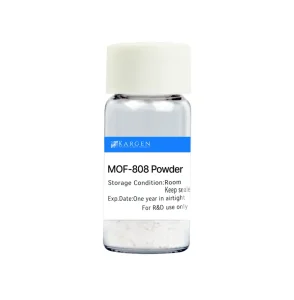
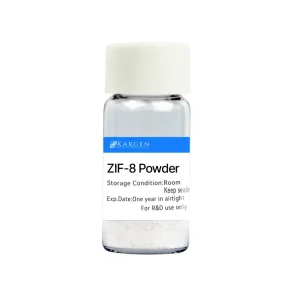
Leading tier-1 Heat Air Unit suppliers are bypassing incremental mechanical optimizations by adopting nanostructured Metal-Organic Frameworks (MOFs) directly within the heat exchangers and desiccant wheels of modern Air Handling Units (AHUs). Engineered materials such as ZIF-8, Al-FUM, and MOF-808 feature crystalline, ultra-porous structures with record-breaking internal surface areas (up to 3,000–6,000 m²/g).
When applied as ultra-thin micro-coatings on aluminum or copper heat-exchange fins, MOF-based Heat Air Units decouple latent and sensible loads entirely:
- Isothermal Dehumidification: Water vapor is captured via stepped, steep S-shape water adsorption isotherms without requiring process air to drop below the dew point.
- Ultra-Low Regeneration Temperatures: Desorption and sorbent thermal recovery occur at ultra-low heat levels (45°C to 70°C), allowing Heat Air Units to run using waste heat from chillers, data center liquid loops, or solar thermal collectors.
- Zero Chemical Carryover: Unlike traditional liquid desiccant or lithium chloride systems, MOF nanostructures bind water molecules inside crystalline cages, eliminating salt carryover and metal corrosion.
Global Industry Development Trends in Heat Air Unit Engineering
Macro-environmental shifts shaping procurement requirements for enterprise HVAC buyers, turnkey EPC contractors, and industrial plants.
1. Decarbonization & Waste Heat Integration
Industrial procurement teams no longer evaluate Heat Air Units solely on initial CAPEX. Strict carbon taxation (e.g., EU CBAM) mandates systems capable of running on low-grade waste thermal energy, achieving net-zero operational footprints.
2. Ultra-Tight Humidity Control (<10% RH)
Gigafactories producing lithium-ion batteries and sub-nanometer semiconductor fabs require absolute moisture control. Modern sorptive Heat Air Units deliver stable dewpoints below -40°C without freezing coil evaporator faces.
3. Smart Digital Twin & Predictive Monitoring
Top Heat Air Unit suppliers integrate IoT sensor arrays, real-time BET sorption tracking, and predictive maintenance algorithms to optimize fan motor speeds and thermal regeneration fluid flow in real-time.
China Factory Supply Chain Advantages for Global Procurement
Why leading global enterprises partner with tier-1 Chinese manufacturers for next-gen Heat Air Units and MOF advanced sorbents.
The global market for advanced Heat Air Units has experienced a massive geographic consolidation of manufacturing capability. China has emerged as the premier manufacturing hub, not only for standard mechanical equipment, but for the advanced chemical synthesis of Metal-Organic Frameworks (MOFs) and nanostructured desiccant matrices that make high-efficiency climate control possible.
Ton-Scale Nanomaterial Synthesis
Our domestic production ecosystem includes high-capacity continuous mechanochemical and hydrothermal reactors, delivering ton-scale production of ZIF-8, HKUST-1, and Al-FUM powders with consistent batch-to-batch quality.
Complete Vertical Integration
From primary organic ligand synthesis to precision automated coating on aluminum fins and full Heat Air Unit cabinet fabrication—single-source manufacturing eliminates component markup and supply chain friction.
Unrivaled Rapid Prototyping
Leveraging Guangdong's world-class precision engineering ecosystem, bespoke OEM Heat Air Unit core designs move from CAD engineering validation to functional pilot prototypes in as few as 14 business days.
30–50% Total Cost Advantage
Achieve significant CAPEX reductions without sacrificing performance. Cost-optimized raw material sourcing, automated powder processing, and optimized labor efficiency deliver unbeatable commercial competitiveness.
Localized Application Scenarios & Deployment Field Matrix
Engineered Heat Air Unit configurations optimized for diverse global climate zones and specialized industrial facilities.
Semiconductor & Battery Cleanrooms
Challenge: Maintaining moisture content below 0.5 g/kg of dry air continuously without thermal drift.
Solution: Dual-wheel Heat Air Units coated with hydrothermally stable ZIF-8 and MOF-808 sorbents, driven by low-grade hot water waste heat.
Data Center Liquid-to-Air Heat Units
Challenge: High ambient heat rejection and strict sensible heat ratio (SHR ~ 1.0) requirements.
Solution: Direct evaporative sorptive Heat Air Units utilizing open-metal-site MOFs (HKUST-1) to manage high thermal throughput with zero compressor run-time during free-cooling windows.
Sub-Zero Extreme Cold Heat Recovery
Challenge: Frost build-up on air-to-air energy recovery core faces below -15°C ambient temperature.
Solution: Hydrophobic MOF surface modification prevents moisture condensation from freezing on coil edges, enabling continuous run-time without defrost energy losses.
Localization Support, Regulatory Compliance & Quality Assurance
Ensuring frictionless international integration with comprehensive testing, certification, and engineering services.
Global Regulatory Compliance
All supplied Heat Air Units and nanostructured sorbents fully comply with CE, UL 1995, AHRI 1060, ASHRAE 62.1, EU REACH, and RoHS guidelines, guaranteeing immediate acceptance by regional building inspectors.
Regional Field Engineering Support
We provide localized engineering support across North America, Europe, and Asia-Pacific, offering on-site system commissioning, air-flow optimization, and emergency spare-parts buffering within 48 hours.
Digital QA/QC Traceability
Every shipment includes lot-specific Certificate of Analysis (CoA) documentation detailing BET surface area testing, Powder X-Ray Diffraction (PXRD) crystalline purity, and thermogravimetric analysis (TGA).
Heat Air Unit Sorbent Selection Guide & Technical Benchmark
Compare physical and thermodynamic properties across our baseline MOF materials to select the perfect match for your Heat Air Unit architecture.
| Material Grade | Metal Node / Linker | BET Surface Area | Optimal Heat Unit Function | Regeneration Temp. | Hydrothermal Stability |
|---|---|---|---|---|---|
| ZIF-8 | Zn / 2-Methylimidazole | 1,300 - 1,800 m²/g | Hydrophobic CO₂ / Moisture Control | 70°C - 90°C | High (Acid/Base Resistant) |
| Al-FUM | Al / Fumaric Acid | 1,000 - 1,400 m²/g | Atmospheric Water Capture & Cooling | 55°C - 70°C | Ultra-High (10,000+ Cycles) |
| HKUST-1 | Cu / Trimesic Acid (BTC) | 1,500 - 2,100 m²/g | High-Affinity Gas Separation Air Units | 80°C - 110°C | Moderate (Dry / Sealed Loops) |
| MOF-808 | Zr / Formic / BTC Acid | 1,600 - 2,400 m²/g | Ultra-Low Dewpoint Desiccant AHUs | 60°C - 75°C | Extreme (Strong Acid Stable) |
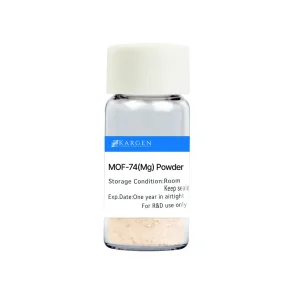
| MOF-74(Mg) | Mg / DOBDC | 1,200 - 1,600 m²/g | Flue Gas / Industrial Air Recirculation | 90°C - 120°C | Moderate (Moisture Sensitive) |
Featured Heat Air Unit Core & Sorbent Products (Part 2)
Explore our second selection of high-performance frameworks and customized solutions engineered for industrial suppliers.
Frequently Asked Questions: Heat Air Unit & Sorbent Procurement
Comprehensive engineering and procurement answers for system integrators, HVAC OEMs, and factory facility managers.
How do MOF-coated Heat Air Units compare to traditional silica gel desiccant wheels?
MOF-coated Heat Air Units deliver vastly superior performance compared to standard silica gel or activated alumina wheels. First, MOFs (such as Al-FUM and MOF-808) feature a tailored pore architecture that exhibits a steep S-shaped water vapor uptake curve. This allows them to adsorb up to 300% more water vapor by weight at moderate relative humidity (30–60% RH).
Second, silica gel requires high regeneration temperatures between 120°C and 140°C, demanding electric heating or high-pressure steam. MOFs desorb water efficiently at 50°C to 70°C, making them directly compatible with low-grade hot water outputs from solar collectors, chiller condenser heat recovery, or hot industrial exhaust streams.
What is the typical operational lifespan of MOF sorbents inside industrial Heat Air Units?
Under standard operating conditions with appropriate air filtration (MERV 13 or higher to prevent particulate fouling), industrial MOF sorbents maintain over 90% of their initial adsorption capacity after 10,000 continuous thermal regeneration cycles. This equates to an effective service life of 7 to 10 years in continuous commercial HVAC operation before media replenishment or re-coating is required.
What OEM customization options are available for Heat Air Unit manufacturers?
We provide comprehensive original equipment manufacturer (OEM) and design (ODM) capabilities. Customization parameters include:
- Material Form: Available as fine dry powders (1–5 µm average particle size), pre-dispersed binder-inclusive liquid suspensions for dip-coating, or pre-coated structured metallic fin matrices.
- Substrate Compatibility: Engineered adhesion for direct coating onto aluminum, copper, stainless steel, or ceramic honeycomb wheel structures.
- Custom Isotherm Tuning: Adjusting organic linker functional groups (e.g., NH₂-functionalization) to match specific dewpoint targets or ambient gas conditions.
How do you ensure batch quality and prevent structural degradation during ocean shipping?
All bulk MOF materials and coated core modules undergo rigorous digital quality assurance prior to dispatch. Dry powders are hermetically sealed under inert argon gas in multi-layer aluminum-foil vapor barrier bags placed inside heavy-duty HDPE drums. Coated heat exchanger cores are vacuum-sealed with desiccant packs and crated in IPPC-certified wooden cases to resist ocean transport humidity and vibration.
What is the minimum order quantity (MOQ) and sample evaluation protocol?
To support R&D screening and prototype validation, we provide 1 g to 5 g evaluation sample lots free of charge for qualified corporate buyers and research institutions (shipping freight collected). For pilot line validation, powder MOQs start at 1 kg. Commercial production scale runs start at 50 kg or 10 complete pre-coated Heat Air Unit core modules.