
Engineered Metal Oxide & Porous Framework Powders (Part I)
High-surface-area metal-organic coordination powders engineered for precision gas separation, carbon capture, heterogeneous catalysis, and energy storage.



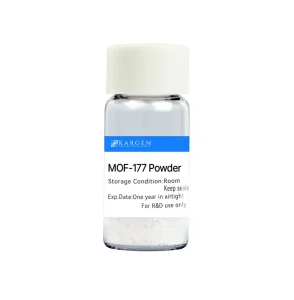


Executive Technical Overview: Metal Oxide Particles & Hybrid Frameworks
Understanding the transition from classic metal oxide nanoparticles to highly structured metal oxide clusters, secondary building units (SBUs), and porous metal-organic frameworks (MOFs).
In modern industrial chemical processing, energy storage, and environmental remediation, metal oxide particles represent a cornerstone material class. Ranging from titanium dioxide ($\text{TiO}_2$), zinc oxide ($\text{ZnO}$), iron oxides ($\text{Fe}_3\text{O}_4$, $\text{Fe}_2\text{O}_3$), alumina ($\text{Al}_2\text{O}_3$), to complex mixed-metal oxides, these inorganic compounds deliver irreplaceable electronic, catalytic, magnetic, and mechanical characteristics. However, as advanced industrial applications push toward higher selective adsorption, ultra-low pressure drops, and tailored chemical specificity, the industry is undergoing a paradigm shift: bridging solid metal oxide nanoparticles with crystalline, ultra-porous Metal-Organic Frameworks (MOFs).
Traditional metal oxide particles possess dense atomic lattices where surface functionality is limited strictly to external particle boundaries. By contrast, engineered metal-oxide cluster frameworks—such as zinc imidazolate frameworks (ZIF-8), copper-based frameworks (HKUST-1), and aluminum carboxylates (MIL-53, Al-FUM)—organize transition metal oxide nodes into three-dimensional crystalline architectures with internal BET surface areas exceeding $1,000\text{ to }4,000\text{ m}^2/\text{g}$.
Morphological Classification of Industrial Metal Oxide Particles
When selecting a metal oxide particles supplier, engineering teams must evaluate three structural categories depending on process temperature, pressure, chemical environment, and dispersion requirements:
- Dense Metal Oxide Nanoparticles: Spherical or faceted grains (5–100 nm) prepared via sol-gel, flame pyrolysis, or hydrothermal precipitation. Ideal for mechanical polishing (CMP slurries), UV attenuation, and rigid catalyst supports.
- Hierarchical Core-Shell Particles: Metal oxide cores encapsulating magnetic or metallic centers, coated with protective silica or active titania shells for targeted catalysis and wastewater purification.
- Metal Oxide Secondary Building Units (Porous MOF Matrices): Discrete metal-oxygen polyhedra ($\text{Zn}_4\text{O}$, $\text{AlO}_6$, $\text{Fe}_3\text{O}$) cross-linked by organic linkers. This configuration yields uniform micro- and mesopores, enabling molecular sieving of gases ($\text{CO}_2$, $\text{CH}_4$, $\text{H}_2$, $\text{VOCs}$).
Global Enterprise Sourcing Demands & Procurement Benchmarks
Key technical criteria, verification protocols, and risk-mitigation strategies required when qualifying high-volume metal oxide and MOF particle vendors.
Purity & Phase Uniformity
Verification via X-Ray Diffraction (XRD) to ensure complete crystalline phase control (e.g., pure rutile/anatase ratios or single-phase ZIF-8 lattice without unreacted zinc oxides).
Particle Size Distribution
Monodisperse Particle Size Distribution (PSD) verified by Dynamic Light Scattering (DLS) and SEM/TEM, preventing nozzle clogging in coating processes and ensuring stable dispersion viscosity.
Scalable Yield Stability
Transition from laboratory grams to multi-ton contract supply without drift in pore volume, BET surface area, or thermal stability ($T_g > 350^\circ\text{C}$).
Regulatory Compliance
Full documentation compliance including REACH registration, RoHS certifications, SDS sheets, and comprehensive Certificate of Analysis (CoA) per batch shipment.
Procurement Matrix: Material Selection Guide
| Particle Grade | Primary Metal Node | BET Surface Area | Thermal Stability | Primary Industrial Application |
|---|---|---|---|---|
| MOF-74 (Mg) | Magnesium Oxide ($\text{MgO}_x$) | $1,500 - 1,800 \text{ m}^2/\text{g}$ | Up to $400^\circ\text{C}$ | Flue Gas $\text{CO}_2$ Capture & High-Capacity Gas Adsorption |
| MIL-53 (Al) | Aluminum Oxide ($\text{AlO}_6$) | $1,100 - 1,500 \text{ m}^2/\text{g}$ | Up to $500^\circ\text{C}$ | Breathing Framework Gas Sensing & Hydrocarbon Separation |
| NH2-MIL-101 (Fe) | Iron Oxide ($\text{FeO}_x$) | $2,200 - 3,000 \text{ m}^2/\text{g}$ | Up to $300^\circ\text{C}$ | Photocatalysis, Wastewater Decontamination & Sensing |
| ZIF-8 (Zn) | Zinc Oxide ($\text{ZnO}_4$) | $1,300 - 1,700 \text{ m}^2/\text{g}$ | Up to $420^\circ\text{C}$ | Battery Separator Coating, Hydrophobic Gas Sieving |
| HKUST-1 (Cu) | Copper Oxide ($\text{CuO}_x$) | $1,500 - 2,100 \text{ m}^2/\text{g}$ | Up to $250^\circ\text{C}$ | Open Metal Site Gas Storage ($\text{CH}_4, \text{H}_2$) & Separation |
Industrial Solutions Driven by Engineered Metal Oxide Particles
From clean energy transition to semiconductor manufacturing, explore how nanostructure metal oxide clusters solve critical process bottlenecks.
Lithium-Ion Battery Separators & Electrolytes
Coating sub-micron metal oxide particles (e.g., ZIF-8 or alumina nanoparticles) onto polyolefin separators drastically improves thermal stability, suppressing dendritic growth and electrolyte wetting resistance. Furthermore, metal oxide frameworks function as ion-selective conduits in solid-state electrolytes, doubling thermal runaway safety margins.
Carbon Capture & Direct Air Capture (DAC)
Magnesium and zinc oxide derived frameworks (such as MOF-74 and ZIF variants) feature dense open metal coordination sites with ultra-high affinity for $\text{CO}_2$. Replacing aqueous amine solvents with solid porous oxide sorbents reduces parasitic energy consumption during thermal regeneration by up to 40%.
Atmospheric Water Harvesting & HVAC Dehumidification
Aluminum oxide carboxylate frameworks (e.g., Al-FUM, MOF-801) demonstrate S-shaped water sorption isotherms. They harvest pure atmospheric water in low-humidity desert regions ($<20\%\text{ RH}$) utilizing low-grade waste heat ($<75^\circ\text{C}$) for desiccant wheel regeneration, drastically lowering HVAC chiller power loads.
Technical Roadmap: Next-Gen Metal Oxide Synthesis (2025–2035)
Analyzing key technological shifts from energy-intensive hydrothermal autoclaves to green mechanochemical shear and continuous flow synthesis.
Solvent-Free Twin-Screw Extrusion
Eliminating toxic organic solvents (DMF, DEF) by leveraging high-shear mechanochemical forces. This pathway cuts raw material unit costs by 60% while increasing spacetime yields ($STY > 2,000 \text{ kg/m}^3\cdot\text{day}$).
Sub-Second Nucleation & Microfluidics
Continuous flow synthesis delivers ultra-narrow particle size distribution ($\pm 2\text{ nm}$ variance). Enables precisely controlled metal-oxide core-shell structures tailored for semiconductor CMP slurries.
Atom-Precise Lewis Acid Modulation
Intentionally creating missing-linker or missing-node crystal defects to expose coordinatively unsaturated metal sites (CUS), boosting turnover frequency (TOF) in heterogeneous catalytic systems.
Global Commercial Industrial Status & Supply Chain Integration
Bridging lab innovation and enterprise volume: How Guangdong Advanced Carbon Materials Co., Ltd. (KARGEN) sets the global benchmark.
The global marketplace for advanced metal oxide particles and metal-organic frameworks is rapidly consolidating around tier-1 chemical producers capable of maintaining strict batch fidelity. Founded by returning scholars from the United States, Germany, and Sweden, Guangdong Advanced Carbon Materials Co., Ltd. (KARGEN) was the first enterprise in China to achieve industrial ton-scale mass production of MOF powders.
Operating a state-of-the-art 10,000 m² R&D and manufacturing base in Zhuhai, China, KARGEN houses an 1,800 m² advanced material research facility and a 1,000 m² pilot engineering scale-up station. With a scientific staff where over 80% hold Master's or Ph.D. degrees, KARGEN provides global buyers with standard off-the-shelf grades and customized synthesis (OEM/ODM) across tailored particle dimensions, pore volumes, and customized liquid dispersion media.
70+ Research Collaborations
In-depth joint developments with elite academic institutions and multinational industrial conglomerates.
20+ Granted Patents
Proprietary intellectual property spanning low-cost metal oxide precursors, continuous mechanochemistry, and structural activation.
1 Business-Day Response
Dedicated international technical sales desk ensuring rapid CoA delivery, technical support, and rapid sample dispatch.
Localization Support, Quality Protocols & International Logistics
Ensuring frictionless procurement for buyers across North America, Europe, East Asia, and the Middle East.
Standardized Quality Assurance (QA/QC)
Every industrial lot undergoes mandatory characterization before leaving our Zhuhai facility: N2 physisorption (BET), Powder XRD phase verification, Thermogravimetric Analysis (TGA), ICP-OES trace metal impurity analysis, and Laser Diffraction PSD testing.
Global Logistics & Secure Packaging
Powders are packaged in moisture-proof aluminum foil vacuum bags, inert gas-purged fiber drums, or custom bulk containers. Full compliance with international air/sea freight hazardous and non-hazardous shipping regulations.
1–5 g Free R&D Evaluation Program
To support corporate procurement screening, KARGEN provides 1–5 gram evaluation samples to qualified B2B research teams, allowing direct laboratory benchmarking prior to commercial pilot commitments.
Frequently Asked Questions (FAQ) for Procurement Teams
Engineering and commercial clarification on metal oxide particles and framework material procurement.
Engineered Metal Oxide & Porous Framework Powders (Part II)
Explore specialized aluminum, iron, cobalt, and copper organic frameworks optimized for industrial environmental systems and energy storage.







Partner with China's Premier Industrial MOF & Metal Oxide Manufacturer
Connect with our Ph.D. technical engineering desk to request product spec sheets, arrange 1–5g laboratory evaluation lots, or discuss custom OEM scale-up timelines.