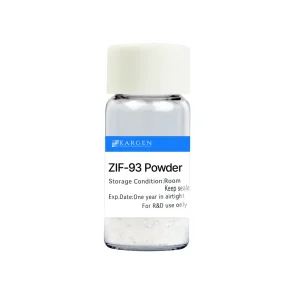
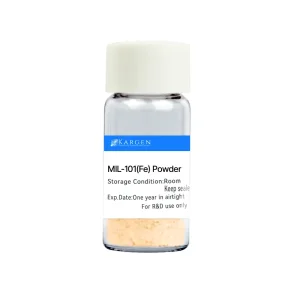
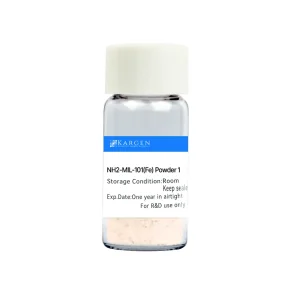
Featured Nanomaterial Powders & MOF Matrix Solutions
Explore our flagship, factory-direct metal-organic frameworks validated for high gas adsorption capacity, catalytic efficiency, and atmospheric water harvesting applications.






The Global Nanotechnology & Nanomaterials Landscape
An authoritative evaluation of commercial scale-up, market dynamics, and material evolution driving next-generation industrial manufacturing.
Market Scale & Growth Trajectory
The global advanced nanomaterials market is transitioning from laboratory-scale validation to high-volume commercial implementation. Projected to surpass $25 Billion by 2030, demand is spearheaded by ultra-porous architectures including Metal-Organic Frameworks (MOFs), Zero-Dimensional Quantum Dots, and Functionalized Carbon Nano-Allotropes. Key adoption vectors center around energy transition storage, semiconductor chemical mechanical planarization (CMP), and environmental remediation.
The Industrialization Bottleneck
Historically, commercial deployment of advanced nanomaterials was restricted by high precursor costs, solvent-intensive solvothermal synthesis methods, and poor batch-to-batch reproducibility. Leading exporters now utilize continuous-flow microfluidic reactors and solvent-free mechanochemical synthesis. This shifts production capacity to true ton-scale manufacturing, dropping cost-per-kilogram barriers by up to 70% over the past five years.
Regulatory & ESG Imperatives
Global regulatory frameworks such as EU REACH, TSCA, and stringent Scope 1-3 emission directives necessitate verifiable green manufacturing routes. Tier-1 global exporters are adopting life-cycle assessment (LCA) methodologies, substituting toxic organic linkers (e.g., DMF) with bio-based alternatives (fumaric acid, amino acids) and replacing heavy metals with biocompatible iron (Fe), aluminum (Al), and magnesium (Mg) nodes.
Unlike traditional activated carbon or zeolites, MOF nanomaterials exhibit customizable pore apertures ranging from 0.3 nm to over 9.8 nm. By altering the organic linkers while retaining the metallic cluster geometry (Isoreticular Principle), engineers can precisely tune affinity metrics for target molecules such as CO₂, H₂O vapor, or Ethylene/Ethane gas mixtures.
Nanomaterial Structural Metrics & Technical Roadmap
Rigorous quantitative comparison of industrial-grade MOFs, detailing surface areas, pore architectures, thermal thresholds, and target applications.
| Framework Classification | Metal Center Node | BET Surface Area (m²/g) | Pore Volume (cm³/g) | Thermal Stability (°C) | Primary Industrial Use-Case |
|---|---|---|---|---|---|
| ZIF-8 (Zeolitic Imidazolate) | Zn (Zinc) | 1,600 - 1,900 | 0.66 - 0.75 | up to 500 °C | CO₂ Capture, Li-Battery Coatings, Catalyst Support |
| MIL-100(Fe) / MIL-101(Fe) | Fe (Iron) | 1,800 - 3,400 | 0.90 - 1.40 | up to 350 °C | Wastewater Decontamination, Fenton Catalysis, Drug Delivery |
| MIL-53(Al) | Al (Aluminum) | 1,100 - 1,500 | 0.55 - 0.68 | up to 450 °C | Breathing Framework VOC Adsorption, Gas Separation |
| MOF-303 | Al (Aluminum) | 1,300 - 1,550 | 0.54 - 0.62 | up to 400 °C | Atmospheric Water Harvesting (Arid Humidity Environments) |
| UiO-66 (Zr-based) | Zr (Zirconium) | 1,100 - 1,400 | 0.45 - 0.55 | up to 500 °C | Acid-Resistant Gas Purification & Toxic Agent Degradation |
| HKUST-1 (Cu-BTC) | Cu (Copper) | 1,500 - 2,100 | 0.70 - 0.85 | up to 250 °C | High-Density Methane Storage & Specialty Gas Separation |
Four-Phase Scaled Technology Integration Roadmap
Computational Screening
Grand Canonical Monte Carlo (GCMC) simulation and DFT modeling to screen millions of framework combinations for specific selectivity.
Mechanochemical Scale-Up
Solvent-free extrusion milling eliminating toxic liquid waste, scaling single-batch outputs to multiton monthly capacities.
Formulation Engineering
Processing raw powders into pellets, beads, monoliths, and slurries without degrading underlying intrinsic surface area or microporosity.
Industrial Deployment
System integration into desiccant wheels, fixed-bed reactors, solid-state battery separators, and point-of-use gas purifiers.
Macro Industrial Solutions Powered by Nanotechnology
Translating nano-scale properties into macro-scale enterprise value across clean energy, environmental engineering, and advanced manufacturing sectors.
1. Direct Air Capture (DAC) & Post-Combustion CO₂ Capture
Conventional amine-scrubbing systems require substantial thermal energy ($3.5 - 4.5 \text{ GJ/ton } \text{CO}_2$) for desorption regeneration. Advanced MOFs (such as modified ZIF-8 and amine-functionalized MIL-101) utilize vacuum swing adsorption (VSA) or low-grade waste-heat thermal swing adsorption (TSA, $<80^\circ\text{C}$). This reduces regeneration parasitic load by up to 40% while exhibiting exceptional selective adsorption over N₂, H₂O, and O₂ in real-world flue gas streams.
2. Next-Gen Lithium Battery Separators & Solid Electrolytes
Transition-metal dissolution and lithium dendrite growth cause catastrophic thermal runaway in energy storage systems. Nanometer-thin ZIF-8 coatings on polyethylene (PE) separators regulate Li-ion flux through uniform 0.34 nm apertures. This effectively suppresses dendrite formation while capturing dissolved Mn²⁺/Fe²⁺ ions from high-voltage cathodes, dramatically extending cycle life by over 1500 cycles at 4C fast-charging conditions.
3. Off-Grid Atmospheric Water Harvesting (AWH)
In hyper-arid regions (Relative Humidity <20%), silica gels and zeolites fail to adsorb water vapor effectively. MOF-303 and Al-FUM exhibit steep sigmoidal water sorption isotherms with inflection points under 15% RH. This allows passive solar-driven water extraction producing over 3.5 Liters per Kilogram of MOF daily using standard solar thermal heating, fulfilling clean drinking water needs in desert environments without electricity.
4. Ultra-Pure Semiconductor Specialty Gas Purification
Sub-nanometer node semiconductor fabrication demands electronic-grade specialty gases (Silane, Arsine, Phosphine, Nitrogen) with impurity thresholds under 1 part-per-billion (ppb). Open-metal site copper frameworks (HKUST-1) selectively remove trace moisture, oxygen, and carbon monoxide impurities from process gas streams, ensuring non-wafer contamination and optimizing yield performance.
Uncompromising Quality & E-E-A-T Compliance
Led by returning overseas PhD scholars from Germany, Sweden, and the US, bringing rigorous peer-reviewed academic excellence into large-scale manufacturing realities.
Scientist-Led R&D Team
Over 60% of our enterprise personnel are dedicated R&D staff, with 80%+ holding Master’s or Doctoral degrees in Chemical Engineering and Materials Science.
20+ Granted Patents
Full independent intellectual property coverage across green synthesis routes, post-synthetic modification, continuous pelletization, and OEM system integration.
Digital Batch Validation
Every commercial lot undergoes rigorous PXRD (Powder X-ray Diffraction), TGA (Thermal Gravimetric Analysis), and N₂ Sorption BET characterization prior to export dispatch.
Global Export Logistics
Fully compliant UN-certified dangerous goods packaging (if required), inert atmosphere vacuum seals, and expedited SDS/COA documentation support for 50+ countries.
Frequently Asked Questions (FAQ)
Direct technical answers for procurement managers, chemical engineers, and industrial researchers evaluating nanomaterial suppliers.
What is the typical lead time and minimum order quantity (MOQ) for industrial MOF powders?
How do MOFs compare with traditional activated carbons and zeolites in cost-benefit ratios?
Can your engineering team custom-synthesize specialized MOFs under non-disclosure agreements (NDA)?
What binder systems or structured forms are available to prevent powder dusting in packed beds?
How do you guarantee moisture and structural stability during overseas transit?
High-Performance Custom & Specialized MOFs
Factory-direct specialized metal-organic framework grades for advanced catalytic, separation, and gas storage industrial applications.