
High-Quality ZIF-93 Powder Metal Organic Frameworks (MOFs) Supplier, Exporters

ZIF-93, a type of zeolitic imidazolate framework, has garnered attention for its diverse applications, particularly in environmental and biosensing fields. Its unique structural properties enable effective gas adsorption and separation, making it a promising candidate for carbon dioxide capture and hydrogen separation. 

Product Description

Product Name
ZIF-93
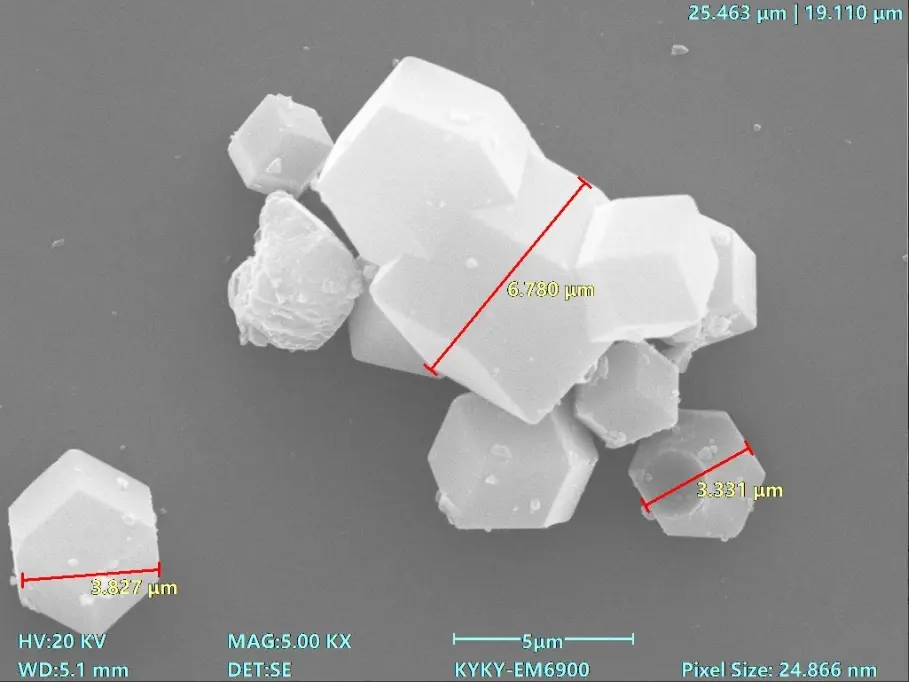
Particle Size
3-6 µm
Specific Surface Area
≥1121 ㎡/g
Pore Size
1.57 nm

ZIF-93 has been synthesized using a water-based method, demonstrating high purity and efficiency in CO2 adsorption from binary mixtures (Ramos-Fernandez et al., 2018). Its porous structure allows for selective gas adsorption, which is crucial for mitigating greenhouse gas emissions.

Hybrid nanoparticles of ZIF-93 have been developed to enhance thermal stability and hydrophobicity, improving its performance in mixed matrix membranes for H2/CO2 separation (Sánchez-Laínez et al., 2018). The membranes achieved a H2/CO2 selectivity of 7.7, surpassing established benchmarks, indicating ZIF-93's potential in energy applications.

ZIF-93 can be integrated with bioactive molecules to create advanced biosensors, leveraging its surface properties for the immobilization of biomolecules (Mousavi et al., 2024) (Feng et al., 2023). While ZIF-93 shows great promise in these applications, challenges remain in scaling production and optimizing its properties for specific uses. Further research is essential to fully realize its potential across various industries.

KAR-F53 ZIF-93
Frequently Asked Questions
1. What synthesis method is used for ZIF-93?
ZIF-93 is synthesized using an eco-friendly water-based method, which delivers high purity and exceptional efficiency for gas adsorption applications.
2. What are the key physical properties of ZIF-93?
ZIF-93 exhibits a particle size of 3-6 µm, a high specific surface area of ≥1121 ㎡/g, and a uniform pore size of 1.57 nm.
3. How is ZIF-93 utilized in gas separation technology?
ZIF-93 hybrid nanoparticles enhance thermal stability and hydrophobicity in mixed matrix membranes, achieving a high H₂/CO₂ selectivity benchmark of 7.7.
4. Can ZIF-93 be applied in biological applications?
Yes, ZIF-93 can be combined with bioactive molecules for biomolecule immobilization, making it a viable candidate for advanced biosensors.
5. What are the main challenges in commercializing ZIF-93?
Key challenges include scaling up industrial production and fine-tuning its material properties for specialized targeted applications.

Related Products








