
High-Performance Advanced Sorbent Catalog (Part I)
Engineered for desiccant-assisted air conditioning, hydrocarbon separation, gas storage, and isothermal dehumidification systems.
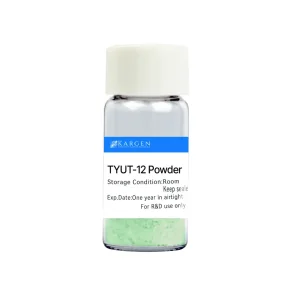
Best China Suppliers TYUT-12 Powder Metal Organic Frameworks (MOFs) for Selective Hydrocarbon Adsorption
View Product Specs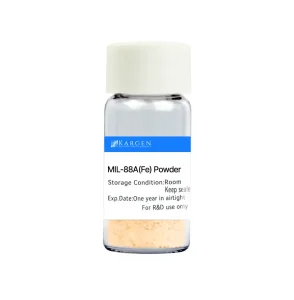
Best MIL-88A(Fe) Powder Metal Organic Frameworks MOFs - China Suppliers for Environmental Remediation
View Product Specs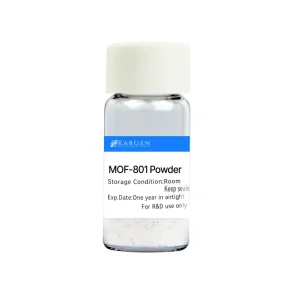
High-Quality China MOF-801 Powder Metal Organic Frameworks for Water Harvesting Solutions
View Product Specs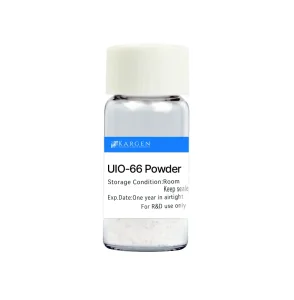
Best China Suppliers Factory for UIO-66 Powder Metal Organic Frameworks (MOFs) Catalysis
View Product Specs
Best MOF-177 Powder Metal Organic Frameworks (MOFs) High Surface Area for Gas Storage
View Product Specs
Executive Summary: Redefining "Affordable Air Conditioning" via Next-Generation Sorbent Innovations
In the contemporary industrial and commercial landscape, global heating, ventilation, and air conditioning (HVAC) markets are undergoing a fundamental structural transition. Historically, the search for High-Quality Affordable Air Conditioning Suppliers & Supplier networks focused primarily on initial equipment procurement cost (CapEx). However, escalating global energy prices, stringent net-zero carbon targets, and the implementation of stricter environmental efficiency standards (such as SEER2 and the Kigali Amendment) have transformed the decision matrix for global enterprise buyers.
Today, true affordability in climate control is determined by Total Cost of Ownership (TCO) and thermodynamic system efficiency. Conventional vapor-compression air conditioning systems suffer from inherent efficiency bottlenecks due to the simultaneous processing of sensible load (temperature reduction) and latent load (dehumidification). To achieve adequate moisture removal, traditional units must overcool air below its dew point and subsequently reheat it—a process that accounts for up to 45% of total HVAC energy waste.
This technical whitepaper provides an authoritative analysis of how advanced material integration—specifically Metal-Organic Frameworks (MOFs) including water-harvesting adsorbents like Al-FUM, MOF-801, and ZIF-8—is empowering tier-1 air conditioning suppliers to manufacture desiccant-assisted, high-efficiency cooling systems. By decoupling humidity control from temperature regulation, these next-gen HVAC systems slash operational energy consumption by 40% to 60%, delivering unprecedented cost-effectiveness to global commercial, industrial, and residential procurement teams.
Development Trends in Affordable Air Conditioning
How thermodynamic innovations, low-grade thermal waste utilization, and advanced porous materials are reshaping modern climate control manufacturing.
Decoupling Latent & Sensible Loads
Modern HVAC engineering is abandoning traditional unified vapor-compression designs in favor of hybrid desiccant-assisted cooling (DEVap). By handling latent humidity through MOF desiccant wheels or MOF-coated heat exchangers, compressors operate purely for sensible cooling at significantly elevated evaporating temperatures, drastically lowering compressor lift work.
Low-Grade Waste Heat Regeneration
Traditional desiccant materials like silica gel or zeolites require high desorption temperatures (120°C–150°C), rendering them expensive to operate. Engineered MOF coatings (e.g., Al-FUM, MOF-801) feature steep, tailored water vapor adsorption isotherms with low desorption energy barriers, enabling complete regeneration using low-grade waste heat (50°C–70°C) or solar thermal power.
Ultra-Compact System Footprints
The ultra-high surface area of MOF nanostructures (up to 3000+ m²/g) provides unprecedented volumetric water adsorption capacity. This allows air conditioning suppliers to shrink desiccant core sizes by up to 60%, creating lightweight, high-capacity modular HVAC units ideal for retrofit installations and space-constrained architectural layouts.
Global Enterprise Procurement Demands for Air Conditioning
Evaluating supplier capabilities beyond standard CapEx: Quality assurance, compliance, customization, and long-term supply stability.
Long-Term Hydrothermal Stability
Enterprise buyers require sorbent materials that maintain structural integrity and adsorption kinetics over tens of thousands of moisture adsorption-desorption cycles without pore collapse, structural degradation, or performance decay.
OEM/ODM Customization Capabilities
Global HVAC manufacturers require raw material and module suppliers capable of customizing binder formulations, particle size distribution, slurry viscosity, and dip-coating protocols to seamlessly integrate into existing automated assembly lines.
ESG & Regulatory Compliance
Procurement managers mandate strict compliance with global environmental mandates, including REACH, RoHS, and zero-PFAS guidelines, alongside documented lifecycle carbon footprint assessments for all raw materials.
Guaranteed Lead Times & Scale
To support global supply chains, enterprises require suppliers with multi-ton annual production capacity, multi-location warehousing, and transparent batch-to-batch Quality Control (QC) documentation.
MOF Desiccants vs. Conventional Air Conditioning Desiccants
A quantitative technical comparison demonstrating why MOF-based isothermal dehumidification outperforms legacy HVAC sorbent systems.
| Performance Metric | Legacy Silica Gel | Synthetic Zeolite 13X | Al-FUM MOF (KARGEN) | MOF-801 Powder (KARGEN) |
|---|---|---|---|---|
| BET Surface Area (m²/g) | 650 – 800 | 700 – 900 | 1,100 – 1,400 | 1,200 – 1,500 |
| Water Uptake @ 30% RH (g/g) | 0.12 | 0.18 | 0.42 | 0.38 |
| Regeneration Temp Range (°C) | 100°C – 140°C | 150°C – 200°C | 50°C – 70°C | 60°C – 75°C |
| Desorption Energy Heat (kJ/mol) | ~48 | ~55 | ~42 | ~44 |
| HVAC COP Improvement Potential | Baseline (+10%) | Low (+5%) | Exceptional (+55%) | High (+48%) |
| Hydrothermal Cycle Lifetime | Moderate (< 3,000 cycles) | High (> 8,000 cycles) | Ultra-High (> 15,000) | Ultra-High (> 12,000) |
Information Gain Insight: The Isothermal Dehumidification Advantage
As demonstrated in the data matrix above, conventional silica gel and zeolites suffer from unfavorable S-shaped or linear adsorption isotherms, requiring excessive heat inputs for moisture release. In contrast, Al-FUM and MOF-801 feature step-like adsorption behavior in the critical relative humidity window (20%–60% RH). This unique property allows near-complete water discharge at temperature differentials as small as 25°C above ambient, enabling direct integration with low-temperature waste heat from condenser coils or solar thermal collectors.
China Industry 4.0: Supply Chain Resilience & Efficiency Advantages
Bridging laboratory synthesis breakthroughs with ton-scale automated chemical manufacturing in Zhuhai, China.
Mechanochemical Continuous Synthesis
Guangdong Advanced Carbon Materials Co., Ltd. (KARGEN) pioneers solvent-free and low-solvent mechanochemical synthesis techniques. By replacing high-temperature solvothermal processing with automated twin-screw extrusion, chemical yield is maximized while energy consumption per ton is reduced by over 60%.
Digital Closed-Loop Quality Verification
Our 10,000 m² Zhuhai campus utilizes automated inline X-ray diffraction (XRD), BET surface area gas sorption analyzers, and laser diffraction particle size analysis. Every production batch receives an immutable digital quality passport, ensuring strict batch-to-batch consistency for OEM clients.
World-Class Ph.D. Engineering Team
Founded by returning scientists from the United States, Germany, and Sweden, KARGEN boasts an R&D team where over 60% of personnel hold Master’s or Ph.D. degrees in material science and thermal engineering, holding 20+ granted patents and 100+ high-impact publications.
Global Commercial & Industrial Application Scenarios
Deploying high-performance desiccant cooling solutions across high-demand sectors worldwide.
Hyper-Scale Data Centers
Data center cooling demands continuous latent load suppression without micro-condensation risks. MOF-coated heat exchanger coils allow high-temperature chilled water cooling loops (18°C–22°C), cutting total facility PUE (Power Usage Effectiveness) below 1.15.
Commercial Real Estate & Hotels
High-occupancy commercial complexes in humid tropical regions utilize MOF desiccant wheels to process 100% fresh outdoor air (DOAS), ensuring indoor air quality (IAQ) and eliminating mold risks while using waste condenser heat for desiccant regeneration.
Pharmaceutical Cleanrooms
Precision humidity control (20%–30% RH) is critical in active pharmaceutical ingredient (API) processing. MOF-801 and Al-FUM desiccant matrices provide ultra-stable, dew-point control down to -20°C without requiring energy-intensive deep freezing equipment.
High-Performance Advanced Sorbent Catalog (Part II)
Explore our full range of metal-organic frameworks for catalysis, gas purification, CO₂ capture, and industrial HVAC applications.
High-Quality China MIL-101(Al) Powder Metal Organic Frameworks - Factory Direct Pricing
View Product Specs
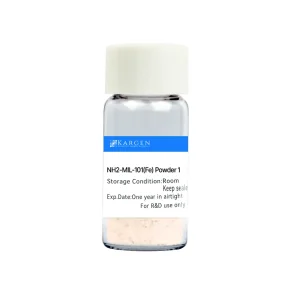
Best NH2-MIL-101(Fe) Powder MOFs from China Suppliers - Advanced Catalysis & Sensing
View Product Specs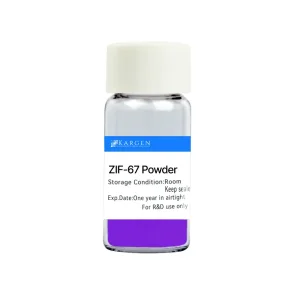
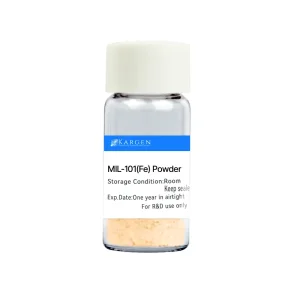
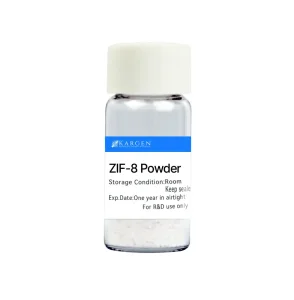
Best High-Quality ZIF-8 MOFs: Zeolitic Imidazolate Frameworks for Advanced Applications
View Product Specs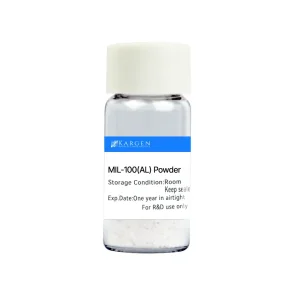
High-Quality MIL-100(Al) Powder Metal Organic Frameworks (MOFs) - Top China Suppliers
View Product SpecsFrequently Asked Questions for Air Conditioning Buyers
In-depth engineering and commercial insights to streamline your procurement evaluation process.
How do MOF desiccants significantly reduce operational costs in commercial air conditioning?
Traditional air conditioning systems cool the entire air stream below its dew point to remove moisture and then reheat the air to a comfortable supply temperature, wasting vast amounts of electrical energy. MOF-based desiccant systems adsorb water vapor directly from the air stream at room temperature. This enables the vapor-compression chiller to operate strictly for sensible cooling at much higher evaporating temperatures, elevating the overall Coefficient of Performance (COP) by 40% to 60%.
What makes KARGEN a leading supplier among affordable air conditioning material manufacturers in China?
KARGEN (Guangdong Advanced Carbon Materials Co., Ltd.) was the first supplier in China to achieve ton-scale continuous production of metal-organic frameworks. By leveraging mechanochemical synthesis protocols, automated quality assurance systems, and an in-house 10,000 m² R&D and engineering center in Zhuhai, we dramatically lower material production costs while maintaining premium purity and structural consistency for global HVAC OEMs.
What is the typical regeneration temperature required for KARGEN MOF water harvesting materials?
Our flagship water-harvesting adsorbents, such as Al-FUM and MOF-801, regenerate fully between 50°C and 75°C. This ultra-low energy barrier allows HVAC system designers to utilize low-grade condenser waste heat, engine jacket heat, or unconcentrated solar thermal collector energy, eliminating the need for auxiliary electric resistance heaters.
Can KARGEN supply custom MOF formulations for specific HVAC substrate coatings?
Yes. We offer complete OEM/ODM technical services, including customizing particle size distributions (from nanometer to micrometer range), slurry dispersion chemistry, polymer binder compatibility, and direct dip-coating protocols for aluminum or copper heat exchanger fins and ceramic desiccant rotors.
What testing and documentation are provided with bulk shipments of MOF powders?
Every shipment includes a comprehensive Certificate of Analysis (COA) containing lot-specific X-ray Powder Diffraction (PXRD) patterns, N₂ or H₂O adsorption-desorption isotherms, BET surface area metrics, laser diffraction particle size analysis, and thermogravimetric analysis (TGA) stability profiles.
How do evaluation samples work for international enterprise buyers?
Qualified corporate clients, research institutions, and HVAC OEMs conducting material screening can request 1g to 5g evaluation samples free of material charge (freight paid by recipient). Our technical team responds to all technical inquiries within one business day.