

Tier-1 Industrial Portfolio
High-Performance Metal Organic Frameworks (Batch 01)
Engineered nanostructured frameworks with high BET surface area, structural integrity, and tailored pore kinetics for global commercial procurement.





Industry Whitepaper & Technical Overview
The Commercialization Evolution of Metal-Organic Frameworks (MOFs)
Metal-Organic Frameworks (MOFs) represent a transformative class of hybrid porous crystalline materials synthesized via the self-assembly of inorganic metal ions or cluster nodes with polyfunctional organic linkers. Characterized by unprecedented specific Brunauer-Emmett-Teller (BET) surface areas (often surpassing 3,000 to 7,000 m²/g), ultra-high void fractions, and tailorable pore geometries, MOFs have transitioned rapidly from academic research projects into indispensable material solutions across decarbonization, green energy, industrial separation, and fine chemical processing.
As a global premier Metal Organic Framework Applications Supplier & Exporter, our manufacturing architecture bridges the historical bottleneck of lab-scale synthesis. By deploying eco-friendly mechanochemical synthesis, green solvent recirculation loops, and continuous hydrothermal crystallization technologies, we enable ton-scale industrial production without sacrificing crystallographic purity, thermal tolerance, or selective adsorption capacity.
Information Gain Insight: Unlike conventional porous materials like zeolites or active carbons, MOFs possess organic-inorganic structural flexibility. This enables dynamic structural breathing, precise chemical functionality tuning at the atomic level, and extremely low regeneration energy requirements—slashing process operational expenditures (OPEX) by up to 45% in industrial gas purification and moisture harvesting systems.
Global Market Dynamics & Supply Chain Acceleration
The global MOFs market is undergoing an exponential shift driven by stringent net-zero environmental mandates, ESG corporate investments, and high-tech manufacturing demands. According to current chemical market intelligence, the demand for scalable MOF structures is expanding at a Compound Annual Growth Rate (CAGR) exceeding 28.4%. Key purchasing vectors originate from three core geographic and industrial hubs:
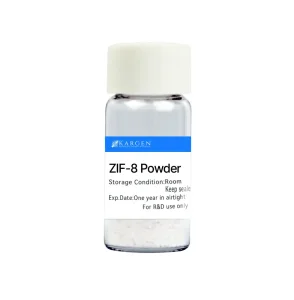
- North America & EU Carbon Initiatives: Urgent procurement of CO₂-selective adsorbents (e.g., ZIF-8, KAUST-7, MOF-303) for Direct Air Capture (DAC) and point-source flue gas decarbonization.
- Asia-Pacific Semiconductor & Electronics Infrastructure: Demand for specialty gas storage (e.g., HKUST-1, TYUT-12) offering ultra-pure gas delivery and hazardous gas abatement (phosphine, arsine, ammonia).
- Global Energy Storage & Battery Manufacturers: Mass uptake of MOF-functionalized lithium-ion battery separators and solid-state electrolyte additives for thermal stability and dendrite suppression.
Application Ecosystem
End-to-End Industrial MOF Solutions
Architected for seamless integration into existing industrial columns, rotary desiccant beds, continuous flow reactors, and specialized battery manufacturing lines.
1. Direct Air Capture & Point-Source Carbon Management
MOFs such as KAUST-7, ZIF-8, and MOF-303 provide thermodynamic and kinetic selectivity for CO₂ over N₂ and moisture. Their hydrophobic apertures maintain structural integrity under real-world flue gas conditions, drastically reducing regeneration parasitic energy loads compared to liquid amine scrubbing systems.
2. Atmospheric Water Harvesting & Low-Temp HVAC
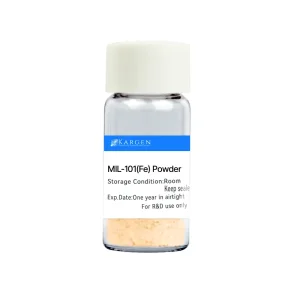
Engineered aluminum-based frameworks like Al-FUM and MIL-100(Fe) feature steep S-shaped water sorption isotherms. They capture moisture in low-humidity environments (RH < 20%) and desorb fresh potable water using low-grade waste heat (< 70°C), empowering energy-efficient climate control and off-grid water production.
3. Hydrocarbon & Olefin/Paraffin Molecular Sieving
Separating ethylene/ethane and propylene/propane demands precise spatial control at the sub-nanometer level. Materials like TYUT-12 and MIL-53(Al) leverage exact molecular aperture sizing, achieving cryogenic-free, energy-lean separation with purity outputs exceeding 99.95%.
4. Next-Gen Lithium Battery Separators & Electrolytes
Integrating nano-sized UiO-66 and ZIF-8 into polymer battery separators creates uniform lithium-ion flux channels. The porous MOF matrix traps unwanted trace moisture and transition metal ions, eliminating lithium dendrite propagation and boosting thermal run-away safety limits.
5. Semiconductor Specialty Gas Storage & Delivery
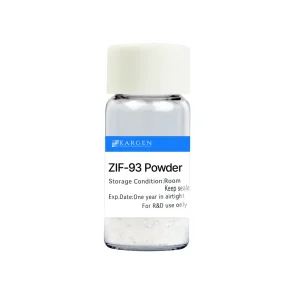
Open metal center frameworks like HKUST-1 and ZIF-93 permit safe, sub-atmospheric gas adsorption for hazardous toxic gases (SiH₄, PH₃, BF₃). This reduces operating storage pressure while maximizing volumetric delivery efficiency in high-precision wafer fabrication fabs.
6. Fine Chemical Catalysis & Wastewater Treatment
Biocompatible, non-toxic frameworks including MIL-101(Fe) and MIL-100(Cr) demonstrate exceptional heterogeneous catalytic activity for advanced oxidation processes (AOPs), photo-catalytic dye degradation, and targeted active pharmaceutical ingredient (API) encapsulation.
Engineering Benchmarks
Technical Specification & Material Selection Matrix
Comprehensive comparative material data for engineering procurement officers, industrial chemists, and project managers.
| MOF Grade Structure | Metal Center Node | BET Surface Area (m²/g) | Pore Window Size (Å) | Thermal Stability (°C) | Primary Industrial Intent |
|---|---|---|---|---|---|
| ZIF-8 | Zinc (Zn²⁺) | 1,600 - 1,900 | 3.4 | > 420°C | CO₂ Capture & Separators |
| HKUST-1 (Cu-BTC) | Copper (Cu²⁺) | 1,800 - 2,100 | 9.0 x 9.0 | > 250°C | Gas Storage & Purifiers |
| UiO-66 | Zirconium (Zr⁴⁺) | 1,100 - 1,400 | 6.0 | > 500°C | Acid Catalysis & Batteries |
| MIL-100(Fe) | Iron (Fe³⁺) | 1,900 - 2,400 | 25.0 / 29.0 | > 300°C | Biomedical & Water Harvesting |
| KAUST-7 (NbOFFIVE-1-Ni) | Nickel / Niobium | 500 - 750 | 3.2 | > 280°C | Trace CO₂ & Ethylene Purify |
| MIL-53(Al) | Aluminum (Al³⁺) | 1,100 - 1,500 | 8.5 (Breathing) | > 500°C | VOC Capture & Hydrocarbons |
| MOF-303 | Aluminum (Al³⁺) | 1,300 - 1,500 | 6.0 | > 400°C | Low-Humidity Water Harvesting |
Global Supply Chain & Rigorous Quality Assurance
Ton-Scale Manufacturing Protocol & Quality Validation
Purchasing advanced nanomaterials on an industrial scale requires absolute batch-to-batch reproducibility, crystal phase stability, and transparent verification. As an established global exporter, our state-of-the-art facility maintains strict ISO 9001:2015, ISO 14001:2015, and ISO 45001 quality management frameworks.
PXRD Phase Verification
Every production batch undergoes Powder X-Ray Diffraction (PXRD) analysis to ensure 100% phase purity and structural crystallinity identical to reference patterns.
N₂ Isotherm BET Profiling
Volumetric gas sorption analysis validates pore volume distribution and surface area thresholds prior to vacuum packaging and export dispatch.
TGA Thermal Profiling
Thermogravimetric Analysis (TGA) confirms solvent evacuation efficiency, structural collapse temperature, and operational thermal windows.
Global Logistics, Localization Support & International Regulatory Compliance
Exporting high-value chemical frameworks across international boundaries demands compliance with global regulatory regimes. We provide comprehensive legal documentation packages to ensure uninterrupted customs clearance:
- EU REACH Registration: Complete technical dossier compliance for seamless importation into the European Economic Area.
- US TSCA & OSHA GHS Compliance: Full Safety Data Sheets (SDS) formatted in 28 languages with standard GHS classification.
- Custom Pelletization & Extrusion: In addition to micron-sized powders, we offer industrial-grade engineered extrudates, monoliths, and spherical beads tailored for low-pressure-drop packed bed reactors.
Next-Gen Materials Roadmap
Pioneering the Next Decade of MOF Innovation
Unlocking multivariate frameworks, machine-learning assisted synthesis, and continuous-flow manufacturing.
10,000+
m² Production Base Capacity
40+
Standard MOF Commercial Products
70+
Global R&D University Partners
< 24h
Global B2B Engineering Response
Strategic Roadmap Highlights (2025–2035):
Our R&D pipeline focuses on Multivariate MOFs (MTV-MOFs) containing multiple functionalized linkers within a single lattice, enabling multi-stage catalytic cascade reactions. Simultaneously, we are scaling Green Mechanochemical Solvent-Free Continuous Extrusions to reduce chemical synthesis energy footprints by 60%, delivering net-zero materials for sustainable enterprise supply chains.
Technical & Commercial Inquiries
Frequently Asked Questions
In-depth answers addressing procurement, handling, custom synthesis, and industrial scaling.
While initial capital expenditure for MOFs can be higher than commodity activated carbon, their exceptionally high working capacity, superior thermodynamic selectivity, and significantly lower thermal regeneration temperature (<80°C vs >200°C for zeolites) result in lower total cost of ownership (TCO) and rapid OPEX payback within 12 to 18 months of process operation.
Yes. We provide comprehensive OEM/ODM custom development. We offer dry micronized powders, custom liquid suspensions/dispersions (water, ethanol, NMP, or organic solvents), as well as structured granules, extrudates (1.5mm–3mm pellets), and monolith coatings designed specifically for industrial fixed-bed reactors.
All moisture-sensitive MOF orders (such as HKUST-1 or ZIF-8) are heat-sealed under inert dry nitrogen purging inside multi-layer aluminum-foil vapor barrier bags, encased in UN-approved fiber drums or heavy-duty export boxes with silica desiccant packs to guarantee shelf life during maritime or air freight.
Yes. Qualified corporate R&D teams, engineering firms, and institutional research units can request 1g to 5g evaluation sample packs accompanied by Certificate of Analysis (CoA), PXRD patterns, and N₂ physisorption isotherms.
Standard catalog products (ZIF-8, UiO-66, HKUST-1, MIL-100) up to 50kg are kept in stock for dispatch within 3–5 business days. Commercial orders ranging from 100kg to multi-ton lots feature standard synthesis and QA lead times of 2 to 4 weeks depending on specific pelletization or binder requirements.
Specialized Formulations
Advanced Commercial MOF Derivatives & Custom Grades (Batch 02)
Targeted crystalline porous materials optimized for extreme selective adsorption, drug loading, and hydrocarbon purification.



Accelerate Your MOF Application Scale-Up Today
Consult directly with our PhD-led chemical engineering team for material recommendations, custom synthesis dossiers, bulk pricing, and 1–5g evaluation samples.
Contact Our Technical Engineering Directors