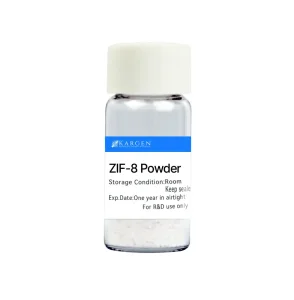
Engineered for high surface area, robust thermal stability, and tunable catalytic centers. Fully characterized via XRD, BET, and TGA.




The Macro Paradigm Shift in Heterogeneous Enantioselective Catalysis via MOFs
The global chemical manufacturing sector is undergoing an unprecedented structural transition toward decarb-driven efficiency, selectivity, and operational sustainability. Traditional heterogeneous catalysts—such as amorphous alumina-supported precious metals, bulk metal oxides, and conventional zeolites—frequently encounter thermodynamic bottlenecks. These bottlenecks include unselective side-reactions, rapid coking under severe reaction regimes, and mass-transfer limitations caused by non-uniform pore geometries.
Metal-Organic Frameworks (MOFs) have redefined the boundary of heterogeneous catalysis. As crystalline porous coordination polymers consisting of metal ions or clusters coordinated to organic linkers, MOFs offer tailored internal pore environments featuring crystallographic precision. By integrating functionalized open metal sites (OMS), photo-active linkers, and single-atom catalytic centers directly into high-surface-area frameworks (BET surface areas exceeding 1,000 to 7,000 m²/g), MOF-based catalysis achieves turnover frequencies (TOF) and selectivities that rival biological enzymes while retaining industrial thermal and mechanical durability.
Historically, industrial adoption of MOF catalysis was constrained by high precursor costs and solvent-heavy batch synthesis. Pioneer manufacturers like Guangdong Advanced Carbon Materials Co., Ltd. (KARGEN) have broken this economic barrier by perfecting low-solvent mechanochemical synthesis and continuous hydrothermal production—lowering scaled production costs by up to 60% while dramatically decreasing solvent E-factors.
Global Commercial Status & Industrial Catalysis Market Dynamics
The commercial landscape for Metal-Organic Framework catalysis suppliers is rapidly scaling from academic benchtop validation into multiton industrial supply contracts. Current industrial penetration focuses heavily on five strategic macro-sectors:
1. CO₂ Conversion & Valorization
Fixation of industrial CO₂ via catalytic cycloaddition with epoxides to produce cyclic carbonates, as well as photocatalytic/electrocatalytic reduction of CO₂ into syngas, methanol, and C2+ hydrocarbons.
2. Fine Chemicals & Pharma
Heterogenization of homogeneous Lewis acid/base catalysts (e.g., MIL-100, ZIF-8) for solvent-free esterifications, Knoevenagel condensations, and enantioselective cross-coupling pathways.
3. Petrochemical Olefin Upgrading
Selective oxidative dehydrogenation of propane to propylene, and room-temperature ethylene/ethane separation combined with in-situ catalytic dimerization.
Global supply chain requirements have shifted. Buyers no longer demand just raw laboratory powders; they require pre-engineered extrudates, monolith coatings, liquid dispersions, and guaranteed batch-to-batch chemical stability. Leading suppliers must possess full-spectrum characterization protocols and robust regulatory certification packages.
Catalytic Mechanisms & Engineered Pore Microenvironments
The performance of MOF catalysts relies on structural optimization across three primary catalytic modes:
- Intrinsic Open Metal Sites (OMS): Removal of terminal solvent molecules from nodes (e.g., Cu(II) in HKUST-1, Fe(III)/Cr(III) in MIL-100) exposes unsaturated Lewis acid centers with high turnover numbers for Friedel-Crafts alkylations and oxygenate transformations.
- Encapsulated Nanoparticles (NP@MOF): The confinement effect of microporous windows (e.g., ZIF-8’s 3.4 Å aperture) prevents sintering and agglomeration of sub-nanometer precious metal clusters (Pd, Pt, Au, Ru), boosting hydrogenation and oxidation selectivity.
- Linker Functionalization & Defect Engineering: Introducing amino (-NH₂), sulfonic acid (-SO₃H), or halogen groups onto linkers (BDC, BTC, Imidazolates) modulates localized pKa values and charge density for acid-base tandem reactions.
Technical Specification Comparison matrix for Commercial MOF Catalysts
| Framework Type | Metal Node / Linker System | BET Surface Area (m²/g) | Catalytic Active Site Type | Primary Catalytic Applications |
|---|---|---|---|---|
| ZIF-8 | Zn(II) / 2-Methylimidazole | 1,600 – 1,900 | N-basic sites / Defect Zn Lewis sites | CO₂ Fixation, Transesterification, Knoevenagel Condensation |
| ZIF-67 | Co(II) / 2-Methylimidazole | 1,500 – 1,800 | Co redox centers / OMS | Peroxymonosulfate activation, Oxidation of VOCs/Dyes |
| MIL-100 (Al/Cr/Fe) | M(III) Trimers / Trimesic Acid | 1,800 – 2,400 | High-density Lewis Acid OMS | Acetalization, Friedel-Crafts, Dehydration Reactions |
| MOF-74 (Mg/Zn/Co) | M(II) / DOBDC | 1,200 – 1,500 | Ultra-dense coordinatively unsaturated sites | C-H Activation, Hydrocarbon Isomerization, CO₂ Cycloaddition |
| HKUST-1 | Cu(II) Paddle-wheels / BTC | 1,500 – 2,000 | Cu(II) Lewis Acid Sites | Sulfide oxidation, Azide-Alkyne Click Chemistry |
Technical Roadmap & Next-Generation MOF Scale-Up Architecture
The next decade of industrial MOF catalysis will be defined by the transition from batch powders to structured continuous reactor inserts. KARGEN's technical roadmap highlights four strategic development horizons:
Phase 1: Continuous Mechanochemical Flow Synthesis
Replacing traditional solvothermal autoclaves with continuous twin-screw extruders. This zero-solvent technique produces MOF powders (ZIF-8, HKUST-1) at 100 kg/hour throughput with minimal chemical waste.
Phase 2: Monolith & Pelleted Shaping Formulations
Direct extrusion of MOF powders with inorganic binders (e.g., pseudoboehmite, silica sol) into 3mm beads and honeycomb monoliths, overcoming bed pressure-drop issues in fixed-bed reactors.
Phase 3: Single-Atom Catalysts (SACs@MOF)
Pyrolysis of precisely metal-doped MOF precursors (e.g., Fe/Co-ZIF-8) to synthesize carbon-supported single-atom catalysts for high-efficiency fuel cell oxygen reduction (ORR) and CO₂ electro-reduction.
Phase 4: Autonomous AI-Driven MOF Discovery
Combining density functional theory (DFT) simulations with high-throughput robotics to rapidly screen mixed-metal nodes for target organic transformations.
Localized Application Scenarios & Industrial Implementation
Translating MOF catalysis into commercial environments requires solving specific engineering challenges. Here are three implemented field scenarios deployed with client partners globally:
Scenario A: Continuous Flow CO₂ Cycloaddition in Fine Chemical Plants
A specialty chemical manufacturer in Western Europe integrated KARGEN’s mechanochemically synthesized ZIF-8 structured beads into a packed-bed flow reactor. Operating at 80°C and 1.0 MPa under solvent-free conditions, the system demonstrated a 98.4% conversion of styrene oxide to styrene carbonate with >99% selectivity over 1,500 continuous operation hours without bed compaction or zinc leaching.
Scenario B: Advanced Wastewater Decontamination via ZIF-67 Fenton-like Oxidation
An industrial textile dye processor incorporated ZIF-67 powder as a heterogeneous peroxymonosulfate (PMS) activator. The elevated concentration of Co(II) active centers led to the rapid catalytic degradation of recalcitrant azo dyes and pharmaceuticals in under 15 minutes, outperforming traditional soluble cobalt salts while remaining within strict environmental effluent guidelines.
Scenario C: Energy-Efficient HVAC Desiccant & Catalytic Dehumidification
Integration of Al-FUM and MIL-100 coatings on aluminum heat exchangers enabled low-temperature regeneration (below 70°C) using industrial waste heat. This cut latent cooling compressor energy demand by over 45% compared to silica-gel desiccant systems.
Localization Support, Quality Assurance & Global Regulatory Compliance
As an international MOF catalysis supplier, Guangdong Advanced Carbon Materials Co., Ltd. (KARGEN) operates under rigorous international quality, environmental, and safety frameworks. We understand that technical specifications alone do not guarantee seamless factory integration.
Full Quality Traceability
Every batch is shipped with a Certificate of Analysis (CoA) containing powder XRD pattern verification, nitrogen adsorption-desorption isotherms (BET surface area), thermogravimetric analysis (TGA), and ICP-OES metal assay reports.
Global Regulatory Compliance
Our materials fully adhere to EU REACH, RoHS, and TSCA registration guidelines. Safety Data Sheets (SDS) are provided in over 15 languages with accurate GHS chemical classifications.
Engineering & OEM Support
Our PhD-led application team offers customized formulation, particle size tuning (d50 from 200 nm to 50 µm), liquid dispersions, and custom linker functionalization under strict NDA terms.
Comprehensive answers to common technical, operational, and commercial questions from procurement heads and chemical engineers.
Explore additional high-performance porous frameworks for gas purification, water harvesting, and industrial catalysis.