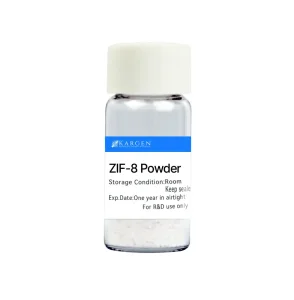
Featured MOF Nanomaterials & Carrier Powders
Ultra-pure metal-organic framework materials engineered with controlled particle size distribution, crystal integrity, and exceptional host-guest payload capacity for drug delivery R&D and scale-up.







The Paradigm Shift in Nanomedicine: Metal-Organic Frameworks (nMOFs) as Superior Drug Carriers
In the rapidly evolving landscape of advanced drug delivery systems (DDS), conventional carriers such as liposomes, polymeric micelles, and inorganic silica nanoparticles frequently encounter fundamental thermodynamic and pharmacokinetic limitations. Issues like premature burst release, low active payload capacity (typically <10 wt%), poor structural stability during storage, and tedious multistep chemical synthesis have restricted their clinical translational efficiency.
Nanoscale Metal-Organic Frameworks (nMOFs)—hybrid crystalline networks formed by the self-assembly of metal ions/clusters with organic linkers—have emerged as a game-changing solution. Offering record-breaking specific surface areas (up to 7,000 m²/g), ultra-high pore volumes (up to 2.5 cm³/g), tunable pore geometries, and versatile surface chemistry, nMOFs represent the ultimate platform for targeted, controlled, and theranostic pharmaceutical formulation.
As a global leader and pioneering manufacturer based in China, KARGEN leverages advanced continuous microfluidics and green mechanochemical scaling to produce high-purity, batch-consistent MOF drug delivery vectors (such as Fe-MIL series, ZIF-8, and CD-MOFs) compliant with international biomedical R&D standards.
Global Trends & Technical Innovations in MOF-Based Drug Delivery
The global nanomedicine market is transitioning from passive carrier vectors to intelligent, stimuli-responsive, biomimetic nanoplatforms. MOF engineering stands at the center of this revolution.
Stimuli-Responsive Triggered Release
Modern nMOFs are designed to remain intact in physiological blood circulation (pH 7.4) while selectively disassembling in acidic tumor microenvironments (pH 5.5–6.5) or endosomal compartments (pH 4.5–5.0). By utilizing pH-sensitive coordination bonds (e.g., Zinc-Imidazolate bonds in ZIF-8), drugs like Doxorubicin (DOX) or 5-Fluorouracil (5-FU) are released exclusively at target pathological sites, minimizing off-target systemic toxicity.
Endogenous & Bio-Friendly Nodes
To clear regulatory hurdles established by the FDA and EMA, research has pivoted toward endogenous bio-metal nodes (Fe³⁺, Zn²⁺, Mg²⁺, Ca²⁺) paired with non-toxic organic linkers (such as amino acids, fumaric acid, or cyclodextrins). Iron-based frameworks like MIL-101(Fe) and MIL-88A(Fe) exhibit exceptional bio-degradability and inherent magnetic resonance contrast imaging capabilities.
Biomimetic Membrane Cloaking
Surface functionalization via PEGylation or cell-membrane encapsulation (cancer cell, macrophage, or red blood cell membranes) confers immune camouflage. This prevents reticuloendothelial system (RES) clearance, extends plasma half-life, and enables homologous targeting to specific diseased cell lines.
Global Procurement Requirements: Qualifying Your MOF DDS Supplier
When pharmaceutical procurement teams, CROs, and biotech R&D centers evaluate industrial suppliers of MOFs for drug loading and clinical formulations, rigorous quality control metrics must be satisfied.
01. Pore Size Distribution & Crystallinity Index
Uncompromising crystal purity confirmed via Powder X-Ray Diffraction (PXRD) and Nitrogen physisorption isotherms. A uniform micropore or mesopore network ensures reproducible host-guest physical entrapment, preventing premature surface leaching of delicate macromolecules or hydrophobic small molecules.
02. Colloidal Stability & Particle Size Control
Monodisperse nanoparticles (50 nm – 200 nm range) verified by Dynamic Light Scattering (DLS) and Transmission Electron Microscopy (TEM). Narrow polydispersity index (PDI < 0.15) is vital for systemic intravenous injection and deep tissue penetration via Enhanced Permeability and Retention (EPR) effects.
03. Residual Solvent & Heavy Metal Impurity Limits
Adherence to ICH Q3C guidelines for residual solvents (eliminating toxic N,N-dimethylformamide [DMF] in favor of green ethanol/water hydrothermal synthesis) and heavy metal residue control analyzed via ICP-MS.
04. High Encapsulation Efficiency (EE%) & Loading Capacity (LC%)
Superior thermodynamic uptake capacity for diverse therapeutic agents including chemotherapeutics (Paclitaxel, Doxorubicin), nucleic acids (siRNA, mRNA, CRISPR-Cas9 complexes), and antimicrobial peptides.
China Industry 4.0: Scalable Nanomanufacturing & Supply Chain Resilience
Historically, MOF production was limited to gram-scale lab synthesis, driving procurement costs above $50–$100 per gram and rendering commercial pharmaceutical scale-up cost-prohibitive. KARGEN has transformed this paradigm by implementing China Industry 4.0 continuous-flow microfluidic synthesis and automated green mechanochemical processing.
- Continuous Microfluidic Crystallization: Replaces traditional batch autoclave reactors, guaranteeing precise nucleation kinetics, identical batch-to-batch crystal morphology, and zero thermal gradients.
- Vertical Raw Material Integration: Complete domestic control over high-purity metal precursors and organic linkers (such as 2-methylimidazole, trimesic acid, and fumaric acid), shielding global buyers from supply chain shocks.
- Dramatic Cost Optimization: Reduces bulk production costs by up to 80% compared to Western laboratory supply houses, making ton-scale commercial DDS applications feasible.
- Robust QA/QC Traceability: Integrated PAT (Process Analytical Technology) equipped with real-time spectroscopy and digital batch certificate archiving.
Manufacturing Capabilities at a Glance
Comparative Technical Matrix: MOF Platforms for Drug Loading
Select the optimal metal-organic framework platform tailored to your target therapeutic molecule and release mechanism.
| MOF Grade | Metal Node / Linker | Pore Size (nm) | Max Drug Payload (wt%) | Degradation Mechanism | Primary Target API Class |
|---|---|---|---|---|---|
| ZIF-8 | Zn²⁺ / 2-Methylimidazole | 0.34 & 1.16 nm | ~35 - 45% | pH-Triggered (Acidic Disassembly at pH < 6.0) | Doxorubicin, 5-FU, Gene/siRNA, Proteins |
| MIL-101(Fe) | Fe³⁺ / Terephthalic Acid | 2.9 & 3.4 nm (Mesoporous) | ~40 - 55% | Slow Hydrolytic Degradation / Endogenous Iron Pool | Paclitaxel, Curcumin, Hydrophobic Chemotherapeutics |
| MIL-88A(Fe) | Fe³⁺ / Fumaric Acid | Flexible Pores (Breathing) | ~30 - 40% | Highly Biocompatible / Rapid Enzymatic Response | Small Molecules, NSAIDs, Antimicrobials |
| UiO-66(Zr) | Zr⁴⁺ / 1,4-Dicarboxybenzene | 0.6 & 1.1 nm | ~25 - 35% | High Chemical/Hydrothermal Stability (Sustained Release) | Extended-Release Antibiotics, Peptides |
| CD-MOF | K⁺ or Na⁺ / Gamma-Cyclodextrin | 1.7 nm | ~50 - 65% | Fast Aqueous Dissolution (Oral/Transdermal) | Oral Insoluble APIs, Nutraceuticals, Fragrances |
Localized Application Scenarios & Engineering Case Studies
Discover how customized MOF nanostructures solve specific formulation barriers across therapeutic fields.
Targeted Intratumoral Delivery with ZIF-8 Nanocarriers
Problem: Free Doxorubicin causes severe cardiotoxicity and systemic side effects during broad systemic circulation.
MOF Solution: Encapsulating Doxorubicin inside ZIF-8 nanoparticles via one-pot bio-inspired synthesis yields an encapsulation efficiency exceeding 90%. In blood plasma (pH 7.4), the drug remain completely sequestered within the framework. Upon endocytosis by cancer cells into acidic lysosomes (pH 4.5–5.0), the zinc-imidazole coordination bonds instantly collapse, unleashing high localized drug concentrations directly into the cell nucleus.
MIL-101(Fe) Dry Powder Formulations for Deep Lung Delivery
Problem: Inhaled antibiotics for pulmonary tuberculosis or cystic fibrosis suffer from rapid alveolar clearance and poor mucosal permeability.
MOF Solution: MIL-101(Fe) mesoporous structures are engineered into dry powder aerosols with optimal aerodynamic diameters (1–5 µm). The high iron-node stability enables sustained lung residence for over 48 hours, maintaining therapeutic minimum inhibitory concentrations (MIC) while avoiding plasma drug spikes.
CD-MOF Microneedle Array Integration
Problem: High-molecular-weight biologic therapeutics struggle to cross the stratum corneum skin barrier without cause patient discomfort.
MOF Solution: Biocompatible Cyclodextrin MOFs (CD-MOFs) synthesized using food-grade potassium nodes and gamma-cyclodextrin are molded into dissolvable microneedle arrays. Upon insertion into the dermal layer, skin moisture triggers rapid dissolvement, delivering intact insulin or peptide payloads effortlessly.
Frequently Asked Questions (FAQ)
Comprehensive answers regarding MOF drug delivery procurement, scale-up, safety profiles, and custom synthesis.
What makes Metal-Organic Frameworks superior to Liposomes or Silica Nanoparticles for drug delivery?
MOFs possess ultra-high porosity and crystalline ordering, allowing payload loading capacities of 30–60 wt%, which is 3x to 5x higher than typical lipid nanoparticles (LNPs) or polymeric micelles. Unlike silica nanoparticles, biocompatible MOFs (like Fe-MILs or ZIFs) undergo total biodegradable degradation into non-toxic metal ions and organic metabolites, preventing long-term bio-accumulation in tissues.
Are KARGEN's MOF drug delivery materials non-toxic and biocompatible?
Yes. We specialize in producing biomedical-grade nMOFs utilizing endogenous or low-toxicity metal nodes (Fe³⁺, Zn²⁺, Mg²⁺, Ca²⁺) paired with GRAS (Generally Recognized as Safe) organic linkers like fumaric acid, amino acids, and cyclodextrins. Full cytotoxicity (MTT/CCK-8 assays) and hemolysis data packages are provided with our pharma-grade materials.
How are active pharmaceutical ingredients (APIs) loaded into MOFs?
APIs can be loaded via two primary methods:
1. Post-Synthetic Impregnation (Physical Entrapment): Activated MOF powders are immersed in concentrated API solution, absorbing molecules into internal pores via capillary and electrostatic forces.
2. One-Pot De Novo Synthesis: The API is added directly into the reaction mixture during MOF crystallization, trapping drug molecules within the forming crystal matrix.
Can KARGEN synthesize custom MOFs with specific functional groups or ligand modifications?
Absolutely. Our R&D facility offers OEM/ODM custom synthesis services. We can engineer amino-functionalized linkers (e.g., NH₂-MIL-101), carboxyl modifications, or conjugate targeting ligands (such as folic acid, RGD peptides, or hyaluronic acid) onto the MOF outer shell for precision receptor-mediated drug targeting.
What sterilization techniques are compatible with MOF drug delivery powders?
Most crystalline MOF powders retain structural integrity when subjected to Gamma Irradiation (25 kGy) or ethylene oxide (EtO) gas sterilization. Autoclaving is suitable for hydrothermally stable frameworks such as UiO-66 or MIL-101(Cr/Fe), but may cause collapse in sensitive frameworks. Sterile filtration (0.22 µm) of colloidal MOF liquid dispersions is recommended prior to loading heat-sensitive biologics.
What is the shelf-life and storage stability of your MOF carrier powders?
When stored in sealed, vacuum-packed moisture-barrier packaging at room temperature or 2–8°C, dry MOF powders maintain full crystallinity and BET surface area for over 24 months. Detailed stability testing documentation under ICH accelerated conditions is available upon request.
What are your typical order lead times and export options for global B2B buyers?
Standard catalog items (ZIF-8, MIL-101(Fe), MOF-801, etc.) are available from stock and ship internationally via air express (FedEx/DHL) within 3–5 business days. Pilot-scale or custom ligand synthesis contracts typically take 2–4 weeks. All shipments include detailed Certificates of Analysis (COA), PXRD spectra, DLS sizing reports, and MSDS.
Explore Full Range of Metal-Organic Framework Powders
Premium grade nanoscale materials, synthesized for maximum structural purity, optimal gas/liquid adsorption, and versatile targeted drug vectorization.