
Featured Nanostructured Solid-State Materials
Industrial-scale MOF sorbents and functional nanopolymers engineered for next-generation air conditioning desiccant wheels, latent heat exchange, and advanced climate systems.
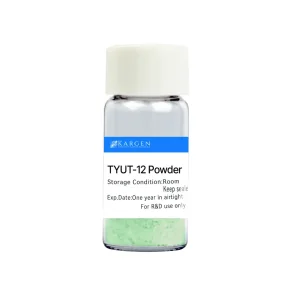
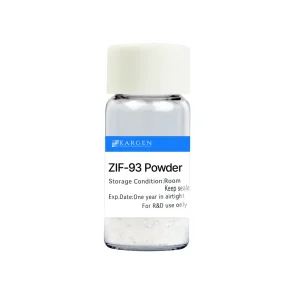
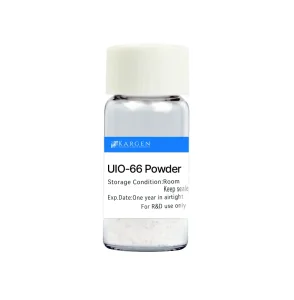
Section 1: The Paradigm Shift in High-Quality New Air Conditioning Systems
Decoupling Latent and Sensible Loads via Nanoporous Material Integration for Net-Zero Energy Buildings
The global heating, ventilation, and air conditioning (HVAC) sector is facing an unparalleled engineering bottleneck. Traditional vapor-compression air conditioning systems, which have dominated the market for over a century, rely heavily on parasitic sub-cooling mechanisms to induce condensation for dehumidification. This process forces the system to cool air below its dew point merely to condense water vapor, only to reheat the air to achieve comfortable indoor thermal conditions. This dual-handling of sensible and latent heat loads results in significant thermodynamic inefficiencies, consuming up to 45% of total building electrical demand in humid tropical and warm temperate zones.
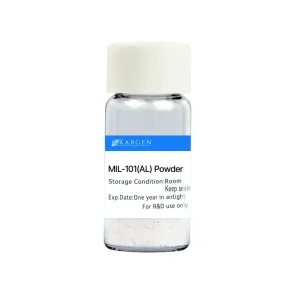
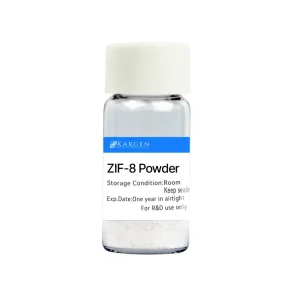
As a premiere High-Quality New Air Conditioning System Service & Supplier, our engineering paradigm revolves around the absolute decoupling of sensible cooling from latent moisture control. By integrating ultra-high-surface-area Metal-Organic Frameworks (MOFs)—such as synthetic Al-FUM, MIL-101(Al), and tailored ZIF-8 architectures—into solid desiccant coated heat exchangers (DCHE) and liquid desiccant evaporative loops, we enable direct, isothermal water vapor capture at ambient conditions.
Sub-80°C Regeneration
MOF desiccant wheels desorb captured humidity using low-grade waste heat (60°C–75°C) from industrial exhaust or solar thermal arrays, drastically lowering primary electric power requirements.
55%+ Efficiency Boost
Eliminating deep sub-cooling dew-point cycles elevates the system Coefficient of Performance (COP) from typical legacy values of 3.2 to over 5.8 in high-humidity commercial deployments.
Zero-Phase Liquid Carryover
Solid-state MOF crystal coatings prevent liquid desiccant aerosol droplet drift, ensuring ultra-clean indoor air quality (IAQ) compliant with cleanroom and healthcare standards.
By leveraging pore sizes engineered precisely at the sub-nanometer scale (0.5 to 1.8 nm), these novel air conditioning system components achieve S-shaped water sorption isotherms. This characteristic allows sudden, step-like water absorption at specific relative humidity (RH) thresholds, enabling complete desiccant regeneration at temperatures accessible via waste heat or low-cost solar thermal loops. Consequently, enterprise clients lower operational expenditures while meeting international carbon-neutrality mandates.
Quantifiable Performance Benchmarks
Empirical performance data from field-tested installations comparing legacy vapor-compression HVAC units against MOF-integrated solid-state new air conditioning systems.
Section 2: Technology Roadmap & Future Outlook (2025–2035)
Architectural progression of next-generation HVAC systems over the coming decade.
Hybrid Solid Desiccant Add-On Modules
Immediate commercial integration of modular MOF-coated desiccant wheels onto existing variable refrigerant flow (VRF) and commercial rooftop units (RTU). This retrofitting step decouples ambient humidity handling, yielding an instant 25–35% energy optimization without requiring structural HVAC overhaul.
Isothermal MOF-Coated Heat Exchangers (HEX)
Direct synthesis of nanostructured metal-organic frameworks onto microchannel copper and aluminum heat exchanger fins. Heat of adsorption is immediately dissipated by integrated micro-fluidic loops, realizing isothermal dehumidification cycles and unlocking COP metrics exceeding 6.5.
Zero-Refrigerant Thermally Driven Cooling
Complete phase-out of high-GWP hydrofluorocarbons (HFCs) and synthetic refrigerants. Systems will operate entirely on water-vapor adsorption/desorption cascades powered by localized waste heat, ambient thermal energy, or low-voltage solar photovoltaics.
| Performance Parameter | Legacy Vapor Compression | Conventional Silica Gel / Polymer | Next-Gen MOF Solid-State HVAC |
|---|---|---|---|
| Regeneration Temperature | N/A (Relies on Dew Point Chilling) | 120°C – 160°C (High Energy Demand) | 55°C – 75°C (Ultra-Low Waste Heat) |
| Water Uptake Capacity | N/A | 0.25 – 0.40 g/g | 1.35 – 2.85 g/g (Up to 7x Higher) |
| Latent Energy Consumption | High (Parasitic Re-Heating Required) | Moderate (Thermal Penalty) | Ultra-Low (Isothermal Capture) |
| System Carbon Footprint | High (HFC Leakage + Power Demand) | Moderate | Near-Zero (Sol-Thermal Compatible) |
| Sorption-Desorption Kinetics | Slow Condensation Rate | Moderate Cycle Times (30-45 min) | Ultra-Fast Kinetics (<5 min Cycle) |
Section 3: Macro-Industry Solutions & System Deployments
Tailored high-performance HVAC equipment and material integrations engineered for mission-critical commercial and industrial facilities.
Hyperscale Data Center Microclimate Systems
Modern AI computing servers generate dense heat loads requiring stringent relative humidity control to prevent electrostatic discharge or micro-condensation on PCB logic boards. Our MOF-assisted liquid desiccant loops reuse high-temperature server exhaust heat (60°C) to desorb moisture, creating a self-sustaining microclimate loop that reduces total Power Usage Effectiveness (PUE) to below 1.15.
Semiconductor & Pharmaceutical Cleanrooms
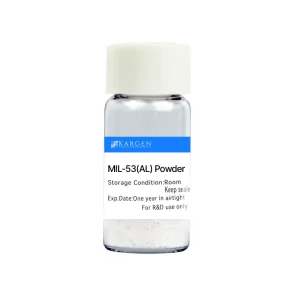
Ultra-clean manufacturing requires tight humidity control (+/- 1% RH) and zero micro-particulate contamination. Solid-state MOF crystal honeycombs (using structurally sound frameworks like ZIF-8 and MIL-53) eliminate organic volatile off-gassing and liquid desiccant droplet drift, ensuring ISO Class 1 compliance while lowering continuous fresh-air treatment energy usage.
Commercial Real Estate & Net-Zero Buildings
For office towers and luxury hospitality assets aiming for LEED Platinum or BREEAM Outstanding certifications, our new air conditioning systems integrate seamlessly into centralized Air Handling Units (AHUs). By utilizing building exhaust heat, operational carbon emissions tied to ventilation air treatment are reduced by over 40%.
Extreme Coastal & Tropical Climate HVAC Units
In high-salinity, high-humidity coastal zones, standard condenser coils corrode and ice up under heavy latent loads. Our specialized MOF compositions incorporate corrosion-resistant aluminum fumarate and zirconium-based frameworks (UiO-66) that perform reliably under ambient relative humidity exceeding 90% without structural degradation.
Section 4: China Factory 4.0 — Scale-Up Precision & Supply Chain Resilience
Bridging Advanced Nanomaterial Synthesis with Automated Sub-Assembly Manufacturing
A primary bottleneck in deploying advanced nanomaterials within global HVAC equipment has historically been the transition from gram-scale laboratory synthesis to multi-ton industrial output. Operating from our state-of-the-art 10,000 m² R&D and automated production complex in Guangdong, China, our manufacturing infrastructure resolves this challenge.
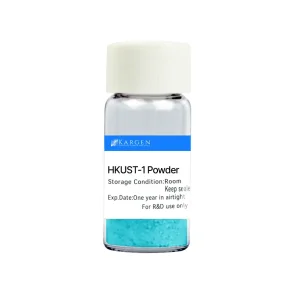
Through mechanochemical green synthesis routes and continuous hydrothermal flow processes, we produce ultra-pure MOF powders (including ZIF-8, HKUST-1, and MIL-101) with consistent batch-to-batch pore size distribution. This capacity enables direct, cost-effective integration into mass-manufactured air conditioning equipment components.
Direct-Coating Precision
Automated dip-coating and spray-pyrolysis assembly lines ensure uniform thickness (20–50 µm) of MOF crystals onto heat-exchanger fins, optimizing mass transfer without restricting airflow or increasing fan static pressure loss.
Digital Quality Control
Every production batch undergoes automated Powder X-Ray Diffraction (PXRD), BET surface area analysis, and dynamic vapor sorption (DVS) verification. Full data traceability ensures every component conforms to enterprise specs.
Supply Chain Efficiency
By controlling raw material sourcing through localized rare-earth and metal ligand networks in China, we offer robust pricing stability, short lead times, and scalability for major OEM HVAC partners worldwide.
Section 5: Global Compliance, Engineering Support & E-E-A-T Framework
Turnkey localization support and strict adherence to international building codes, environmental directives, and equipment performance standards.
Regulatory & Safety Compliance
Our complete line of new air conditioning systems and functional nanomaterial desiccant components adhere strictly to major international frameworks:
- AHRI Standard 1060: Performance rating for air-to-air heat exchangers.
- ASHRAE 90.1 & 62.1: Energy conservation and indoor air quality standards.
- EU REACH & RoHS Compliance: Heavy-metal-free, eco-friendly metal nodes.
- ISO 9001 / 14001 / 45001: Certified manufacturing and environmental safety.
- CE Mark & UL Certification: Electrical safety and electromagnetic compatibility.
Full-Lifecycle Engineering Support
We provide comprehensive technical consultation to streamline integration into existing or new HVAC platforms:
- Computational Fluid Dynamics (CFD): Thermal modeling of air stream dynamics.
- Custom Psychrometric Mapping: Site-specific ambient environment sizing.
- Field Commissioning Support: On-site engineer dispatch for initial setup.
- Lifecycle Maintenance Protocols: Material inspection every 50,000 operational hours.
Section 6: Global Procurement & Enterprise OEM/ODM Framework
Streamlined Sourcing, Customized Fabrication, and Rigid Service Level Agreements for International Commercial Buyers
Procuring next-generation air conditioning infrastructure involves rigorous vendor qualification, supplier audit trails, and long-term service guarantees. Our organization serves international engineering contractors, real estate developers, and commercial equipment distributors with a structured procurement framework.
Material Selection
Consultation with our PhD application specialists to select optimal MOF compositions based on local psychrometric profiles.
Prototype Validation
Delivery of 1–5 kg evaluation desiccant samples or small-scale test coils within 7 business days.
Scale-Up Production
Transfer to automated assembly lines for ton-scale material synthesis or mass coil coating.
Global Delivery & SLA
Door-to-door multimodal freight, complete customs clearance documentation, and 24-hour engineer support.
Section 7: Deep-Dive Technical FAQ
Detailed engineering answers regarding system integration, material stability, and enterprise procurement.
Complete Commercial Material & Sub-System Portfolio
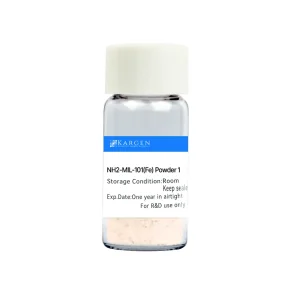
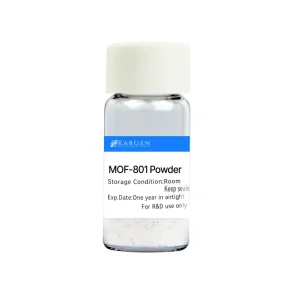
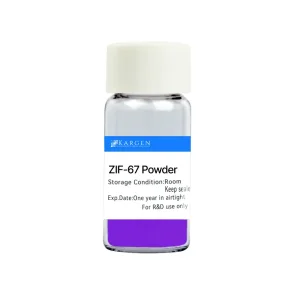
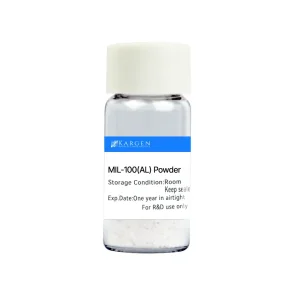
Explore our full range of industrial MOF powders, catalytic sorbents, and specialized frameworks available for immediate global export.
Initiate Your HVAC Engineering Upgrade Today
Partner with China's leading ton-scale MOF material manufacturer and air conditioning innovation supplier. Request technical engineering dossiers, psychrometric modeling support, or evaluation material samples.
Contact Our HVAC Application Engineering Team