
Top-Tier Core Components & Nanomaterials Portfolio
Explore our specialized material frameworks engineered for high-efficiency solid-state desiccant cooling, humidity control, and thermal management in modern air conditioning units.








Executive Whitepaper: The Thermal Management Paradigm Shift
Navigating the convergence of Industry 4.0 manufacturing, low-GWP refrigerant mandates, and advanced sorbent-assisted cooling architecture in modern HVAC systems.
Decarbonization & Efficiency Directives
Global regulatory bodies, including the EU F-Gas Regulation and US EPA AIM Act, are forcing a fundamental redesign of commercial and residential air conditioning architecture. Modern B2B buyers must prioritize ultra-high Seasonal Energy Efficiency Ratios (SEER2) and low-GWP refrigerants (R-32, R-454B, R-290) to maintain compliance and reduce lifetime operational expenditures.
Solid-State Sorbent Integration
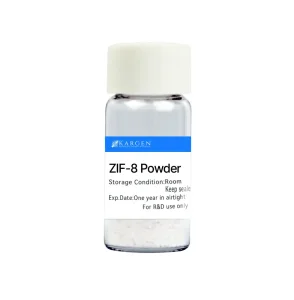
Traditional vapor-compression systems waste over 40% of their electrical energy overcoming latent moisture loads. By integrating engineered Metal-Organic Frameworks (MOFs) like ZIF-8 and Al-FUM into heat-exchanger coatings and desiccant wheels, new air conditioning units decouple sensible and latent cooling, unlocking energy savings exceeding 35% across tropical climates.
Smart Inverter & IoT Predictive Maintenance
Industry 4.0 integration allows air conditioning systems to operate as intelligent nodes within modern microgrids. Variable-speed DC inverter compressors paired with AI-driven sensor arrays optimize thermal output dynamically, predicting mechanical fatigue before structural failures occur and ensuring uninterrupted uptime for mission-critical installations.
Global Enterprise Procurement Dynamics: 2025–2030 Analysis
Understanding the multi-variable evaluation criteria applied by industrial procurement officers, HVAC contractors, and commercial developers worldwide.
Total Cost of Ownership (TCO)
B2B procurement has moved past initial CAPEX savings. Enterprise buyers perform rigorous 10-year Lifecycle Cost Analyses (LCCA), factoring in power consumption rates, maintenance intervals, coefficient of performance (COP) efficiency retention, and residual equipment value.
Multi-Regional Compliance
Leading exporters must supply units certified across multiple jurisdiction frameworks—CE, UL, AHRI, Eurovent, and CB Scheme. Conformance with ISO 9001 (Quality Control), ISO 14001 (Environmental), and ISO 5001 (Energy Management) remains a mandatory baseline for bidding on international infrastructure projects.
Climate Adaptation Engineering
With global temperature extremes increasing, equipment built for standard temperate zones frequently experiences high-head-pressure trips in desert or tropical regions. Enterprise demand is surging for wide-ambient-range inverter AC units rated to operate continuously at up to 55°C without thermal throttling.
Modular OEM/ODM Customization
B2B importers require modular chassis designs that permit flexible component integration—such as selecting specific compressor brands (Copeland, Mitsubishi, Panasonic), custom heat exchanger anti-corrosion coatings (Gold Fin, Blue Fin, E-Coating), and specialized filtration modules (HEPA, MOF-based VOC scrubbers).
China Industry 4.0: Supply Chain Resilience & Manufacturing Efficiency
How the Pearl River Delta & Yangtze River Delta industrial ecosystems deliver unparalleled production scalability, precision quality assurance, and speed-to-market.
Complete Vertical Integration
China's modern manufacturing infrastructure co-locates raw material refining, micro-electronic PCB fabrication, motor winding, precision metal stamping, and plastic injection molding within tight regional clusters. This eliminates long-distance intermediate transport delays and insulates international buyers against global supply chain bottlenecks.
Automated Robotics & AI Inspection
Smart factories utilize 6-axis robotic arm welding for copper refrigerant piping, computer-vision AI for micro-defect recognition on coil fins, and automated vacuum dehydration systems. Every completed unit undergoes rigorous performance validation in psychrometric test chambers under simulated extreme ambient conditions.
Advanced Material Scale-Up
Pioneering the industrial synthesis of advanced sorbents (such as ZIF-8, HKUST-1, and MIL-series MOFs), Chinese factories lead the world in transitioning nanomaterial research from gram-scale laboratory experiments to ton-scale mass production—enabling commercial integration into next-gen desiccant cooling hardware.
Localized Application Scenarios & Tailored HVAC Architecture
Engineered micro-climate control solutions tailored for diverse commercial, industrial, and high-density residential installations.
Hyperscale Data Centers
Challenge: Massive sensible heat generation combined with strict humidity threshold requirements to prevent electrostatic discharge or condensation corrosion.
Engineered Solution: High-sensible-heat-ratio (SHR) Computer Room Air Handler (CRAH) units using indirect evaporative cooling and MOF-coated heat recovery wheels, delivering Power Usage Effectiveness (PUE) metrics below 1.15.
Pharmaceutical Cleanrooms
Challenge: Ultra-precise temperature (±0.5°C) and relative humidity (±2% RH) regulation combined with zero airborne contamination risks.
Engineered Solution: Dedicated Outdoor Air Systems (DOAS) featuring dual-wheel solid-state desiccant dehumidification, active HEPA filtration, and titanium dioxide anti-microbial fin coatings.
Commercial Real Estate & Hotels
Challenge: Multi-zone thermal demand with stringent acoustic decibel limits (< 25 dB(A)) and low energy overhead for high-occupancy structures.
Engineered Solution: Variable Refrigerant Flow (VRF) smart inverter split systems featuring individual zone micro-controllers, ultra-quiet BLDC fan motors, and intelligent heat recovery heat pumps.
Marine & Offshore Platforms
Challenge: Highly corrosive salt-mist atmospheres, heavy vibration exposure, and volatile power grid fluctuations.
Engineered Solution: Heavy-duty marine air conditioners equipped with 316L stainless steel casing, electro-coated copper-to-copper heat exchanger coils, and anti-vibration rubber damper assemblies.
Industrial Process Cooling & Cold Chain
Challenge: Continuous low-temperature maintenance with zero moisture accumulation during high-frequency inventory transfers.
Engineered Solution: Low-temperature heat pump chillers with electronic expansion valves, intelligent hot-gas defrost cycles, and integrated remote telemetry connectivity.
Net-Zero Residential Complexes
Challenge: Achieving compliance with passive house thermal insulation mandates while preserving indoor air quality (IAQ).
Engineered Solution: All-in-one Energy Recovery Ventilators (ERV) combined with heat pump water heaters and ultra-low GWP R-290 monobloc heat pumps.
Technical Specification & Performance Benchmark
A comparative engineering evaluation contrasting traditional legacy AC units against modern Industry 4.0 Nanotech-Enhanced Systems.
| Performance Criteria | Legacy Air Conditioning Units | Industry 4.0 Smart Inverter Units | Nanotech Sorbent-Assisted Systems (Next-Gen) |
|---|---|---|---|
| Seasonal Energy Efficiency (SEER2) | 13.0 – 15.0 | 20.0 – 26.0 | 32.0+ (Ultra High Efficiency) |
| Refrigerant Standard | R-410A / R-22 (Phase-Out) | R-32 / R-454B (Low GWP) | R-290 (Natural / Zero ODP / GWP=3) |
| Latent Moisture Handling | Overcooling + Reheating (High Energy Waste) | Variable Fan Speed Control | Solid-State MOF Desiccant Wheel (Zero Latent Waste) |
| Compressor Architecture | Fixed Speed Rotary / Scroll | Full-DC Twin Rotary Inverter | Magnetic Levitation / Variable-Frequency Centrifugal |
| Operating Ambient Temperature | -7°C to 43°C | -20°C to 52°C | -30°C to 58°C (Extreme Ambient Rated) |
| IoT Telemetry & Diagnostics | Basic On/Off Thermostat | Wi-Fi Modbus / BACnet Protocols | AI Predictive Maintenance & Grid-Interactive Control |
| Heat Exchanger Protection | Standard Aluminum Fins | Blue Fin / Gold Fin Hydrophobic Coating | Graphene-Enhanced E-Coating (10,000hr Salt Spray Certified) |
Frequently Asked Questions (Technical & Procurement FAQ)
Expert answers to critical technical, logistics, and quality assurance questions asked by international B2B buyers.
- Compressor Selection: Brand specification (Copeland, Highly, GMCC, Panasonic, Daikin).
- Refrigerant Choice: R-32, R-454B, R-290, R-134a, or R-410A.
- Anti-Corrosion Fin Treatments: Gold Fin, Hydrophobic Blue Fin, or Graphene/Epoxy E-Coating for coastal installations.
- Communications Protocols: BACnet IP, Modbus RTU, or custom IoT cloud API integration.
- Branding & Packaging: Customized metal stamping, silk-screen logos, and reinforced export palletizing.
Extended Material Frameworks & Industrial Exporters Directory
Explore our complete catalog of metal-organic frameworks, synthetic zeolites, and micro-porous powders supporting advanced industrial cooling and gas processing projects.




Partner with Tier-1 HVAC Engineering Leaders
Whether you require standard high-SEER commercial air conditioning units, custom OEM/ODM split systems, or advanced sorbent-assisted desiccant cooling integration, our engineering team is ready to consult on your project parameters.
Request Technical Consultation & RFP Quotation