Advanced MOF Adsorbents for Gas Purification & Storage
Engineered for high selectivity, sub-ppm contaminant removal, and zero-loss gas retention across semiconductor, aerospace, and isotopic tracing applications.







High-Quality Noble Gas Ampoules: Global Supply Chain & Materials Engineering
An authoritative analysis of precision noble gas encapsulation, cryo-adsorption using porous metal-organic structures, and strict international compliance standards for advanced research and manufacturing.
1. Global Procurement Dynamics
Noble gases—comprising Helium (He), Neon (Ne), Argon (Ar), Krypton (Kr), and Xenon (Xe)—represent the bedrock of next-generation technological infrastructure. From deep-ultraviolet (DUV) and extreme-ultraviolet (EUV) semiconductor lithography to space-propulsion Hall thrusters, quantum computing thermal barriers, and isotopic medical imaging, the demand for non-reactive, hyper-pure gas standards has escalated exponentially.
Global procurement teams face two core challenges: fluidic leakage during long-term storage and trace chemical contamination during gas transfer. Encapsulation in hermetically flame-sealed glass or quartz ampoules provides a zero-permeation barrier, making ampoule-based supply the gold standard for high-value calibration gases, rare isotopic reference standards, and laboratory-scale reagent additions.
2. MOF-Enabled Cryo-Trapping
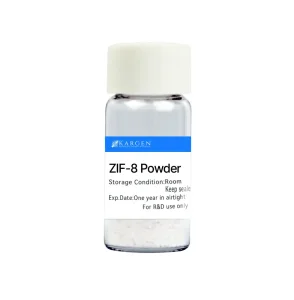
Historically, filling noble gas ampoules required cryogenic condensation using liquid helium or liquid nitrogen systems, which frequently led to cryo-fracturing of delicate glass capillary stems. Modern encapsulation services utilize advanced nanostructured adsorbents, specifically metal-organic frameworks (MOFs) such as ZIF-8 and HKUST-1 synthesized via mechanochemical routes.
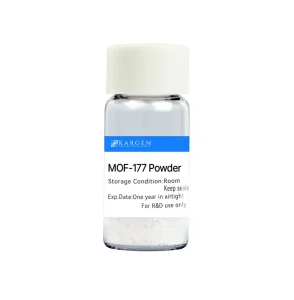
These MOFs feature custom pore dimensions matching the kinetic diameters of Xenon (0.396 nm) and Krypton (0.369 nm), enabling reversible physisorption at moderate temperatures and low pressures. By integrating micro-pelletized MOF substrates directly inside ampoule vessels or upstream charging manifolds, suppliers achieve high volumetric gas density without ultra-high pneumatic pressures.
3. Ampoule Metallurgy & Glass Chemistry
Selecting the ideal noble gas ampoule service requires a deep understanding of container material science. Standard borosilicate 3.3 glass is ideal for stable rare gases at ambient pressures, but Helium retention demands synthetic fused silica (high-purity quartz) due to Helium's unique ability to permeate amorphous silicate networks over extended periods.
For industrial and calibration environments requiring break-seal activation or high-pressure delivery, custom metal ampoules featuring stainless steel or Monel construction with integrated copper crimp-seals or ultra-high-vacuum (UHV) bellows valves are utilized, preventing atmospheric back-diffusion down to 10⁻¹⁰ mbar·L/s leak rates.
Noble Gas Ampoule Encapsulation & Adsorbent Specifications
Comparative operational matrix highlighting gas selectivity, container compatibility, and MOF-assisted volumetric performance.
| Noble Gas Species | Kinetic Diameter (nm) | Optimal Ampoule Medium | Adsorbent Substrate Integration | Target Purity Grade | Primary Industrial Application |
|---|---|---|---|---|---|
| Helium (He-3 / He-4) | 0.260 nm | Synthetic Fused Quartz / Metal Crimp | Custom MOF-74 (Cryo-stabilized) | 99.9999% (6N) | Quantum Dilution Cryogenics & Leak Detection |
| Neon (Ne) | 0.275 nm | Heavy-Wall Borosilicate 3.3 | ZIF-8 Mechanochemical Powder | 99.999% (5N) | DUV Excimer Lithography Gas Mixtures |
| Argon (Ar) | 0.340 nm | Standard Glass / Break-Seal Glass | MIL-53(Al) Flexible Framework | 99.9999% (6N) | Semiconductor ICP-MS & Plasma Etching |
| Krypton (Kr) | 0.369 nm | Borosilicate / Stainless Steel Valve | HKUST-1 Open Metal Site Matrix | 99.999% (5N) | Insulated Architectural Glass & Satellite Propulsion |
| Xenon (Xe) | 0.396 nm | Quartz / Borosilicate Glass Ampoule | MOF-177 High Surface Area Pore Structure | 99.9999% (6N) | Ion Propulsion, Medical Imaging & Dark Matter Detection |
Holistic Noble Gas Ampoule Service & Custom Filling Framework
Custom Volumetric & Isotopic Dosing
Our state-of-the-art manifold systems allow precise volumetric dosing ranging from fractional micro-moles (for rare isotopic calibration such as Xenon-129 or Helium-3) up to multi-liter standard temperature and pressure (STP) equivalencies inside high-pressure glass ampoules.
Ultra-High Vacuum (UHV) Bake-Out Protocols
To eliminate trace atmospheric impurities (H₂O, N₂, O₂, CO₂), all ampoules undergo thermal conditioning up to 450°C under continuous turbomolecular ultra-high vacuum (< 10⁻⁷ mbar) prior to gas introduction, guaranteeing sub-ppm impurity limits.
Zero-Thermal-Stress Flame Sealing
Utilizing automated oxygen-hydrogen precision micro-torches, ampoule neck closure is executed instantaneously while maintaining cryogenic cooling on the gas chamber. This eliminates thermal expansion of the enclosed gas and guarantees zero contamination from combustion byproducts.
Regulatory Compliance, Quality Assurance & Global Logistics
Transporting sealed glass ampoules containing pressurized rare gases requires rigorous adherence to international dangerous goods regulations. Our facility operates under a fully documented ISO 9001:2015 Quality Management System, backed by rigorous batch-level Gas Chromatography-Mass Spectrometry (GC-MS) certifications.
Technology Roadmap: MOF-Integrated Smart Ampoules
Pioneering future innovations in noble gas capture, isotopic enrichment, and non-destructive pressure verification.
Sub-Nanometer MOF Sieves
Commercialization of ultra-selective porous coordination polymers engineered specifically for ambient Krypton/Xenon separation directly inside ampoule charging systems.
RF-ID Pressure Sensing
Embedding micro-passive RFID sensors into glass ampoule bases to monitor internal gas pressure and seal integrity without compromising hermetic isolation.
Isotopic Cascade Enrichment
Deployment of continuous MOF-column manifolds for high-yield separation of Xenon-129 and Xenon-131 isotopes for advanced hyperpolarized MRI contrast agents.
Zero-Loss Break-Seal Valves
Next-generation glass-to-metal magnetic break-seal designs guaranteeing total gas transfer into ultra-high vacuum analytical equipment with zero residual hold-up.
Frequently Asked Questions on Noble Gas Ampoules
Industrial & Research Grade MOF Products
Browse our full catalog of high-surface-area frameworks suitable for noble gas separation, gas storage, and catalytic applications.