
1 / 2
High-Quality MOF-5 Powder Metal Organic Frameworks (MOFs) Suppliers, Exporters
Product Description
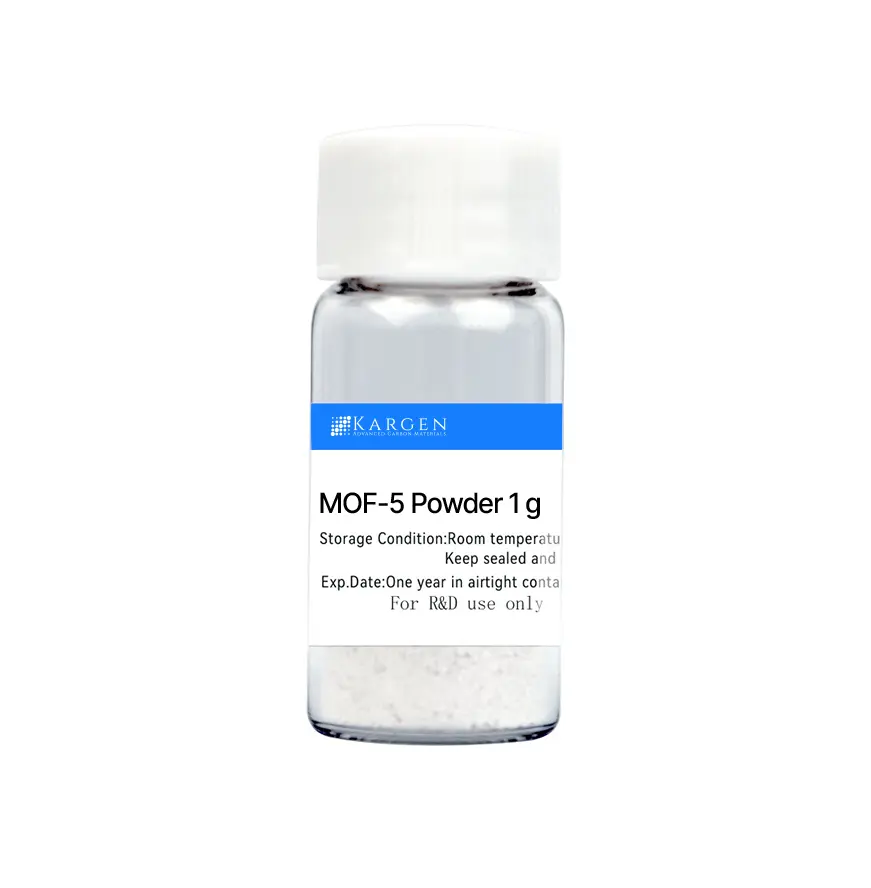
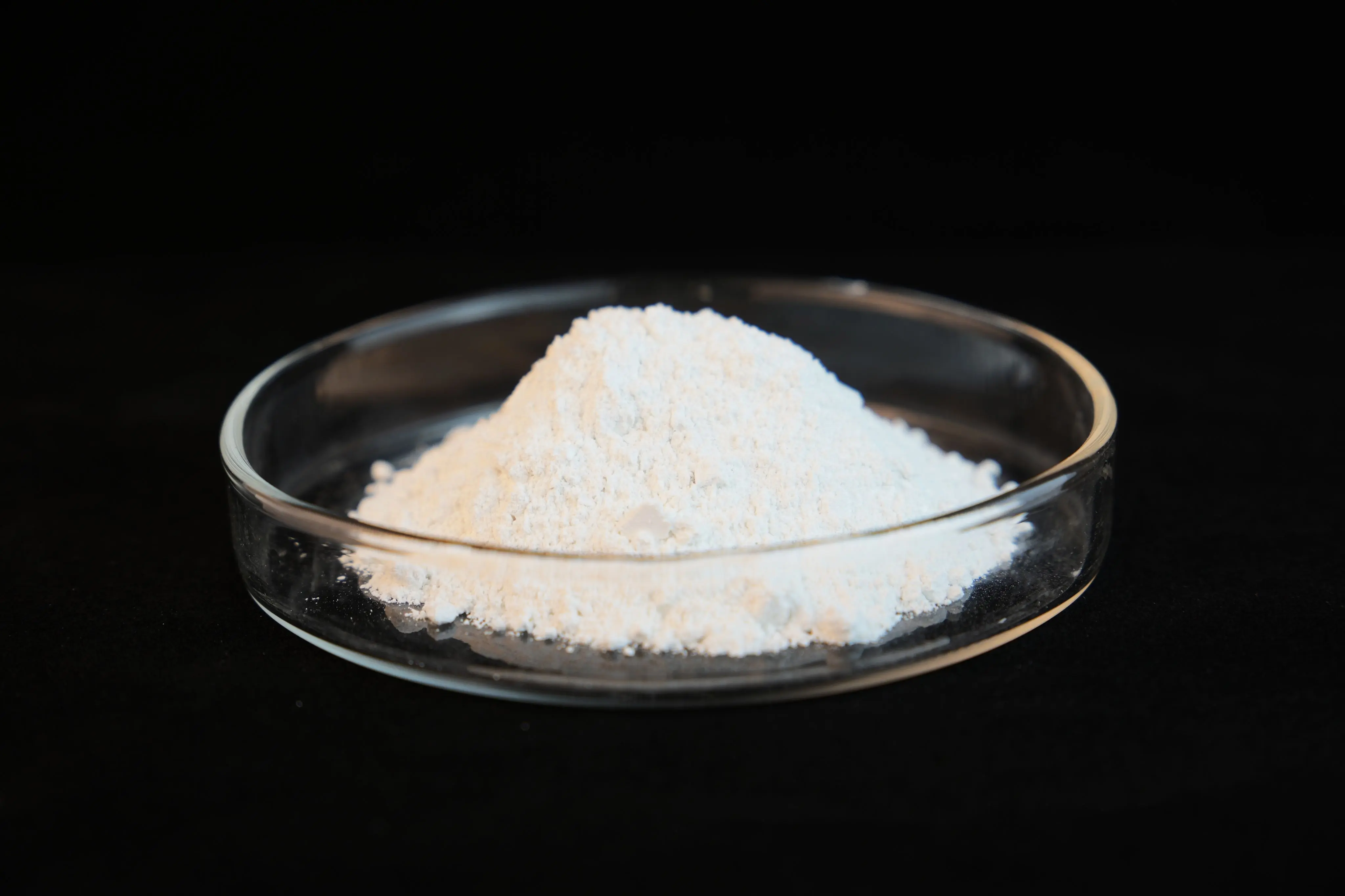
| Product Name | MOF-5 |
| Particle size | 1-3 μm |
| Specific surface area | > 2000 ㎡/g |
| Pore size | 1.2 nm |
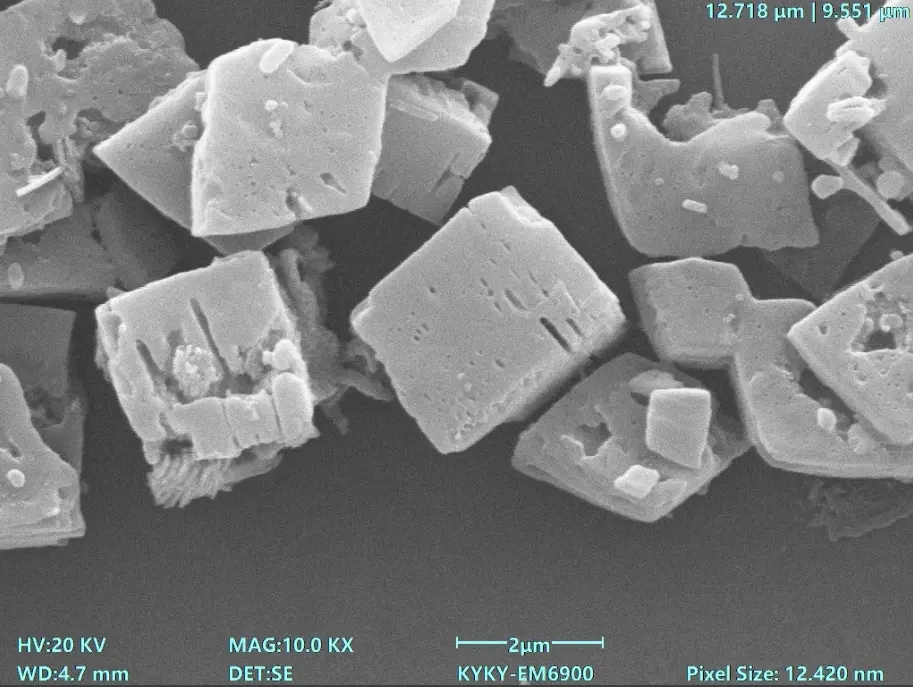
High Porosity & Gas Storage: MOF-5 is recognized for its high porosity, making it suitable for gas storage, especially hydrogen and carbon dioxide. The binding energy for hydrogen adsorption is approximately 26-27 meV, indicating effective physisorption (Gurung & Adhikari, 2023). A semi-empirical molecular dynamics study demonstrated that CO2 can form a liquid-like structure within MOF-5, showcasing its capacity for gas storage under varying conditions (Listyarini et al., 2023).
Pollutant Removal: Recent studies highlight the effectiveness of functionalized MOF-5 in removing phenolic pollutants, with fluorine-modified variants showing superior adsorption capabilities due to enhanced van der Waals and π–π interactions (Razavi et al., 2024).
Moisture Protection & Gas Separation: To address moisture susceptibility, a hydrophobic porous shell was developed around MOF-5, maintaining its structural integrity while enabling CO2/N2 separation under humid conditions (Li et al., 2023). While MOF-5 shows promise in various applications, its stability and performance can be influenced by environmental factors and structural modifications, necessitating further research to optimize its use in practical scenarios.
Frequently Asked Questions (FAQ)
Q: What is the specific surface area and pore size of MOF-5?
MOF-5 features a specific surface area of greater than 2000 ㎡/g and a pore size of 1.2 nm, along with a particle size ranging between 1-3 μm.
Q: What makes MOF-5 suitable for gas storage applications?
MOF-5 possesses high porosity with a hydrogen binding energy of approximately 26-27 meV for effective physisorption. Additionally, CO₂ can form a liquid-like structure within MOF-5, enhancing gas storage under various conditions.
Q: How is MOF-5 utilized in environmental pollutant removal?
Functionalized MOF-5, particularly fluorine-modified variants, exhibits superior adsorption capabilities for removing phenolic pollutants through enhanced van der Waals and π–π interactions.
Q: How can MOF-5 perform efficiently in humid environments?
By engineering a hydrophobic porous shell around MOF-5, the material maintains its structural integrity and enables effective CO₂/N₂ separation even under humid conditions.
Q: What factors affect the stability and performance of MOF-5?
MOF-5's stability and performance are primarily influenced by environmental factors (such as moisture) and structural modifications, which are key areas of ongoing optimization research.









