
Featured CO2 Capture & Nanotechnology Sorbents
Commercial-grade Metal-Organic Framework powders engineered for extreme CO2 selectivity, rapid sorption kinetics, and low regeneration thermal penalties.







Global Enterprise Procurement Demand for Carbon Adsorption
Analyzing the shift from legacy liquid amine scrubbing to solid-state porous sorbents in global decarbonization infrastructure.
1. Macro-Economic Drivers Scaling Industrial Carbon Capture
The global transition toward net-zero industrial emissions has fundamentally transformed carbon capture, utilization, and storage (CCUS) from a compliance tax into a strategic economic necessity. Driven by regulatory frameworks such as the European Union’s Carbon Border Adjustment Mechanism (CBAM), the US Inflation Reduction Act (IRA Section 45Q tax credits granting up to $180/ton for Direct Air Capture), and stringent ESG reporting standards worldwide, heavy emission industries—including cement production, blast-furnace steel manufacturing, petrochemical refining, and waste-to-energy power plants—are aggressively auditing their carbon supply chains.
Historically, liquid amine absorption systems (e.g., Monoethanolamine, MEA) dominated point-source decarbonization. However, liquid amines suffer from catastrophic operational inefficiencies: immense thermal regeneration energy penalties (typically requiring $3.5 \text{ to } 4.5 \text{ GJ/ton CO}_2$), severe equipment corrosion, liquid parasitic loss via vaporization, and toxic degradation byproducts (nitrosamines and nitramines). As procurement directors evaluate life-cycle expenditures (CAPEX and OPEX), solid-state adsorption using structured **Metal-Organic Frameworks (MOFs)**, functionalized porous silicas, and engineered zeolites has emerged as the definitive benchmark for enterprise procurement.
Procurement Evaluation Criteria: Modern carbon management teams evaluate solid CO2 capture adsorbents across four primary quantitative vectors: (1) Isosteric Heat of Adsorption ($\Delta H_{ads}$), (2) Dynamic Working Capacity under realistic gas mixtures containing H2O and SOx, (3) Mechanical Fluidized-Bed Attrition Resistance, and (4) Net Regeneration Parasitic Energy Penalty.
2. Comparative Technical Evaluation: Solid Sorbents vs. Legacy Solutions
Selecting the optimal CO2 capture adsorption supplier requires deep structural alignment between the sorbent's thermodynamic pore architecture and the targeted emission point-source stream. Flue gas streams typically operate at atmospheric pressures with low CO2 partial pressures ($0.04 \text{ to } 0.15 \text{ bar}$), elevated temperatures ($40^\circ\text{C} \text{ to } 120^\circ\text{C}$), and high humidity levels.
| Adsorbent Class | BET Surface Area (m²/g) | CO2 Capacity (mmol/g @ 0.15 bar) | Regeneration Temp (°C) | Hydrothermal Degradation | Target Application |
|---|---|---|---|---|---|
| Amine-Functionalized MOFs (e.g., NH2-MIL-101) | 2,200 – 3,400 | 3.8 – 5.2 | 70 – 90 | Ultra-Low (<1% after 5,000 cycles) | Flue Gas Capture & Direct Air Capture (DAC) |
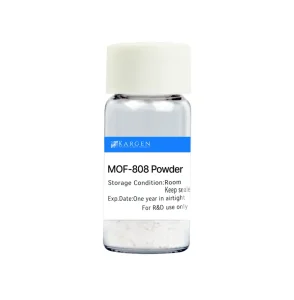
| Open Metal Site MOFs (e.g., HKUST-1 / MOF-808) | 1,800 – 2,800 | 2.9 – 4.1 | 100 – 120 | Moderate (Requires dry gas pre-treatment) | Biogas Sweetening & High-Pressure Natural Gas |
| Zeolite 13X (Legacy Standard) | 500 – 700 | 1.2 – 1.8 | 150 – 250 | Severe Competitive H2O Deactivation | Dry High-Pressure Separation |
| Activated Carbon (Low-Cost Polymeric) | 800 – 1,200 | 0.5 – 0.9 | 110 – 140 | Low Selectivity (CO2/N2 < 15) | Bulk Flue Gas Stripping (Low Purity) |
| Hydrothermally Stable Al-MOFs (e.g., Al-FUM) | 1,100 – 1,500 | 2.4 – 3.2 | 65 – 80 | Zero Degradation (Water-Stable Framework) | Humid Flue Gas & Adsorption Heat Pumps |
Macro-Industry Solutions & Material Synthesis Engineering
How engineered porous frameworks solve extreme chemical separation challenges across heavy industry.
Point-Source Flue Gas Decarbonization
Custom-engineered pellets ($MIL-101(Fe)$, $MIL-100(Al)$) designed for Vacuum Temperature Swing Adsorption (VTSA) systems, achieving >95% capture purity directly from cement kiln exhaust and steel blast furnaces without requiring energy-intensive gas pre-drying.
Direct Air Capture (DAC) Sorbents
Specialized amine-functionalized MOFs ($NH_2-MIL-101$) providing exceptional chemisorption kinetics at ultra-dilute atmospheric concentrations (~420 ppm CO2). Desorption operates under mild low-grade thermal heat ($70^\circ\text{C}-85^\circ\text{C}$), maximizing system COP.
Biogas Upgrading & Natural Gas Sweetening
Ultra-selective molecular sieve materials ($KAUST-7$, $ZIF-93$) optimized for sharp $CO_2/CH_4$ separation. Eliminates methane loss to less than 0.1% while removing trace moisture and hydrogen sulfide ($H_2S$) in a single continuous adsorption column.
3. Technical Roadmap: Evolution of Pore Engineering & Chemical Tuning (2025–2035)
The next decade of carbon capture material science focuses on transition from purely physical adsorption (physisorption) to hybrid chemisorption-physisorption porous frameworks. Advanced suppliers no longer offer single generic adsorbents; instead, structural metal nodes ($Fe^{3+}, Al^{3+}, Zr^{4+}, Cu^{2+}$) are atomically paired with functional organic linkers (fumaric acid, terephthalic acid, imidazole derivatives) to tailor specific thermodynamic binding energies.
Phase I: Open Metal Site Exploitation (Current Commercial Scale)
Frameworks like $HKUST-1$ and $MOF-808$ utilize coordinatively unsaturated metal sites that create strong electrostatic quadropole interactions with $CO_2$ molecules. This yields incredible volumetric capacity ($>100 \text{ cm}^3\text{ (STP)/cm}^3$), ideal for enclosed high-pressure industrial gas purification.
Phase II: Hydrothermal Stabilization & Covalent Functionalization
By introducing amino groups ($-NH_2$) onto iron and aluminum cages—as demonstrated in $NH_2-MIL-101(Fe)$—the framework forms reversible carbamate and bicarbonate bonds with $CO_2$ even under 100% relative humidity. This completely bypasses the need for costly upstream desiccant condensation beds, reducing system footprint by up to 40%.
Phase III: Mechanochemical & Solvent-Free Mass Scale Manufacturing
The historical barrier to widespread commercial adoption of MOFs was the prohibitive synthesis cost associated with toxic organic solvents (e.g., DMF). Guangdong Advanced Carbon Materials Co., Ltd. (KARGEN) has pioneered industrial green mechanochemical synthesis and aqueous continuous-flow crystallization. This allows ton-scale production while driving raw material costs down by over 60%, matching traditional synthetic zeolites in price-per-kilogram.
Localization Support, Quality Assurance & Global Compliance
Ensuring seamless integration into global industrial supply chains with complete regulatory and environmental certification.
1. Stringent Quality Control & Batch-to-Batch Consistency
Industrial adsorption towers contain tens of metric tons of structured adsorbents. A minor deviation in pore volume, crystal phase purity, or particle size distribution can cause catastrophic bed channeling, pressure drops, or premature breakthrough. KARGEN operates under a fully digitized quality management framework:
- Powder X-Ray Diffraction (PXRD): Every batch undergoes full crystalline phase verification to guarantee zero amorphous phase contamination.
- Automated N2 & CO2 Physisorption Isotherms: Full BET surface area and micropore size distribution validation per ISO 9277 standards.
- Thermogravimetric Analysis (TGA): Thermal stability mapping up to 600°C to ensure linker integrity and solvent residue removal.
- Pellet Crush Strength Testing: Granulated shaped bodies (extrudates, spheres, monoliths) undergo ASTM D4179 crush strength testing to survive high-flow industrial bed compaction.
2. International Regulatory Compliance & Environmental Safeguards
Exporting advanced nanostructured materials requires transparent environmental and chemical safety documentation. Our global export operations comply with international market entrance criteria:
- EU REACH & US TSCA Compliance: Full chemical registration dossiers and REACH pre-registrations for seamless European and North American importation.
- OSHA & GHS Safety Data Sheets: Comprehensive 16-section SDS documentation, toxological clearance, and handling procedures provided in over 15 native languages.
- ISO 9001, ISO 14001 & ISO 45001 Certification: Certified manufacturing management systems ensuring quality, environmental protection, and occupational safety.
- Life Cycle Assessment (LCA) Documentation: Standardized ISO 14064 carbon footprint metrics detailing the net negative carbon impact of our sorbent manufacturing processes.
Frequently Asked Questions (FAQ)
Answers to technical, commercial, and operational queries regarding MOF carbon capture adsorbents.
How do MOF solid adsorbents handle high humidity in raw flue gas streams?
What are the primary energy savings when replacing amine scrubbers with MOFs?
What is the typical lifespan and cycle degradation rate of KARGEN MOF powders?
Can standard MOF powders be shaped into industrial pellets, extrudates, or monoliths?
What is the lead time for pilot-scale (kilogram) and industrial-scale (ton-scale) shipments?
Explore Our Complete MOF Powder & Custom Solutions
Comprehensive tailored options, high-selectivity grades, and advanced framework formulations ready for immediate export.


