
1 / 2
High-Quality MOF-808 Powder Metal Organic Frameworks (MOFs) Suppliers, Supplier
Product Description
Product Specifications
Product Name
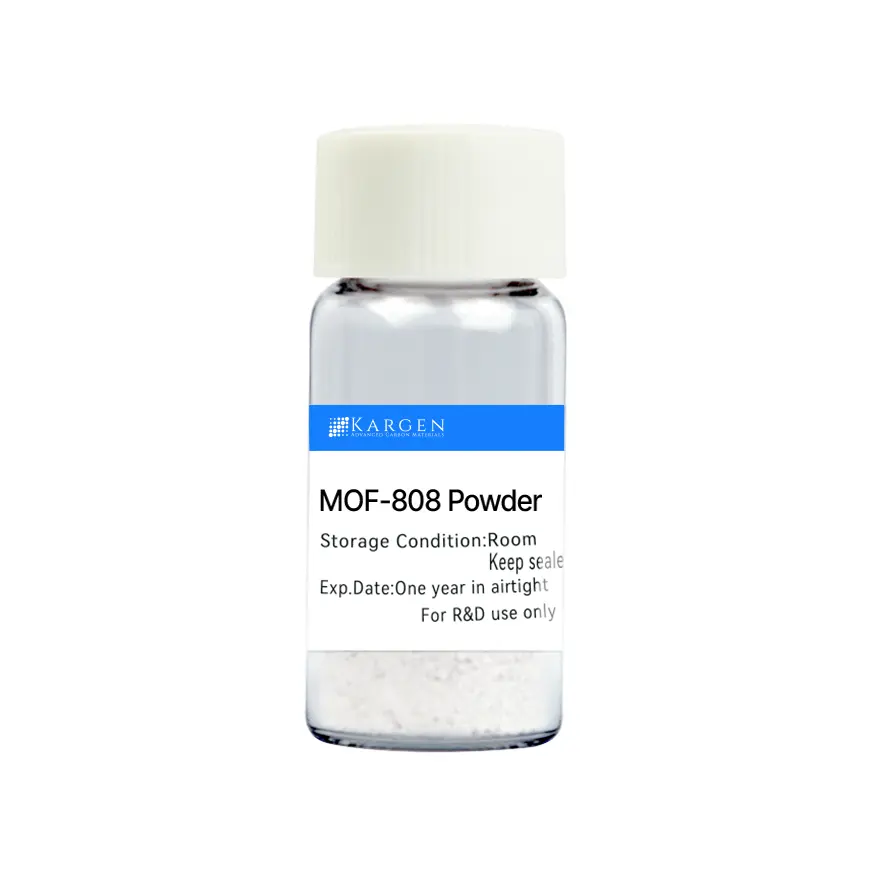
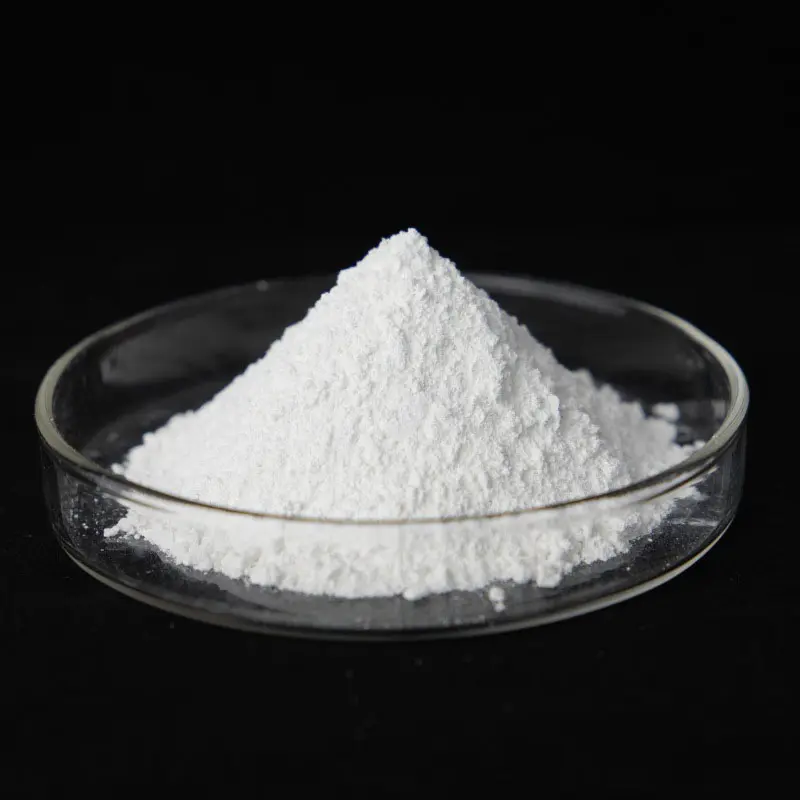
MOF-808
Particle Size
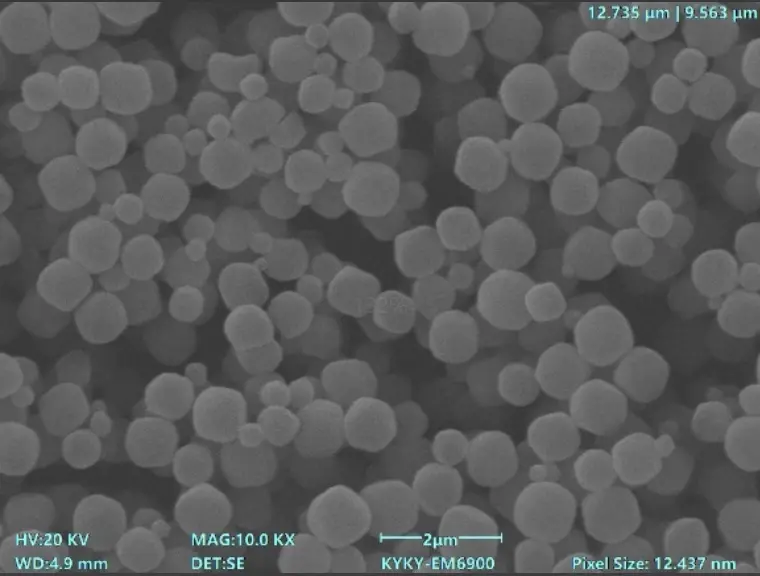
≈1 μm
Specific Surface Area
≥1600 ㎡/g
Pore Size
0.3~0.7, 1.1~1.6 nm
Product Description
The inorganic SBU in MOF-808 comprises Zr6(μ3-O)4-(μ3-OH)4(CO2)12 clusters (referred to as Zr6-clusters), wherein terminal formate anions can be further replaced by other functionalized ligands during MOF synthesis or by PSM, allowing for facile incorporation of targeted functional groups. The presence of large cavities with stable, open coordination sites amenable to PSM has made MOF-808 an attractive candidate for use in industrial processes such as methane oxidation to methanol, heavy metal ion capture, superacid catalysis, water capture, shape-selective catalysis and others.
Frequently Asked Questions
What is MOF-808 and its primary structural composition?
MOF-808 is a metal-organic framework featuring an inorganic secondary building unit (SBU) composed of Zr6(μ3-O)4-(μ3-OH)4(CO2)12 clusters (Zr6-clusters).
What are the key physical specifications of MOF-808?
MOF-808 features a particle size of approximately 1 μm, a specific surface area of ≥1600 ㎡/g, and dual pore size ranges of 0.3~0.7 nm and 1.1~1.6 nm.
What is Post-Synthetic Modification (PSM) in MOF-808?
Terminal formate anions in MOF-808 can be replaced by functionalized ligands during synthesis or through PSM, enabling the incorporation of specific functional groups into its large cavities.
What are the main industrial applications of MOF-808?
MOF-808 is widely utilized in methane oxidation to methanol, heavy metal ion capture, superacid catalysis, water capture, and shape-selective catalysis due to its stable, open coordination sites.
Why is MOF-808 suitable for catalytic applications?
Its large internal cavities combined with open coordination sites provide excellent accessibility for chemical reactions and functionalization, making it highly effective for targeted catalysis.









