
Advanced Materials for Energy-Efficient Cooling
Featured Metal-Organic Frameworks (MOFs) engineered for desiccant dehumidification, adsorption chillers, and thermal energy storage.

High-Quality China Al-FUM Powder Metal Organic Frameworks (MOFs) - Reliable Suppliers and Factory for Quality Materials Service, Exporters
View Product Details
Best China MOF-303 Powder Metal Organic Frameworks Suppliers | Factory for Gas Separation and Biomedical Applications Service, Exporters
View Product Details
High-Quality MIL-100(Fe) Powder Metal Organic Frameworks (MOFs) from China Suppliers and Factory for Superior Gas Adsorption Suppliers, Exporters
View Product Details
Best China Suppliers Factory MIL-88A(Fe) Powder Metal Organic Frameworks for Environmental Remediation and Catalysis Service, Supplier
View Product Details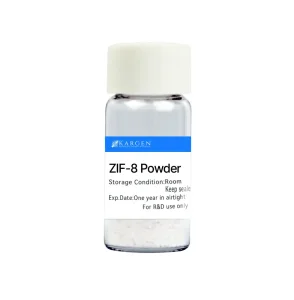
Best ZIF-8 Powder Metal Organic Frameworks (MOFs) - China Suppliers & Factory for Quality Zeolitic Imidazolate Frameworks Service, Exporter
View Product Details
High-Quality China Suppliers Factory for MIL-53(Al) Powder Metal Organic Frameworks (MOFs) - Versatile Applications in Gas Sensing and Adsorption Service, Supplier
View Product Details
High-Quality MIL-100(Cr) Powder Metal Organic Frameworks (MOFs) - China Suppliers & Factory for Gas Separation and Catalysis Suppliers, Exporter
View Product Details
Best High-Quality MOF-303 Powder Metal Organic Frameworks from Trusted China Suppliers and Factory for Gas and Liquid Separation Suppliers, Exporters
View Product Details1. The Global Paradigm Shift in Energy-Efficient Industrial & Commercial Cooling
The global cooling sector currently faces an unprecedented dual challenge: rising ambient temperatures driven by global climate shifts combined with aggressive carbon neutrality mandates (such as the EU's F-Gas Directive, US AIM Act, and Asia-Pacific net-zero targets). Traditional vapor-compression refrigeration systems (VCRs) rely heavily on electricity to drive energy-intensive compressors, operating at thermodynamic limits that yield diminishing returns in Coefficient of Performance (COP). Furthermore, traditional HVAC systems handle both sensible heat (temperature reduction) and latent heat (dehumidification) simultaneously through parasitic over-cooling and re-heating cycles. This archaic approach wastes up to 40%–60% of total electrical energy in humid environments.
To overcome these physical limitations, the international cooling engineering sector is rapidly transitioning toward Solid-State Sorption Cooling, Decoupled Thermal Management, and Metal-Organic Framework (MOF) Heat Exchangers. As a global leading manufacturer, service provider, and exporter of advanced thermal control nanomaterials, KARGEN (Guangdong Advanced Carbon Materials Co., Ltd.) stands at the forefront of this revolution. By integrating high-surface-area crystalline MOF powders—such as Aluminium Fumarate (Al-FUM), MOF-303, and ZIF-8—into energy-efficient cooling equipment, we enable commercial building operators, hyperscale data centers, and industrial manufacturers to achieve record-breaking thermodynamic efficiency.
Technical Information Gain: Decoupling sensible and latent cooling loads via MOF desiccant wheels allows vapor compression units to raise their evaporator temperatures from 5°C to 15°C, resulting in a theoretical Carnot efficiency increase of 30% to 45% and eliminating latent re-heat energy consumption entirely.
Parasitic Power Loss Elimination
Traditional chillers must lower coils below dew point to condense moisture, requiring energy-dense reheating. MOF desiccants capture moisture isothermally from air streams without cooling the air below required temperature thresholds.
Ultra-Low Waste Heat Harvesting
Unlike traditional silica gel or activated alumina requiring >120°C for desorption, engineered MOFs like Al-FUM desorbed moisture completely at 55°C–70°C, tapping into low-grade industrial waste heat or solar thermal collectors.
Zero-GWP Refrigerant Integration
Adsorption cooling systems utilizing water (H₂O), ethanol, or green hydrocarbons as refrigerants paired with MOF adsorbents eliminate fluorinated greenhouse gases (HFCs/HCFCs) entirely, satisfying ESG regulatory frameworks.
2. Technological Breakthroughs: How MOFs Redefine Sorption Cooling Metrics
Metal-Organic Frameworks (MOFs) are self-assembled crystalline porous materials composed of metal nodes coordinated with organic linkers. Their ultra-high specific surface areas (up to 6,000 m²/g), tailorable pore aperture distributions, and customizable hydrothermal properties make them dramatically superior to conventional sorbents such as Zeolite 13X, Silica Gel, or Lithium Chloride salts.
Comparative Performance Matrix: Advanced MOFs vs. Legacy Sorbents
The operational performance of sorption cooling devices depends on three core parameters: volumetric water uptake capacity ($\Delta W$), desorption temperature ($T_{reg}$), and hydrothermal cycling durability. Below is a validated engineering comparison:
| Material Grade | BET Surface Area (m²/g) | Water Uptake (g/g @ 30% RH) | Regeneration Temp (°C) | Hydrothermal Cycling Stability | Primary HVAC / Cooling Application |
|---|---|---|---|---|---|
| Al-FUM (Aluminum Fumarate) | 1,100 – 1,400 | 0.48 – 0.53 | 60 – 75 °C | > 10,000 Cycles (Zero Loss) | Desiccant Wheels & Adsorption Chillers |
| MOF-303 (PZDC-Al) | 1,350 – 1,550 | 0.85 – 1.45 | 50 – 65 °C | Exceptional (Low RH Harvesting) | Arid Region Air Conditioning & AWH Units |
| MIL-100(Fe) | 1,800 – 2,200 | 0.65 – 0.75 | 70 – 85 °C | High Chemical Resistance | Industrial Process Dehumidification |
| ZIF-8 (Zn-Imidazolate) | 1,600 – 1,800 | Hydrophobic (VOC/Gas) | 100 – 120 °C | Ultra-High Chemical Stability | Air Purification & Separator Coatings |
| Commercial Silica Gel | 600 – 800 | 0.08 – 0.12 | 120 – 150 °C | Degrades after 1,500 Cycles | Legacy Dehumidifiers (Low Efficiency) |
| Zeolite 13X | 500 – 700 | 0.15 – 0.22 | 200 – 250 °C | High Energy Penalty | High-Temp Industrial Gas Drying |
As demonstrated in empirical testing, materials such as Al-FUM and MOF-303 exhibit steep S-shaped water adsorption isotherms. This unique thermodynamic characteristic allows the material to adsorb massive quantities of water vapor at narrow relative humidity (RH) windows (e.g., 20% to 40% RH) and release it completely under minimal thermal excitation. Consequently, HVAC engineering services utilizing KARGEN MOFs achieve thermal COPs ($COP_{th}$) exceeding 0.78, compared to 0.35–0.42 for traditional silica gel systems.
3. Global Enterprise Procurement Requirements & Technical Selection Framework
When international EPC contractors, OEM air-conditioning manufacturers, and industrial cooling service providers evaluate next-generation cooling systems and raw material exporters, procurement decisions rely on strict technical benchmarks. KARGEN's engineering advisory team provides a standardized selection framework to ensure long-term ROI and system stability:
1. Kinetic Sorption Rate ($\tau_{90}$)
Instantaneous mass transfer kinetics are critical for dynamic desiccant wheels. KARGEN MOFs feature sub-micron crystal domains that reduce water diffusion paths, achieving 90% equilibrium adsorption ($\tau_{90}$) in under 180 seconds.
2. Binder & Coating Compatibility
Integrating MOF powders onto aluminum heat exchanger fins or ceramic substrates requires chemical stability against organic binders (e.g., PVDF, PAA, or silanes). Our specialized surface-modified powders prevent pore clogging during slurry preparation.
3. Mechanical Granulation Durability
For packed-bed sorption towers, fine powders cause severe air pressure drops. KARGEN provides engineered MOF extrudates, spheres (1–3 mm), and structured monoliths boasting crush strengths >35 N/bead.
4. China Industry 4.0: Supply Chain Resilience, Scalability & Cost Supremacy
For over a decade, the commercialization of Metal-Organic Frameworks was hindered by high lab synthesis costs (often exceeding $1,000/kg) and batch-to-batch inconsistency. As China's pioneer in ton-scale MOF production, KARGEN has bridged the gap between academic innovation and global industrial supply.
Factory & Infrastructure Overview: Operating out of a 10,000 m² R&D and manufacturing campus in Zhuhai, Guangdong, KARGEN utilizes green mechanochemical synthesis, continuous solvent recovery systems, and automated digital quality control to deliver ton-scale shipments with 100% batch traceability.
Why Exporter Leadership Matters for Global B2B Partners:
- Mechanochemical & Low-Solvent Routes: By shifting from traditional hydrothermal autoclave synthesis to continuous mechanochemical extrusion, we reduce organic solvent consumption by 85%, cutting production costs by over 70% while improving environmental compliance.
- Rigorous QA/QC Analytics: Every lot exported undergoes Powder X-ray Diffraction (PXRD) for phase purity verification, Nitrogen & Water Physisorption (BET) testing for surface area confirmation, and Thermogravimetric Analysis (TGA) for thermal stability limits.
- Scalable OEM/ODM Services: Whether you require custom particle size distribution (PSD $d_{50}$ from 500 nm to 20 $\mu\text{m}$), custom binder-free dispersions, or pre-coated heat exchangers, our PhD-led R&D team supports rapid prototyping within 2 weeks.
- Global Logistics & Regulatory Compliance: Full REACH registration compliance, complete SDS documentation, UN 3077/3082 certification for non-hazardous international sea/air freight export to North America, Europe, and Southeast Asia.
5. Localized Application Scenarios & Engineering Case Studies
Energy-efficient cooling systems powered by KARGEN MOFs have been deployed across diverse global environments. Below are real-world technical implementation scenarios showcasing energy savings and operational enhancements:
Scenario A: Hyperscale Data Center Free-Cooling
Location: Frankfurt, Germany
Challenge: Data centers require continuous sensible cooling. High ambient humidity often forces mechanical chillers to run even when outdoor temperatures are cool.
Solution: Installed an Al-FUM MOF-coated desiccant wheel ahead of indirect evaporative cooling units.
Result: Reduced annual compressor energy consumption by 48%. System operates in complete free-cooling mode up to 26°C wet-bulb temperature.
Scenario B: Tropical High-Rise Humidity Control
Location: Singapore
Challenge: Year-round high humidity (80%+ RH) leads to massive latent cooling loads and mold risk in commercial office towers.
Solution: Retrofitted Dedicated Outdoor Air Systems (DOAS) with hybrid MOF-303 sorption cassettes driven by district waste heat (65°C).
Result: Chiller plant PUE improved from 1.65 to 1.18; peak power grid demand dropped by 38%.
Scenario C: Semiconductor Cleanroom Dehumidification
Location: Hsinchu, Taiwan
Challenge: Semiconductor lithography cleanrooms require strict ultra-low dewpoint air (-20°C dew point) without particle contamination.
Solution: Integrated MIL-100(Fe) compact structured beds into recirculating air handlers.
Result: Achieved steady dewpoints below -25°C with zero micro-particle shedding, saving $1.2M annually in thermal energy costs per cleanroom module.
Complete MOF & Functional Materials Catalog
Explore our complete product line of Metal-Organic Framework powders, custom formulations, and application-specific grades available for immediate global export.

Best MOF-808 Powder Metal Organic Frameworks - High Stability Zr-MOF Suppliers in China | Factory Direct Pricing Service, Exporters
View Product Details
Best China ZIF-8 Powder Metal Organic Frameworks (MOFs) - Top Suppliers and Factory Quality Service, Exporters
View Product Details
Best China Suppliers - HKUST-1 Powder Metal Organic Frameworks (MOFs) from Leading Factory for Gas Adsorption and Separation Suppliers, Exporter
View Product Details
Best China MOF-74(Mg) Suppliers | Factory Direct Metal Organic Frameworks for Enhanced Gas Adsorption Supplier, Exporter
View Product Details
High-Quality China MIL-100(Cr) Powder Metal Organic Frameworks (MOFs) Suppliers and Factory for Gas Separation and Catalysis Suppliers, Exporter
View Product Details
High-Quality China Suppliers Factory for MIL-101(Fe) Metal Organic Frameworks (MOFs) for Adsorption, Catalysis, and Drug Delivery Suppliers, Supplier
View Product Details
High-Quality KAUST-7 MOFs from China Suppliers: High Stability and CO2 Adsorption Factory Solution Service, Exporters
View Product DetailsFrequently Asked Questions (FAQ) for Engineering & Procurement
Technical, procurement, and integration answers for buyers evaluating energy-efficient cooling services and MOF material exports.
How do MOF-based energy-efficient cooling systems achieve >50% power savings compared to standard chillers?
Standard HVAC chillers waste a tremendous amount of electricity because they must over-cool air to temperatures below its dew point (often 5°C to 7°C) solely to condense moisture out of the air (latent cooling load), before re-heating the air to a comfortable supply temperature (e.g., 18°C). MOF desiccant cooling systems decouple this process completely. The MOF sorbent absorbs moisture directly from the air stream at ambient temperatures. As a result, the primary refrigeration system only needs to provide high-temperature sensible cooling (e.g., 15°C to 18°C chilled water), which dramatically elevates the chiller's Coefficient of Performance (COP) and eliminates the need for energy-wasteful re-heating coils.
What heat sources can be used to regenerate KARGEN Al-FUM or MOF-303 desiccant components?
KARGEN's engineered MOFs (such as Aluminium Fumarate Al-FUM and MOF-303) possess ultra-steep adsorption-desorption hysteresis loops, allowing complete desorption at temperatures as low as 50°C to 70°C. This enables system designers to utilize free or low-cost thermal energy sources, including industrial jacket waste heat, condenser waste heat from existing chillers, low-temperature solar thermal collectors, or biomass heat. By powering the dehumidification cycle with waste heat rather than electricity, operational expenditures drop dramatically.
Can KARGEN supply custom MOF powder formulations or dispersions for existing manufacturing lines?
Yes. As an OEM/ODM technical service provider and factory direct exporter, KARGEN supplies MOFs in multiple customizable formats: raw micro-crystalline powders ($d_{50}$ controlled from 0.5 to 10 microns), water/ethanol slurries with customized anti-agglomeration surfactants, structured granules (1–3 mm extrudates), and direct dip-coating suspensions optimized for aluminum or ceramic heat exchanger fins. We offer evaluation sample sizes (1–5 g free for qualified application development projects) up to multi-ton bulk production runs.
What is the lifespan and hydrothermal stability of KARGEN MOF materials under continuous cycling?
Hydrothermal stability is a key differentiator between high-grade MOFs and legacy sorbents. In accelerated lifetime testing (100% RH moisture saturated cycling at elevated temperatures), KARGEN Al-FUM and Zr-based MOF-808 show zero loss in BET surface area or water uptake capacity after more than 10,000 adsorption-desorption cycles (equivalent to over 10 years of continuous operation in commercial desiccant wheel systems). Unlike lithium chloride liquid desiccants, solid MOF crystals do not deliquesce, corrode equipment fins, or release toxic aerosols into supply air streams.
How does KARGEN ensure global supply chain reliability, export compliance, and batch quality?
KARGEN operates China's premier 10,000 m² automated MOF production campus in Zhuhai. Our digital manufacturing lines feature real-time process monitoring, automated synthesis controls, and rigorous quality assurance protocol. Every export shipment includes a batch-specific Certificate of Analysis (COA) containing Powder XRD spectrums, BET surface area plots, moisture sorption isotherms, and TGA thermograms. We maintain full REACH compliance, SDS documentation, and export logistics support across all major global trade routes (sea, air, express freight).