
Featured MOF Products & Nanomaterial Portfolio (Part I)
Explore our laboratory-validated and industrial-scale Metal-Organic Framework powders available for global bulk supply and custom sample evaluation.
-
 Best China MOF-177 Powder Metal Organic Frameworks - Top Suppliers and Reliable Factory for Gas Storage and Drug Delivery Solutions Service, ExportersView Specifications & Quote
-
 High-Quality China NH2-MIL-101(Fe) Powder Metal Organic Frameworks Suppliers & Factory for Catalysis and Sensing Applications Suppliers, ExportersView Specifications & Quote
-
 Best China MIL-100(Al) Powder Metal Organic Frameworks (MOFs) - Top Suppliers and Factory for Catalytic Applications Suppliers, ExportersView Specifications & Quote
-
High-Quality High Surface Area MOF-177 Powder - Top China Suppliers & Factory for Gas Storage, Catalysis, and Drug Delivery Suppliers, ExportersView Specifications & Quote
-
 High-Quality China ZIF-67 Powder MOFs Supplier - High Surface Area Cobalt-Based Frameworks from Factory Supplier, ExporterView Specifications & Quote
-
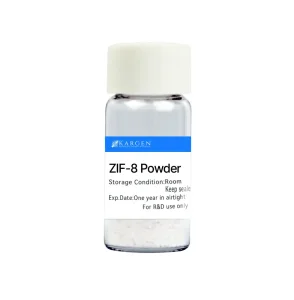 High-Quality High-Quality ZIF-8 Powder Metal Organic Frameworks (MOFs) from China Suppliers and Factory Service, SupplierView Specifications & Quote
-
High-Quality NH2-MIL-101(Fe) Powder Metal Organic Frameworks (MOFs) Suppliers, ExportersView Specifications & Quote
-
 Best TYUT-12 Powder Metal Organic Frameworks (MOFs) from China Suppliers - High Selectivity for C2H6 Over C2H4 Supplier, ExportersView Specifications & Quote
1. Technical Whitepaper: Crystallographic Structure & Adsorption Thermodynamics of HKUST-1 (Cu-BTC)
A authoritative overview of Copper Benzene-1,3,5-tricarboxylate architecture, open metal site coordination, and porosity metrics essential for industrial process engineers.
HKUST-1 (Hong Kong University of Science and Technology-1), chemically designated as copper(II) benzene-1,3,5-tricarboxylate and frequently referred to as Cu-BTC or MOF-199, represents one of the most thoroughly benchmarked and industrially vital Metal-Organic Frameworks (MOFs) in modern chemical engineering. Constructed from dimeric copper paddlewheel units $[Cu_2(COO)_4]$ coordinated to rigid organic trimesate linkers (1,3,5-benzenetricarboxylic acid), HKUST-1 forms a face-centered cubic lattice characterized by a highly accessible three-dimensional pore network.
Dual-Pore Bimodal Architecture
Features a complex pore hierarchy comprising main cavities of approximately 1.3 nm in diameter, interconnected by smaller 0.9 nm triangular windows, offering exceptional molecular sieving and internal volumetric space.
Uncoordinated Open Metal Sites (OMS)
Upon thermal activation, axial water ligands are removed from the $Cu^{2+}$ centers, yielding Lewis acidic open metal sites that exhibit strong dipole-quadrupole interactions with polarizable gases like $NH_3, CO_2, H_2S,$ and $H_2O$.
High Specific Surface Area
Commercially synthesized industrial-grade HKUST-1 from premier Chinese manufacturers routinely achieves BET surface areas exceeding 1,800 to 2,100 $m^2/g$, with total pore volumes reaching 0.75-0.85 $cm^3/g$.
To realize the maximum working capacity of HKUST-1 in gas separation and adsorption processes, vacuum activation at 120°C to 150°C for 6 to 12 hours is required. This process evacuates residual coordination solvents without inducing structural collapse of the framework, changing the material color from light turquoise to deep sapphire blue.
| Physical / Chemical Parameter | Standard Laboratory Spec | China Industrial Bulk Grade (KARGEN Spec) | Analytical Measurement Method |
|---|---|---|---|
| BET Specific Surface Area | 1,400 - 1,600 m²/g | > 1,850 - 2,100 m²/g | $N_2$ Adsorption Isotherm (77 K, Micromeritics) |
| Micropore Volume | 0.65 cm³/g | 0.78 - 0.84 cm³/g | t-plot method / HK method |
| Thermal Stability Limit | 200 °C | 240 °C (in inert $N_2$ atmosphere) | Thermogravimetric Analysis (TGA) |
| Bulk Density (Tapped) | 0.35 g/cm³ | 0.45 - 0.52 g/cm³ (Pelletized/Granulated) | ASTM D4164 Standard |
| Crystalline Phase Purity | > 92% | > 98.5% (Phase-pure cubic) | Powder X-ray Diffraction (PXRD) refinement |
| Form Factors Available | As-synthesized Powder | Powder, Extrudates, Pellets, Coated Monoliths | Industrial Shaping Technologies |
2. Strategic Advantages of Purchasing HKUST-1 from Top China Manufacturers
Analyzing the raw material supply integration, green solvent-free synthesis scale-up, and substantial cost reduction pathways delivered by Chinese advanced materials factories.
Historically, commercial deployment of Metal-Organic Frameworks was hindered by astronomical pricing—often exceeding $5,000 to $15,000 per kilogram when sourced from traditional Western laboratory chemical catalog vendors. China's emergence as a manufacturing powerhouse for advanced porous materials has fundamentally altered this landscape, enabling industrial scale-up of HKUST-1 at economics suitable for multi-ton industrial installations.
Upstream Chemical Integration
China accounts for over 70% of global production for 1,3,5-benzenetricarboxylic acid (BTC ligand) and ultra-pure copper precursor salts ($Cu(NO_3)_2$ and $Cu(CH_3COO)_2$). Direct integration eliminates intermediary markup and supply chain bottlenecks.
Mechanochemical & Continuous Flow Scale-up
Leading Chinese factories have transitioned from batch hydrothermal autoclaves to green mechanochemical reactive extrusion and continuous flow spray-drying. This dramatically reduces organic solvent usage (DMF/ethanol) and increases space-time yields.
Rigorous Digital QA/QC Testing
Every bulk export shipment from top suppliers undergoes full characterization—including PXRD pattern matching, nitrogen sorption surface area profiling, particle size distribution analysis (Laser Diffraction), and residual metal oxide checking.
3. Macro Industry Trends Driving HKUST-1 Demand Across Global Markets
From ESG zero-carbon initiatives to semiconductor gas purification, discover why international enterprises are scaling HKUST-1 implementation.
Semiconductor Cleanroom Gas Scrubbing
The rapid expansion of sub-3nm wafer fabrication requires ultra-high-purity gases free of trace ammonia ($NH_3$), phosphine ($PH_3$), and hydrogen sulfide ($H_2S$). HKUST-1's accessible $Cu^{2+}$ open metal sites chemically bind basic polar gases with irreversible specificity down to single-digit ppb (parts per billion) levels.
Next-Gen Low-Energy HVAC Dehumidification
Traditional silica gel and zeolites require high regeneration temperatures (120-180°C). Modified HKUST-1 composites enable low-temperature thermal desorb (<70°C), allowing desiccant HVAC systems to harvest waste heat from industrial chillers or solar thermal collectors, slashing building energy consumption by up to 45%.
Solid-State Methane (ANG) & Hydrogen Storage
Adsorbed Natural Gas (ANG) systems operating at moderate pressures (35-100 bar) utilize HKUST-1 pellets to achieve volumetric methane storage capacities matching compressed natural gas (CNG at 250 bar), enhancing safety and drastically reducing heavy tank wall thicknesses.
4. Localized Application Scenarios & Industrial Process Integration
Real-world engineering implementation guidelines for deploying HKUST-1 across petrochemical, pharmaceutical, environmental, and gas separation units.
In petrochemical ethylene cracking plants, cryogenic distillation of acetylene ($C_2H_2$) from ethylene ($C_2H_4$) is exceptionally capital and energy-intensive. HKUST-1 selectively binds acetylene over ethylene due to the synergistic interaction between the open $Cu^{2+}$ sites and the $\pi$-electrons of the $C\equiv C$ triple bond.
- Selectivity factor ratio ($C_2H_2 / C_2H_4$) > 4.8 at 298 K.
- Produces polymer-grade ethylene (>99.999% purity) in a single adsorption pass.
- Replaces solvent-absorption columns, eliminating DMF toxic waste streams.
Military and industrial gas masks historically relied on ASSTM impregnated carbons, which have low physical capacity for low-boiling toxic chemicals. Impregnating HKUST-1 onto carbon fibers or non-woven substrates provides reactive detoxification of lethal industrial gases.
- Instantaneous chemisorption of Ammonia ($NH_3$), Hydrogen Cyanide ($HCN$), and Sulfur Dioxide ($SO_2$).
- High dynamic breakthrough times under high air velocity conditions.
- Custom binder-free pellet formulations for heavy industrial respirators.
While HKUST-1 exhibits remarkable structural strength in dry or acidic environments, prolonged exposure to liquid water or liquid humidity (>75% RH at elevated temperatures >60°C) can cause slow hydrolysis of the copper-carboxylate bond. Top manufacturers recommend hydrophobic shell coatings (e.g., PDMS vapor deposition) or composite blending when HKUST-1 is intended for humid flue-gas applications.
5. Global Enterprise Procurement & Export Compliance Protocol
A standardized audit checklist for global procurement managers evaluating HKUST-1 manufacturers in China.
1. Sample Evaluation & Bench Test
Request 100g to 1kg validation samples. Verify BET surface area, pore size distribution, and dynamic breakthrough curve under specific gas composition and temperature settings.
2. Factory Quality System Audit
Confirm ISO9001 quality management, ISO14001 environmental safety compliance, and REACH certification (for EU exports). Verify batch-to-batch PXRD overlay consistency.
3. Specialized Export Packaging
HKUST-1 is moisture-sensitive. Ensure bulk goods are vacuum-sealed in double-layer aluminum foil barrier bags within UN-certified steel drums with desiccant protection.
6. Frequently Asked Questions (FAQ) for HKUST-1 Purchasing & Engineering
Comprehensive answers to common procurement, technical, and logistics queries from international buyers.
Featured MOF Products & Nanomaterial Portfolio (Part II)
Complete product listings including specialized MIL, MOF, and ZIF series frameworks synthesized for industrial gas separation and catalysis.
-
 High-Quality High-Quality MIL-101(Al) Powder Metal Organic Frameworks from China Suppliers and Factory Exporters, ExporterView Specifications & Quote
-
 High-Quality MOF-303 Powder Metal Organic Frameworks Suppliers in China - Leading Factory for Gas & Liquid Separation Solutions Service, ExporterView Specifications & Quote
-
 Best MIL-101(Fe) Powder Metal Organic Frameworks (MOFs) – Reliable China Suppliers & Factory for Adsorption and Catalysis Service, SuppliersView Specifications & Quote
-
 High-Quality China MIL-100(Cr) Powder Metal Organic Frameworks (MOFs) - Leading Suppliers and Factory Direct Products Suppliers, ExporterView Specifications & Quote
-
 Best China Suppliers Factory for MIL-101(Cr) Powder Metal Organic Frameworks (MOFs) - High Surface Area for Adsorption and Catalysis Service, ExporterView Specifications & Quote
-
High-Quality China MOF-303 Suppliers: High-Quality Factory Product for Gas and Liquid Separation Applications Service, ExporterView Specifications & Quote
-
High-Quality China MIL-101(Al) Powder Metal Organic Frameworks (MOFs) - Reliable Suppliers & Factory Direct Pricing Suppliers, ExportersView Specifications & Quote
-
 Best China Suppliers - HKUST-1 Powder Metal Organic Frameworks (MOFs) from Leading Factory for Gas Adsorption and Separation Suppliers, ExporterView Specifications & Quote