
1 / 1
High-Quality NH2-MIL-101(Fe) Powder Metal Organic Frameworks (MOFs) Suppliers, Exporters
Product Description
Product Specifications
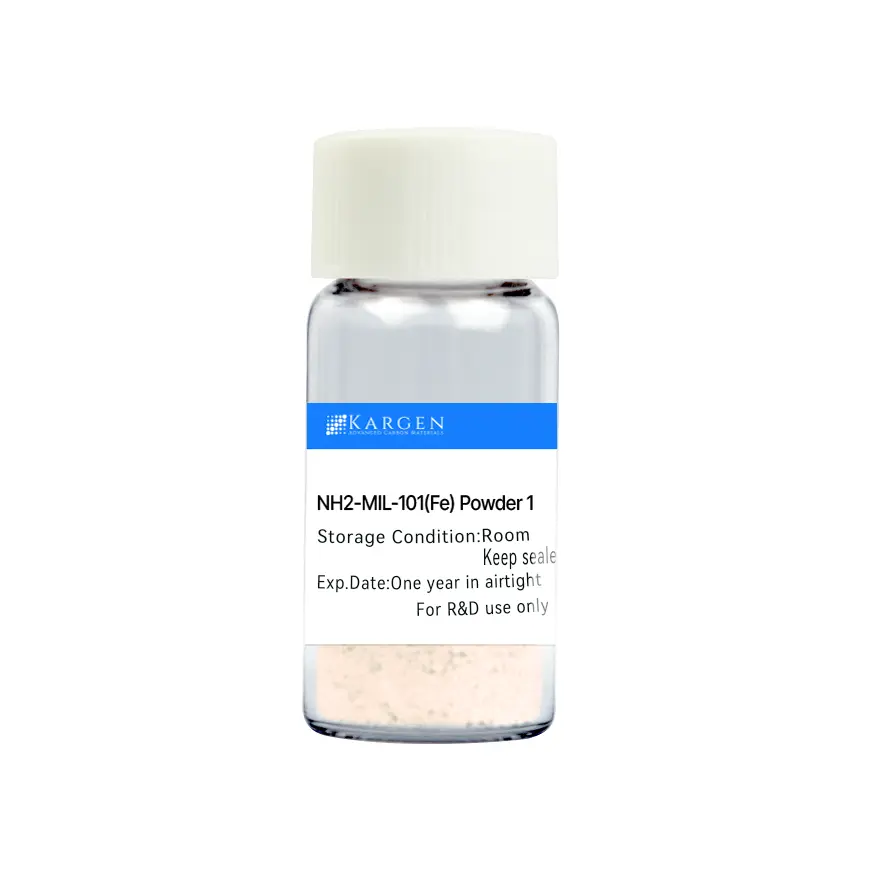
| Product Name | NH2-MIL-101(Fe) |
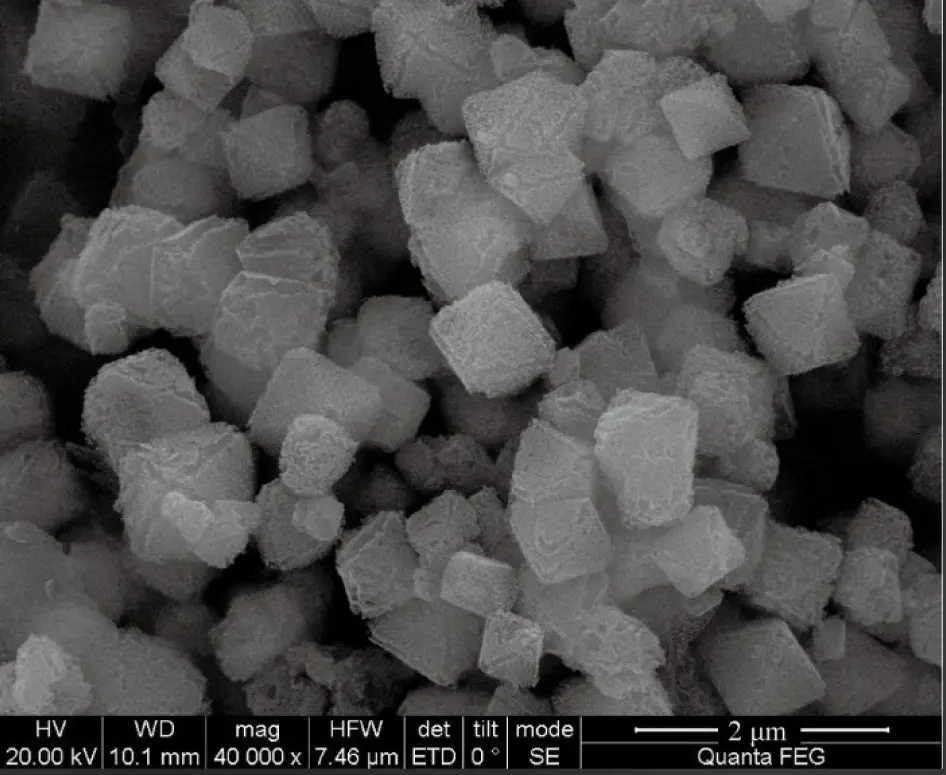
| Particle size | 0.8~1.0 μm |
| Specific surface area | ≥260 ㎡/g |
| Pore size | ≈2.1 nm |
Key Applications
Catalytic Applications
Electrocatalytic Nitrogen Fixation: NH2-MIL-101(Fe) serves as a support for Au-Cu nanoalloys, enhancing nitrogen fixation efficiency by improving N2 adsorption and reducing the energy barrier for N2 bond cleavage, achieving a notable NH3 yield of 161.07 μg h−1 mg-1cat. and a Faradaic efficiency of 58.86%.
Ammonia Synthesis: The framework facilitates multi-site catalysis, activating both N2 and H2 under mild conditions, which is crucial for sustainable ammonia production.
Sensing Applications
Electrochemical Detection: NH2-MIL-101(Fe) nanoparticles have been integrated into sensors for simultaneous detection of caffeic acid and acetaminophen, demonstrating high sensitivity with detection limits of 29 nM and 24 nM, respectively.
Lead Ion Detection: Functionalized NH2-MIL-101(Fe) has been developed as a fluorescent biosensor for lead ions, achieving a detection limit of 9.51 ppb, showcasing its potential in environmental monitoring.
While NH2-MIL-101(Fe) exhibits remarkable capabilities, challenges remain in optimizing its performance for large-scale applications and ensuring stability under various operational conditions.
Frequently Asked Questions (FAQ)
What are the physical specifications of NH2-MIL-101(Fe)?
NH2-MIL-101(Fe) features a particle size of 0.8~1.0 μm, a specific surface area of ≥260 ㎡/g, and a pore size of approximately 2.1 nm.
How does NH2-MIL-101(Fe) assist in electrocatalytic nitrogen fixation?
It serves as a support for Au-Cu nanoalloys, improving N2 adsorption and lowering the energy barrier for N2 bond cleavage. This enables an NH3 yield of 161.07 μg h−1 mg-1cat. and a Faradaic efficiency of 58.86%.
What role does NH2-MIL-101(Fe) play in ammonia synthesis?
The framework facilitates multi-site catalysis, activating both N2 and H2 under mild conditions to support sustainable ammonia production.
What are the electrochemical detection limits of NH2-MIL-101(Fe) sensors?
When integrated into electrochemical sensors, it achieves high sensitivity with detection limits of 29 nM for caffeic acid and 24 nM for acetaminophen.
Can NH2-MIL-101(Fe) be used for environmental monitoring of lead ions?
Yes, functionalized NH2-MIL-101(Fe) works as a fluorescent biosensor capable of detecting lead ions with a low detection limit of 9.51 ppb.
What are the current limitations or challenges for NH2-MIL-101(Fe)?
Key challenges include optimizing performance for large-scale industrial applications and maintaining structural/operational stability under diverse working conditions.









