
Featured Nanostructured Sorbents & MOFs (Part I)
High-surface-area catalytic and gas-adsorption materials engineered for advanced humidity management and thermal exchange systems.

Best China ZIF-8 Powder MOFs Factory: Leading Suppliers for High-Performance Adsorption and Catalysis Solutions Service
View Specifications
High-Quality China MIL-101(Al) Powder Metal Organic Frameworks (MOFs) - Reliable Suppliers and Factory Direct Pricing
View Specifications
Best China Suppliers Factory for UIO-66 Powder Metal Organic Frameworks (MOFs) - Advanced Applications in Catalysis and Adsorption
View Specifications
Best China Suppliers Factory of MIL-101(Cr) Powder Metal Organic Frameworks for Gas Adsorption and Catalysis Exporters
View Specifications
Best MIL-100(Cr) Powder Metal Organic Frameworks - Top China Suppliers and Factory for Gas Separation and Catalysis Service
View Specifications
Best China Suppliers Factory MIL-88A(Fe) Powder Metal Organic Frameworks for Environmental Remediation and Catalysis Service
View Specifications
Best MIL-101(Fe) Powder Metal Organic Frameworks (MOFs) Supplier, Exporters & Manufacturers
View Specifications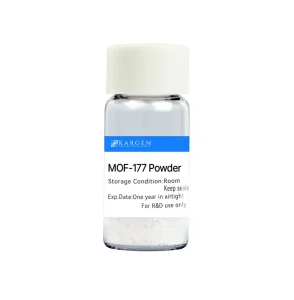
High-Quality China MOF-177 Powder Metal Organic Frameworks - High Surface Area for Gas Storage, Separation, and Drug Delivery
View SpecificationsThe Paradigm Shift in Commercial & Industrial Climate Control
Evaluating the evolution from high-emission vapor compression systems to low-carbon, sorbent-assisted HVAC solutions engineered with advanced porous solids.
Latent Heat Penalty
Conventional HVAC systems overcool air below its dew point to condense humidity, then reheat it to human comfort zones—wasting up to 45% of total building electrical energy on moisture removal alone.
Isothermal Desiccant Decoupling
By utilizing solid-state sorbents like Metal-Organic Frameworks (Al-FUM, MIL-101), latent humidity loading is decoupled from sensible cooling. Chiller operational temperatures rise from 7°C to 16°C, yielding massive COP improvements.
Low-Grade Waste Heat Utilization
Advanced MOF desiccants exhibit ultra-steep adsorption isotherms with regeneration thresholds below 65°C, allowing heat wheels and chillers to run on solar-thermal collectors or process waste heat.
Emerging Trends in Industrial Humidity & Air Conditioning Services
Comparing classic silica gels and zeolites against customized porous coordination polymers for targeted moisture management.
The global market for Humidity and Air Conditioning Services & Suppliers is undergoing its most radical transformation since the invention of modern mechanical refrigeration. Global decarbonization mandates (EU EPBD, US ASHRAE 90.1, and China Double Carbon Targets) have forced HVAC manufacturers and facility operation specialists to re-engineer core thermal management physics.
Traditional HVAC equipment relies heavily on vapor compression cooling coils to handle both sensible cooling (lowering dry-bulb temperature) and latent cooling (condensing water vapor). In humid climates or specialized industrial facilities (such as lithium-ion battery dry rooms, pharmaceutical cleanrooms, and food processing plants), humidity accounts for more than 60% of the net cooling load. Conventional desiccant wheels utilizing Silica Gel or Zeolite 13X suffer from structural limitations: high regeneration temperatures (120°C–150°C), low water uptake capacity at low relative humidity (RH < 30%), and high parasitic energy penalties.
The Nanomaterial Revolution: MOFs in HVAC Architecture
Metal-Organic Frameworks (MOFs)—crystalline porous materials composed of metal nodes coordinated to organic linkers—represent the state of the art in sorbent technology. Through precise molecular engineering of pore aperture diameter and hydrophilic/hydrophobic internal pore surfaces, MOFs like Al-FUM (Aluminium Fumarate), ZIF-8, and MIL-101(Al) exhibit S-shaped water vapor adsorption isotherms. This allows step-like water capture at specific relative humidity thresholds and complete desorption at ultra-low energy levels.
| Desiccant / Sorbent Grade | Pore Structure Type | Regeneration Temp (°C) | Water Uptake (g/g @ 80% RH) | Hydrothermal Stability | Primary HVAC / Dehumidification Application |
|---|---|---|---|---|---|
| Al-FUM (Aluminium Fumarate) | 1D Microchannels | 55°C - 70°C | 0.52 g/g | Exceptional (>10,000 cycles) | Adsorption Chillers, Desiccant Wheels, AWH |
| MIL-101(Al) / MIL-101(Cr) | Mesoporous Cage (29-34 Å) | 70°C - 85°C | 1.35 - 1.45 g/g | High Structural Integrity | High-Capacity Industrial Dehumidifiers |
| ZIF-8 (Zinc Imidazolate) | Sodalite Topology (3.4 Å) | 80°C - 100°C | 0.35 g/g (Hydrophobic) | Extreme Chemical / Solvent Stability | VOC Adsorption, Separator Coatings |
| Standard Silica Gel | Amorphous Porous Silica | 120°C - 140°C | 0.25 - 0.35 g/g | Pore Collapses over time | Legacy Commercial HVAC Desiccant Wheels |
| Zeolite 13X | Crystalline Aluminosilicate | 180°C - 250°C | 0.22 g/g | High Thermal Tolerance | Deep Industrial Gas Drying (<-40°C Dew Point) |
Global Enterprise Purchasing Criteria for HVAC & Dehumidification Systems
Strategic qualification metrics for chief engineers, procurement directors, and system integrators sourcing high-efficiency environmental equipment.
1. Coefficient of Performance (COP) & Energy Metrics
Enterprise procurement teams must evaluate the combined Thermal COP ($COP_{th}$) and Electrical COP ($COP_{el}$) of humidity control solutions. Premium suppliers provide integrated thermal modeling demonstrating system COP improvements from baseline values of 2.8–3.2 up to >5.5 when pairing MOF desiccant heat exchangers with low-grade waste hot water (<70°C).
2. Hydrothermal Degradation & Lifecycle Analysis
Sorbent durability directly impacts equipment CAPEX payback horizons. Suppliers should present multi-cycle water sorption kinetics, demonstrating less than 3% capacity loss across 10,000 rapid sorption-desorption cycles under aggressive RH transitions (10% to 90% RH) and continuous thermal stress.
3. Industrial Scalability & Binder Compatibility
Porous materials must be seamlessly processed into commercial forms—coated heat exchanger fins, honeycomb desiccant wheels, or extruded structured monoliths—without blocking open metal sites or restricting mass transfer rates. High-tier suppliers provide ready-to-coat water-based slurries and customized dispersions.
4. Total Cost of Ownership (TCO) & Carbon Footprint
Evaluating initial procurement cost against long-term operational expenditures (OPEX). Advanced MOF desiccant integration lowers annual kWh consumption by up to 48%, significantly reducing Scope 2 indirect carbon emissions for corporate ESG reporting.
Macro Industry Solutions for High-Precision Climate Control
Tailored moisture management and air conditioning frameworks for mission-critical commercial and industrial facilities.
Pharmaceutical & Semiconductor Cleanrooms
Cleanrooms demand strict humidity tolerances (±2% RH) to prevent hygroscopic powder agglomeration, biological contamination, or microchip oxidation. Our MOF-based desiccant systems deliver continuous sub-zero dew points (< -40°C) while reducing chiller refrigeration loads by up to 55%.
Lithium Battery Dry Room Air Conditioning
Battery cell manufacturing requires ultra-dry air environments (-45°C to -60°C dew point) to prevent lithium metal degradation and hydrofluoric acid formation. By utilizing structured MIL-101 and Al-FUM sorbent matrices, dry room HVAC units achieve energy savings of 35%–50% over legacy active alumina systems.
Atmospheric Water Harvesting (AWH) Systems
Off-grid and arid zone water generation systems utilize thermal-swing MOF beds to capture clean potable water directly from low-humidity air (down to 15% RH). Powered entirely by solar-thermal inputs, these units yield over 3.5 liters of clean water per kilogram of material daily.
Localization Support & Global Quality Assurance Standards
Ensuring full regulatory compliance, rapid international distribution, and batch-to-batch structural integrity.
Procuring advanced humidity control systems and specialized chemical sorbents requires adherence to international chemical safety regulations, environmental standards, and local installation codes. Leading service providers and suppliers maintain comprehensive compliance frameworks to safeguard global supply chains.
Regulatory & Environmental Certifications
- REACH & RoHS Compliance: Full compliance with European Chemicals Agency (ECHA) standards ensuring zero restricted SVHC compounds in porous metal substrates or linkers.
- ISO 9001:2015 & ISO 14001:2015: Certified quality management and environmental protection systems covering ton-scale synthesis, binder coating, and final assembly testing.
- UL & CE Marking: Complete electrical and mechanical safety integration for automated desiccant air conditioning equipment distributed across North America and the European Economic Area.
Localized Technical Support & OEM Customization
- Global Field Engineering: On-site operational testing, psychrometric performance modeling, and retrofit integration assistance for existing commercial HVAC infrastructure.
- Custom Powder & Dispersion Formulations: OEM/ODM capability to adjust particle size distributions (0.5μm to 50μm), surface hydro-affinity, and slurry viscosity for spray-coating onto aluminum heat exchanger fins.
- Guaranteed Rapid Sample Evaluation: 1–5 gram evaluation samples shipped worldwide within 48 hours for laboratory verification and thermal characterization.
Technology Roadmap & Future Horizons in Climate Engineering
Exploring the convergence of artificial intelligence, direct air capture (DAC), and solid-state thermochemical heat storage.
AI-Guided MOF Material Discovery
High-throughput computational screening and machine learning algorithms are accelerating the development of next-generation MOF crystal structures with ultra-low regeneration energies (<45°C) and tailored step-adsorption positions.
Thermochemical Thermal Energy Storage
Integrating MOF-water vapor working pairs into seasonal thermal energy storage (STES) units. Excess summer solar-thermal energy is stored loss-free as chemical potential and released during winter for space heating.
Dual-Function HVAC & Direct Air Capture (DAC)
Hybrid climate control systems capable of simultaneously regulating building indoor air quality/humidity while selectively capturing ambient $CO_2$ from ventilation exhaust air streams for localized sequestration or utilization.
Expert Q&A: Humidity & Air Conditioning Services & Material Selection
In-depth technical answers addressing operational mechanics, retrofit feasibility, energy optimization, and procurement.
How does MOF-based desiccant dehumidification compare to traditional compressor cooling in commercial air conditioning?
Traditional compressor cooling removes humidity by chilling air below its dew point (often to 4°C–7°C) to force condensation, requiring significant energy to lower the temperature and additional energy to reheat the air to supply conditions (20°C–22°C). MOF-based desiccant systems extract water vapor directly from the air stream isothermally via high-affinity physical adsorption. This decouples humidity control from sensible cooling, allowing chillers to operate at higher chilled water temperatures (14°C–18°C), increasing compressor electrical efficiency by 30% to 55%.
What heat sources are required to regenerate MOF materials like Al-FUM or MIL-101 in desiccant wheels?
One of the primary structural advantages of engineered MOFs (such as Aluminium Fumarate, Al-FUM) is their low-temperature desorption profile. Unlike conventional silica gel or zeolites that require regeneration temperatures between 120°C and 200°C, Al-FUM can fully desorb captured moisture at temperatures between 55°C and 70°C. This threshold allows system integrators to drive desiccant regeneration using low-grade waste heat from industrial condenser loops, solar thermal hot water arrays, or data center liquid-cooling waste streams.
Can MOF sorbent materials be retrofitted into existing commercial HVAC air handling units (AHUs)?
Yes. Advanced MOF materials are available as formulated slurry coatings, liquid dispersions, and structured composite beds that can be directly applied to standard aluminum heat exchanger fins, rotary enthalpy wheels, or fixed-bed matrix blocks. System suppliers offer direct drop-in replacement desiccant cassettes and MOF-coated heat exchanger coils designed to fit standard AHU dimensions without requiring structural ductwork modifications.
What is the operational lifespan and hydrothermal degradation rate of MOF sorbents under continuous humidity cycling?
Industrial-grade MOFs designed for environmental conditioning undergo rigorous hydrothermal aging tests. Top-tier materials such as MIL-101(Al) and Al-FUM demonstrate exceptional framework stability, maintaining over 97% of their initial BET surface area and water sorption capacity after 10,000 rapid condensation-evaporation cycles. Under typical commercial HVAC operation, equipment operating life spans 10 to 15 years with minimal sorbent degradation.
How do MOF suppliers ensure batch-to-batch consistency and high structural purity for ton-scale orders?
Leading suppliers like KARGEN (Guangdong Advanced Carbon Materials Co., Ltd.) utilize automated, solvent-minimized mechanochemical and hydrothermal continuous-flow production lines. Every ton-scale production batch undergoes rigorous digital quality control verification, including Powder X-Ray Diffraction (PXRD) for crystal phase purity, Nitrogen/Water N2/H2O physisorption analysis for BET surface area verification, and Thermogravimetric Analysis (TGA) for thermal stability documentation.
What process is required to request evaluation samples for OEM R&D projects?
R&D engineering teams and procurement specialists can request 1–5 gram free evaluation samples by submitting technical project parameters (target working humidity range, available regeneration temperature, and application form factor). Qualified corporate and research partners receive material sample kits accompanied by comprehensive safety data sheets (SDS) and lot-specific Certificates of Analysis (COA).
Specialized MOF Materials & Sorbents (Part II)
High-purity coordination polymers engineered for precise gas separation, CO2 capture, and thermal management.

Best NH2-MIL-101(Fe) Powder - Top China Suppliers & Factory for Metal Organic Frameworks (MOFs) in Catalysis and Sensing
View Specifications
Best Al-FUM Powder Metal Organic Frameworks (MOFs) from China Suppliers and Factory - High-Quality Al(OH)(fum) Production
View Specifications
Best MIL-100(Al) Powder - Premium Metal Organic Frameworks from Leading China Suppliers and Factory Supplier
View Specifications
High-Quality MOF-74(Mg) Powder Metal Organic Frameworks - Leading CO2 Adsorption Solutions from China Suppliers & Factory
View Specifications
High-Quality High Surface Area MOF-177 Powder - Top China Suppliers & Factory for Gas Storage, Catalysis, and Drug Delivery
View Specifications
High-Quality TYUT-12 Powder Metal Organic Frameworks (MOFs) Supplier, Exporters & Advanced Catalytic Material Factory
View Specifications
Best China MIL-101(Al) Powder Metal Organic Frameworks (MOFs) Suppliers and Factory for Advanced Material Solutions Exporters
View Specifications