High-Performance MOF Carbon Capture Powders & Adsorbents
Direct factory supply of engineered metal-organic frameworks featuring benchmark volumetric capacity, high hydrothermal stability, and low desorption energy thresholds.
The Paradigm Shift in Carbon Capture: Why MOF Technologies Outperform Legacy Solvents
Global industrial decarbonization has reached a critical inflection point. As corporate commitments shift from symbolic carbon offset purchases toward verifiable point-source flue capture and Direct Air Capture (DAC) projects, traditional liquid amine scrubbing (such as Monoethanolamine or MEA) faces severe operational bottlenecks. Monoethanolamine systems suffer from massive thermal energy penalties for solvent regeneration (typically requiring 3.5 to 4.5 GJ/ton CO₂ captured), severe chemical degradation from oxygen and trace contaminants ($SO_x/NO_x$), and toxic aerosol emissions.
Metal-Organic Frameworks (MOFs)—crystalline, hybrid porous materials composed of metal nodes coordinated to organic linkers—represent the most significant material science breakthrough for gas separation in two decades. By leveraging customizable pore apertures, open metal site chemistries, and ultra-high BET surface areas exceeding 2,000–6,000 $m^2/g$, engineered MOF materials reduce the levelized cost of carbon capture (LCOC) by up to 45% compared to conventional chemical solvents and synthetic zeolites.
Engineering the Pore Space: Physisorption vs. Chemisorption Mechanisms
A rigorous evaluation of thermodynamic parameters governing MOF performance across point-source and DAC environments.
Open Metal Site (OMS) Chemistry
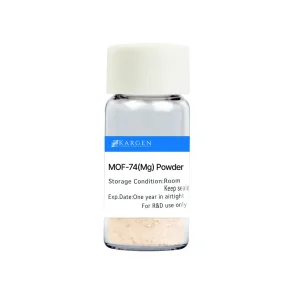
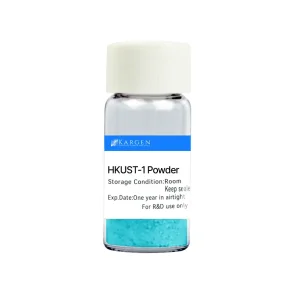
Frameworks such as MOF-74(Mg) and HKUST-1 utilize coordinatively unsaturated metal cations exposed within the pore channels. These OMS nodes act as strong Lewis acids, exerting powerful electrostatic interactions with the quadrupole moment of carbon dioxide molecules ($CO_2$).
- Isosteric Heat of Adsorption ($\Delta H_{ads}$): 38 - 47 kJ/mol
- Ideal for low partial pressure capture (Flue gas < 15% $CO_2$)
- High selectivity over Nitrogen ($N_2$) and Argon ($Ar$)
Hydrophobic Pore Walls & Moisture Tolerance
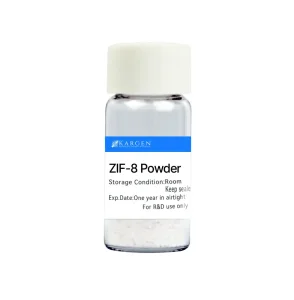
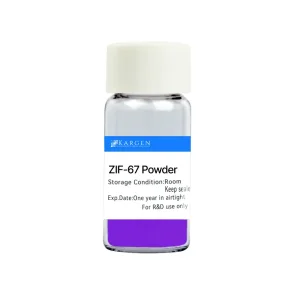
Zeolitic Imidazolate Frameworks (ZIF-8, ZIF-67) feature hydrophobic organic linkers that prevent competitive water vapor co-adsorption—a major failure point for conventional Zeolite 13X materials under humid industrial flue gas conditions.
- Contact Angle > 135° demonstrating inherent water repulsion
- Sustained operational capacity at > 80% Relative Humidity
- Prevents pore condensation and rapid capacity loss
Breathing Mechanics & Flexible Frameworks
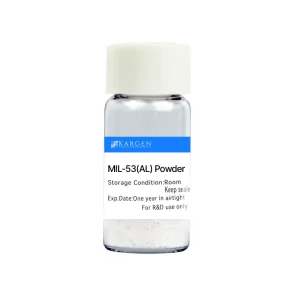
Flexible frameworks like MIL-53(Al) exhibit structural transitions ("breathing" effects) induced by guest molecule adsorption. This non-linear isotherm enables stepped desorption profiles under minimal pressure swings.
- Drastically reduced vacuum requirements during VSA cycles
- High mechanical resilience during repeated pressure cycling
- Lower structural attrition during bed compaction
Benchmarking MOF Technology Against Legacy Sorbents
Empirical technical data illustrating why global engineering EPCs are specifying MOF adsorbents for next-generation carbon capture plants.
| Adsorbent / Media Type | BET Surface Area ($m^2/g$) | $CO_2$ Capacity (15% flue gas, 25°C) | Regeneration Temp (°C) | Energy Penalty (GJ/t $CO_2$) | Moisture Resistance |
|---|---|---|---|---|---|
| Liquid Amine (30 wt% MEA) | N/A (Liquid) | 1.2 - 1.5 mmol/g | 120 - 140 °C | 3.6 - 4.2 GJ/t | Degrades rapidly |
| Zeolite 13X | 600 - 700 | 2.1 - 2.6 mmol/g | 180 - 250 °C | 2.8 - 3.4 GJ/t | Severe degradation (Hydrophilic) |
| Activated Carbon | 800 - 1,200 | 0.8 - 1.2 mmol/g | 100 - 120 °C | 2.2 - 2.6 GJ/t | Moderate |
| MOF-74(Mg) Powder | 1,400 - 1,600 | 6.5 - 8.5 mmol/g | 80 - 100 °C | 1.7 - 2.1 GJ/t | Engineered stable options |
| ZIF-8 (Mechanochemical) | 1,300 - 1,700 | 2.4 - 3.2 mmol/g | 60 - 80 °C | 1.5 - 1.8 GJ/t | Exceptional (Hydrophobic) |
| KAUST-7 (Custom Sorbent) | 850 - 1,100 | 4.2 - 5.1 mmol/g | 70 - 90 °C | 1.6 - 1.9 GJ/t | High Selectivity under Humidity |
Macro-Industry Carbon Capture Solutions & Granulation Technologies
Custom structured contactors, extrudates, monoliths, and mixed-matrix membranes tailored to enterprise compliance mandates.
Coal & Gas Fired Power Plants
Processing ultra-large flue streams requiring massive volumetric throughput without pressure drop constraints.
- Sorbent Grade: Mechanochemical ZIF-8 & MOF-74(Mg) pellets
- System Integration: Vacuum Temperature Swing Adsorption (VTSA)
- Benefit: 40% reduction in auxiliary power parasitic draw
Cement & Steel Industry Decarbonization
High temperature and high $CO_2$ content streams (20-30% concentration) carrying particulates and acidic contaminants.
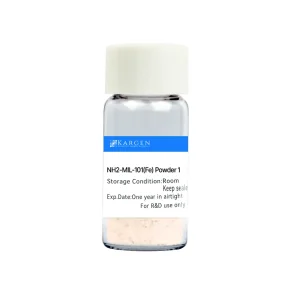
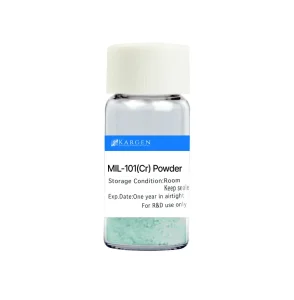
- Sorbent Grade: MIL-101(Cr) & NH2-MIL-101(Fe) structured contactors
- System Integration: Dual-bed Temperature Swing Adsorption
- Benefit: Resists sulfur oxides ($SO_x$) and heavy metal fouling
Direct Air Capture (DAC) Facilities
Capturing ambient $CO_2$ (~420 ppm) requires ultra-fast kinetics and extreme adsorption affinity at low partial pressures.
- Sorbent Grade: Amine-functionalized MOF powders & KAUST-7
- System Integration: Low-temperature steam desorption modules
- Benefit: Unrivaled capture rates under ambient atmospheric air flow
From Gram-Scale Synthesis to Ton-Scale Global Logistics
One of the primary roadblocks facing corporate procurement managers is the "Valley of Death" in advanced material commercialization—where promising laboratory MOF structures fail to scale up to multi-ton factory orders with batch-to-batch chemical fidelity. Founded by returning international scientists, Guangdong Advanced Carbon Materials Co., Ltd. (KARGEN) bridges this gap via proprietary continuous-flow mechanochemical processes and automated green solvent recovery systems.
Phase 1: Lab & Pilot Screening
We provide 1–5 g complimentary evaluation samples alongside full Powder X-Ray Diffraction (PXRD), Thermogravimetric Analysis (TGA), and Nitrogen/$CO_2$ adsorption isotherms to confirm crystalline purity before scaling.
Phase 2: Custom Formulations (OEM/ODM)
Formulation of custom particle sizes, micro-bead extrudates (1mm to 3mm), honeycomb monolith coatings, and binderless pellets with high crush strength (> 50 N/bead) designed for heavy packed bed vibration.
Phase 3: Multi-Ton Supply & Compliance
Mass production lines operating in a 10,000 m² campus ensure rapid turnarounds, ISO 9001 quality management compliance, REACH registration, and full carbon offset traceability documentation for European & North American importers.
Frequently Asked Questions by Industrial Buyers & Engineers
Comprehensive answers regarding MOF performance, custom synthesis, supply chain logistics, and integration standards.
Why are MOF carbon capture exporters transitioning toward mechanochemical synthesis?
Traditional solvothermal synthesis of MOFs requires massive volumes of organic solvents (such as DMF or DEF), making ton-scale production economically unviable and environmentally hazardous. Mechanochemical synthesis (solvent-free or liquid-assisted grinding) dramatically lowers production costs, eliminates hazardous solvent waste, increases space-time yield, and yields highly uniform crystalline powders like ZIF-8 and HKUST-1 at a fraction of the cost.
How do MOF adsorbents perform under heavy moisture and high relative humidity (RH)?
Hydrophobic MOF grades—such as ZIF-8, ZIF-67, and fluorinated framework variants—feature hydrophobic organic ligands that prevent water molecules from occupying active adsorption sites. Unlike Zeolite 13X, which suffers catastrophic loss of $CO_2$ capacity under humid conditions, engineered MOFs maintain high working capacities without requiring energy-intensive pre-drying beds.
What form factors are supplied for industrial packed beds and VSA systems?
While raw MOFs are synthesized as fine powders, packed bed towers require structured form factors to prevent pressure drop and attrition. We export MOF materials in multiple engineered formats: 1–3mm spherical granules, cylindrical extrudates with specialized polymeric binders (PVDF, silica), wash-coated ceramic honeycombs, and liquid dispersions for membrane fabrication.
What is the operational lifespan and thermal cyclability of KARGEN MOFs?
Under standard temperature and vacuum swing cycles, high-stability MOFs (such as MIL-101(Cr) and ZIF-8) exhibit less than 3% capacity loss over 10,000 continuous adsorption-desorption cycles. Our rigorous quality control guarantees long structural integrity under typical industrial thermal loads up to 250°C - 300°C.
Does KARGEN provide sample testing and global export certification?
Yes. We offer 1–5 g evaluation samples for qualified R&D institutions and industrial engineering teams. All export shipments are accompanied by comprehensive Certificate of Analysis (COA) documents, PXRD diffraction pattern verification, BET surface area certification, MSDS safety compliance, and ISO 9001/14001 documentation.
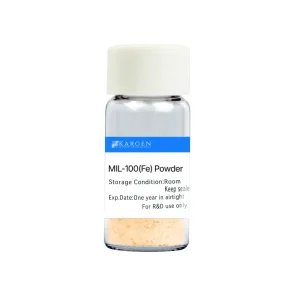
Specialized Metal-Organic Framework Powders & Catalytic Sorbents
Explore our complete inventory of industrial-grade MOF products engineered for gas storage, catalysis, separation, and water recovery.
Accelerate Your Decarbonization Deployment Today
Partner with China's pioneer in ton-scale MOF manufacturing. Request technical documentation, book a scientist consultation, or apply for evaluation sample lots.