
Industrial Grade Metal-Organic Framework Powders
High-surface-area engineered MOF structures ready for commercial deployment in gas adsorption, carbon capture, VOC removal, and catalysis.
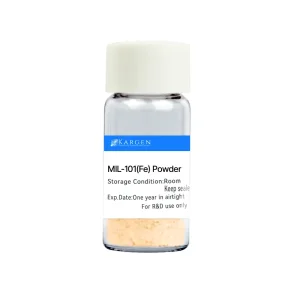
Best MIL-101(Fe) Metal-Organic Frameworks (MOFs) from China Suppliers
View Technical Specs
High-Quality China MOF-5 Powder Metal Organic Frameworks Suppliers
View Technical Specs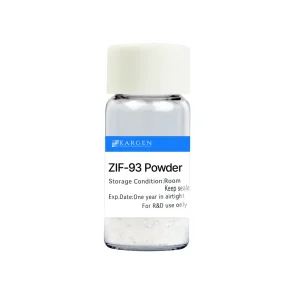
High-Quality China ZIF-93 Powder Metal Organic Frameworks (MOFs)
View Technical Specs
Best China Suppliers Factory of MIL-100(Fe) Powder Metal Organic Frameworks
View Technical Specs
Best China Suppliers of MIL-53(Al) Powder Metal Organic Frameworks
View Technical Specs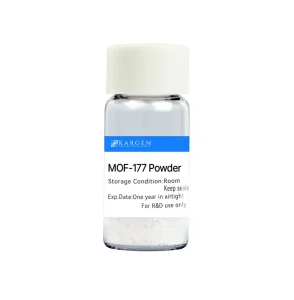
High-Quality China MOF-177 Powder Metal Organic Frameworks
View Technical Specs
Best MIL-101(Cr) Powder Metal Organic Frameworks China Suppliers
View Technical Specs
Best MIL-100(Cr) Powder Metal Organic Frameworks Top China Suppliers
View Technical SpecsThe Global Paradigm Shift in Chemical Adsorption & Separation
Evaluating the transition from legacy zeolites and activated carbons to crystalline metal-organic frameworks across multi-billion dollar industrial markets.
In the contemporary advanced chemical processing landscape, Metal-Organic Frameworks (MOFs) represent the single most transformative leap in hybrid porous materials engineering over the past three decades. Formed through the self-assembly of metal nodes (clusters or single ions) coordinated with organic linkers (carboxylates, azoles, or phosphonates), MOFs construct highly ordered, three-dimensional crystalline networks with unmatched permanent micro- and mesoporosity. Today, as global industrial markets face aggressive net-zero carbon targets, stringent environmental regulations, and escalating demands for ultra-pure process gases, the sourcing of commercial-grade MOFs from reliable, scale-capable exporters has escalated from an academic curiosity to a core strategic imperative for chemical conglomerates, battery manufacturers, and HVAC engineering firms worldwide.
Carbon Capture & Direct Air Capture (DAC)
Global decarbonization mandates require solid-state sorbents capable of selectively stripping $CO_2$ from dilute industrial flue gases and ambient atmosphere with minimal parasitic regeneration energy.
Clean Energy & Energy Storage
Next-generation lithium-metal battery separators coated with MOF nanolayers suppress lithium dendrites, immobilize polysulfides, and optimize ionic conductivity across temperature extremes.
Semiconductor & Specialty Gas Purification
Achieving sub-parts-per-billion (ppb) purity levels in electronic-grade gases ($SiH_4$, $NH_3$, $BF_3$) via targeted open-metal-site chemisorption in copper and zirconium frameworks.
Reticular Chemistry Mechanics & Pore Architecture Precision
Understanding the molecular thermodynamics, structural topologies, and synthesis routes that differentiate premium exporter-grade MOFs.
The strategic advantage of sourcing MOFs from top-tier exporters lies in the precise control over **Secondary Building Units (SBUs)**. By selecting specific transition metal oxo-clusters (e.g., $Zr_6O_4(OH)_4$ in UiO series, $Fe_3O$ in MIL series, or $Zn_4O$ in MOF-5) and coordinating them with rigid organic linkers (such as 1,4-benzenedicarboxylate [BDC], 2-methylimidazole [2-mIm], or 1,3,5-benzenetricarboxylate [BTC]), reticular chemists design frameworks with predictable topologies ($pcu$, $sod$, $fcu$, $mtn$).
Structural Performance Comparison Matrix
Below is an engineering benchmark dataset representing KARGEN's mass-produced industrial MOF series, providing procurement managers and chemical engineering teams with key physical metrics needed for process integration:
| MOF Nomenclature | Metal Node / SBU | Organic Linker | BET Surface Area | Pore Volume | Thermal Stability | Primary Industrial Application |
|---|---|---|---|---|---|---|
| ZIF-8 | $Zn^{2+}$ | 2-Methylimidazole | 1,600 – 1,900 m²/g | 0.66 cm³/g | Up to 400°C | Hydrophobic $CO_2$ Capture, Li-Battery Coatings |
| UiO-66 | $Zr_6O_4(OH)_4$ | 1,4-BDC | 1,100 – 1,500 m²/g | 0.50 cm³/g | Up to 500°C | Acid Catalysis, Water Contaminant Stripping |
| MIL-101(Fe) | $Fe_3O(F,OH)$ | 1,4-BDC | 2,800 – 3,500 m²/g | 1.40 cm³/g | Up to 300°C | Fenton Catalysis, Heavy Metal Adsorption |
| HKUST-1 (Cu-BTC) | $Cu_2(COO)_4$ | 1,3,5-BTC | 1,800 – 2,200 m²/g | 0.78 cm³/g | Up to 250°C | Specialty Gas Purification, $NH_3$ Scavenging |
| Al-FUM | $Al^{3+}$ | Fumaric Acid | 1,000 – 1,300 m²/g | 0.48 cm³/g | Up to 350°C | Atmospheric Water Harvesting (AWH), HVAC |
| MOF-303 | $Al^{3+}$ | 1H-pyrazole-3,5-dicarboxylic acid | 1,250 – 1,400 m²/g | 0.54 cm³/g | Up to 300°C | Low-Humidity Desert Water Extraction |
Historically, standard academic synthesis relied on toxic DMF (N,N-dimethylformamide) solvents in high-pressure hydrothermal autoclaves—a method financially unfeasible for ton-scale production. Premier Chinese exporters led by Guangdong Advanced Carbon Materials Co., Ltd. (KARGEN) have revolutionized commercial supply through continuous green mechanochemical milling and solvent-free micro-extrusion. This innovation slashes production costs by up to 60%, drastically lowers carbon intensity, and yields powder batches with zero residual trapped solvent within crystalline cavities.
Macro Industrial Solutions & Use-Case Scenarios
How leading industrial enterprises integrate exporter-grade MOFs into their operational infrastructure to drive competitive edge and compliance.
HVAC Latent Heat Reduction & Atmospheric Water Harvesting
By integrating hydrolytically stable aluminum-based frameworks like Al-FUM or MIL-53(Al) into desiccant wheels and heat-exchanger fins, HVAC manufacturers decouple sensible and latent cooling loads. The sharp S-shaped water sorption isotherm allows desorption at ultra-low temperature waste heat ($<70^\circ C$), dropping chiller power consumption by over 45% while enabling clean atmospheric drinking water extraction in arid environments.
Battery Separators & Solid-State Electrolytes
Energy storage manufacturers utilize ZIF-8 nano-dispersions to engineer uniform microporous coatings on ceramic battery separators. The sub-nanometer pore channels homogenize $Li^+$ ion flux, mitigating dendrite nucleation at high discharge rates. Furthermore, Lewis-acidic metal nodes act as anion traps, scavenging trace moisture and hydrofluoric acid ($HF$) to drastically extend battery cycle life.
Post-Combustion & Point-Source Carbon Capture
Power generation and cement plants utilize custom amine-functionalized MOF powders (e.g., MIL-101(Fe)-$NH_2$) packed into structured monoliths. These materials display exceptional $CO_2/N_2$ thermodynamic selectivity (exceeding 40:1) under humid flue gas streams, enabling energy-efficient vacuum swing adsorption (VSA) recovery cycles without chemical degradation.
KARGEN: Pioneering Ton-Scale MOF Manufacturing in China
Guangdong Advanced Carbon Materials Co., Ltd. combines doctoral-level innovation with massive industrial throughput to power global supply chains.
Founded by returning scientists from prestigious research institutions across the United States, Germany, and Sweden, Guangdong Advanced Carbon Materials Co., Ltd. (KARGEN) was the first specialized material enterprise in China to achieve true industrial-scale continuous mass production of Metal-Organic Frameworks. Operating from a modern 10,000 m² R&D and manufacturing complex in Zhuhai, Guangdong Province, KARGEN integrates chemical synthesis, particle size engineering, and liquid dispersion formulation under one unified quality system.
PhD-Led Research Leadership
Over 60% of KARGEN's workforce is dedicated to active R&D. Over 80% of research staff hold Master's or PhD degrees in inorganic chemistry, material science, and chemical engineering.
End-to-End Form Factors
Available in high-purity micro-powders, pelleted extrudates, coated membranes, and stabilized liquid dispersions (water, ethanol, or organic solvents) tailored to client deposition processes.
Agile OEM / ODM Scale-Up
Collaborating with over 70 worldwide universities and industrial labs, KARGEN seamlessly takes novel linkers or custom ligands from 1-gram feasibility screening to multi-ton factory batch output.
Localization Support, Regulatory Compliance & Logistics
Securing smooth cross-border customs clearance and reliable international chemical supply chains.
Exporting advanced nanomaterials requires rigorous adherence to international regulatory landscapes and transparent chemical documentation. Top-tier MOF exporters maintain full compliance protocols to safeguard overseas enterprise partners from supply disruptions or regulatory fines.
- REACH & TSCA Registration Readiness: Comprehensive chemical safety dossiers, SDS (Safety Data Sheets) in 20+ languages, and full CAS registration backing for bulk commercial frameworks ($ZIF-8$, $UiO-66$, $HKUST-1$).
- Batch-Specific Analytical Verification: Every single production batch is delivered with an authoritative Certificate of Analysis (COA) containing Powder X-Ray Diffraction (PXRD) patterns for phase purity, $N_2$ physisorption isotherms for BET surface area verification, and Thermogravimetric Analysis (TGA) for thermal stability limits.
- Hazard-Rated Packaging & Express Logistics: Utilizing moisture-sealed aluminum foil barrier bags, inert gas purging, and UN-certified fiber drums for safe air/ocean freight delivery across Europe, North America, East Asia, and the Middle East.
- Dedicated Technical Support: On-demand direct consultation with senior chemical engineers to solve dispersion stability, binder compatibility, and process line integration challenges.
The Next Frontier: Conductive MOFs & Machine-Learning Reticular Design
Pioneering tomorrow's porous material breakthroughs through AI-assisted molecular screening and hybrid framework composites.
As the MOF industry matures from niche laboratory scale to mainstream industrial implementation, the horizon of reticular chemistry is expanding exponentially. Emerging technological pathways currently moving through KARGEN's pilot lines include:
1. Electrically & Optically Conductive MOFs
Introducing $\pi-\pi$ conjugated organic linkers and redox-active metal centers to construct 2D conductive MOF nanosheets for next-generation supercapacitors, electrocatalytic water splitting, and real-time toxic gas chemiresistors.
2. MOF-COF Hybrid Heterostructures
Synthesizing epitaxial growth of Covalent Organic Frameworks (COFs) onto MOF core substrates to produce hierarchical meso-microporous architectures that combine extreme chemical durability with ultra-high selective adsorption speed.
3. Generative AI & High-Throughput Screening
Deploying deep-learning generative algorithms to screen millions of hypothetical crystal structures, instantly matching ideal pore dimensions and binding energies to ultra-specific target pollutants before physical laboratory synthesis.
Specialty Metal Organic Framework Solutions
Explore our full catalog of iron, zirconium, aluminum, and zinc framework formulations available for OEM/ODM factory order.
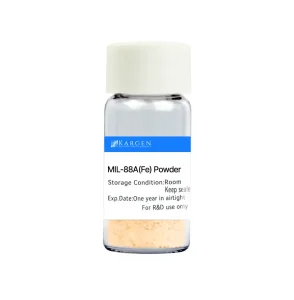
High-Quality MIL-88A(Fe) Powder Metal Organic Frameworks (MOFs) Top China Suppliers
View Technical Specs
High-Quality ZIF-67 Powder Metal Organic Frameworks from China Suppliers
View Technical Specs
Best China MOF-303 Powder Metal Organic Frameworks Suppliers | Factory Solution
View Technical Specs
High-Quality MOF-303 Powder Metal Organic Frameworks Suppliers in China
View Technical Specs
High-Quality MIL-101(Al) Powder Metal Organic Frameworks (MOFs) Service
View Technical Specs
Best China Suppliers Factory for UIO-66 Powder Metal Organic Frameworks
View Technical Specs
Best China ZIF-93 Powder Metal Organic Frameworks (MOFs) Leading Suppliers
View Technical Specs
High-Quality UIO-66 Powder Metal Organic Frameworks (MOFs) Suppliers
View Technical SpecsFrequently Asked Technical Questions
Direct answers to crucial commercial, synthesis, quality, and shipping inquiries from global material engineers.