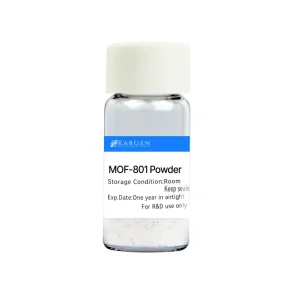
Featured Industrial Grade MOF Frameworks (Top Series)
Commercial-grade metal-organic frameworks validated for atmospheric water generation, post-combustion carbon capture, precision gas separation, and advanced energy storage systems.
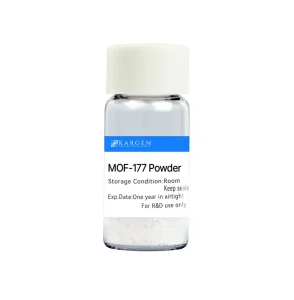
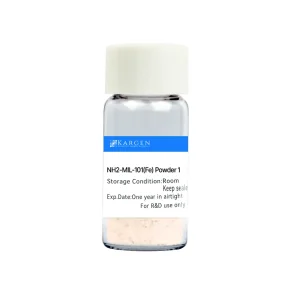





Global Commercial Status & Industrial Scale-Up Economics of MOFs
Transitioning from milligram academic curiosities to multi-ton continuous manufacturing hubs: The macroeconomic landscape of modern porous coordination polymers.
Mass Production Breakthroughs
Historically restricted by batch solvothermal synthesis utilizing expensive organic solvents (e.g., DMF, DEF), leading MOF structure suppliers have successfully commercialized mechanochemical synthesis, aqueous-phase crystallization, and continuous flow precipitation. Modern production sites now reach annual capacities exceeding several hundred metric tons while lowering unit production costs below critical commercial adoption thresholds.
Quality Assurance & Crystallinity
Top-tier industrial suppliers enforce stringent analytical protocols for every batch. Key quality verification criteria include BET nitrogen physisorption surface area benchmarks (exceeding 1,500 m²/g to 7,000 m²/g depending on structure), high-resolution Powder X-Ray Diffraction (PXRD) phase purity validation, Thermogravimetric Analysis (TGA) thermal degradation thresholds, and ICP-OES residual free-metal ion quantification.
Global Supply Chain Hubs
China has emerged as a dominant powerhouse in global MOF raw material synthesis, leveraging centralized supply chains for organic linkers (such as 2-methylimidazole, trimesic acid, and fumaric acid) and metal salts. Qualified China suppliers offer direct OEM/ODM contract manufacturing, custom ligand functionalization (e.g., -NH2, -SO3H, -COOH substitution), and continuous supply guarantees for Fortune 500 chemical integrators.
Technical Taxonomy: Comparative Analysis of Core MOF Structures
Selecting the optimal framework requires matching inorganic node geometry, organic linker thermal limits, and pore window apertures to specific industrial feedstocks.
| Framework Designation | Inorganic Node / Cluster | Organic Linker / Ligand | Pore Size / Geometry | Thermal / Hydrolytic Limits | Primary Industrial Vector |
|---|---|---|---|---|---|
| ZIF-8 | Zinc (Zn²⁺) Tetrahedral | 2-Methylimidazole | 3.4 Å aperture / 11.6 Å cage | Stable to 500°C; High alkaline aqueous stability | CO₂ flue capture, battery separators, hydrophobic VOC removal |
| Al-FUM | Aluminium (Al³⁺) Octahedral | Fumaric Acid | 3.8 Å × 5.7 Å rhombic channels | Stable to 350°C; Exceptional hydrothermal cycling durability | Atmospheric Water Harvesting (AWH), adsorption chillers, HVAC dehumidification |
| HKUST-1 (Cu-BTC) | Copper (Cu²⁺) Paddlewheel | 1,3,5-Benzenetricarboxylic acid | 9 Å × 9 Å main pores / 13.5 Å cages | Stable to 240°C; Sensitive to prolonged boiling water exposure | Specialty gas purification (Arsine, Phosphine), methane/H₂ storage, open-metal catalysis |
| MOF-303 | Aluminium (Al³⁺) Rod-like SBUs | 1H-pyrazole-3,5-dicarboxylic acid | "6.0 Å 1D channels"Stable to 300°C; Ultra-high hydrolytic stability under low RH | Arid atmosphere water capture (RH 10-30%), pervaporation, low-energy thermal desorption | |
| MIL-101(Cr / Fe) | Chromium (Cr³⁺) / Iron (Fe³⁺) trimers | 1,4-Benzenedicarboxylic acid (BDC) | 29 Å and 34 Å mesoporous cages | Stable to 300°C; Outstanding acid resistance and hydrolytic resilience | Dye adsorption, pharmaceutical delivery, liquid phase heavy metal extraction |
| MOF-177 | Zinc (Zn₄O) Octahedral SBUs | 1,3,5-tris(4-carboxyphenyl)benzene (BTB) | 10.8 Å × 10.8 Å micropores | Stable to 400°C (dry environment); Hydrolytically moisture sensitive | Volumetric methane storage, high-pressure hydrogen enrichment, gas separation |
E-E-A-T Technical Engineering Insight: Mechanochemical vs. Solvothermal Manufacturing
Industrial procurement officers must distinguish between solvent-intensive solvothermal synthesis and mechanochemical solid-state extrusion. Solvothermal routes yield highly crystalline powders ideal for electronic-grade gas purifiers but require costly activation (degassing trapped solvent under vacuum at elevated temperatures). Mechanochemical twin-screw extrusion reduces liquid effluent by >90%, offering a greener footprint and lower cost for bulk civil engineering applications like atmospheric water harvesting and flue-gas carbon capture.
Localized Macro-Industrial Solutions & Engineering Use Cases
How tailored crystal pore architectures address decarbonization, energy storage safety, and water scarcity across global markets.
Carbon Capture (CCUS & DAC)
Amine-functionalized MOFs (e.g., NH2-MIL-101) and hydrophobic ZIFs demonstrate high CO₂ binding affinity over N₂ and H₂O. Designed for low-energy Vacuum Swing Adsorption (VSA) and Temperature Swing Adsorption (TSA), these materials require regeneration temperatures below 85°C—drastically cutting parasitic power consumption compared to traditional aqueous monoethanolamine (MEA) solvent scrubbers.
Atmospheric Water Harvesting (AWH)
Materials such as MOF-303, Al-FUM, and MOF-801 feature steep S-shaped water vapor adsorption isotherms. They harvest pure drinking water from desert air at relative humidity levels as low as 10-20% using ambient solar flux for thermal desorption. This enables off-grid freshwater generation systems for arid regions across the Middle East, North Africa, and Australia.
Lithium Battery Separators & Electrolytes
Coating polyolefin lithium-ion separators with nanoscale ZIF-8 or MIL-53 dispersions regulates Li-ion flux, equalizes ion distribution, and suppresses lithium dendrite formation. Furthermore, sub-nanometer MOF channels act as physical traps for dissolved transition metal cations (Fe, Mn, Co), preventing cathode degradation and doubling EV battery cycle life.
Petrochemical & Hydrocarbon Refining
Engineered framework variants like TYUT-12 achieve precise kinetic separation of ethylene/ethane and propylene/propane mixtures without cryogenic distillation. Replacing energy-intensive thermal fractionation columns with MOF pressure-swing adsorption (PSA) beds cuts industrial refining energy usage by up to 40%.
Technology Roadmap & Future Horizon (2026–2035)
Strategic development vectors shaping the commercial adoption, shaping technologies, and digital synthesis of advanced metal-organic materials.
AI-Driven High-Throughput Screening
Integrating Density Functional Theory (DFT) with Generative Machine Learning algorithms to predict crystal stability, gas adsorption isotherms, and optimal synthesis pathways prior to wet-lab trials.
Bindless Monolith & Pellet Shaping
Transitioning fine MOF powders into high-density extrudates, honeycomb monoliths, and spherical beads without occluding micropores or reducing accessible BET surface area during industrial compaction.
Direct Water Solvothermal Recycling
Implementing closed-loop aqueous synthesis factories capable of recovering and recycling 99% of organic linkers and process water, driving bulk MOF pricing down to competitive commodity desiccant levels.
Conductive & Catalytic Heterostructures
Scaling electrically conductive MOFs (2D conjugated frameworks) for direct electrocatalytic CO₂ reduction, solid-state electrolyte matrices, and real-time gas sensor arrays integrated into IoT devices.
Frequently Asked Technical & Procurement Questions (FAQ)
Comprehensive answers regarding sample request protocols, custom synthesis options, degassing procedures, and supplier qualification standards.
Specialized Industrial MOF Portfolio (Secondary Catalog)
Additional engineered framework grades tailored for pervaporation, catalytic oxidation, open-metal coordination, and high-selectivity hydrocarbon purification.