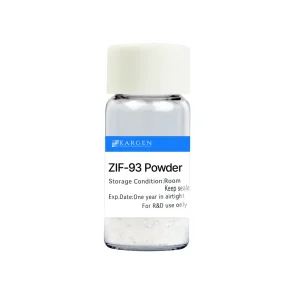
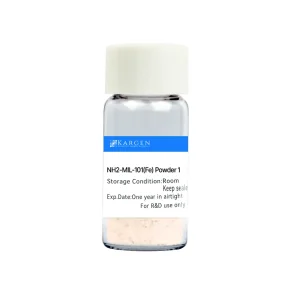
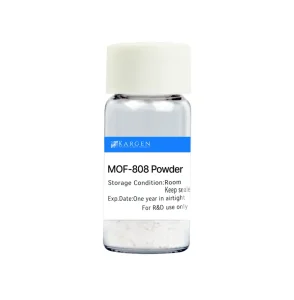
Featured Nanoporous Adsorbents & Advanced MOFs for Noble Gas Isolation
Discover high-performance porous matrix materials enabling high-purity separation of Xenon, Krypton, Argon, and Helium. Sourced direct from automated China Industry 4.0 production lines.
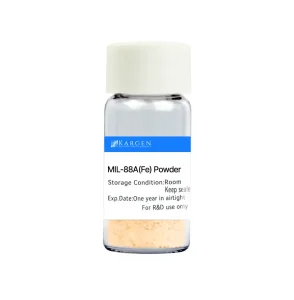
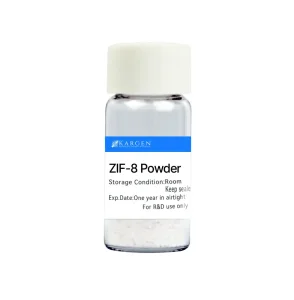






1. Paradigm Shifts in Noble Gas Purification & Export Dynamics
The global demand for high-purity noble gases—specifically Helium (He), Neon (Ne), Argon (Ar), Krypton (Kr), and Xenon (Xe)—has transitioned from standard industrial consumption to critical strategic enablers for semiconductor fabrication, quantum optics, deep-space ion propulsion, and ultra-high-resolution medical diagnostics. Historically dependent on energy-intensive cryogenic fractional distillation of air or natural gas streams, the sector is experiencing a monumental shift toward physisorption-based separation using targeted porous materials such as Metal-Organic Frameworks (MOFs) and Zeolitic Imidazolate Frameworks (ZIFs).
As global supply chains navigate geopolitical realignments and stringent quality constraints, evaluating noble gas properties and selecting the right export partners requires a deep technical understanding of atomic dimensions, polarizability differentials, thermodynamic breakthrough characteristics, and physical transport mechanisms. This technical whitepaper establishes an authoritative benchmark for procurement directors, process chemical engineers, and semiconductor plant operators evaluating noble gas suppliers, export logistics resilience, and state-of-the-art separation media.
2. Comprehensive Physical & Thermodynamic Property Matrix of Noble Gases
Selecting the ideal noble gas and understanding its behavior in advanced applications requires precise physical and chemical metrics. Noble gases exhibit complete valence shell saturation ($ns^2 np^6$, with Helium at $1s^2$), rendering them monoatomic, chemically inert under standard conditions, and non-flammable. However, subtle variations in atomic mass, polarizability, and kinetic diameter govern their separation dynamics and industrial utility.
| Noble Gas | Atomic Radius (Å) | Kinetic Diameter (Å) | Polarizability ($10^{-24} \text{ cm}^3$) | Boiling Point (°C) | Abundance in Dry Air (ppm) | Primary Industrial Vector |
|---|---|---|---|---|---|---|
| Helium (He) | 0.31 | 2.55 | 0.205 | -268.93 | 5.24 | Cryogenics, Superconducting Magnets, Leak Detection |
| Neon (Ne) | 0.38 | 2.75 | 0.396 | -246.08 | 18.18 | DUV Lithography Lasers (193nm), Plasma Displays |
| Argon (Ar) | 0.71 | 3.40 | 1.641 | -185.85 | 9,340.00 | Silicon Ingot Synthesis, Inert Arc Welding, Window Insulation |
| Krypton (Kr) | 0.88 | 3.60 | 2.484 | -153.34 | 1.14 | EUV Lithography Windows, Insulated Glazing, Satellite Propulsion |
| Xenon (Xe) | 1.08 | 3.96 | 4.044 | -108.12 | 0.087 | Ion Propulsion Thrusters, Anesthesia, X-ray Contrast |
| Radon (Rn) | 1.20 | 4.17 | 5.300 | -61.70 | Trace (Radioactive) | Radiotherapy, Hydro-geological Tracing (Controlled) |
Key Information Gain Insight: The separation of Xe from Kr is notoriously challenging due to their close kinetic diameters (3.96 Å vs. 3.60 Å). Traditional cryogenic separation requires immense capital and thermal energy. However, because Xenon possesses a significantly higher polarizability ($4.044 \times 10^{-24} \text{ cm}^3$) than Krypton ($2.484 \times 10^{-24} \text{ cm}^3$), advanced MOFs engineered with electron-dense linkers or polarizable metal nodes (e.g., ZIF-8, MIL-100, MOF-303) preferentially adsorb Xenon over Krypton under ambient conditions, achieving selectivity factors exceeding 8.5.
3. Global Industrial Dynamics & Sourcing Challenges
The global trade of noble gases represents a high-value, highly concentrated sector within industrial gases. The production infrastructure is intrinsically tied to Large Air Separation Units (ASUs) and Natural Gas Processing Facilities (for Helium extraction).
Semiconductor Manufacturing
Extreme Ultraviolet (EUV) and Deep Ultraviolet (DUV) excimer lasers consume massive volumes of ultra-pure Neon, Krypton, and Argon gas mixtures. Fluctuations in raw gas supply directly jeopardize global microchip fabrication yield.
Aerospace & Satellite Propulsion
Modern commercial and defense satellite constellations utilize Hall-effect thrusters fueled by Xenon and Krypton. Xenon's high atomic mass (131.29 amu) provides optimal specific impulse, driving demand spikes across commercial launch providers.
Medical Diagnostics & Lighting
Hyperpolarized Xenon-129 magnetic resonance imaging (MRI) allows non-invasive 3D visualization of pulmonary ventilation. Meanwhile, Krypton lighting remains irreplaceable in high-intensity airport runway illumination and surgical lasers.
4. Next-Generation Adsorption Technologies: MOFs for Noble Gas Isolation
To overcome the thermodynamic limitations of cryogenic fractionation, advanced exporters and gas processors are deploying solid-state molecular sorbents. Metal-Organic Frameworks (MOFs)—crystalline porous materials composed of metal ions coordinated to organic linkers—offer unprecedented pore-size tunability and surface chemistry customized for noble gas capture.
Size-Selective Sieving
Frameworks such as KAUST-7 and modified ZIF-8 feature pore apertures tailored down to sub-angstrom accuracy. By restricting apertures to approximately 3.6 Å to 3.8 Å, these materials permit Krypton diffusion while kinetically blocking larger Xenon atoms, or vice versa, maximizing single-pass purity.
Polarizability Driven Binding
Frameworks with open metal sites, such as HKUST-1 and MIL-101(Cr), generate strong localized electrostatic fields. The highly polarizable electron cloud of Xenon interacts favorably with these open sites, yielding high adsorption enthalpies without chemical reaction.
Low Regeneration Energy
Unlike liquid amine scrubbing or high-temperature chemisorption, MOFs bind noble gases via physical adsorption (physisorption). Desorption occurs rapidly upon moderate pressure drops (Pressure Swing Adsorption - PSA) or minor heating (Vacuum Thermal Swing Adsorption - VTSA), reducing operational expenditure by over 70%.
5. China's Industry 4.0: Supply Chain Resilience & Scalability Advantages
As global buyers evaluate leading exporters of noble gas property characterization media and raw high-purity gases, China's advanced industrial ecosystem offers unprecedented integration. The convergence of large-scale coal chemical synthesis, comprehensive Air Separation Unit (ASU) networks, and Industry 4.0 smart MOF manufacturing has created an incredibly resilient supply chain.
- Ton-Scale Automated Synthesis: China-based chemical manufacturing plants have pioneered continuous mechanochemical and hydrothermal batch reactors for MOF production (e.g., ZIF-8, MIL-53(Al), MOF-5). This eliminates batch-to-batch variation and drops precursor cost structures substantially.
- Vertical Supply Integration: From raw metal salts (Zinc, Iron, Chromium, Aluminum) to specialized organic linkers (Trimesic acid, Fumaric acid, Imidazoles), domestic backward integration insulates international buyers from raw material price shocks.
- Digital Quality Assurance: Smart factories implement inline Powder X-ray Diffraction (PXRD), Brunauer-Emmett-Teller (BET) surface area verification, and automated Inductively Coupled Plasma Mass Spectrometry (ICP-MS) to guarantee zero contamination of export-grade sorbents.
- Global Logistics Infrastructure: Strategic proximity to major deep-water ports (Shanghai, Ningbo, Shenzhen) combined with international ISO tank container certification ensures seamless global delivery under UN/DOT hazardous and compressed gas regulations.
6. Localized Application Scenarios & Implementation Blueprints
Different international regions and industrial clusters demand customized sourcing strategies based on local end-use dynamics. Below are detailed operational scenarios detailing how noble gas properties are harnessed across global hubs.
East Asia Semiconductor Fabs
Scenario: 3nm and 2nm logic gate production in Taiwan, South Korea, and Japan requires steady 6N (99.9999%) purity Neon and Argon gas mixtures.
Solution: Implementation of dedicated onsite MOF-303 and ZIF-8 recycling beds to capture and purify laser purge gases, reducing fresh gas purchasing costs by 45%.
North American Space Hubs
Scenario: Commercial launch operators in Texas and Florida require multi-ton supplies of high-purity Xenon for orbital satellite maneuvers.
Solution: Bulk export of high-density pressurized Xenon cylinders coupled with local vacuum swing adsorption (VSA) recovery skid deployment using MIL-101(Cr) porous media.
European Nuclear & Healthcare Facilities
Scenario: Radiopharmaceutical labs and research reactors in Germany and Switzerland need to capture radioactive Xenon and Krypton isotopes ($^{85}\text{Kr}$, $^{133}\text{Xe}$) from off-gas streams.
Solution: Selective silver-doped MOF filters designed for complete radioactive noble gas containment under humid atmospheric conditions.
7. Global Procurement Framework & Compliance Standards
Procuring noble gases or advanced separation media requires adherence to rigid technical and regulatory specifications. International procurement managers should mandate the following verification protocols from candidate exporters:
1. Impurity Tolerances (ppb Level)
For semiconductor applications, total hydrocarbon (THC), moisture ($H_2O$), oxygen ($O_2$), and nitrogen ($N_2$) contamination must remain below 10 parts-per-billion (ppb). Exporters must provide batch-specific Gas Chromatography-Mass Spectrometry (GC-MS) certificates.
2. Cylinder & Vessel Certification
High-pressure cylinders must strictly comply with ISO 11110, DOT-3AA, or TPED standards. Internal passivation treatment (e.g., electronic-grade polishing) prevents wall outgassing over long sea transport durations.
3. MOF Sorbent Characterization
When purchasing separation powders (ZIF-8, MIL series), demand nitrogen isotherm BET surface area measurements ($>1500 \text{ m}^2/\text{g}$), thermogravimetric analysis (TGA) stability up to 400°C, and crushing strength data for pelletized media.
8. Industry Trends & Horizon Outlook (2025–2030)
The noble gas export market is evolving rapidly alongside energy transition imperatives and space exploration milestones. Strategic forecasting indicates three dominant vectors through 2030:
- Onsite Point-of-Use Gas Recycling: Industrial end-users will increasingly migrate from buy-and-vent models to closed-loop recovery. Point-of-use MOF recycling skids will capture up to 90% of spent Xenon and Krypton from semiconductor lithography and satellite test chambers.
- Decarbonized Air Separation Units (ASUs): As steel mills and industrial air plants transition to green hydrogen power, the carbon intensity per liter of extracted Argon, Neon, and Krypton will drop dramatically, favoring exporters with verified ESG credentials.
- Quantum Computing & Superconductivity Demand: The scaling of quantum processing units (QPUs) utilizing liquid Helium-3 and Helium-4 cryostats will create sustained demand spikes, cementing Helium's status as a top-tier critical strategic asset.
9. Technical Frequently Asked Questions (FAQ)
Direct technical answers addressing high-intent queries regarding noble gas physical properties, exporter selection, and MOF-based separation mechanics.
While Xenon has a larger kinetic diameter (3.96 Å) than Krypton (3.60 Å), it also possesses a significantly higher polarizability ($4.044 \times 10^{-24} \text{ cm}^3$ vs. $2.484 \times 10^{-24} \text{ cm}^3$). In MOF pores with optimized polar linkers or open metal sites, Van der Waals interactions scale directly with polarizability. This creates a stronger thermodynamic adsorption enthalpy for Xenon, allowing it to displace Krypton in the pore network.
Top-tier noble gas exporters must possess ISO 9001 (Quality Management), ISO 14001 (Environmental Management), ISO 17025 (Testing Laboratory Accreditation), and full compliance with UN/DOT cylinder pressure standards. For semiconductor supply, compliance with SEMI C3 standards for trace contaminants is mandatory.
China's smart manufacturing integration combines continuous mechanochemical synthesis, automated solvent recovery, and continuous quality monitoring. This scales MOF production from traditional lab gram-scale to multi-ton industrial outputs, reducing unit costs by 60% to 80% while maintaining BET surface area consistency above 98%.
Yes. ZIF-8 (Zinc Imidazolate Framework) exhibits exceptional hydrothermal and chemical stability due to strong Zinc-Nitrogen coordination bonds. Its hydrophobic pore channels resist water vapor competitive adsorption, making it suitable for wet gas stream separations where conventional zeolites lose efficiency.
MIL-100 and MIL-101 series MOFs exhibit high thermal stability, with framework breakdown typically occurring above 300°C to 350°C. Under proper sealed storage (inert packaging), shelf-life exceeds 3 years. Thermal desorption during cyclic gas purification is typically executed between 100°C and 150°C under vacuum.
Noble gases are exported across four standard formats: High-pressure seamless steel or aluminum cylinder bundles (50L, 200 bar), ISO Tube Trailers (for high-volume gaseous Helium, Neon, or Argon), Liquid Dewars (cryogenic liquid state), and specialized high-purity cylinder racks with ultra-clean diaphragm valves.
Advanced Portfolio of Specialty MOFs & Gas Separation Frameworks
Explore our complete catalog of industrial-grade Metal-Organic Framework powders engineered for high selectivity, gas storage, and trace contaminant removal.