
High-Quality MIL-101(Cr) Powder Metal Organic Frameworks (MOFs) Service, Exporters
Product Description
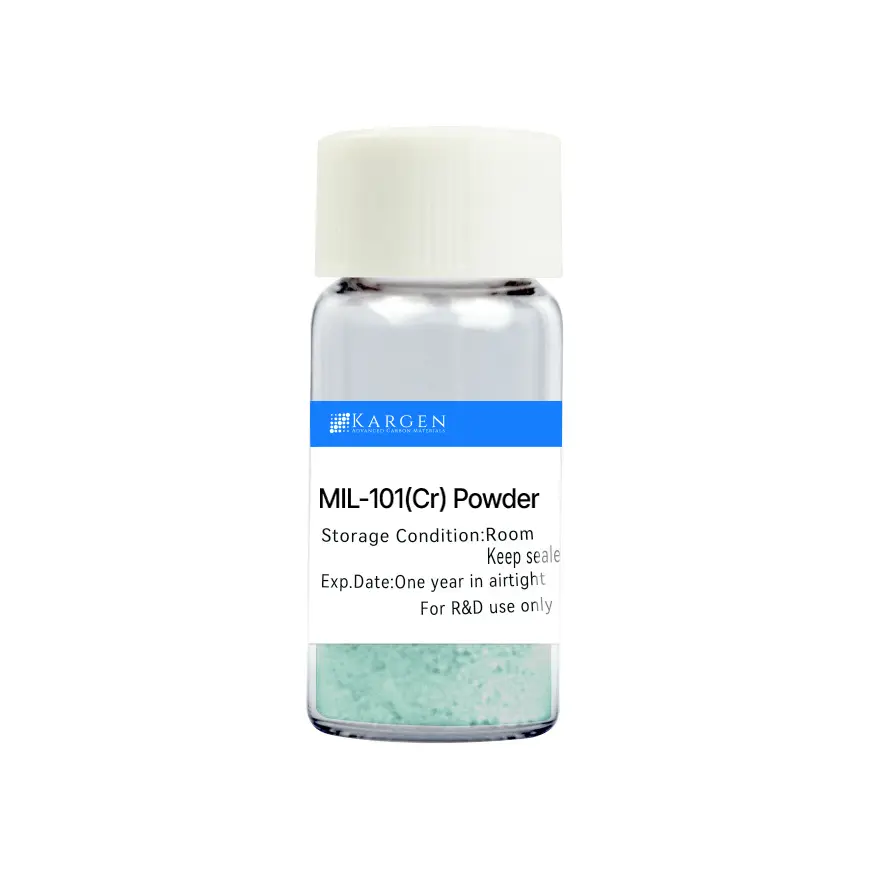
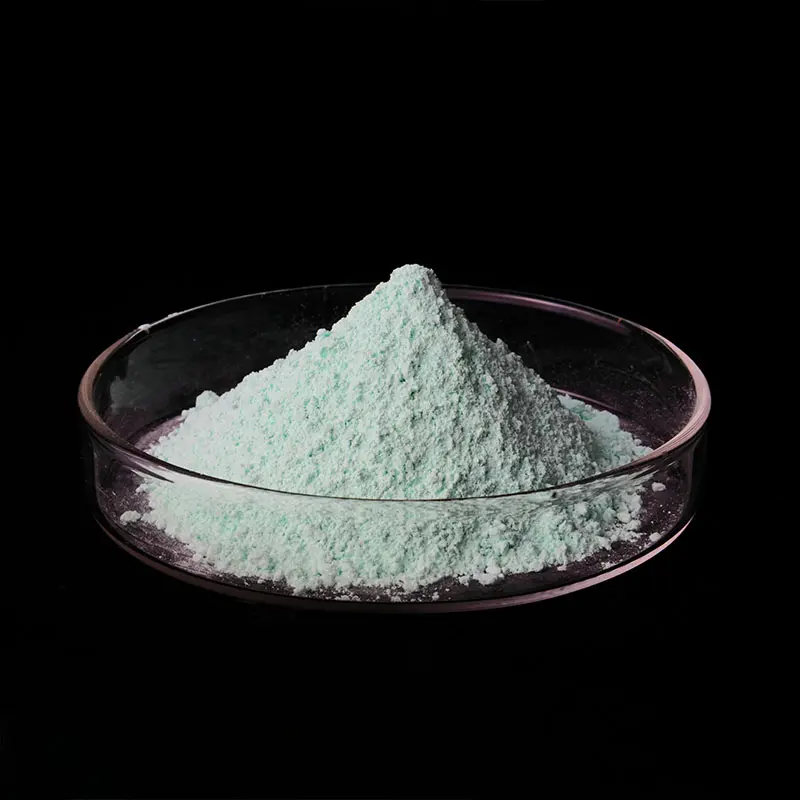
MIL-101(Cr), a chromium-based Metal Organic Framework (MOF), is recognized for its exceptional characteristics that make it highly suitable for a multitude of applications. With a green powder form, MIL-101(Cr) boasts an ultra-high specific surface area exceeding 2500 ㎡/g and large mesoporous cage cavities with diameters of 29 Å and 34 Å. The pore windows of this MOF can expand up to 16 Å in diameter, facilitating high porosity and accessibility for various molecules.
The synthesis of MIL-101(Cr) involves the coordination of Cr3O ionic clusters with terephthalic acid (H2BDC), resulting in the formula [Cr3(O)X(BDC)3(H2O)2]·nH2O, where X represents OH− or F−. The structure of MIL-101(Cr) is akin to the MTN zeolite topology, indicative of its highly ordered and porous nature.
One of the distinctive features of MIL-101(Cr) is the presence of crystalline water molecules at the end of its molecular structure, which can be removed under high temperature or vacuum conditions. This removal results in the exposure of unsaturated metal sites, effectively creating potential Lewis acidic sites within the MOF. These sites are particularly beneficial for catalytic applications, where they can interact with various reactant molecules.
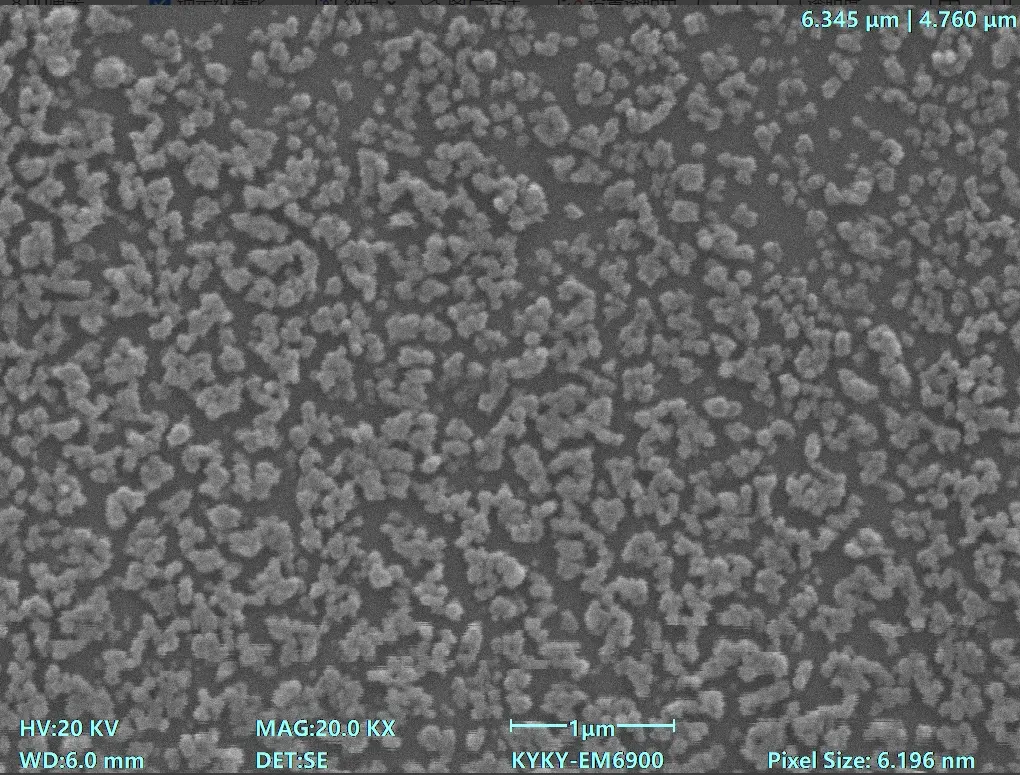
The robust physicochemical properties and chemical stability of MIL-101(Cr) make it an ideal candidate for use in gas storage and separation processes. Its high porosity allows for the efficient capture and release of gases, while its stability ensures that it can withstand the conditions required for these processes.
Moreover, MIL-101(Cr) has been explored for use in electrocatalysis and photocatalysis due to its ability to facilitate charge transfer and reactant adsorption. Its application extends to the development of mixed matrix membranes, where it can enhance the performance of the membrane by providing selective pathways for molecular transport.
In the realm of environmental remediation, MIL-101(Cr) has been studied for its pollutant adsorption capabilities, effectively capturing and sequestering harmful substances from various media. Its use in detection technologies leverages its high surface area and pore structure to selectively bind and detect target molecules.
The potential for drug transport is another area where MIL-101(Cr) shows promise, with its porous structure offering a means to encapsulate and deliver pharmaceutical agents in a controlled manner.
MIL-101(Cr) is a versatile and robust MOF with a broad range of applications spanning from gas storage and separation to catalysis and environmental remediation. Its unique structural features, combined with its high porosity and chemical stability, make it a valuable material for current and future technological developments.









