
High-Performance Portfolio: Top Industrial MOF Grades
Featured reticular framework powders and dispersions engineered for demanding gas adsorption, catalysis, and energy storage applications.






Reticular Chemistry to Commercial Reality: The Legacy of Yaghi MOFs
Metal-Organic Frameworks (MOFs), pioneered by Professor Omar M. Yaghi at UC Berkeley, represent a paradigm shift in crystalline porous materials technology. By linking inorganic metal clusters (secondary building units, or SBUs) with organic linkers via strong coordination bonds, Reticular Chemistry allows scientists to design porous crystals with atomic precision, unprecedented internal BET surface areas (exceeding 7,000 m²/g), and tailorable pore apertures.
As the global market transitions from laboratory-scale synthesis to commercial deployment, identifying a dependable, high-yield Yaghi MOF supplier and exporter has become a vital strategic imperative for multinational chemical, energy, HVAC, and electronic corporations. KARGEN (Guangdong Advanced Carbon Materials Co., Ltd.) stands at the forefront of this industrial transition, serving as China's first ton-scale commercial MOF manufacturer and a premier global exporter of Yaghi-class porous materials.
SEO Information Gain Insight: Unlike traditional zeolites or activated carbons, Yaghi MOFs feature customizable open metal sites, steep hydrophobic/hydrophilic adsorption isotherms, and dynamic framework elasticity ("breathing effect"), enabling targeted molecule separation with significantly lower thermal regeneration penalties.
1. The Structural Evolution & Future Trends of Yaghi MOFs
The industrial trajectory of Metal-Organic Frameworks has progressed from structural discovery to target-driven material design. Understanding these evolutionary phases helps technical procurement teams select framework topologies optimized for long-term mechanical and chemical durability.
Zeolitic Imidazolate Frameworks (ZIFs)
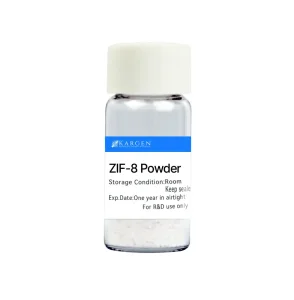
Pioneered by Yaghi's group, ZIF topologies (e.g., ZIF-8, ZIF-67, ZIF-93) substitute tetrahedral silicon/aluminum with zinc or cobalt nodes linked by imidazolate ligands. Featuring M-IM-M bond angles of 145°, ZIFs exhibit exceptional hydrothermal stability, remaining crystalline in boiling water and basic aqueous media. Ideal for CO₂ capture, battery separators, and membrane separations.
High-Valency Metal Architectures (UiOs & MILs)
Zr(IV)-based frameworks such as UiO-66 and Al(III)/Fe(III)-based MIL frameworks (MIL-100, MIL-53, MIL-88A) leverage strong metal-oxygen coordination bonds. The high charge density of Zr⁴⁺ and Al³⁺ hexanuclear nodes yields high thermal thresholds (>400°C) and resistance to harsh acidic environments, making them benchmarks for industrial aqueous pollutant removal and acidic catalyst support.
Next-Gen Mechanochemical & Continuous Scale-Up
The global MOF industry is shifting rapidly away from high-solvent solvothermal synthesis toward eco-friendly mechanochemical milling and continuous-flow hydrothermal reaction loops. KARGEN has pioneered solvent-minimized mechanosynthesis for ZIF-8 and HKUST-1, dramatically lowering Capex/Opex while increasing batch consistency to multi-ton volumes.
2. Global Enterprise Procurement Demands: Key Selection Criteria
As fortune-500 chemical manufacturers, automotive OEM engineering teams, and HVAC pioneers move from lab testing to commercial pilot deployment, vendor qualification criteria have matured. Technical procurement directors look beyond laboratory BET metrics to evaluate systemic vendor capability.
Batch-to-Batch Quality Consistency
Industrial scale processes cannot tolerate pore size variance or phase impurities. Enterprise procurement mandates strict standard deviation bounds on BET surface area (±3%), narrow particle size distribution (PSD d50 control), and low unreacted organic linker residue (<0.5 wt%), verified via powder X-ray diffraction (PXRD) and thermogravimetric analysis (TGA).
Scalable Cost Parity & Price Elasticity
Historic MOF prices ($50–$500/gram from catalog suppliers) blocked mass adoption. Global buyers require cost structures approaching standard industrial adsorbents ($15–$50/kg at multi-ton volumes). Achieving this requires direct integration with precursor synthesis, local organic linker production, and low-energy continuous production machinery.
Formulation Versatility (Powders, Dispersions, Shaped Pellets)
Raw microcrystalline powders can cause pressure drops in fixed-bed reactors or dust during handling. Buyers expect custom material forms: monodisperse nanoparticles, stable polar/non-polar liquid dispersions, micro-beads, extrudates, or wash-coated ceramic monoliths engineered with organic binders.
Full Regulatory Compliance & ESG Traceability
Exporting to Europe, North America, and East Asia demands full REACH registrations, RoHS/REACH SVHC declarations, safety data sheets (SDS) under GHS standards, and carbon footprint audits showing sustainable synthesis routes with closed-loop solvent recovery.
China Factory 4.0: Supply Chain Resilience & Mass Efficiency
KARGEN (Guangdong Advanced Carbon Materials Co., Ltd.) leverages China’s advanced chemical industrial ecosystem, fully automated Industry 4.0 production lines, and PhD-led R&D centers to bridge laboratory chemistry with reliable commercial MOF manufacturing.
Vertically Integrated Raw Materials
Situated within China's Guangdong-Hong Kong-Macao Greater Bay Area, KARGEN maintains direct raw material pipelines for key metal salts (Zinc, Aluminum, Copper, Zirconium, Iron) and synthesized organic linkers (2-methylimidazole, fumaric acid, terephthalic acid, BTC), ensuring supply resilience against global market fluctuations.
Automated Process Control
Our Zhuhai facility utilizes digital SCADA-monitored crystallization reactors, continuous centrifugal washing arrays, low-temperature vacuum drying suites, and closed-loop solvent recovery units to achieve tight parameter control, high atom economy, and zero toxic effluent discharge.
Analytical Expertise & QA/QC
Founded by scholars returning from the United States, Germany, and Sweden, KARGEN's 50+ staff includes over 60% R&D specialists with master's or doctoral degrees. Every batch is certified via BET nitrogen physisorption, PXRD phase verification, SEM morphology inspection, and ICP-OES elemental analysis.
4. Comprehensive Material Benchmark & Industrial Application Matrix
To assist chemical design engineers and material buyers in selecting optimal framework chemistry, the matrix below details physical parameters, adsorption kinetics, and primary industrial applications for standard KARGEN Yaghi-grade MOFs.
| Framework Name | Metal Node / Linker | BET Surface Area | Pore Aperture / Window | Key Performance Trait | Target Application |
|---|---|---|---|---|---|
| ZIF-8 | Zn / 2-Methylimidazole | 1,600 – 1,900 m²/g | 3.4 Å (Window) / 11.6 Å (Cage) | Hydrophobic, highly stable in basic media, high thermal threshold (500°C) | CO₂ Capture, Li-Ion Separator Coating, Catalyst Support |
| Al-FUM | Al / Fumaric Acid | 1,000 – 1,200 m²/g | 5.7 Å × 6.0 Å (Channel) | Steep S-shape water uptake isotherm, low regeneration temp (<80°C) | Atmospheric Water Harvesting (AWH), HVAC Dehumidification |
| HKUST-1 (Cu-BTC) | Cu / Trimesic Acid | 1,500 – 1,800 m²/g | 9.0 Å × 9.0 Å | High density of open unsaturated Cu²⁺ metal sites, strong Lewis acid | Gas Separation, Semiconductor Specialty Gas Purifiers |
| UiO-66 | Zr / Terephthalic Acid | 1,100 – 1,400 m²/g | 6.0 Å (Window) / 11.0 Å (Cage) | Exceptional acid/hydrolytic stability (pH 1–10), high mechanical pressure resistance | Heterogeneous Catalysis, Heavy Metal & Fluoride Water Treatment |
| MIL-53(Al) | Al / Terephthalic Acid | 1,100 – 1,300 m²/g | Flexible Breathing Pores | Dynamic structural transition upon gas/vapor adsorption ("Breathing effect") | C2/C3 Hydrocarbon Separation, VOC Abatement |
| MIL-88A(Fe) | Fe / Fumaric Acid | 600 – 900 m²/g | Flexible Porphyrin-like Channels | Non-toxic iron base, bio-compatible, high photo-Fenton activity | Wastewater Remediation, Environmental Photo-Catalysis |
| KAUST-7 (NbOFFIVE-1-Ni) | Ni, Nb / Pyrazine | 400 – 600 m²/g | 3.0 Å × 3.0 Å (Molecular Sieving) | Rigid narrow channel sieving CO₂ from N₂/CH₄ with ultra-high selectivity | Flue Gas Carbon Capture, Natural Gas Upgrading |
Localized Industrial Deployment Scenarios
1. Atmospheric Water Harvesting (AWH) & HVAC Energy Saving
In arid microclimates and desert infrastructure projects, KARGEN's Al-FUM MOFs harvest potable water directly from ambient air even at ultra-low relative humidity (RH <20%). When integrated into commercial desiccant wheels or HVAC heat exchangers, Al-FUM desorbs collected moisture using low-grade industrial waste heat (<80°C), reducing chiller compressor electrical loads by up to 50%.
2. Next-Gen Lithium-Ion Separator & Solid-State Battery Coatings
Coating polyolefin lithium-ion separators with sub-micron ZIF-8 or UiO-66 nanoparticles drastically enhances electrolyte wettability and thermal stability (preventing separator shrinkage up to 200°C). The uniform MOF pore channels regulate Li-ion flux, effectively suppressing dangerous lithium dendrite growth and extending battery cycle life in electric vehicles.
3. Point-Source CO₂ Capture & Direct Air Capture (DAC)
Addressing industrial decarbonization mandates, KARGEN's tailored ZIF-8 and KAUST-7 series offer targeted CO₂ adsorption capacities with minimal energy penalties. Engineered MOF granules deployed in temperature swing adsorption (TSA) or vacuum swing adsorption (VSA) units efficiently capture carbon dioxide from coal/gas flue stacks and ambient atmospheric flows.
4. Semiconductor Gas Purification & Hydrocarbon Separation
In high-purity semiconductor fabrication, trace impurities (NH₃, H₂S, moisture) impair yield rates. HKUST-1 open copper site frameworks adsorb corrosive ambient contaminants down to parts-per-billion (ppb) levels. Furthermore, flexible MIL-53(Al) media separate olefin/paraffin mixtures (ethylene/ethane, propylene/propane) at room temperature, replacing energy-intensive cryogenic distillation columns.
5. Enterprise Customization: OEM/ODM & Scale-Up Workflows
Recognizing that standard catalog powders do not always fit specialized industrial machinery, KARGEN offers structured OEM/ODM joint development programs. From initial lab screening to pilot manufacturing, our PhD engineering team works directly with client technical leads.
Application Screening
Definition of target adsorbate molecules, operating thermal/pressure windows, solvent exposure, and targeted physical morphology.
Gram-Scale Sampling
Rapid synthesis of 1–5g evaluation lots sent via express air courier along with comprehensive PXRD, TGA, and BET characterization dossiers.
Pilot Line Scale-Up
Transfer of optimized chemistry to 50kg–500kg pilot reactors, adjusting particle size distributions and binder formulations for extrusion or shaping.
Ton-Scale Delivery
Contracted commercial supply backed by ISO-certified quality management, digital lot tracking, and continuous technical support.
Frequently Asked Questions (FAQ)
Expert insights regarding procurement, technical specifications, custom formulations, and global shipping logistics for Yaghi MOF products.
Yaghi MOFs offer uniform, sub-nanometer pore architectures with tailored chemical functionality. Unlike heterogeneous activated carbons, MOFs possess crystalline frameworks with precisely defined pore cages and apertures. Compared to rigid inorganic zeolites, MOFs exhibit vastly higher BET surface areas (up to 3x higher) and much lower thermal regeneration energy requirements, enabling more energy-efficient swing adsorption processes.
Yes. KARGEN provides 1–5 gram evaluation samples of standard product grades (such as ZIF-8, Al-FUM, HKUST-1, and UiO-66) to qualified corporate R&D teams and academic research institutes. Sample requests are processed promptly, with international air freight arranged under standard DAP/FOB buyer terms.
We provide versatile product forms based on end-use engineering needs: dry microcrystalline powders (d50 from 200nm to 10µm), pre-dispersed liquid slurries (in water, ethanol, NMP, or organic solvents for coating battery separators), macro-pellets (1–3mm cylindrical extrudates), and spherical granules bound with inert silicates or polymers for packed-bed columns.
Framework moisture tolerance depends heavily on SBU valency and ligand pKa. For water harvesting or wet gas applications, we recommend high-valency Zr-based frameworks (UiO-66) or Al-based frameworks (Al-FUM, MIL-53) and hydrophobic ZIFs. Every production batch undergoes moisture adsorption isotherm validation and PXRD integrity checks post-steam exposure.
In-stock standard MOF powders ship within 3–5 business days. Commercial multi-hundred kilogram to ton-scale contracts typically ship within 3 to 4 weeks. KARGEN manages full international dangerous goods (DG) compliance, REACH documentation, moisture-proof vacuum packaging, and worldwide ocean/air freight logistics across Europe, North America, Japan, Korea, and Southeast Asia.
Specialized & High-Selectivity MOF Frameworks
Additional enterprise-grade MOF products available directly from KARGEN factory lines for environmental remediation, selective hydrocarbon sorption, and specialized catalysis.




Accelerate Your MOF Commercialization Project
Connect with KARGEN’s senior PhD application engineers to request custom material synthesis, batch COA documentation, or 1–5g qualification samples.