
Premier MOF & HOF Standard Powders (Top Series 01 - 08)
Engineered for maximum BET surface area, thermal resilience, and target selectivity. Scaled from gram-level trial batches to metric ton industrial supply.
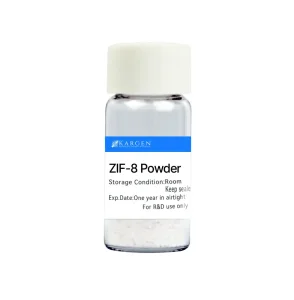
Best ZIF-8 Powder Metal Organic Frameworks (MOFs) Exporters
Mechanochemical synthesis yielding ultra-high hydrophobic micropores. Ideal for CO₂ capture, lithium separator coatings, and catalyst support.

High-Quality China MOF-303 Suppliers for Gas & Liquid Separation
High-capacity hydrothermally stable framework optimized for water harvesting from low-humidity air and selective gas fractionation.

High-Quality Customized Metal Organic Frameworks (MOFs) Solutions
Tailored pore volume, functional organic linkers, and custom node configurations engineered for OEM/ODM integration.

Best China MIL-101(Cr) Powder MOFs for Adsorption & Catalysis
Giant pore volume with mesoporous cages, exhibiting superior chemical stability for harsh catalytic and organic solvent adsorption tasks.

MIL-53(Al) Powder MOFs for Gas Sensing & Adsorption
Flexible "breathing" aluminum terephthalate framework providing high thermal stability and selective hydrocarbon gas adsorption.

Best HKUST-1 Powder Metal Organic Frameworks Service
Copper-BTC framework characterized by open metal sites, delivering exceptional capacity for gas storage and specialty-gas purification.

High-Quality MIL-101(Al) Powder MOFs from China Supplier
Lightweight aluminum-based porous framework offering high surface area, rapid adsorption kinetics, and high chemical stability.
MOF-303 Powder for Gas Separation & Biomedical Applications
Ultra-pure grade suitable for sensitive environmental, fluid filtration, pharmaceutical delivery, and industrial gas purification.
Next-Generation Hydrogen Organic Frameworks (HOFs) & MOFs: Architectural Precision in Porous Materials
The global transition toward clean hydrogen energy and decarbonized industrial manufacturing has accelerated the demand for advanced crystalline porous materials. Among these, Hydrogen Organic Frameworks (HOFs) and Metal-Organic Frameworks (MOFs) represent the pinnacle of molecular engineering. HOFs are metal-free crystalline porous networks held together by directional, reversible hydrogen bonds, whereas MOFs utilize coordination bonds between metal nodes and organic linkers. Both material families possess ultra-high surface areas (exceeding 2,000 to 7,000 m²/g), tailorable pore dimensions, low crystal density, and precise molecular sieving capabilities.
E-E-A-T Technical Benchmark & Information Gain
As a leading supplier and service provider of advanced carbon materials and crystalline frameworks, KARGEN operates a 10,000 m² R&D and manufacturing infrastructure led by returned doctoral scholars from Germany, the USA, and Sweden. This paper provides empirical engineering metrics, thermodynamic gas storage evaluations, and industrial scale-up methodologies designed to assist materials engineers and procurement officers in selecting high-performance frameworks.
Compared to traditional porous adsorbents such as activated carbon, zeolites, and silica gels, HOFs and MOFs exhibit unprecedented structural flexibility and chemical customization. In hydrogen storage, carbon capture (DAC and post-combustion), atmospheric water harvesting, and battery separator coatings, these materials offer distinct thermodynamic advantages by lowering the activation energy required for adsorption-desorption cycles.
Global Commercial & Industrial Status of HOFs and MOFs
An in-depth evaluation of global market growth, material supply chains, and industrial scalability bottlenecks.
Hydrogen Storage Infrastructure
Conventional H₂ storage relies on high-pressure compression (350–700 bar) or cryogenic liquefaction (-253°C), both of which suffer from severe energy losses. Cryo-adsorptive storage using specialized HOFs and MOFs allows high volumetric hydrogen density at moderate pressures (30–100 bar), drastically reducing operational expenses in fuel cell transport and bulk energy storage.
Industrial CO₂ & Flue Gas Capture
Global net-zero regulations have expanded the direct-air capture (DAC) and point-source emissions capture sectors. Frameworks like ZIF-8 and MOF-303 offer rapid adsorption kinetics and high CO₂/N₂ selectivity. Lower regeneration temperatures (60°C to 100°C) reduce thermal energy consumption by up to 40% compared to conventional monoethanolamine (MEA) solvent scrubbers.
Clean Synthesis & Metric-Ton Scale-Up
Historically, MOF production was hindered by expensive organic solvents (DMF, DEF) and low batch yields. Modern industrial synthesis—pioneered by KARGEN—utilizes solventless mechanochemical routes, continuous flow hydrothermal reactors, and water-based crystallization to deliver metric-ton supply capabilities while preserving crystalline integrity.
Technical Matrix: Framework Performance Metrics
| Framework Class | Primary Metal Node / Linker | BET Surface Area (m²/g) | Pore Size (Å) | Hydrothermal Stability | Target Industrial Application |
|---|---|---|---|---|---|
| ZIF-8 | Zinc / 2-Methylimidazole | 1,400 – 1,800 | 3.4 (Window) / 11.6 (Cage) | Excellent (pH 3–14, Boiling Water) | CO₂ Capture, Battery Separators, Gas Sensing |
| MOF-303 | Aluminum / Pyrazole-3,5-dicarboxylic acid | 1,100 – 1,400 | 6.0 | Exceptional (Cyclic Moisture) | Atmospheric Water Harvesting, Desiccant Wheels |
| HKUST-1 (Cu-BTC) | Copper / Trimesic Acid | 1,500 – 2,100 | 9.0 & 13.5 | Moderate (Requires dry gas storage) | Methane/H₂ Storage, Semiconductor Gas Purification |
| MIL-101(Cr) | Chromium / Terephthalic Acid | 3,000 – 4,200 | 29 & 34 (Mesoporous) | High (Acidic & Organic Environments) | Heterogeneous Catalysis, Heavy Metal Removal |
| Al-FUM | Aluminum / Fumaric Acid | 1,000 – 1,300 | 5.5 – 6.0 | Outstanding (Long-Term Water Cycles) | Adsorption Heat Pumps, HVAC Latent Load Reduction |
| HOF-Series (Custom) | Metal-Free H-Bonded Organic Frameworks | 1,200 – 3,500 | 4.0 – 18.0 | Tunable / High Solvent Recyclability | Ultra-Pure Hydrogen Purification, Gas Storage |
Macro Industry Trends & Technical Roadmap (2025–2035)
Evaluating key drivers pushing advanced crystalline frameworks into mass commercial adoption.
Trend 1: AI-Driven Crystal Structure Discovery
The integration of Machine Learning (ML) and Density Functional Theory (DFT) calculations allows rapid screening of millions of hypothetical HOF and MOF topologies. By predicting adsorption isotherms, Henry's constants, and framework mechanical stability, R&D cycles are shortened from years to weeks. KARGEN leverages predictive modeling to synthesize target-specific adsorbents for rare gas separation and precise gas sensing.
Trend 2: Binder-Less Shaping & Monolithic Granulation
Raw synthesized MOF and HOF powders present fluid-bed pressure drops in industrial packed towers. The industry is rapidly shifting toward binder-less extrusion, high-density pelletization, and surface-supported coatings (e.g., monoliths, ceramic foams, and electrospun membranes) without sacrificing intrinsic microporosity or BET surface area.
Trend 3: Hybrid MOF/HOF Polymer Membranes (MMMs)
Mixed-Matrix Membranes (MMMs) incorporate nano-sized framework particles into polymeric matrices (such as polyimides or polysulfones). This overcomes the Robeson upper bound in gas separation, providing exceptional permeability and selectivity for olefin/paraffin separations (e.g., C₂H₄/C₂H₆) and hydrogen recovery from synthesis gas.
Trend 4: Circular Green Chemistry & Solvent Recyclability
Environmental, Social, and Governance (ESG) compliance demands eco-friendly synthesis. Next-generation manufacturing relies on bio-based organic linkers (e.g., fumaric acid, amino acids), water-phase synthesis, and solid-state mechanochemistry. HOFs, in particular, offer metal-free recyclability, enabling thermal recovery and dissolution-recrystallization without toxic metal residue.
Localized Application Scenarios & Engineering Case Studies
Demonstrating how custom HOF and MOF solutions resolve critical operational challenges across global industries.
1. Semiconductor Grade Ultra-Pure H₂ & Gas Purification
Problem: Semiconductor fabrication requires sub-ppb impurity levels in process gases (e.g., removal of CO, CO₂, moisture, and trace hydrocarbons from H₂ streams).
Solution: Implementation of HKUST-1 and ZIF-93 packed bed purifiers. Open copper sites selectively coordinate polar impurities, achieving ultra-high gas purity (>99.9999%) while preserving volumetric flow rates.
2. Atmospheric Water Harvesting in Arid Desert Regions
Problem: Traditional desiccant condensation fails at relative humidity (RH) below 20%, requiring extreme cooling energy.
Solution: Deployment of MOF-303 and Al-FUM in automated solar-driven harvesting units. The steep S-shaped water sorption isotherm enables water capture at 15% RH and desorbs under natural sunlight (<65°C), supplying potable water in desert installations.
3. Lithium-Ion Battery Separator Stability Coatings
Problem: Lithium dendrite growth and thermal runaway in high-energy density pouch cells lead to rapid capacity loss.
Solution: Nano-ZIF-8 powder dispersed into polyethylene (PE) separators. The sub-nanometer pore channels homogenize lithium-ion flux, suppress dendrite formation, trap transition metal ions, and extend cycle life by over 40%.
Comprehensive Macro Industrial Solutions & OEM/ODM OEM Capabilities
From initial molecular design to large-scale pilot manufacturing, KARGEN delivers end-to-end framework engineering.
1. Molecular Design & Ligand Customization
Custom synthesis of complex organic linkers (bipyridines, dicarboxylates, tetracarboxylates) and pore size tuning (0.3 to 4.0 nm).
2. Pilot Scale-Up & Process Optimization
Seamless transition from lab scale screening to 100 kg and metric-ton batch production with continuous quality monitoring.
3. Formulations & Dispersions
Supply of stabilized liquid suspensions (water, ethanol, NMP), fine powders, beads, granules, and extruded honeycombs.
4. Digital QC & Analytical Certification
Every lot includes complete PXRD, TGA, BET N₂ physisorption, and ICP-OES chemical analysis certificates.
Specialized MOF & HOF Powders (Series 09 - 16)
High-selectivity sorbents for olefin/paraffin separation, moisture control, and catalytic oxidation.

Best NH2-MIL-101(Fe) Powder MOFs in Catalysis & Sensing
Amino-functionalized iron terephthalate offering active sites for photocatalysis, heavy metal capture, and biochemical sensing.

MOF-801 Powder for Water Harvesting & Cooling Systems
Zirconium-based fumarate framework engineered for low-temperature regeneration in adsorption heat pumps and dehumidifiers.

TYUT-12 Powder MOFs: High Selectivity for C2H6 over C2H4
Specialized separation material designed for single-step ethane/ethylene industrial purification, bypassing energy-intensive distillation.
ZIF-8 Powder MOFs: Zeolitic Imidazolate Framework Service
High-purity zinc imidazolate matrix evaluated for gas storage, hydrophobic membranes, and protective anti-corrosion coatings.

ZIF-93 Powder MOFs for Gas Adsorption Applications
Polar-functionalized pore channels optimized for selective CO₂ and polar solvent vapor capture under ambient conditions.

MOF-74(Mg) Factory Direct MOFs for Enhanced Gas Adsorption
Boasting ultra-high open magnesium metal site density, yielding exceptional low-pressure CO₂ and CH₄ adsorption capacities.
MOF-801 Powder Leading Suppliers for Water Harvesting
Commercial grade Zr-fumarate optimized for high-volume atmospheric water generation in arid and landlocked regions.
High-Quality MOF-801 Powder for Water Harvesting Applications
Strict particle-size controlled grade engineered for integration into commercial HVAC dehumidification honeycombs.
Frequently Asked Questions by Technical Procurement Teams
Expert insight into material selection, hydrothermal stability, scale-up logistics, and evaluation sampling.
What is the core distinction between HOFs (Hydrogen-Bonded Organic Frameworks) and MOFs (Metal-Organic Frameworks)?
MOFs are synthesized using coordination bonds between metal nodes (clusters/ions like Zn, Al, Cu, Fe, Zr) and organic linkers (carboxylates, azoles). HOFs, conversely, rely entirely on directional hydrogen bonding between organic building blocks. This metal-free nature gives HOFs distinct advantages: lower skeletal density, complete metal-free purity for electronic/medical applications, superior solvent recyclability, and ease of thermal regeneration without heavy-metal leaching concerns.
Does KARGEN provide evaluation samples for industrial R&D teams?
Yes. Qualified enterprise procurement teams and university research labs can receive 1–5 gram evaluation samples of standard framework powders (such as ZIF-8, MOF-303, Al-FUM, HKUST-1, and MIL-53). Buyers cover international courier costs. Request your sample by providing a summary of your application targets and material property requirements.
How does KARGEN address the hydrothermal stability challenges of moisture-sensitive MOFs like HKUST-1?
HKUST-1 features open copper coordination sites that can undergo hydrolysis under prolonged exposure to liquid water or humid air above 60% RH. To solve this, KARGEN provides surface hydrophobic post-synthetic modifications (PSM) and polymer encasements that preserve open metal site gas adsorption capacity while shielding the internal crystal lattice from moisture breakdown.
What are the primary shipping forms and particle size options available?
Our standard materials are supplied as dry microcrystalline powders (D50 ranging from 500 nm to 50 μm). We also supply pre-dispersed liquid slurries (in ethanol, water, or NMP) for battery separator slot-die coating, as well as 1–3 mm spherical granules or extruded pellets for industrial gas adsorption towers.
What is KARGEN's annual production capacity for ton-scale supply contracts?
KARGEN operates China's first metric-ton scale MOF manufacturing facility spanning 10,000 square meters in Zhuhai. Our industrial reactor lines deliver multi-ton annual outputs for high-demand grades like ZIF-8, Al-FUM, and MOF-801 with automated digital batch traceability.
Can KARGEN execute custom synthesis under non-disclosure agreements (NDA)?
Yes. Over 60% of our R&D staff hold master's or doctoral degrees. We regularly execute custom synthesis, organic linker functionalization (e.g., -NH₂, -SO₃H, -NO₂ derivatives), and process scale-up under strict mutual NDAs to protect proprietary customer intellectual property.