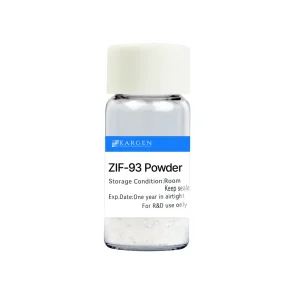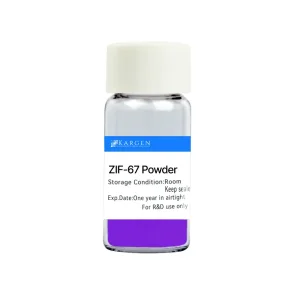
Featured Nanomaterial Components for Air Systems
Explore our top-tier Metal-Organic Framework (MOF) formulations engineered for advanced HVAC, desiccant air cooling, and gas purification exporters globally.
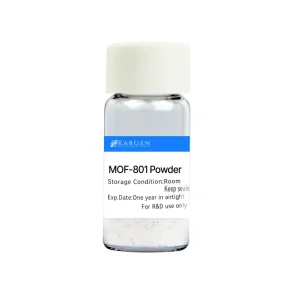
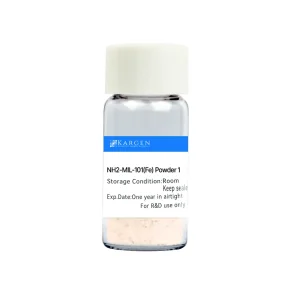
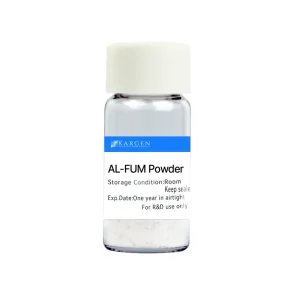
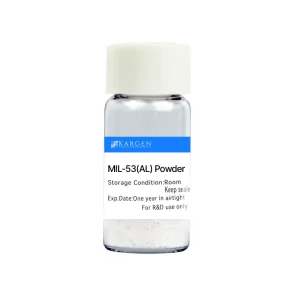
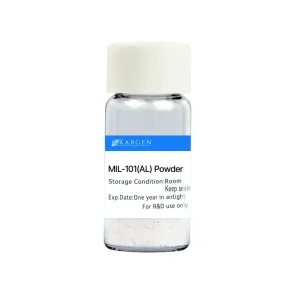
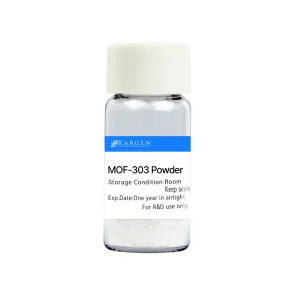
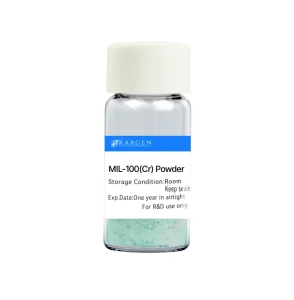
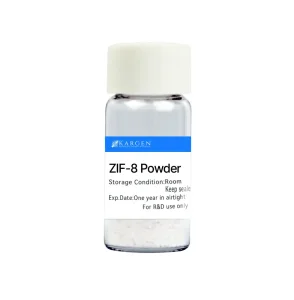
Next-Generation Air Systems: Redefining Thermal Efficiency & Atmospheric Gas Separation via Nanoporous MOF Technology
In the modern industrial landscape, HVAC (Heating, Ventilation, and Air Conditioning) platforms, commercial desiccant dehumidifiers, direct air capture (DAC) rigs, and semiconductor cleanroom atmospheric handlers face a trilemma: rising energy overheads, aggressive carbon neutrality mandates, and strict requirements for gas purity. Traditional air treatment systems rely heavily on energy-intensive vapor compression cycles, silica gel/zeolite desiccant wheels with high thermal regeneration thresholds (often requiring temperatures exceeding 140°C–200°C), and chemical amine scrubbing systems prone to thermal degradation and high parasitic energy losses.
As leading air systems suppliers and exporters, Guangdong Advanced Carbon Materials Co., Ltd. (KARGEN) bridges the gap between atomic-level chemistry breakthroughs and ton-scale industrial manufacturing. By synthesizing crystalline Metal-Organic Frameworks (MOFs)—including hydrothermal benchmark sorbents such as Al-FUM, MOF-801, ZIF-8, and MOF-303—we supply worldwide OEMs and engineering exporters with next-generation sorbent materials. These components lower thermal regeneration thresholds to under 70°C, drastically cut latent heat loads by over 50%, and enable precise molecular sieving for atmospheric CO₂ capture and trace VOC abatement.
Key Information Gain Metric: Latent-Heat Decoupling in Modern Air Systems
Sensible cooling accounts for only 40–50% of the energy consumed by standard compressor air conditioners operating in humid environments. The remaining 50–60% is wasted condensing atmospheric moisture (latent load). By replacing standard silica packings with MOF-coated microchannel heat exchangers, air systems adsorb moisture directly from ambient air at relative humidities (RH) as low as 10–30%, desorbing the water vapor using low-grade waste heat (60°C–75°C) from compressor exhaust or solar thermal loops.
Thermodynamic Superiority of MOFs over Traditional Desiccants in Air Handling
The operational advantage of MOF materials in engineered air handling units lies in their ultra-high BET specific surface areas (exceeding 1,500 to 5,000 m²/g), customizable pore apertures (3 Å to 20 Å), and S-shaped water uptake isotherms. Unlike traditional silica gels, which exhibit linear sorption isotherms requiring high heating for moisture release, aluminum fumarate (Al-FUM) and zirconium-based MOF-801 display steep step-shaped adsorption isotherms tailored to ambient humidity zones.
| Air System Sorbent Grade | BET Surface Area (m²/g) | Water / Gas Pore Volume | Regeneration Temp (°C) | Primary Air System Application |
|---|---|---|---|---|
| Al-FUM (Aluminium Fumarate) | 1,100 – 1,400 | 0.55 cm³/g | 60°C – 75°C | Desiccant Dehumidification Wheels, HVAC Latent Load Reduction |
| MOF-801 (Zr-Fumarate) | 800 – 1,050 | 0.45 cm³/g | 65°C – 80°C | Atmospheric Water Harvesting (AWH), Ultra-Low RH Air Systems |
| ZIF-8 (Zinc Imidazolate) | 1,600 – 1,900 | 0.68 cm³/g | 100°C – 120°C | Hydrophobic VOC Removal, Gas-Separation Membranes, Battery Air Purifiers |
| MOF-303 (Al-PZDC) | 1,300 – 1,500 | 0.58 cm³/g | 60°C – 70°C | Desert Air Systems, Low-Energy Direct Air Capture (DAC) Units |
| HKUST-1 (Cu-BTC) | 1,800 – 2,100 | 0.78 cm³/g | 110°C – 130°C | Specialty Air Separation, Semiconductor Ammonia/Amine Scavenging |
China Factory Advantages: Why Sourcing Air System Sorbents from KARGEN Empowers Exporters
Combining Ph.D.-led advanced R&D with continuous scale manufacturing to deliver cost performance, batch consistency, and reliable international supply chains.
Ton-Scale Industrial Batch Capacity
Operating from our 10,000 m² R&D and manufacturing base in Zhuhai, Guangdong, KARGEN was the first enterprise in China to achieve ton-scale mass production of MOF powders. We bridge the gap between small laboratory synthesis and multi-ton commercial contract supply for global HVAC and air purification exporters.
Mechanochemical & Low-Solvent Green Synthesis
Our proprietary solvent-free and low-solvent mechanochemical synthesis technologies significantly reduce manufacturing costs while minimizing environmental impact. This process delivers purer nano-crystalline phase products with uniform particle size distributions suited for wash-coating air heat exchangers.
Rigorous Digital Quality Control & Batch Traceability
Every shipment undergoes automated X-ray Diffraction (XRD), Brunauer-Emmett-Teller (BET) nitrogen sorption testing, and Thermogravimetric Analysis (TGA). Detailed Certificates of Analysis (COA) accompany all production lots, ensuring consistent performance for OEM air filtration assemblies.
Scientist-Led Custom Formulation & OEM Support
Founded by returning scholars from prestigious research institutions in the U.S., Germany, and Sweden, our engineering team consists of over 60% dedicated R&D personnel. We offer custom binder formulations, slurry dispersions, and extruded honeycombs to fit specific system designs.
Macro Trends Shaping the Global Air Systems Industry
Key technological evolutions driven by strict carbon regulations, semiconductor precision demands, and energy efficiency mandates.
1. Decarbonization of HVAC via Waste Heat Recovery
Commercial air system exporters are transitioning from electricity-heavy compressor cooling to liquid-desiccant and solid-desiccant evaporative systems powered by low-grade industrial waste heat (55°C–75°C), cut energy usage across global commercial property installations.
2. Modular Direct Air Capture (DAC) Rigs
Point-source industrial emissions capture is rapidly extending into atmospheric CO₂ extraction. System manufacturers are building modular DAC units packed with functionalized amine MOFs (like MIL-101 or MOF-808) capable of binding ambient CO₂ at 420 ppm concentrations with lower energy footprints.
3. Ultra-Clean Microelectronics Cleanrooms
Semiconductor fabs require sub-ppb (parts-per-billion) control over airborne molecular contaminants (AMCs) including ammonia, siloxanes, and volatile organic compounds. MOF-based gas filters provide selective sorption tailored to these sensitive fabrication environments.
Localized Application Scenarios for Global Air Systems Integration
How advanced porous materials solve distinct air handling and gas purification challenges across diverse operating environments.
Off-Grid Atmospheric Water Harvesting Air Systems
In arid coastal zones (Middle East, North Africa, Western Australia) where relative humidity drops dramatically during daytime, systems packed with MOF-303 or MOF-801 extract potable water directly from the air. Operating effectively even at 10%–20% RH, these air systems utilize ambient solar thermal energy for desorption, producing over 3 to 5 liters of clean water per kilogram of MOF daily without electricity grids.
Lithium Battery Dry Room Air Dehumidifiers
Lithium battery electrode coating and electrolyte filling processes require cleanroom air maintained at dew points below -40°C to -50°C. Modern air system suppliers use low-temperature desiccant rotors coated with water-stable Al-FUM powders. This configuration achieves sub-zero dew points while cutting wheel regeneration heat demands by up to 40% compared to standard molecular sieves.
Industrial Air Exhaust VOC Capture & Solvent Recovery
Industrial manufacturing plants releasing volatile organic compounds (toluene, acetone, ethyl acetate) face strict emissions standards. Air purification systems integrated with hydrophobic ZIF-8 and MIL-53(Al) adsorb VOC molecules at high humidity levels without water competitive adsorption. Solvents are recovered via simple vacuum or low-temperature steam sweeps.
Subsea & Aerospace Life-Support Recirculation Systems
Enclosed life-support environments in submarines, space habitats, and deep mining air locks require low-power CO₂ scrubbing. Functionalized iron and aluminum MOFs bind exhale-generated CO₂ selectively over nitrogen and oxygen, allowing ambient pressure regeneration without chemical amine toxicity risks.
Global Procurement & Engineering Customization Framework
How international buyers and air system exporters partner with KARGEN to take custom formulations from lab validation to mass production.
Application Requirement Audit
Engineering consultation to define targeted air parameters: target dew points, relative humidity spectrum, gas stream compositions, pressure drops, and available waste heat temperatures.
1g – 5g Evaluation Sampling
Rapid dispatch of standardized MOF powder samples or ready-to-test liquid dispersions for laboratory sorption bench analysis, TGA characterization, and dynamic vapor sorption (DVS) trials.
Formulation & Substrate Coating
Custom tuning of binder chemistry, particle size distribution (d50), and slurry rheology to enable direct wash-coating onto metallic microchannel heat exchangers or ceramic desiccant rotors.
Frequently Asked Questions by Air Systems Buyers
In-depth technical answers addressing material longevity, scale-up logistics, and engineering integrations.
Why choose Metal-Organic Frameworks (MOFs) over conventional Silica Gel or Zeolites in Air Handling Systems?
Traditional silica gels and zeolites require high thermal energy to release adsorbed moisture (often 120°C to 200°C), resulting in high electricity bills for air dehumidification units. MOFs (such as Al-FUM and MOF-801) feature step-shaped sorption isotherms tailored specifically to ambient humidity zones. They release up to 90% of adsorbed moisture at temperatures between 60°C and 75°C, allowing air systems to utilize low-grade heat, such as compressor exhaust or solar thermal heat, cutting cooling energy consumption by over 50%.
How does KARGEN ensure batch-to-batch consistency for ton-scale orders?
Our 10,000 m² production facility in Zhuhai operates continuous mechanochemical reactors with automated feedback controls over temperature, residence time, and stoichiometry. Every production lot undergoes rigorous digital inspection, including powder X-ray diffraction (PXRD) for phase purity, nitrogen pore surface area analysis (BET), thermogravimetric analysis (TGA), and particle size analysis. Complete batch certificates accompany every global shipment.
Are MOF materials stable under high-humidity and hydrothermal cyclic operation?
Yes. Early laboratory MOF compounds suffered from moisture degradation, but modern industrial frameworks like Al-FUM, ZIF-8, MIL-53(Al), and MOF-801 feature highly stable coordination bonds (e.g., Zr-O and Al-O clusters). These materials withstand tens of thousands of moisture adsorption-desorption cycles without crystal structure collapse or capacity degradation.
Can KARGEN supply MOFs in forms other than raw dry powders?
Absolutely. While raw powders are standard, we supply MOFs as stabilized liquid dispersions, binder-integrated slurries ready for dip-coating, extruded spherical beads (1–3 mm), granules, and structured honeycomb blocks designed to minimize pressure drops in high-velocity airflow streams.
What is the turnaround time for inquiry responses and global sample shipments?
All technical inquiries receive a detailed response from a Ph.D. application scientist within 1 business day across all global time zones. Evaluation sample lots (1g to 5g) for qualified project developers are typically prepared and dispatched via international air express within 3 to 5 working days.
How do MOFs perform in Direct Air Capture (DAC) systems for atmospheric CO₂ recovery?
MOFs possess structural pore features that can be functionalized with specific chemical groups (such as amine chains). This allows them to selectively bind trace CO₂ molecules at 400–420 ppm concentrations in open atmospheric air. Their low heat capacity enables energy-efficient desorption under vacuum or mild heating (80°C–100°C), making them strong candidates for scalable DAC air systems.
Explore Additional Air System Nanomaterial Options
Comprehensive chemical portfolio covering ZIFs, MIL-series, and Zr/Fe-framework powders for specialized industrial exporters.