
Best Organic Nanomaterials Exporters & Industrial Suppliers
Pioneering Ton-Scale Metal-Organic Framework (MOF) Powder Synthesis, Porous Nanostructures & Engineered Application-Specific Solutions for Global Enterprise Sourcing.
Featured MOF & Nanomaterial Export Products
High-purity framework powders engineered for gas separation, catalysis, atmospheric water harvesting, and battery coatings.





Industry Whitepaper: The Technical Frontier of Organic Nanomaterials & MOFs
Bridging academic synthesis with industrial scale up: An authoritative analysis of crystalline porous frameworks, organic ligand design, and bulk manufacturing dynamics.
1. Reticular Chemistry & Molecular Architecture
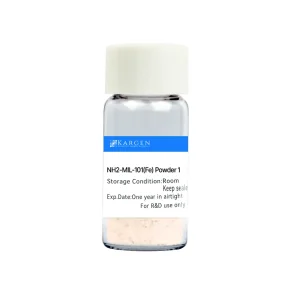
The defining advantage of organic nanomaterials lies in their modular construction. By selecting specific secondary building units (SBUs)—such as trivalent iron centers in MIL-100(Fe), zirconium oxide clusters in UiO-66, or zinc imidazolate geometries in ZIF-8—chemists can pre-determine topological networks. When linked with multi-topic organic ligands like terephthalic acid, trimesic acid, or 2-methylimidazole, these nodes yield predictable pore topologies with customizable chemical functionality (e.g., amine functionalization in NH2-MIL-101(Fe) for enhanced selective affinity).
Unlike amorphous porous carbons, MOFs possess long-range crystalline order. This enables definitive structural validation via Powder X-Ray Diffraction (PXRD), ensuring zero batch-to-batch structural deviation during large-scale manufacturing runs. Furthermore, open metal sites within frameworks like HKUST-1 (Cu-BTC) create strong Lewis-acidic centers capable of preferentially chemisorbing specific gas species, such as olefin molecules or carbon dioxide, out of complex volatile mixtures.
2. Information Gain: Key Physical Parameters for Enterprise Procurement
When qualifying the best organic nanomaterials exporters, enterprise procurement teams must look beyond simple material grade titles and evaluate four fundamental physical parameters:
- Specific Surface Area (BET): Measured via N2 or Ar physisorption isotherms at 77K. High-grade industrial MOFs like ZIF-8 consistently achieve BET surface areas above 1,300–1,800 m²/g, while specialized frameworks reach >3,000 m²/g.
- Thermal & Hydrothermal Stability: Thermogravimetric Analysis (TGA) establishes operational ceilings. For instance, ZIF-8 exhibits thermal stability up to 500°C in inert atmospheres, whereas water-harvesting grades like Al-FUM demonstrate continuous cyclic hydrothermal stability across thousands of adsorption-desorption cycles without pore collapse.
- Pore Size & Volume Distribution: Micro-porosity (< 2 nm) determines molecular sieving selectivity, whereas meso-porosity (2–50 nm) dictates mass transport kinetics across high-throughput industrial reactors.
- Particle Size Distribution (PSD) & Form Factor: Raw synthesized powders typically exhibit PSDs between 200 nm and 5 µm. Top exporters offer engineered form factors including mono-dispersed liquid colloids, extrudates, honeycombs, and binder-free granulated pellets designed to minimize bed pressure drop in industrial adsorption columns.
China Factory Advantage: Scaling Ton-Scale Nanomaterials
How Guangdong Advanced Carbon Materials Co., Ltd. (KARGEN) bridged the gap from laboratory novelty to multi-ton industrial chemical export.
Mechanochemical & Solvent-Free Synthesis
Traditional MOF production relies on high-cost, toxic solvents like DMF in batch autoclaves. KARGEN utilizes proprietary continuous mechanochemical extrusion lines. This green synthesis route reduces solvent consumption by up to 90%, dramatically lowering unit production costs while eliminating hazardous waste streams.
Upstream Ligand Integration
Situated within Guangdong’s premier chemical manufacturing ecosystem, our facilities possess direct access to bulk organic precursors (fumaric acid, terephthalic acid, imidazole derivatives). Vertical supply chain integration protects global customers from raw material price spikes and ensures uninterrupted supply continuity.
Ph.D.-Led Quality Assurance
Founded by returnee scholars from the United States, Germany, and Sweden, KARGEN operates a 10,000 m² campus combining R&D with pilot-scale engineering centers. Every batch undergoes rigorous PXRD, TGA, and Nitrogen BET surface area verification prior to export dispatch.
Industrial Scale & Manufacturing Metrics
Quantifiable data demonstrating leadership in the global organic nanomaterial and MOF export sector.
Macro Industry Solutions & Next-Gen Applications
Engineered organic nanomaterials addressing critical global challenges in clean energy, climate control, and industrial chemical processing.
1. Carbon Capture, Utilization & Storage (CCUS)
Traditional amine scrubbing suffers from immense energy penalties during solvent regeneration. High-capacity adsorbents like ZIF-8 and customized MIL-101 derivatives selectively bind CO2 from flue gas streams or direct air capture (DAC) arrays. Their low specific heat capacity reduces desorptive thermal regeneration energy by up to 40% compared to liquid monoethanolamine (MEA) systems.
2. Atmospheric Water Harvesting (AWH) & HVAC Dehumidification
Hydrothermally stable frameworks such as Al-FUM and MOF-303 exhibit steep, step-shaped S-curve water adsorption isotherms at low relative humidity (RH 10–30%). Installed inside desiccant wheels or solar-driven water harvesters, these materials capture potable water from arid desert air using ambient heat or low-grade waste thermal energy (60–80°C).
3. Lithium-Ion Battery Separators & Solid-State Electrolytes
Coating lithium-ion battery polypropylene separators with nanometer-scale ZIF-8 or UiO-66 powders creates sub-nanometer ion channels. This uniformizes lithium-ion flux during rapid charge cycles, suppresses dendrite growth, traps transition metal ion leakage from cathodes, and significantly reduces thermal runaway risks in high-energy EV batteries.
4. Semiconductor Gas Purification & Olefin/Paraffin Separation
Cryogenic distillation of ethylene/ethane and propylene/propane mixtures is one of the chemical industry's most energy-intensive processes. Open-metal site MOFs like HKUST-1 and TYUT-12 operate as molecular sieves, executing thermodynamic or kinetic separation of light hydrocarbons at ambient temperatures, cutting separation energy demands by over 70%.
Framework Selection & Technical Parameter Matrix
Comparative benchmark data for key organic nanomaterial frameworks exported worldwide.
| Framework Grade | Metal Node / Ligand System | BET Surface Area | Pore Window Size | Primary Industrial Vector |
|---|---|---|---|---|
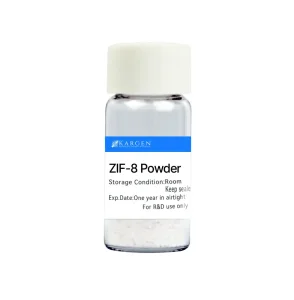
| ZIF-8 | Zinc / 2-Methylimidazole | 1,300 – 1,800 m²/g | 0.34 nm (3.4 Å) | CO2 Capture, Li-Ion Separator Coating, Catalyst Support |
| Al-FUM | Aluminium / Fumaric Acid | 1,000 – 1,300 m²/g | 0.60 nm (6.0 Å) | Atmospheric Water Harvesting, HVAC Dehumidification |
| HKUST-1 (Cu-BTC) | Copper / Trimesic Acid | 1,500 – 2,100 m²/g | 0.90 nm (9.0 Å) | Gas Storage, Semiconductor Gas Purification |
| MIL-101(Fe) / NH2 | Iron / Aminoterephthalic Acid | 2,000 – 3,200 m²/g | 1.2 – 1.6 nm | Photocatalysis, Water Pollutant Adsorption, Biosensing |
| UiO-66 | Zirconium / Terephthalic Acid | 1,100 – 1,500 m²/g | 0.60 nm (6.0 Å) | Chemical Protective Gear, Acid-Stable Gas Scrubbing |
| MOF-303 | Aluminium / Pyrazoledicarboxylic Acid | 1,100 – 1,400 m²/g | 0.60 nm (6.0 Å) | Ultra-Low Humidity Water Extraction (Desert Climate) |
Global Procurement, Compliance & Enterprise Export Protocol
Ensuring seamless international compliance, batch consistency, and reliable freight logistics for bulk chemistry buyers.
Sample Validation & OEM Scaling
Recognizing that material integration requires empirical verification, KARGEN offers 1–5 g evaluation sample lots accompanied by complete Certificate of Analysis (COA) documents. Upon validation, seamless scale-up from kilogram pilot batches to ton-scale commercial shipments is guaranteed under strict non-disclosure (NDA) terms.
Regulatory & Safety Compliance
All exported organic nanomaterials comply fully with international chemical management standards. Material Safety Data Sheets (MSDS / SDS) are authored under GHS Rev.8 standards. Packaging meets UN-certified hazardous/non-hazardous transport specifications with moisture-barrier aluminum foil lining and inert gas purging.
Logistics & Supply Chain Assurance
Export operations are supported by FOB, CIF, and DDP terms via major shipping routes out of Shenzhen, Guangzhou, and Hong Kong ports. Standard lead times for stock framework powders (such as ZIF-8, HKUST-1, and Al-FUM) range between 5 and 10 business days for global express dispatch.
Frequently Asked Questions (FAQ) for Enterprise Buyers
In-depth answers addressing material handling, custom synthesis, stability, and procurement procedures.
Does KARGEN provide free MOF samples for commercial evaluation?
How does KARGEN guarantee batch-to-batch consistency in ton-scale exports?
What options are available for custom organic linkers or functionalized frameworks?
Can MOFs be supplied in liquid dispersion or shaped pellet forms?
What are the storage and shelf-life recommendations for exported MOF powders?
Additional Specialized Nanomaterial Export Products
Explore our extended series of specialized Metal-Organic Frameworks for advanced separation, cooling, and catalysis applications.





Initiate Your Organic Nanomaterial Procurement
Connect directly with KARGEN’s senior chemical engineers for technical specification sheets, sample lot dispatch, and volume pricing quotes.