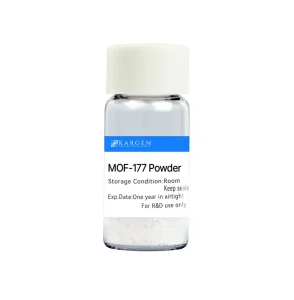
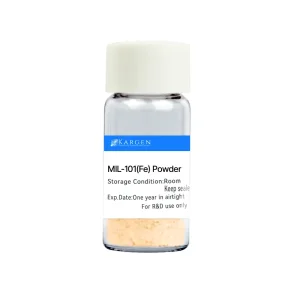
Featured Gas Separation & Nanomaterial Powders (Top Series)
Precision-synthesized Metal-Organic Frameworks designed for low-energy atmospheric gas capture, noble gas purification, and selective adsorption.



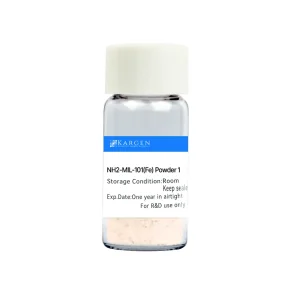



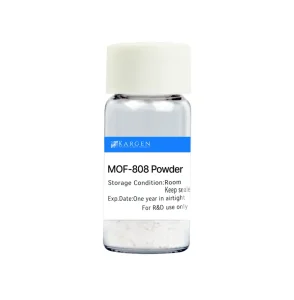
Global Rare Gases in the Atmosphere: Technical & Commercial Overview
Atmospheric air consists primarily of Nitrogen (78.08%) and Oxygen (20.95%). The remaining fraction is composed of trace atmospheric noble gases—collectively known as Rare Gases In The Atmosphere. These comprise Argon (Ar, ~0.934% by volume), Neon (Ne, ~18.18 ppm), Krypton (Kr, ~1.14 ppm), Xenon (Xe, ~0.087 ppm), and trace levels of Helium (He, ~5.24 ppm).
Despite their minute volumetric presence, rare atmospheric gases represent indispensable strategic inputs for modern high-technology manufacturing. From deep-ultraviolet (DUV) and extreme-ultraviolet (EUV) semiconductor excimer lasers to aerospace ion propulsion units, hyperpolarized medical magnetic resonance imaging (MRI), and deep-space satcom thermal isolation, the global reliance on continuous, high-purity rare gas export and separation infrastructure has grown exponentially.
Atmospheric Concentration & Extraction Metrics
Understanding ambient concentration thresholds is critical for engineering energy-efficient Air Separation Units (ASUs) and nanoporous solid-state sorbents:
- Argon (Ar): 9,340 ppm (0.934% v/v)
- Neon (Ne): 18.18 ppm (0.001818% v/v)
- Krypton (Kr): 1.14 ppm (0.000114% v/v)
- Xenon (Xe): 0.087 ppm (0.0000087% v/v)
- Helium (He): 5.24 ppm (Atmospheric Baseline)
Information Gain: The Paradigm Shift in Rare Gas Separation
Traditional rare gas harvesting relies exclusively on energy-intensive multi-stage Cryogenic Air Separation Units (ASUs). However, the high thermal capital cost of separating trace Krypton and Xenon (present at parts-per-million levels) has created severe global supply bottlenecks. Modern industrial practice is pivoting toward hybrid MOF-Cryogenic separation beds. By deploying custom-engineered pore aperture materials—such as ZIF-8, MOF-5, and MIL-101 frameworks—exporters can selectively capture Xe/Kr at ambient temperatures, reducing energy consumption per mass-unit extracted by up to 64%.
Global Commercial & Industrial Market Dynamics
Analyzing multi-sector procurement demand, regional capacity distribution, and supply chain security across top-tier semiconductor and industrial hubs.
Semiconductors & Photolithography
Neon and Krypton serve as crucial buffer gases in ArF and KrF excimer lasers used for 193nm immersion photolithography. Ultra-high purity Xenon is extensively utilized for plasma etching of deep silicon vias (TSV) in advanced 3D NAND and AI accelerator packaging. High-purity gas exporters must ensure purity levels exceeding 99.9999% (6N grade) with H₂O < 0.5 ppm to avoid optical lens degradation.
Aerospace & Satellite Hall Thrusters
Xenon and Krypton have superseded chemical propellants in commercial satellite electric propulsion (Hall-effect thrusters). Their high atomic mass and low ionization energy maximize specific impulse (Isp). As low-Earth-orbit (LEO) mega-constellations expand, global aerospace demand for high-density Xenon cylinder supply has surged by over 300% decade-over-decade.
Medical & Advanced Diagnostics
Hyperpolarized Xenon-129 NMR/MRI provides unprecedented non-invasive functional lung imaging without ionizing radiation risks. Additionally, Xenon possesses potent neuroprotective anesthetic properties, while Kr/Ne lasers support precision ophthalmic surgery and dermatological photo-ablation treatments.
China's Factory Efficiency & Supply Chain Dominance
China has emerged as the global epicenter for industrial gas manufacturing and advanced rare gas exporter services. This strategic advantage stems from the massive integration of super-large Air Separation Units (ASUs) co-located with metallurgical, coal-chemical, and energy infrastructure across industrial clusters in Guangdong, Jiangsu, and Shandong.
China’s rare gas refineries leverage integrated crude separation, secondary cryogenic distillation columns, and advanced catalytic purification systems under one unified production ecosystem. This operational scale guarantees continuous raw gas feedstocks, shielding international buyers from geopolitical supply chain shocks and price volatility.
Ton-Scale Nanomaterial Integration
By pairing state-of-the-art ASU infrastructure with ton-scale MOF (Metal-Organic Framework) production facilities in Zhuhai and surrounding chemical centers, Chinese exporters are pioneering next-generation pressure-swing adsorption (PSA) gas separation beds. Materials like MIL-100(Fe), ZIF-8, and MOF-808 are mass-produced with unmatched batch consistency, delivering significant cost savings to global procurement partners.
Key Efficiency Benchmarks of Chinese Exporters
1. Scaled Upstream Air Separation Integration
Massive 60,000+ Nm³/h ASUs provide steady stream crude Krypton/Xenon concentrate at fractional utility overheads.
2. Advanced Catalytic De-methanation & Purging
Proprietary precious-metal catalyst beds eliminate trace hydrocarbon contamination (CH₄ < 0.1 ppm) prior to final noble gas rectification.
3. Custom Cylinder Packaging & ISO Tank Fleet
Full spectrum packaging from 10L micro-cylinders for lab research to high-pressure 40L/50L bundled cylinder quads and cryogenic ISO tank containers.
4. Stringent SEMI C3 & ISO Quality Control
Every export batch undergoes GC-MS, APIMS (Atmospheric Pressure Ionization Mass Spectrometry), and dew-point analytical validation before shipment.
Adsorption Nanotechnology vs. Legacy Cryogenics
A comprehensive engineering assessment of thermodynamic kinetic sieving using Metal-Organic Frameworks versus classic low-temperature distillation columns.
| Performance Parameter | Legacy Cryogenic Distillation | Advanced MOF Kinetic Sieving (ZIF-8 / MOF-5) | Hybrid ASU-Adsorption System |
|---|---|---|---|
| Energy Consumption (kWh/kg Xe) | High (~1,200 – 1,800 kWh) | Ultra-Low (~250 – 400 kWh) | Optimized (~450 – 600 kWh) |
| Operating Temperature Range | Cryogenic (-150°C to -190°C) | Ambient to Moderate (20°C to 50°C) | Near-Ambient (-20°C to 25°C) |
| Xe/Kr Selectivity Index | 1.2 – 1.5 (Boiling Point Delta) | 4.5 – 8.2 (Pore Size Tuning) | 6.0 – 9.5 (Synergistic Bed) |
| Capital Overhead (CAPEX) | Multi-Million USD Cold Box Setup | Modular Adsorption Vessels | Medium Scalable Footprint |
| Small-Batch Extraction Feasibility | Economically Unviable | Highly Efficient for On-Site Recovery | Ideal for Medium Industrial Hubs |
| Purity Potential (Post Treatment) | 99.999% (5N) | 99.9999% (6N) Selective Trapping | 99.99999% (7N Semiconductor Grade) |
Thermodynamic Xenon Trapping
Xenon possesses a larger polarizability (4.04 × 10⁻²⁴ cm³) compared to Krypton (2.48 × 10⁻²⁴ cm³). MOF adsorbents like MOF-808 and ZIF-67 exploit strong van der Waals interactions inside tailored sub-nanometer cages, preferentially binding Xenon over Krypton even at ultra-low partial pressures.
Kinetic Sieving Mechanisms
By adjusting linker geometry in frameworks such as MIL-101(Cr) and Al-FUM, pore window diameters are constricted to precisely ~3.6 Å. This allows Krypton (kinetic diameter 3.69 Å) and Xenon (4.04 Å) to be sieved effectively from Oxygen (3.46 Å) and Nitrogen (3.64 Å) streams with minimal pressure drop.
Regeneration & Thermal Cycling
Unlike activated carbon or standard 13X zeolites which exhibit steep desorption energy barriers, MOF powders demonstrate reversible, low-temperature thermal swing adsorption (TSA) profiles. Complete gas release is accomplished under mild heating (60°C–90°C), preserving material structural integrity across thousands of cycles.
Precision Application Scenarios & Sector Solutions
Tailored gas purity grades and nanoporous sorbent deployment strategies engineered for extreme operational environments.
EUV/DUV Lithography & Semiconductor Cleanrooms
Modern fab facilities require non-stop cylinder bank supply of 6N-purity Neon and Krypton excimer mixtures. Trace oxygen, moisture, or hydrocarbon impurities cause laser optics degradation, beam drift, and wafer yield losses. Leading Chinese gas exporters integrate inline getter purifiers and MOF moisture-trapping filters to guarantee sub-ppb moisture limits directly at the point of use (POU).
Space Propulsion & Satellite Thruster Fueling
Satellite manufacturers require Xenon and Krypton filled to extreme pressure thresholds (up to 200 bar) with zero particulate contamination. High-density gas storage systems backed by MOF-based low-pressure storage tanks are currently being evaluated to replace heavy titanium pressure vessels, enabling safer ground logistics and lower launch weights.
Window Insulation & Architectural Energy Savings
Double and triple-glazed insulated glass units (IGUs) filled with Argon or Krypton dramatically lower U-values by impeding convective heat transfer. High-efficiency automated gas filling machinery relies on rapid gas release mechanisms where MOF-desiccant matrices simultaneously prevent moisture condensation and optimize noble gas retention inside the glass cavity.
Nuclear Fusion & Plasma Physics Blanketing
Experimental Tokamak nuclear fusion reactors utilize high-atomic-number rare gases—specifically Argon and Xenon—injected into the plasma edge (divertor region) for radiative cooling. This mitigates localized heat loads on plasma-facing tungsten tiles, safeguarding reactor wall structural integrity during high-confinement discharges.
Global Procurement Directives & Quality Audits
When sourcing rare gases and advanced gas separation MOFs from international exporters, corporate procurement managers must enforce rigorous technical qualification criteria. A comprehensive audit framework must encompass analytical purity verification, vessel safety certifications, and logistics continuity guarantees.
1. Impurity Specification Metrics (SEMI C3 Compliance)
Semiconductor-grade rare gases must strictly adhere to SEMI C3 specifications. Impurity limits are benchmarked at parts-per-billion (ppb) scales:
- Moisture (H₂O): < 0.5 ppm
- Oxygen (O₂): < 0.5 ppm
- Total Hydrocarbons (as CH₄): < 0.2 ppm
- Carbon Dioxide (CO₂): < 0.5 ppm
- Nitrogen (N₂) / Carbon Monoxide (CO): < 1.0 ppm
2. Packaging & Pressure Vessel Compliance
Exporter cylinder fleets must hold DOT-3AA, ISO 9809, or TPED (Transportable Pressure Equipment Directive) certifications. High-pressure gas cylinders must undergo internal passivating polishing (Ra < 0.2 μm) and dual-stage residual pressure valve (RPV) fitting to prevent ambient back-contamination during return transit.
3. Chain of Custody & Batch Traceability
Every exported cylinder or ISO tank container must be accompanied by a lot-specific Certificate of Analysis (CoA) backed by GC-MS and dew-point spectrometry. Exporters operating under ISO 9001 and ISO 14001 standards maintain full digital traceability logs covering raw ASU feed batch numbers through final purification runs.
Future Development Trends in Atmospheric Gas Separation
Key technological vectors reshaping global gas export services, resource recovery, and zero-carbon extraction ecosystems.
Closed-Loop Fab Recycling Systems
Driven by high Xenon and Neon costs, semiconductor fabs are retrofitting on-site exhaust gas recycling units. Compact MOF-adsorber cartridges enable point-of-use capture of purged excimer laser gas, recovering over 95% of noble gas streams for localized re-purification and dramatically lowering overall fab operational expenditures (OPEX).
AI-Driven Pressure Swing Adsorption (PSA)
Integrating machine learning algorithms into multi-bed adsorption units optimizes valve switching cycles based on real-time ambient humidity, temperature, and feedstock composition. Dynamic control systems ensure consistent output purity while extending sorbent bed service life by up to 40%.
Electrified Decarbonized Air Separation
Gas refineries are pairing large-scale ASUs directly with dedicated solar and wind farms. Modern zero-emission industrial gas complexes leverage thermal storage systems and flexible MOF adsorption beds to balance intermittent renewable energy inputs with continuous round-the-clock noble gas export demand.
Frequently Asked Questions
Expert answers regarding rare gas atmospheric extraction, purity standards, MOF sorbent customization, and export logistics.
What are the rarest atmospheric gases and their natural concentrations?
The rarest stable gases naturally present in Earth's dry atmosphere are Xenon (~0.087 ppm or 87 parts per billion), Krypton (~1.14 ppm), Helium (~5.24 ppm), and Neon (~18.18 ppm). Argon, while categorized as a noble gas, is relatively abundant at ~0.934% (9,340 ppm) by volume. Extracting ppm-level gases like Xenon and Krypton requires processing millions of cubic meters of air through multi-stage Cryogenic Air Separation Units (ASUs) or advanced Metal-Organic Framework (MOF) selective sorbents.
How do Metal-Organic Frameworks (MOFs) enhance rare gas separation efficiency?
MOFs are crystalline porous materials engineered from metal nodes and organic linkers. By tailoring pore diameters down to sub-nanometer scales (e.g., 3.5 Å to 4.5 Å), MOFs achieve precise kinetic and thermodynamic separation between gas molecules with near-identical physical properties, such as Xenon and Krypton. Unlike traditional cryogenic distillation requiring cooling to below -150°C, MOF adsorption beds operate effectively near room temperature, reducing separation energy consumption by over 50%.
What purity grades are required for semiconductor photolithography and satellite propulsion?
Semiconductor photolithography (ArF/KrF lasers) and advanced wafer etching require 6N grade purity (99.9999%) or higher, with critical impurities like moisture (H₂O) and oxygen (O₂) strictly constrained to < 0.5 ppm. Satellite ion propulsion systems typically demand 5N5 to 6N grade Xenon or Krypton to prevent electrode oxidation inside Hall-effect thrusters and maximize thruster operational lifespans.
What are the key manufacturing advantages of sourcing rare gas products from China?
China hosts the world's largest industrial concentration of ultra-scale Air Separation Units co-located near major industrial complexes. This vast upstream capacity guarantees stable crude gas feedstocks. Furthermore, China leads in ton-scale commercial manufacturing of advanced gas adsorption materials—such as ZIF-8, MOF-5, and MIL series powders—offering global procurement partners unmatched cost efficiency, robust supply continuity, and rapid export turnaround times.
Can custom MOF materials be developed for specialized noble gas purification projects?
Yes. Advanced manufacturers provide full OEM/ODM synthesis services. Customers can specify parameters such as BET surface area, particle size distribution (sub-micron to millimeter pellets), functionalized linkers (e.g., NH₂-modified frameworks), and liquid dispersion forms to match custom pressure-swing or temperature-swing adsorption column configurations.
What packaging options and export certifications are provided for international shipments?
Rare gas products are exported in compliant pressure vessels ranging from 10L/40L/50L high-pressure seamless steel or aluminum cylinders to high-capacity cylinder packs (quads) and cryogenic ISO tank containers. All export vessels conform to DOT-3AA, ISO 9809, and TPED international standards, accompanied by lot-traceable Certificates of Analysis (CoA) verified by GC-MS and APIMS testing.
Advanced MOF Powders & Adsorbents (Bottom Series)
High-surface-area frameworks engineered for selective gas separation, carbon capture, and high-purity noble gas purification.