
Featured Nanoparticles & Metal-Organic Framework Solutions
Direct access to high-purity ZIF-8, MOF-5, MOF-74, MIL-101, TYUT-12, and KAUST-7 materials manufactured under ISO-certified digital quality controls.
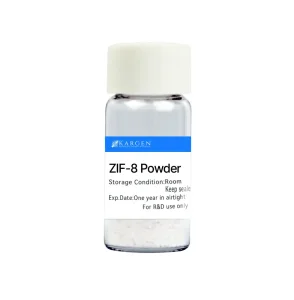






State of Global Nanoparticles & MOF Supply: Precision Reticular Materials at Ton-Scale
The commercialization of advanced nanoparticles and porous coordination networks—commonly designated as Metal-Organic Frameworks (MOFs)—represents a foundational shift in chemical engineering and industrial material science. Unlike traditional bulk adsorbents such as activated carbon, silica gels, or conventional zeolites, reticular nanomaterials offer atomic-level architectural control. By combining inorganic metal clusters (secondary building units, or SBUs) with multifunctional organic linkers (such as carboxylates, azolates, and phosphonates), synthetic chemists and chemical engineers can tailor pore aperture diameters, surface chemistries, and internal surface areas up to 7,000 m²/g.
However, bridging the gap between benchtop discovery and multi-ton industrial procurement has historically presented significant hurdles. The search query "High-Quality Articles On Nanoparticles Suppliers & Supplier" reflects an urgent market demand among procurement managers, materials researchers, and industrial process designers for transparent, reliable information regarding scalable synthetic pathways, chemical stability metrics, batch consistency standards, and supply chain security.
Structural Precision & Pore Engineering
Nanoparticles and crystalline MOFs operate at the convergence of molecular chemistry and solid-state materials science. Precision pore engineering enables distinct molecular sieving capabilities, allowing selective adsorption of CO₂ over N₂, ethylene over ethane, and trace moisture harvesting at low ambient relative humidity (<20% RH).
The Industrial Scale-Up Bottleneck
Transitioning from gram-scale solvothermal laboratory procedures using expensive dimethylformamide (DMF) solvents to continuous, low-cost, green mechanochemical or aqueous routes requires deep process engineering expertise, rigorous safety protocols, and specialized reactor design.
Industrial MOF Nanoparticle Comparison & Performance Metrics
Selection criteria for chemical procurement teams evaluating crystalline nanoparticle adsorbents and catalytic frameworks.
| MOF / Nanoparticle Grade | Metal Center & Linker | Pore Aperture (Å) | BET Area (m²/g) | Thermal Stability (°C) | Key Industrial Benchmark Application |
|---|---|---|---|---|---|
| ZIF-8 (Zinc Imidazolate) | Zn²⁺ / 2-Methylimidazole | 3.4 Å (6-ring window) | 1,600 – 1,800 | > 400 °C | CO₂ Capture & Battery Separator Coating |
| MOF-5 (IRMOF-1) | Zn₄O / Terephthalate (BDC) | 12.8 Å | 2,800 – 3,500 | ~ 300 °C | Gas Storage & VOC Removal |
| MOF-74 (Mg) / CPO-27-Mg | Mg²⁺ / 2,5-Dihydroxyterephthalate | 11.0 Å | 1,400 – 1,600 | ~ 350 °C | Flue Gas CO₂ Adsorption |
| MIL-101 (Fe) | Fe³⁺ / Terephthalate (BDC) | 29 Å & 34 Å cages | 2,200 – 2,800 | ~ 320 °C | Wastewater Treatment & Catalysis |
| TYUT-12 | Transition Metal / Polycarboxylate | Molecular sieving | 1,200 – 1,500 | ~ 300 °C | C2/C3 Hydrocarbon Separation |
| KAUST-7 (NbOFFIVE-1-Ni) | Ni²⁺ / [NbOF₅]²⁻ & Pyrazine | 3.0 – 4.0 Å tuned | 800 – 1,100 | ~ 250 °C | Trace CO₂ Removal from Air |
| MOF-303 (Al-PDC) | Al³⁺ / 1H-Pyrazole-3,5-dicarboxylate | 6.0 Å | 1,100 – 1,300 | > 350 °C | Arid Atmospheric Water Harvesting |
| ZIF-67 (Cobalt Imidazolate) | Co²⁺ / 2-Methylimidazole | 3.4 Å | 1,500 – 1,700 | ~ 350 °C | Heterogeneous Catalysis & Supercapacitors |
| MOF-808 (Zr) | Zr₆O₄(OH)₄ / Trimesic Acid | 18 Å cages | 1,600 – 2,000 | > 450 °C | PFAS Removal & Acid Catalysis |
| Al-FUM (Aluminum Fumarate) | Al³⁺ / Fumaric Acid | 5.7 Å | 1,000 – 1,200 | > 300 °C | Desiccant Cooling & Heat Exchange |
Technical Selection Note for Purchasing Engineers:
When requesting quotations or 1–5g qualification batches, specify whether your process requires dry powders (micronized or nano-sized), aqueous/organic liquid dispersions, or binderless extruded pellets. Hydrothermal stability varies significantly based on metal-node coordination strength (e.g., Zr⁴⁺ > Al³⁺ > Fe³⁺ > Zn²⁺).
Localized Application Scenarios & Synthetic Technology Roadmap
Deploying specialized metal-organic nanoparticles across real-world commercial ecosystems.
Lithium-Ion Battery Separator Coatings
Incorporating ZIF-8 or MIL-53(Al) sub-micron particles into polyethylene (PE) or polypropylene (PP) battery separators enhances electrolyte wettability, mechanically suppresses lithium dendrite formation, and traps dissolved transition metals from cathodes. This extends EV battery cycle life by up to 25%.
Atmospheric Water Harvesting (AWH)
In arid regions with relative humidity under 25%, traditional silica desiccants fail. Hydrothermally robust frameworks like MOF-303 and Al-FUM exhibit steep S-shaped water uptake isotherms, allowing rapid thermal desorption powered by low-grade solar thermal energy at temperatures as low as 65°C.
Direct Air Capture (DAC) & Flue Gas CO₂
High-density open metal sites in MOF-74(Mg) and KAUST-7 selective pore geometry enable ultra-high CO₂/N₂ adsorption ratios. Industrial DAC systems utilizing structured MOF monoliths achieve up to 60% lower regeneration energy consumption compared to conventional aqueous liquid amine scrubbers.
Technology Roadmap: 2025–2030 Synthesis & Manufacturing Evolution
Phase 1: Mechanochemical Scale-Up
Eliminating hazardous organic solvents via continuous twin-screw extrusion (TSE) mechanochemistry. Reduces liquid waste by 85% and lowers unit manufacturing costs for ZIF-8 and Al-FUM.
Phase 2: AI-Assisted Crystal Design
Deploying Graph Neural Networks (GNNs) and high-throughput computational screening to predict target linker combinations for ultra-selective olefin/paraffin separations (TYUT-12 variants).
Phase 3: Binderless Monolith Pelletization
Developing advanced shaping techniques to convert powders into high-density granules, structured honeycomb monoliths, and thin-film membranes without blinding internal active pore volume.
China Supply Chain Resilience, Efficiency & Cost Advantages
Global procurement of advanced nanomaterials demands not only high performance, but also unyielding supply security and competitive pricing structures. China’s integrated chemical manufacturing ecosystems provide unparalleled advantages for industrial scale-up:
- Upstream Raw Material Integration: Direct proximity to major producers of organic linkers (terephthalic acid, imidazole derivatives, fumaric acid) and inorganic metal salts reduces raw material logistics bottlenecks.
- Continuous Manufacturing Clusters: Modernized production facilities utilizing 10,000+ m² R&D and scale-up campuses ensure seamless transitions from pilot trials to multi-ton batch orders.
- Digital Quality Control & Traceability: Automated batch recording, X-ray diffraction (XRD) crystal verification, thermogravimetric analysis (TGA), and Nitrogen sorption BET measurements accompany every dispatch shipment.
- Global Logistics Security: Full compliance with UN 3077/3088 packaging regulations, air/sea freight certifications, SDS data sheets, and REACH compliance documentation for frictionless customs clearance.
Quality Assurance & Compliance Protocols
Every shipment undergoes strict analytical validation prior to release:
Specialized & High-Surface-Area Nanoparticle Offerings
Explore tailored MOF formulations including ZIF-67, MOF-303, MOF-808, MIL-53(Al), and Al-FUM powders directly from accredited Chinese chemical facilities.






Frequently Asked Questions by Chemical Engineers & Buyers
Authoritative answers addressing common inquiries regarding qualification samples, production capacity, custom synthesis, and quality assurance.