
High-Quality Heat Air Conditioner Service & Exporter
Pioneering ultra-efficient thermal management systems, advanced MOF sorbent integrations, and OEM/ODM global export solutions for industrial, commercial, and clean-energy applications.
Featured Heat Conditioning Frameworks & Core Powders
Engineered for high enthalpy recovery, continuous moisture separation, and ultra-low thermal regeneration thresholds in next-gen heat pump air conditioning networks.
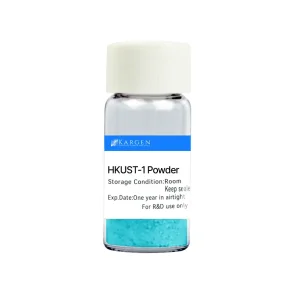
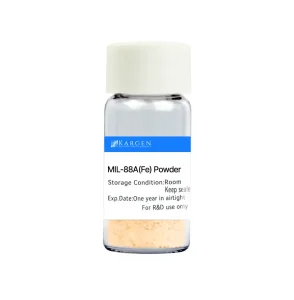
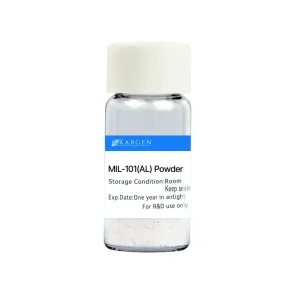
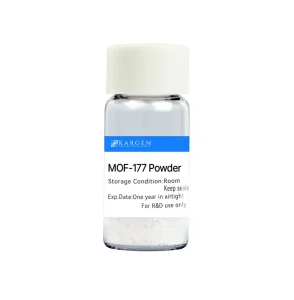
The Global Heat Air Conditioning Evolution: Solid-State Desiccant & Heat Pump Synergy
Analyzing the macro transition from legacy compressor-reliant vapor-compression systems to climate-resilient, energy-decoupled thermal management architectures.
1.1 Decoupling Latent & Sensible Cooling Loads
Traditional heat air conditioning systems operate under a fundamental thermodynamic compromise: to remove moisture (latent heat load) from indoor ambient air, cooling coils must reduce air temperatures well below the dew point, often overcooling the supply stream only to require electrical reheat before distribution. This inefficient energy expenditure reduces system Coefficient of Performance (COP) and escalates global grid demand. Modern high-quality heat air conditioner engineering bypasses this constraint through Desiccant-Enhanced Evaporative Cooling (DEVap) and solid-state sorption beds utilizing Metal-Organic Frameworks (such as Al-FUM, MOF-801, and ZIF-8).
By delegating moisture capture directly to high-capacity micro-porous sorbents, sensible cooling can be executed at elevated chilled-water temperatures (e.g., 14°C to 18°C instead of standard 6°C), elevating compressor efficiency by up to 45%. This technological paradigm shift redefines global procurement standards for industrial HVAC facilities, pharmaceutical cleanrooms, mega data centers, and commercial skyscrapers.
Energy Efficiency Elevation
Integrating MOF-coated heat exchangers lowers thermal regeneration requirements to under 65°C, permitting the complete utilization of low-grade industrial waste heat or solar thermal energy.
Zero GWP & Compliance
Aligns with global ESG directives, Montreal Protocol Kigali Amendments, and EU F-Gas Regulations by transitioning toward low-refrigerant or pure water-vapor adsorption thermal transport.
Extreme Climate Adaptability
Maintains robust moisture adsorption and heating capacities even under extreme environmental conditions (-30°C low-temperature heating up to 55°C desert cooling operational envelopes).
Global Enterprise Procurement Demands & Engineering Specifications
What multi-national industrial buyers, engineering contractors, and OEM brands require when sourcing high-reliability heat air conditioning units and core materials.
2.1 Strict Operational Requirements in B2B Procurement
Procurement directors and HVAC system integrators evaluate heat air conditioning solutions across four primary performance vectors: Volumetric Energy Efficiency, Material Longevity under Hydrothermal Stress, Regeneration Kinetics, and Total Cost of Ownership (TCO). In extreme commercial installations, unexpected downtime or sorbent degradation results in costly humidity spikes and thermal drift, impacting sensitive wafer fabrication lines, server infrastructure, or pharmaceutical stability storage.
| Thermal System Metric | Traditional HVAC Benchmark | Advanced Sorption Heat AC Target | KARGEN MOF Sorbent Advantage |
|---|---|---|---|
| Latent Heat COP Impact | Requires Sub-dewpoint Cooling (COP 2.2 - 3.1) | Decoupled Moisture Sorption (COP 4.8 - 6.2) | Up to +55% COP enhancement via tailored water uptake isotherms |
| Regeneration Source | High-Temperature Electric Resistive Heating (>120°C) | Low-Grade Thermal Waste Heat / Solar (<65°C) | Ultra-low desorption activation barrier; compatible with exhaust water lines |
| Hydrothermal Stability | Silica Gel Pore Collapse after ~2,000 Cycles | Structured Frameworks Stability (>10,000 Cycles) | Hydrothermally robust Zr & Al frameworks (Al-FUM, MOF-808) with zero lattice structural decay |
| Specific Water Uptake | 0.15 - 0.25 g/g (Silica Gel) | 0.45 - 1.25 g/g (Optimized Metal-Organic Frameworks) | Exceptional surface area (>1500 m²/g) maximizing mass exchange per footprint |
2.2 Custom Engineering: OEM & ODM Sorbent Coated Exchanger Solutions
To maximize heat exchange rates without increasing pressure drops across air-handling units (AHUs), advanced exporters offer direct binder-free or polymeric slurry coating of microporous frameworks onto aluminum heat exchanger fins. This process requires precise rheological control of MOF nanodispersions to ensure uniform 50–150 μm coating thicknesses while preserving micro-pore accessibility. Our technical service team provides global enterprise clients with end-to-end integration support, including computational fluid dynamics (CFD) heat mass transfer modeling and custom thermal exchanger prototype validation.
China Factory 4.0: Modern Supply Chain Resilience & Manufacturing Dominance
How automated continuous synthesis, precision quality control, and scale economies empower high-quality exporter competitive advantages.
Continuous Mechanochemical Synthesis
Eliminating batch-to-batch variance through solvent-free and low-solvent continuous twin-screw reactive extrusion lines, yielding multi-ton annual material output with minimal environmental footprint.
Digital Quality Inspection (QC 4.0)
Every lot undergoes automated powder X-ray diffraction (PXRD), N2/H2O adsorption BET surface area verification, and thermogravimetric analysis (TGA) for full lot traceability.
Agile Global Logistics Network
Strategic export location with established international multimodal freight channels, ensuring compliance with UN chemical safety standards, customs documentation, and seamless door-to-port delivery.
3.1 Overcoming Global Supply Chain Disruptions
In an era characterized by geopolitical volatility and raw material pricing fluctuations, China's integrated industrial ecosystem provides unmatched resilience for heat air conditioner manufacturing. By maintaining localized upstream chemical raw material synthesis (organic linkers like fumaric acid, terephthalic acid, BTC, and metal salts) right through to finished assembly, lead times are compressed by up to 60% compared to fragmented European or North American supply chains. This structural efficiency guarantees steady contract pricing and predictable delivery schedules for international partners.
Localized High-Value Industrial Application Scenarios
Real-world deployment profiles where advanced heat air conditioning service and MOF sorbent technologies deliver quantifiable operational benefits.
Hyperscale Data Center Cooling
Replaces power-hungry chillers with solid-state desiccant heat exchangers running on chip waste heat (>55°C liquid loop export), dropping Power Usage Effectiveness (PUE) below 1.15.
Extreme Sub-Zero Heat Pumps
Utilizing high-stability MOF vapor injection cycles to prevent outdoor coil frost accumulation, allowing commercial heat pumps to operate down to -30°C without energetic electric defrosting.
Atmospheric Water-Harvesting HVAC
Integrated hybrid systems for arid regions (Middle East/North Africa) that simultaneously generate potable drinking water while providing ultra-efficient indoor space cooling.
Pharmaceutical Cleanroom HVAC
Delivers strict relative humidity control (RH ±2%) and continuous volatile organic compound (VOC) scrubbing without risk of liquid desiccant droplet carryover.
Marine & Off-Shore HVAC Units
Corrosion-resistant coating formulations engineered to withstand saline environments while continuously stripping humidity from humid tropical ocean air streams.
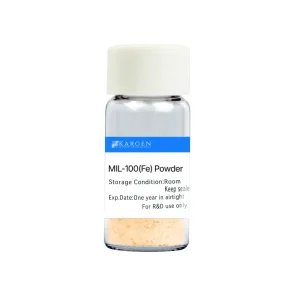
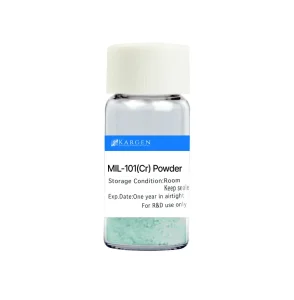
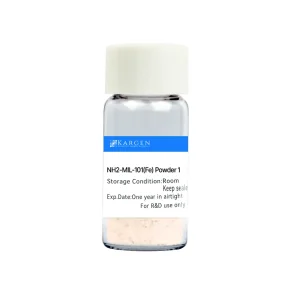
High-Stability MOFs & Specialized Heat Conditioning Materials
Explore our full range of factory-direct metal-organic frameworks for specialized thermal management, gas purification, and advanced catalytic applications.

Frequently Asked Questions for B2B Procurement & Engineers
In-depth responses regarding heat air conditioner sorbent technology, supplier evaluation, OEM integration, and global export compliance.
How does MOF-enhanced heat air conditioning differ from conventional silica gel desiccant systems?
Metal-Organic Frameworks (such as Al-FUM or MOF-801) possess significantly higher BET surface areas (1,000–3,000+ m²/g) and customizable pore sizes compared to traditional silica gel or zeolites. This allows MOFs to achieve up to 3x higher water vapor adsorption capacity per unit mass. Furthermore, MOFs feature steep S-shaped water uptake isotherms, enabling full thermal regeneration at much lower temperatures (<65°C vs. >120°C for zeolites), drastically lowering energy consumption during heat pump heat exchange cycles.
Can your enterprise handle custom OEM/ODM synthesis for specialized HVAC exchanger geometries?
Yes. We offer complete OEM and ODM customization services ranging from tailored framework powder particle size distributions (sub-micron to millimeter granulates) to stabilized aqueous or solvent-based dispersions for direct wash-coating onto aluminum coil surfaces. Our engineering team provides CFD heat and mass balance simulation support to optimize exchanger fin pitch and coating layer thickness.
What quality assurance protocols guarantee lot-to-lot consistency during bulk export?
Our Industry 4.0 production facility operates under strict ISO 9001 and ISO 14001 certifications. Every manufacturing lot undergoes standardized characterization tests including Powder X-Ray Diffraction (PXRD) for crystal structure integrity, BET N2/H2O isotherm profiling for porosity verification, TGA for thermal stability, and ICP-OES for elemental purity. Certificate of Analysis (CoA) documentation accompanies all shipments.
What is the typical lead time for evaluation samples versus ton-scale commercial orders?
Standard catalog evaluation samples (1–5 g or bulk lab quantities) are dispatched within 24 to 48 hours. Pilot-scale and full commercial contract orders (ton-scale capacity) typically ship within 2 to 4 weeks depending on custom chemical modification requirements and packaging formats.
How do MOF sorbents perform under long-term cyclic hydrothermal exposure?
Frameworks such as Al-FUM, MOF-808, and ZIF-8 exhibit exceptional hydrothermal robustness. Laboratory acceleration trials demonstrate less than 3% capacity loss after 10,000 continuous adsorption-desorption cycles under high humidity conditions, guaranteeing a service life exceeding 10+ years in standard commercial heat air conditioning units.
Partner with China's Premier Heat AC & Sorption Exporter
Accelerate your next-generation thermal management systems. Request technical datasheets, request free 1-5g evaluation samples, or speak with our doctoral engineering team today.
Request Engineering Consultation