Featured MOF Examples & Commercial Powders
Explore high-purity metal-organic frameworks validated for carbon capture, gas separation, catalytic substrates, and energy storage systems.






Taxonomy & Physical Chemistry of Benchmark MOF Examples
Understanding coordination polymers: Metal clusters, organic linkers, pore windows, and thermodynamic stability boundaries.
Metal-Organic Frameworks (MOFs) represent a transformative class of hybrid crystalline porous materials composed of metal ions or clusters coordinated to organic linkers. By precisely engineering the coordination geometry of the inorganic node alongside the length and functionality of the organic ligand, chemical engineers can tune pore sizes from sub-nanometer micropores (<2 nm) to mesopores (2–50 nm). This structural versatility provides surface areas exceeding 7,000 m²/g, vastly outperforming traditional adsorbents like zeolites and activated carbon.
1. Major Structural Families & Coordination Geometries
Industrial procurement teams and research institutions evaluate MOF examples based on distinct structural archetypes:
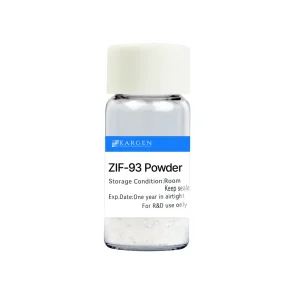
- Zeolitic Imidazolate Frameworks (ZIFs): Tetrahedrally coordinated metal nodes (typically Zn²⁺ or Co²⁺) linked by imidazolate derivatives. ZIF-8 and ZIF-67 exhibit exceptional thermal stability up to 500°C and strong resistance to water hydrolysis due to hydrophobic pore cavities.
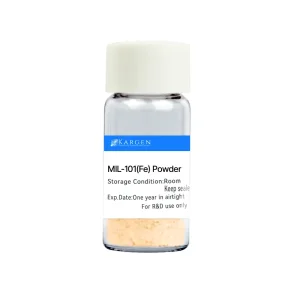
- Materials Institute Lavoisier (MILs): Trivalent metal centers (Fe³⁺, Al³⁺, Cr³⁺) joined by carboxylate linkers (e.g., fumaric acid, terephthalic acid). MIL-101 and MIL-53 feature flexible "breathing" pores capable of reversible structural expansion during guest molecule sorption.
- Isoreticular MOFs (IRMOFs) & UiO Series: Zirconium-based frameworks such as UiO-66 possess hexanuclear Zr₆O₄(OH)₄ nodes, yielding unprecedented chemical stability in acidic aqueous environments and high mechanical shear resistance.
- Pillared-Layer & Open Metal Site Frameworks: Materials like HKUST-1 (Cu-BTC) feature unsaturated copper coordinative sites that act as Lewis acids, enabling high selectivity for polar gas molecules like ammonia, water, and unsaturated hydrocarbons.
| MOF Family Example | Metal Node / Organic Linker | BET Surface Area (m²/g) | Pore Window Diameter (Å) | Thermal Limit (°C) | Primary Industrial Intent |
|---|---|---|---|---|---|
| ZIF-8 | Zn²⁺ / 2-Methylimidazole | 1,600 – 1,900 | 3.4 | 500°C | CO₂ Capture & Li-Ion Coating |
| MIL-101(Al) | Al³⁺ / H₂BDC (Terephthalic) | 3,000 – 4,100 | 12 – 16 & 29 - 34 | 400°C | VOC Removal & Catalysis Support |
| Al-FUM | Al³⁺ / Fumaric Acid | 1,000 – 1,300 | 5.8 | 450°C | Atmospheric Water Harvesting |
| MOF-74(Mg) | Mg²⁺ / DOBDC | 1,400 – 1,800 | 11.0 | 380°C | Flue Gas CO₂ Scrubbing |
| HKUST-1 | Cu²⁺ / BTC (Trimesic Acid) | 1,500 – 2,100 | 9.0 | 240°C | UHP Gas Purification & Separation |
| KAUST-7 | Nb/F Fluorinated Node / Pyrazine | 600 – 900 | 3.0 – 3.8 | 350°C | Direct Air Capture & C₂H₂/C₂H₄ Separation |
Macro-Industry Solutions Powered by MOF Materials
Translating crystalline porosity into industrial competitive advantages across climate tech, electronics, HVAC, and energy transition.
Carbon Capture & Net-Zero (CCUS)
Traditional amine scrubbing requires energy-intensive thermal regeneration (~3.5–4.5 GJ/ton CO₂). Advanced MOF examples such as MOF-74(Mg) and KAUST-7 selectively adsorb CO₂ via thermodynamic affinity and physical sieving, reducing regeneration heat penalties by up to 40% (desorbing at temperatures under 90°C).
Atmospheric Water Harvesting & Desiccants
Super-adsorbent MOFs like Al-FUM feature S-shaped water uptake isotherms. They absorb moisture at low relative humidity (<30% RH) in arid regions and release potable water using ambient low-grade thermal heat or solar flux (<70°C). Integrated into HVAC desiccant wheels, MOFs reduce chiller energy consumption by 50%.
Lithium Battery Separators & Solid Electrolytes
Nanosized ZIF-8 dispersions applied as thin surface coatings on polypropylene battery separators regulate lithium-ion flux, mitigate dendrite formation, and trap dissolved transition metal cations. In solid-state electrolyte matrices, MOF fillers create continuous sub-nanometer ion pathways, boosting room-temperature conductivity.
UHP Specialty Gas Purification
Semiconductor manufacturing demands Ultra-High Purity (UHP) gases (99.9999% purity). HKUST-1 and MIL-101(Cr) remove trace moisture, carbon monoxide, silane impurities, and heavy volatile organic compounds (VOCs) down to sub-ppb thresholds, extending target gas filter lifespan and reducing chip yield defects.
Solid-State Hydrogen & Methane Storage
High volumetric energy density storage of gases at low pressures is critical for green transportation. Ultra-porous MOFs allow safe, reversible adsorption storage of CH₄ and H₂ at reduced operating pressures (35-100 bar), lowering tank wall thickness requirements and compression energy costs.
Heterogeneous Catalysis & Organic Synthesis
Enclosing active metal nanoparticles (Pd, Pt, Ru) inside the pore cavities of frameworks like MIL-101(Fe) prevents nanoparticle sintering while offering shape-selective catalysis for fine chemical synthesis, pharmaceutical intermediates, and wastewater dye degradation.
MOF Examples in Technical Roadmap & Future Outlook
The shift from benchtop synthesis to high-throughput continuous manufacturing, shaping technologies, and green reticular chemistry.
The industrial trajectory of Metal-Organic Frameworks is undergoing a rapid evolution from small-scale laboratory curiosity to multi-ton commodity and specialty chemical production. As global decarbonization mandates intensify, manufacturing focus has pivoted toward four critical technological pillars:
1. Transitioning from Batch Solvothermal to Continuous Flow Scale-Up
Historically, MOF synthesis relied on high-temperature, high-pressure solvothermal reactions in DMF or DEF solvents within batch autoclaves. This approach yielded small batches, high solvent overhead, and batch-to-batch variation. Modern Tier-1 manufacturers utilize continuous mechanochemical twin-screw extrusion, microfluidic continuous crystallizers, and aqueous spray-drying processes. These methods eliminate toxic organic solvents, cut reaction times from 24 hours to under 30 seconds, and drastically reduce capital expenditure per ton.
2. AI-Driven Reticular Chemistry & Generative Material Discovery
By leveraging machine learning models trained on structural database metrics (such as the Cambridge Structural Database and CoRE MOF database), computational chemists can now screen millions of hypothetical MOF structures in silico. Algorithms predict nitrogen physisorption isotherms, mechanical bulk moduli, and chemical stability profiles before physical synthesis, accelerating custom ODM development cycles from years to weeks.
3. Commercial Shaping & Monolithic Integration
Finely synthesized MOF powders suffer from high pressure drops when packed directly into fixed-bed industrial adsorption towers. The industry roadmap emphasizes advanced shaping technologies: extruding MOFs into mechanical pellets, beads, honeycomb ceramic monoliths, and mixed-matrix hollow-fiber membranes (MMMs). Key technical hurdles involve selecting inert inorganic/organic binders (e.g., PVDF, silica sol, cellulosic fibers) that maintain structural pore accessibility without blocking aperture channels.
4. Lifecycle Assessment (LCA) & Circular Green Synthesis
Future competitiveness hinges on green manufacturing standards. Forward-thinking suppliers are replacing fossil-derived organic linkers with bio-derived ligands (e.g., fumaric acid from fermentation, terephthalic acid from recycled PET) and utilizing water-based or solvent-free mechanochemical reactions with closed-loop organic solvent recovery exceeding 98.5% efficiency.
China Factory 4.0: Supply Chain Resilience & Efficiency
Combining automated chemical synthesis, raw material integration, and rigorous digital quality control for scalable global supply.
Upstream Chemical Integration
China's comprehensive chemical manufacturing infrastructure allows direct local sourcing of raw metal salts (zinc, aluminum, iron, zirconium) and bulk organic linkers (2-methylimidazole, BTC, terephthalic acid). This minimizes upstream supply chain disruption and lowers production bill-of-materials costs.
Automated Ton-Scale Lines
Factory 4.0 continuous-flow reactors feature integrated SCADA systems monitoring real-time temperature, mixing shear, pH, and crystallization kinetics. Automated washing, centrifugation, and vacuum rotary drying ensure uniform particle size distributions and batch consistency.
Digital Quality Assurance (Cpk > 1.33)
Every commercial batch undergoes multi-stage characterization: Powder X-ray Diffraction (PXRD) for crystal phase purity, Nitrogen Physisorption (BET) for pore volume verification, Thermogravimetric Analysis (TGA) for stability limits, and ICP-OES for residual metal node verification.
Navigating Global Enterprise Procurement Requirements
Key decision frameworks for material managers, industrial buyers, and R&D directors evaluating MOF suppliers.
Procuring advanced nano-porous materials requires moving beyond baseline price-per-kilogram metrics. Engineering decision-makers must evaluate total cost of performance, intellectual property landscapes, and scale-up timelines.
1. Stage-Gated Qualification Framework
Enterprise procurement typically follows a three-stage validation protocol:
- Benchtop Feasibility (1 g – 100 g): Verification of baseline BET surface area, pore size distribution, XRD crystal pattern, and target gas adsorption capacity under controlled laboratory environments.
- Pilot Rig Validation (1 kg – 50 kg): Testing shaped pellets or slurry formulations in continuous flow beds, gas separation skid columns, or coating lines to evaluate dynamic breakthrough curves and attrition rates.
- Commercial Contract Supply (Ton-Scale): Establishing long-term supply agreements with strict quality tolerance margins, batch Certificate of Analysis (CoA) verification, and audit-ready supply chain transparency.
2. Total Cost of Ownership (TCO) & Volumetric Productivity
Because MOF materials possess low tap densities (often 0.2–0.5 g/cm³), procurement officers must calculate cost based on volumetric working capacity (e.g., grams of CO₂ adsorbed per liter of bed volume) rather than gravimetric cost alone. High-density shaped extrudates often provide superior TCO despite higher initial material costs due to lower reactor volume demands.
3. IP Protection & Custom OEM/ODM Collaborations
When requesting modified linkers, custom functional groups, or proprietary core-shell architectures, enterprise clients require robust Non-Disclosure Agreements (NDAs), clear patent freedom-to-operate (FTO) clearances, and dedicated production lines to safeguard proprietary chemical formulations.
Regulatory Compliance & Localized Technical Support
Ensuring seamless international logistics, chemical safety compliance, and regional engineering services.
Global Chemical Inventory Compliance
Exported MOF products adhere strictly to regional regulatory frameworks, including EU REACH registration, US EPA TSCA compliance, K-REACH (South Korea), and GB standard safety filings, accompanied by GHS-compliant Safety Data Sheets (SDS) in multi-language formats.
Hazmat Transport & Packaging
Fine chemical powders require specialized packaging to prevent moisture ingress and oxidation during sea and air transit. Products are sealed under inert nitrogen atmosphere in multi-layer moisture-barrier aluminum foil bags, UN-certified fiber drums, or heavy-duty bulk totes.
Responsive Application Support
Global clients receive technical assistance from senior PhD application engineers. Services include batch-specific characterization data, recommendations for binder formulation, pelletization parameters, and emergency sample dispatch within 24–48 hours.
Frequently Asked Questions for MOF Buyers & Engineers
Clear, technical answers to common queries regarding sample testing, scale-up pricing, material handling, and custom formulations.
How do I select the right MOF example for my specific gas separation project?
Selection depends on target kinetic gas diameter, dipole moment, operating temperature, and stream moisture level. For hydrophobic CO₂/N₂ separation under high humidity, ZIF-8 is ideal. For polar molecules like CO₂ or NH₃ under dry conditions, MOF-74(Mg) or HKUST-1 offer higher adsorption capacities due to open metal sites. Contact our application engineers for custom breakthrough simulations.
What is the typical evaluation sample size and lead time for overseas clients?
We supply 1 g to 5 g free evaluation lots for verified enterprise application projects (client covers express courier logistics). Standard catalog powders ship within 2 business days. Pilot quantities (1 kg – 10 kg) ship within 1–2 weeks, complete with lot-specific PXRD patterns and nitrogen sorption isotherms.
Can MOF powders be shaped without destroying their crystalline pore structure?
Yes. While raw powders collapse or create high pressure drops in fixed beds, our factory utilizes low-temperature binder techniques (using 2–5 wt% inert silica or polymer binders) and mechanical extrusion or spray granulation. This preserves over 90% of the native BET surface area while increasing bulk crush strength to >15 N/pellet.
How are MOF materials regenerated in continuous industrial processes?
Regeneration typically uses Temperature Swing Adsorption (TSA), Pressure Swing Adsorption (PSA), or Vacuum Swing Adsorption (VSA). Due to weak physisorption binding energies compared to chemisorbents, MOFs generally require lower regeneration temperatures (60°C – 120°C), significantly reducing energy overhead.
What key factors drive ton-scale MOF pricing for bulk exporters?
Bulk pricing is primarily driven by organic ligand synthesis costs (e.g., customized pyridyl or fluorinated linkers vs mass-produced fumaric acid or imidazole), solvent recycling efficiency during manufacturing, and order volume. Commercializing high-volume grades like Al-FUM or ZIF-8 yields substantial economies of scale.
Additional Commercial MOF Powders & Solutions
Browse our complete range of specialized metal-organic frameworks engineered for industrial catalysis, VOC treatment, and gas storage.