
Industrial MOF Powders & Linker Ready-Stock
Standardized metal-organic framework powders synthesized from high-purity organic linkers, available for instant evaluation and commercial-scale integration.





The Strategic Role of Organic Ligands in Reticular Chemistry
Metal-Organic Frameworks (MOFs) represent a revolutionary class of ultra-porous crystalline materials constructed by coupling inorganic metal nodes (Secondary Building Units, SBUs) with organic linkers (ligands) via coordinate covalent bonds.
Topology & Pore Architecture
The structural geometry, length, and denticity of organic ligands dictate the overall framework topology (e.g., pcu, fcu, sod, tbo). Sub-nanometer tuning of pore apertures allows precise molecular sieving of gas molecules such as CO₂, CH₄, N₂, and olefin/paraffin isomers.
Chemical & Hydrothermal Stability
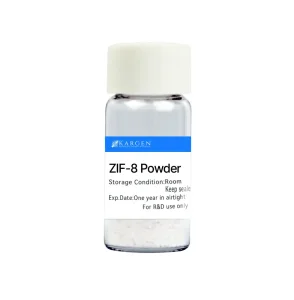
Ligand pKa and coordination strength govern framework robustness. High-valence carboxylate linkers (e.g., Zr-BDC in UiO-66) and azolate linkers (e.g., Zn-2-MeIm in ZIF-8) deliver exceptional thermal stability exceeding 400°C and resilience against humid flue gas streams.
Post-Synthetic Functionalization
Tailored organic linkers bearing amino (-NH₂), hydroxyl (-OH), nitro (-NO₂), or sulfonic acid groups permit targeted chemical functionality. This enables custom binding energetics for open metal site activation, targeted catalysis, and guest molecule encapsulation.
| Ligand Family | Representative Linkers | Target MOF Frameworks | Primary Industrial Application | Typical Purity Benchmark |
|---|---|---|---|---|
| Dicarboxylates | 1,4-BDC, 2-Amino-BDC, Fumaric Acid | UiO-66, MIL-53(Al), Al-FUM, MOF-5 | Water harvesting, carbon capture, VOC adsorption | ≥ 99.5% (NMR/HPLC) |
| Tricarboxylates & Tetracarboxylates | BTC (Trimesic acid), H4TCPP, H4EDTE | HKUST-1 (Cu-BTC), MIL-100(Fe/Al), PCN series | Gas storage (H₂/CH₄), heterogeneous catalysis | ≥ 99.0% (TGA verified) |
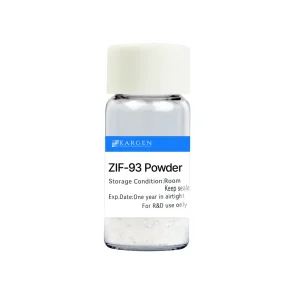
| Imidazolates & Azoles | 2-Methylimidazole, 2-Ethylimidazole, Benzimidazole | ZIF-8, ZIF-67, ZIF-90, ZIF-93 | Li-ion battery separators, CO₂/N₂ membrane separation | ≥ 99.8% (Ultra-low trace metals) |
| Pyrazoles & Triazoles | 1,3.5-Triazole, 1,4-Bis(pyrazol-4-yl)benzene | CALF-20, MOF-303, Pyrazole-MOFs | Direct Air Capture (DAC), acid gas removal | ≥ 99.5% (Isomeric purity) |
| Phosphonates & Heterocyclic | EDTMP, Pyridine-2,6-dicarboxylic acid | STA series, Metal Phosphonates | Proton exchange membranes, water treatment | ≥ 98.5% (Custom synthesis) |
Global Procurement Requirements for Commercial MOF Synthesis
Transitioning MOF materials from benchtop research to multi-tonne industrial deployment demands stringent organic linker quality, uncompromised batch-to-batch reproducibility, and robust supply chain resilience.
Defect-Engineering Mitigation
Trace mono-carboxylic impurities or isomeric contaminants terminate crystal growth, inducing uncoordinated metal sites and uncontrolled micropore collapse. KARGEN's proprietary multi-stage crystallization process guarantees chemical purity ≥99.5%, preventing structural defects and preserving theoretical BET surface area.
Solvent & Volatile Residue Control
Residual high-boiling solvents like N,N-Dimethylformamide (DMF) or N-Methylpyrrolidone (NMP) occupied inside ligand channels severely impair gas sorption capacity. Our green isolation protocols utilize continuous washing with eco-friendly low-boiling solvents, leaving VOC residues < 500 ppm.
Comprehensive Certificate of Analysis (CoA)
Every shipment includes complete analytical validation: High-Performance Liquid Chromatography (HPLC), Proton Nuclear Magnetic Resonance (¹H NMR), Thermogravimetric Analysis (TGA) for thermal stability, and ICP-MS for ultra-low residual transition metal counts.
Empowering High-Growth Sectors with Engineered Linkers
From carbon management to next-generation clean energy storage, high-performance MOF ligands serve as the chemical foundation for next-generation environmental solutions.
Direct Air Capture (DAC) & Flue Gas CO₂
Customized hydrophobic azolate and pyrazole ligands maintain structural integrity under humid flue gas streams (15-20% RH). MOFs formulated with our low-regeneration-energy linkers (e.g., CALF-20 analogs, ZIF-8) reduce thermal desorption energy requirements to < 2.5 GJ/tonne CO₂ captured.
Lithium-Ion Battery Separator Coatings
Sub-micron ZIF-8 and customized organic linkers applied as thin coatings onto polypropylene/polyethylene battery separators immobilize transition metal ions (Mn²⁺, Co²⁺) and scavenge trace H₂O in organic electrolytes. This suppresses lithium dendrite formation and extends battery cycle life by over 40%.
Atmospheric Water Harvesting (AWH)
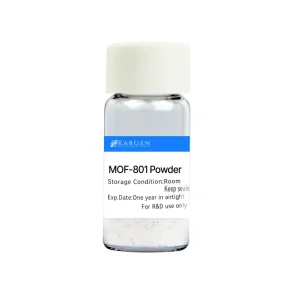
Ultra-hydrophilic aluminum fumarate (Al-FUM) and MOF-801 linkers feature steep S-shaped water vapor adsorption isotherms. Capable of harvesting drinkable water at relative humidity levels as low as 15-20% in arid climates, utilizing low-grade ambient solar heat (< 65°C) for rapid desorption.
Semiconductor Specialty Gas Purification
HKUST-1 (Cu-BTC) and flexible MIL-53(Al) linkers exhibit preferential coordination for polar gas contaminants. Used in sub-ppb gas scrubbers for electronics-grade Silane (SiH₄), Ammonia (NH₃), and Ethylene (C₂H₄) purification in semiconductor manufacturing fabs.
Heterogeneous Catalysis & Organic Synthesis
Functionalized linkers containing Lewis acid or base centers (e.g., MIL-100(Fe), MIL-101(Cr)) provide high-density active catalytic sites for continuous flow organic synthesis, Knoevenagel condensation, and selective hydrocarbon oxidation.
Solid-State Hydrogen & Methane Storage
Volumetric hydrogen and ANG (Adsorbed Natural Gas) storage systems utilize high-surface-area linkers (BET > 3,500 m²/g) to maximize volumetric energy density at low operational pressures, facilitating safe clean-vehicle transport.
China Factory 4.0: Supply Chain Resilience & Cost Leadership
KARGEN operates an advanced 10,000 m² R&D and manufacturing base in Zhuhai, Guangdong, leveraging China's robust chemical ecosystem to deliver unprecedented cost-efficiency and supply security.
Continuous Flow Synthesis
Replacing batch autoclaves with automated microchannel continuous flow reactors dramatically accelerates reaction kinetics, narrows crystal size distribution (PDI < 0.1), and reduces energy consumption by up to 45%.
Upstream Petrochemical Integration
Direct integration with South China's key chemical clusters guarantees unhindered raw material access to fundamental benzene, imidazole, and carboxylate building blocks, mitigating global market volatility.
Closed-Loop Solvent Recovery
Our zero-liquid-discharge (ZLD) purification systems capture, distil, and recycle organic reaction solvents with > 98% efficiency, aligning with international ISO 14001 ESG standards and reducing waste penalties.
Technology Roadmap: Next-Gen MOF Ligands (2025–2035)
Anticipating the technological shifts in advanced porous materials over the coming decade to keep our enterprise partners ahead of the competition.
AI-Guided Inverse Ligand Design & Green Mechanochemical Synthesis
Integrating generative machine learning models to screen virtual ligand libraries for targeted gas binding affinities. Transitioning 60% of standard production to solvent-free mechanochemical and aqueous-phase synthesis routes.
Bio-Based Linkers & Electrically Conductive 2D MOF Networks
Scaling up organic linkers derived from renewable agricultural biomass (e.g., furandicarboxylic acid, lignin derivatives) and conjugated catechol/phthalocyanine linkers for electronic sensors and electrochemical energy storage.
Smart Stimuli-Responsive & Ultra-Large Pore Covalent-Organic Hybrids
Commercializing light-, thermal-, and pressure-responsive linkers that undergo controlled conformational changes for ultra-low energy guest release, alongside mesoporous COF/MOF hybrid architectures exceeding 5,000 m²/g BET surface area.
Worldwide Regulatory Compliance & Custom Support
Navigating international chemical compliance frameworks to ensure smooth clearance, rapid scale-up, and localized technical assistance for global buyers.
REACH, TSCA & K-REACH Documentation
Full chemical inventory compliance and technical registration dossiers for importation into the European Union (EU REACH), United States (US EPA TSCA), South Korea, and Japan.
OEM & Custom Organic Synthesis
Dedicated laboratory facilities for proprietary ligand development under strict Non-Disclosure Agreements (NDAs). From gram-scale screening lots to multi-tonne commercial supply contracts.
Specialized Logistics & Packaging
Moisture-proof, inert-gas desiccant packaging in stainless steel drums, UN-approved fiber drums, or custom liquid dispersion totes engineered to preserve product freshness during long-distance ocean freight.
Technical & Procurement Questions & Answers
Direct answers to the most common questions raised by chemical engineers, procurement officers, and R&D managers evaluating MOF suppliers.
Additional High-Purity MOF Powders & Materials
Explore our complete catalog of commercial framework grades engineered for environmental remediation, catalysis, water harvesting, and gas separation.




Partner with a Premier MOF Ligand Manufacturer
Accelerate your commercial MOF development with custom ligand synthesis, reliable ton-scale supply, and direct engineering support from PhD scientists.