

Best MIL-100(Fe) Powder Metal Organic Frameworks (MOFs) Service, Exporters
View Product Details →
Engineered for high BET surface area, thermal endurance, and precise pore topology. Explore our flagship MOF powder products ready for global export.






Nanoparticle technology—specifically the design, synthesis, and industrialization of Metal-Organic Frameworks (MOFs) and nanostructure-engineered inorganic materials—has transitioned from academic curiosity to a core driver of modern industrial transformation. As global industries strive for net-zero carbon targets, ultra-pure electronics processing, and energy-dense storage solutions, advanced porous nanoparticles represent the critical material bottleneck that enables these technological leaps.
According to recent industrial market intelligence, the global metal-organic framework market is expanding at a Compound Annual Growth Rate (CAGR) exceeding 22.4%, driven primarily by demand in carbon capture, gas separation, energy storage, and environmental remediation. MOFs, characterized by their hybrid crystalline structures comprising inorganic metal nodes coordinated with organic linkers, offer unprecedented specific surface areas (frequently exceeding 1,000 to 7,000 m²/g), tailorable pore metrics, and functionalized chemical environments.
Historically, the widespread commercial adoption of MOFs and specialty nanoparticles was hindered by prohibitive production costs, solvent-intensive synthesis routes, and limited batch scales. China's advanced chemical manufacturing ecosystem, led by specialized R&D hubs in Guangdong and Zhuhai, has effectively overcome these scale-up barriers.
By leveraging integrated raw material supply chains, state-of-the-art continuous flow reactors, and green mechanochemical synthesis technologies, Chinese manufacturing facilities offer distinct strategic advantages for enterprise buyers:
Transitioning from traditional solvothermal synthesis to low-solvent or solvent-free mechanochemical ball-milling drastically reduces raw material costs, energy consumption, and liquid waste treatment overheads by up to 60%.
Equipped with modern analytical instrumentation—including Powder X-ray Diffraction (PXRD), Thermogravimetric Analysis (TGA), Automated Gas Sorption (BET), and SEM/TEM—every export batch complies with stringent standard deviations.
From particle size adjustment (nanometer to micron range) to customized ligand functionalization (such as amino, hydroxyl, or sulfonic acid groups), domestic factories support tailored synthesis for niche application requirements.
How engineered nanoparticle technology solves complex technical challenges across key global industry sectors.
In power plants, cement manufacturing, and steel mills, flue gases contain complex gas mixtures at elevated temperatures. Hydrophobic, thermally stable frameworks such as ZIF-8 and modified MIL-100(Fe) selectively adsorb CO₂ over N₂ and H₂O with low enthalpy of desorption. This reduces the energy footprint of carbon capture facilities compared to liquid amine scrubbing by up to 40%.
Incorporating nanoscale MOF particles (such as ZIF-8 or UiO-66) into polyolefin battery separators or solid-state electrolyte matrices improves electrolyte wettability, thermal stability, and mechanical toughness. The uniform porous network regulates lithium-ion transport, effectively suppressing lithium dendrite growth and extending battery cycle life in electric vehicles.
Frameworks such as Al-FUM (Aluminium Fumarate) and MOF-303 exhibit characteristic steep S-shaped water vapor adsorption isotherms. They efficiently harvest potable water from ambient arid air at low relative humidity (RH < 20%) and desorb water using low-grade thermal energy (below 80°C), making them ideal for solar-driven water generators and ultra-efficient desiccant wheels for commercial HVAC systems.
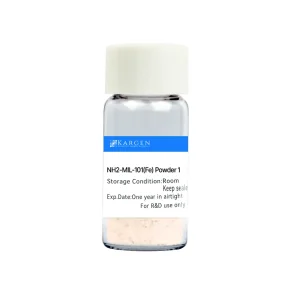
With high density of active catalytic sites (e.g., Lewis acidic Zr-nodes in UiO-66 or open iron sites in MIL-101(Fe)), MOFs serve as robust, recyclable solid catalysts. They excel in organic condensation reactions, oxidation of pollutants, and selective catalytic reduction (SCR) of nitrogen oxides without active site leaching.
A reference table designed for chemical buyers, application engineers, and procurement managers to evaluate material suitability for commercial scale-up.
| MOF Designation | Metal Node / Linker System | BET Surface Area (m²/g) | Pore Volume (cm³/g) | Thermal Stability (°C) | Primary Industrial Vector |
|---|---|---|---|---|---|
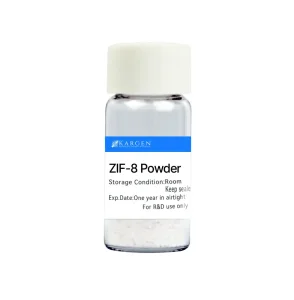
| ZIF-8 | Zn / 2-Methylimidazole | 1,300 - 1,800 | 0.60 - 0.75 | ~ 400 °C | CO₂ Capture, Battery Coatings, Hydrophobic Separations |
| UiO-66 | Zr / 1,4-Dicarboxybenzene | 1,100 - 1,500 | 0.45 - 0.60 | ~ 500 °C | Heterogeneous Catalysis, Acid Resistance, Heavy Metal Adsorption |
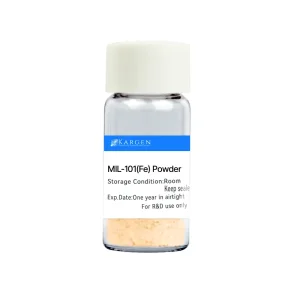
| MIL-100(Fe) | Fe / Trimesic Acid (BTC) | 1,800 - 2,200 | 0.90 - 1.10 | ~ 300 °C | Wastewater Treatment, Biocompatible Carriers, Gas Purification |
| Al-FUM | Al / Fumaric Acid | 1,000 - 1,300 | 0.45 - 0.55 | ~ 350 °C | Atmospheric Water Harvesting, HVAC Desiccant Systems |
| MIL-101(Cr) | Cr / Terephthalic Acid | 2,800 - 3,500 | 1.30 - 1.60 | ~ 350 °C | High-Capacity VOC Adsorption, Gas Storage, Catalyst Matrix |
| MOF-5 | Zn / Terephthalic Acid | 2,500 - 3,200 | 1.00 - 1.30 | ~ 300 °C | Gas Storage (H₂ / CH₄), Clean Dry Gas Separation |
As nanotechnology matures from small-scale synthesis into multi-ton industrial deployment, five dominant technological vectors will define the next decade of commercial adoption:
The combination of Density Functional Theory (DFT) calculations and machine learning algorithms enables rapid screening of millions of theoretical crystal structures. This accelerates the formulation-to-factory timeline from years down to weeks.
Pure MOF powders are increasingly formulated into polymeric or ceramic matrices. Incorporating 10–30 wt% MOF nanoparticles into polyimide or polysulfone membranes yields self-supporting, flexible filters with ultra-high permeability and selectivity.
Environmental regulations and carbon footprint quotas demand green manufacturing. Continuous twin-screw extrusion mechanochemistry eliminates hazardous organic solvents (like DMF), significantly lowering Scope 1 and Scope 2 emissions for nanomaterial suppliers.
Leading exporters are replacing petroleum-derived linkers with bio-based alternatives (such as agricultural fumaric acid or recycled PET-derived terephthalic acid), establishing fully sustainable closed-loop life cycles.
Explore additional high-performance formulations developed for specialized catalytic, sensing, and adsorption applications.


Authoritative technical answers to assist material scientists, procurement managers, and R&D engineers.
Batch consistency is primarily defined by three analytical metrics: 1. Crystallinity via PXRD (ensuring phase purity without unreacted ligand or metal salt residues); 2. Nitrogen Isotherm BET Surface Area (verifying pore availability and structural integrity); and 3. Thermogravimetric Analysis (TGA) (confirming solvent activation completeness and thermal decomposition thresholds). Full Certificate of Analysis (COA) documents accompany all export shipments.
Hydrolytic stability depends on the metal-ligand coordination bond strength. High-valence metal frameworks (such as Zr⁴⁺ in UiO-66 or Cr³⁺/Fe³⁺ in MIL-101/MIL-100) form strong coordination bonds, demonstrating exceptional stability in water and acidic media. Hydrophobic azolate frameworks like ZIF-8 protect their metal centers via steric shielding. For specialized water-harvesting applications, frameworks such as Al-FUM are specifically selected for their long-term hydrothermal cycling resilience.
While microcrystalline powders remain the standard laboratory format, commercial scale deployment typically requires formatted materials to minimize pressure drop in packed beds. We supply MOFs in multiple physical forms, including: dry microcrystalline powder, liquid dispersions (ethanol, water, or organic solvents), extruded pellets/granules (with inert binders), and pre-coated porous substrates.
Yes. Our R&D engineering team specializes in custom synthesis. We routinely synthesize amino-functionalized derivatives (e.g., NH₂-MIL-101(Fe)), nitro-modified frameworks, mixed-metal nodes, and targeted particle-size distribution curves (ranging from sub-100 nm nanoparticles up to micron-scale crystals) under strict non-disclosure agreements (NDAs).
MOF powders should be stored in sealed, moisture-proof containers in a dry room. Before application gas sorption or catalytic testing, materials should undergo vacuum activation (typically 100°C–150°C for 6 to 12 hours) to clear guest water or solvent molecules trapped inside the micropores.
We provide 1g to 5g evaluation samples for qualified corporate R&D labs and industrial procurement teams. Overseas shipping is handled via express air freight (DHL/FedEx) with complete SDS, UN hazard documentation, and custom clearance paperwork provided to ensure smooth delivery.
Partner with China's leading ton-scale MOF exporter. Our Ph.D. technical support team is ready to assist with material selection, custom synthesis, and industrial scale-up validation.