Featured Industrial-Grade Nanoparticle & MOF Products
Explore our core portfolio of scalable Metal-Organic Framework (MOF) powders manufactured under strict ISO/GMP-aligned synthesis protocols with validated surface areas and crystal purities.
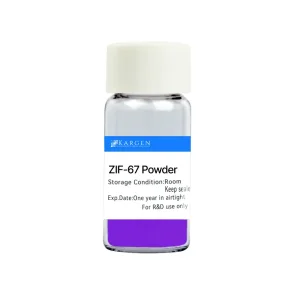

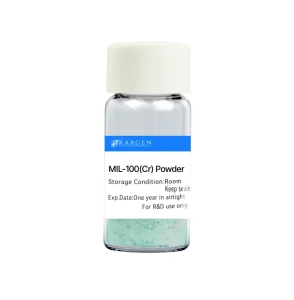
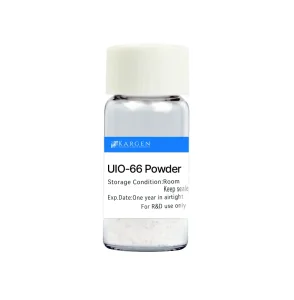
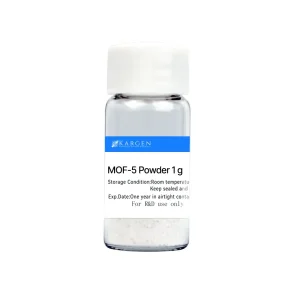
The global advanced materials economy is experiencing a paradigm shift. High-precision nanoparticle synthesis suppliers are transitioning from small-scale batch laboratory methods to scalable continuous manufacturing of engineered porous crystals, specifically Metal-Organic Frameworks (MOFs) and customized metal-oxide nanostructures. MOFs represent a hybrid class of porous crystalline materials formed by the self-assembly of inorganic metal nodes (clusters or ions) bridged by multi-topic organic linkers.
Historically, commercial adoption of MOFs—such as ZIF-8, HKUST-1, UiO-66, and MOF-808—was restricted by high production costs, low-yield batch solvothermal synthesis, and severe batch-to-batch variation. Modern industrial applications in Direct Air Capture (DAC), carbon sequestration, lithium-ion battery separator modification, semiconductor specialty gas purification, and atmospheric water harvesting demand continuous ton-scale throughput with rigorous quality guarantees.
SEO & Industry Benchmark: Achieving commercial scalability requires bridging the gap between molecular precision and industrial cost efficiency. Modern nanoparticle suppliers must deliver consistent crystal structure, controlled particle size distribution (PSD), and maximized Brunauer-Emmett-Teller (BET) surface areas while maintaining scalable green chemistry synthesis pathways.
Solvothermal vs. Mechanochemical Synthesis
Solvothermal routes yield high crystallinity but consume significant organic solvents. Modern mechanochemical synthesis (solvent-free or liquid-assisted grinding) dramatically reduces effluent waste, lowers operating costs, and accelerates reaction times to minutes rather than days.
Pore Engineering & Functionalization
By selecting specific transition metals (Zr, Zn, Cu, Fe, Cr, Al) and linkers (terephthalic acid, BTC, imidazolates), nanoparticle synthesis suppliers can fine-tune pore diameters from micro-apertures (<2 nm) to mesopores, tailoring selectivity for targeted gas sorption.
Chemical & Thermal Stability Assurance
Industrial deployment requires framework endurance under harsh humidity, acidic flue gas streams, and thermal cycling up to 400°C. Robust frameworks like UiO-66 and ZIF-8 provide superior structural stability across harsh chemical environments.
As the primary hub for advanced chemical manufacturing and rare-earth/metal processing, China offers unprecedented structural advantages for global enterprises seeking high-quality MOF and nanoparticle synthesis suppliers. China’s supply chain ecosystem provides a complete vertical integration from basic chemical precursors to finished functionalized nano-powders.
| Evaluation Factor | Western & Regional Competitors | China Advanced Factory Ecosystem | Procurement Impact & Benefit |
|---|---|---|---|
| Precursor Supply Chain | Relies on imported organic linkers and metals; subject to supply disruptions. | Direct local integration with primary chemical producers for terephthalic acid, imidazole, and metal salts. | 40%–60% Reduction in total bill-of-materials cost for bulk MOF orders. |
| Scalability & Reactor Tech | Primarily batch reactors (50L–200L scale); high labor and energy overhead. | Continuous-flow solvothermal reactors and continuous mechanochemical extruders (Ton-scale). | Shorter lead times (from months to days) for multi-ton industrial deliveries. |
| Batch Consistency (QC) | High per-unit testing cost; limited high-throughput analytical infrastructure. | Integrated in-house PXRD, BET nitrogen physisorption, TGA, and SEM/TEM characterization labs. | Guaranteed lot-to-lot BET surface area variance within ±3%. |
| OEM / ODM Customization | Strict IP constraints; slow customization timelines (6–12 months). | Agile R&D scaling with rapid pilot prototyping (gram to kilogram to ton scaling in weeks). | Accelerated commercialization cycles for novel energy & filtration products. |
Our Zhuhai manufacturing base exemplifies this efficiency advantage. Spanning 10,000 square meters with dedicated R&D and engineering pilot lines, our scientist-led team (over 60% R&D personnel with 80%+ holding Master’s or PhD degrees) directly bridges top-tier academic chemistry with industrial scale manufacturing.
Industrial Application Scenarios & Engineering Implementations
From carbon capture installations to next-generation energy storage, high-surface-area nanoparticles and MOF structures unlock unprecedented operational performance.
Atmospheric Water Harvesting (AWH)
Core Frameworks: MOF-801, Al-FUM
In arid and desert climates with relative humidity (RH) as low as 10%–20%, traditional silica gels and zeolites fail to perform. Zirconium-based MOF-801 and Aluminum Fumarate (Al-FUM) exhibit step-shaped water vapor adsorption isotherms, adsorbing water at low humidity and desorbing it efficiently under low-grade solar thermal energy (<65°C).
Industrial CO₂ Capture & DAC
Core Frameworks: ZIF-8, MOF-808, UiO-66
Post-combustion flue gas streams require selective sequestration of CO₂ over N₂ and H₂O. Hydrophobic ZIF-8 and amine-functionalized UiO-66 derivatives offer exceptional adsorption capacities and low heat of regeneration compared to traditional liquid amine scrubbers, reducing energy penalties in carbon management.
Lithium Battery Separators & Electrolytes
Core Frameworks: ZIF-67, ZIF-8 Dispersions
Coating polyolefin battery separators with ultra-fine MOF nanoparticles homogenizes lithium-ion flux, effectively suppressing lithium dendrite growth. Furthermore, open metal coordination sites inside the MOF framework immobilize polysulfides in Li-S batteries and trap moisture impurities in solid-state electrolytes.
Semiconductor Gas Purification
Core Frameworks: HKUST-1, MIL-100(Cr)
Semiconductor manufacturing demands sub-ppb gas purity for toxic hydrides and fluorides (e.g., AsH₃, PH₃, BF₃). Open metal site MOFs like HKUST-1 act as selective reactive sorbents, trapping trace moisture and contaminants without reacting with bulk specialty process gases.
HVAC Energy-Saving Coatings
Core Frameworks: MIL-53(Al), MOF-801
Integrating MOF thin-film desiccants directly onto air-conditioning heat-exchanger coils allows for latent heat load removal through moisture adsorption. This reduces building HVAC electricity usage by up to 40%–50% by decoupling sensible and latent cooling demands.
Hydrocarbon Separation & Refining
Core Frameworks: TYUT-12, MIL-88A(Fe)
Cryogenic distillation of olefin/paraffin mixtures (e.g., ethylene/ethane, propylene/propane) is one of the chemical industry’s most energy-intensive processes. Molecular sieve MOFs separate hydrocarbon isomers at ambient temperatures based on subtle steric differences.
When evaluating nanoparticle synthesis suppliers, procurement managers and technical directors must review critical physical-chemical parameters to ensure seamless integration into downstream formulation processes. Below is an engineering guide to our primary framework product lines.
| Nanomaterial / MOF Grade | Metal Center / Linker | BET Surface Area | Pore Volume / Size | Thermal Stability | Primary Industrial Application |
|---|---|---|---|---|---|
| ZIF-8 | Zn²⁺ / 2-Methylimidazole | 1,300 – 1,800 m²/g | 0.65 cm³/g (1.1 nm) | Up to 400°C | CO₂ capture, Li-ion separator coating, hydrophobic membrane |
| MOF-808 | Zr₄O₄ / Formate & BTC | 1,600 – 2,100 m²/g | 0.85 cm³/g (1.8 nm) | Up to 350°C | Heavy metal adsorption, toxic water contaminant removal, catalysis |
| UiO-66 | Zr₆O₄(OH)₄ / Terephthalic Acid | 1,100 – 1,500 m²/g | 0.50 cm³/g (0.6 nm) | Up to 500°C | Extreme hydro-thermal environment gas separation, acidic catalysis |
| MOF-801 | Zr₆O₄(OH)₄ / Fumaric Acid | 800 – 1,100 m²/g | 0.45 cm³/g (0.7 nm) | Up to 300°C | Atmospheric water harvesting in low humidity (<20% RH), dehumidification |
| ZIF-67 | Co²⁺ / 2-Methylimidazole | 1,200 – 1,700 m²/g | 0.60 cm³/g (1.1 nm) | Up to 350°C | Cobalt-based catalytic support, battery electrode modification |
| MIL-101(Cr) | Cr³⁺ / Terephthalic Acid | 2,500 – 3,400 m²/g | 1.40 cm³/g (2.9-3.4 nm) | Up to 300°C | Ultra-high capacity gas storage (H₂, CH₄), VOC adsorption, dye removal |
Technical Audit Checklist for Buyers: Always request a lot-specific Certificate of Analysis (COA) containing Powder X-Ray Diffraction (PXRD) patterns for phase purity verification, Nitrogen adsorption-desorption isotherms for BET confirmation, and Thermogravimetric Analysis (TGA) for solvent residue quantification.
Maintaining analytical precision across high-volume production requires state-of-the-art laboratory infrastructure. Every batch produced in our facilities undergoes a four-stage digital quality assurance pipeline:
1. Crystallinity & Phase Verification
Utilizing high-resolution Powder X-Ray Diffraction (PXRD) to match experimental Bragg peak profiles against simulated single-crystal patterns, guaranteeing 100% phase purity and absence of unreacted metal oxides.
2. Porosity & Surface Area Metrics
Automated N₂ and Ar physisorption measurements at 77K. We calculate BET surface areas, total pore volumes, and pore size distributions (DFT methods) to certify adsorption performance prior to dispatch.
3. Particle Size Distribution (PSD)
Laser diffraction particle sizing (D10, D50, D90) paired with Field-Emission SEM (FE-SEM) to ensure uniform micro-crystalline or nano-crystalline morphologies tailored for liquid dispersions or extrusion.
Looking forward, the advanced nanomaterial industry is moving rapidly towards solvent-free green synthesis. Continuous mechanochemical extrusion and high-throughput continuous-flow microfluidic synthesis are replacing conventional batch autoclaves. These methods drastically reduce environmental footprints while providing enterprise customers with reliable, low-cost MOF supplies.
Frequently Asked Questions (FAQ) for Procurement Teams
Comprehensive technical and commercial answers tailored for research organizations, plant managers, and global procurement officers.
Additional High-Performance MOF & Nanomaterial Grades
Browse our extended specialized products engineered for gas separation, catalytic substrates, sensing, and environmental remediation.