
Precision Metal-Organic Frameworks (MOFs)
Explore our top-tier engineered nanostructured frameworks available for direct industrial export, contract OEM development, and commercial-scale deployment.
-
View Product Details →
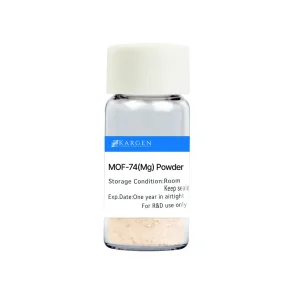
MOF-74(Mg) Powder Metal Organic Frameworks
-
View Product Details →
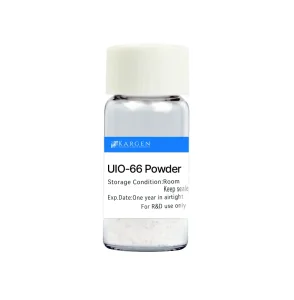
UIO-66 Powder Metal Organic Frameworks (MOFs)
-
View Product Details →
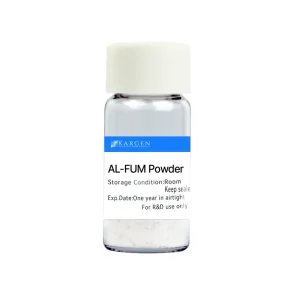
Al-FUM Powder Metal Organic Frameworks (MOFs)
-
View Product Details →
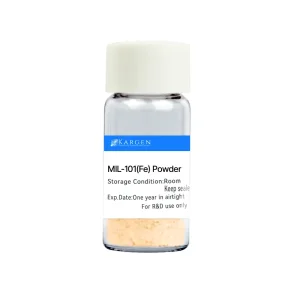
MIL-101(Fe) Metal-Organic Frameworks (MOFs)
-
View Product Details →
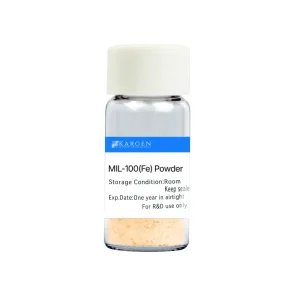
MIL-100(Fe) Powder Metal Organic Frameworks (MOFs)
-
View Product Details →
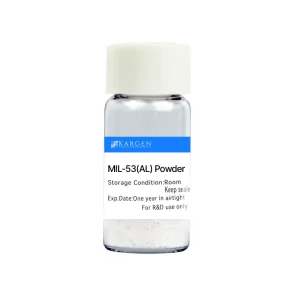
MIL-53(Al) Powder Metal Organic Frameworks (MOFs)
-
View Product Details →
Customized Metal Organic Frameworks (MOFs)
-
View Product Details →
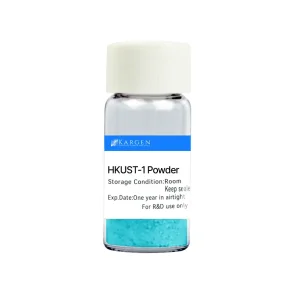
HKUST-1 Powder Metal Organic Frameworks (MOFs)
The Industrial Transformation of Nanotechnology & Porous Framework Materials
An authoritative evaluation of how advanced metal-organic frameworks (MOFs), zeolitic imidazolate frameworks (ZIFs), and customized nanopolymers are revolutionizing carbon capture, gas purification, and energy storage performance.
In the contemporary landscape of advanced chemical engineering and advanced materials manufacturing, nanotechnology products in market exporters play a pivotal structural role. Nanotechnology has transcended theoretical laboratory research, evolving into scalable, commercially viable manufacturing frameworks. Among these technological triumphs, Metal-Organic Frameworks (MOFs)—a unique class of crystalline porous materials consisting of metal ions or clusters coordinated to organic ligands—represent the absolute frontier of porous material science.
Key Takeaway for B2B Procurement Teams: Modern MOF architectures achieve record-breaking ultra-high specific surface areas (exceeding 7,000 m²/g in advanced formulations), tuneable pore diameters (from 0.3 nm to 5.0 nm), and customized chemical functionality, offering unmatched performance in gas adsorption, molecular separation, and heterogeneous catalysis compared to traditional activated carbons or standard zeolites.
Precision Engineering of Porous Nanostructures
The operational capability of industrial-grade nanotechnology hinges on structural reproducibility and precise reticular synthesis. Reticular chemistry links molecular building blocks into predetermined crystalline frameworks via strong chemical bonds. By selecting specific metal nodes (such as Zr⁴⁺, Al³⁺, Fe³⁺, Cu²⁺, or Mg²⁺) and pairing them with tailored organic linkers (such as carboxylates, azoles, or phosphonates), material engineers can engineer exact topological frameworks like UiO-66, MIL-101, HKUST-1, and ZIF-8.
This molecular precision enables targeted molecular sieving. For example, in gas separation processes, the spatial configuration of MOF channels allows the material to discriminate between gas molecules differing by mere fractions of an Angstrom. Such selectivity dramatically reduces thermal energy consumption during gas purification, presenting a massive economic advantage for industrial-scale deployment.
Ultra-High BET Surface Area
Internal volumetric surface areas engineered to maximize mass transfer, guest-molecule binding capacity, and active catalytic site density per unit mass.
Thermal & Chemical Robustness
Zirconium and aluminium-based frameworks (UiO-66, Al-FUM) formulated to endure high acidic vapor exposure, humidity, and temperatures up to 500°C.
Mechanochemical Scalability
Shift from solvent-heavy batch synthesis to low-solvent/solvent-free mechanochemical continuous extrusion, drastically cutting eco-footprint and unit costs.
Nanotechnology-Driven Solutions for Global Enterprise Challenges
Engineered applications addressing global sustainability targets, energy transition imperatives, and high-purity industrial processing requirements.
Flue-Gas & Direct Air CO₂ Capture (DAC)
Traditional amine scrubbing requires excessive thermal energy for solvent regeneration. Functionalized MOFs (such as ZIF-8 and MOF-74 variations) offer low-parasitic-energy regeneration profiles. Their open metal sites demonstrate exceptional CO₂ affinity over nitrogen and water vapor, driving down operating expenses (OPEX) in point-source flue gas capture and atmospheric Direct Air Capture (DAC) modules.
Atmospheric Water Harvesting (AWH) & HVAC Efficiency
Water scarcity in arid microclimates demands innovative sorbent technology. Aluminium fumarate (Al-FUM) MOFs possess steep S-shaped water sorption isotherms, capable of harvesting potable water from desert air at relative humidity levels below 20%. When applied to HVAC coated heat exchangers, these MOF desiccants decouple sensible and latent cooling loads, cutting air conditioning compressor power requirements by up to 50%.
Next-Gen Lithium-Ion Battery Separators
In high-density lithium-ion energy storage systems, lithium dendrite formation and electrolyte degradation lead to safety risks and cycle decay. Nanometer-thin ZIF-8 functional separator coatings homogeneously regulate lithium-ion flux, mitigate thermal runaway risks, immobilize trace moisture, and prevent metal ion dissolution from cathodes—substantially extending battery lifecycle performance.
Semiconductor Gas Refining & Hydrocarbon Separation
The production of sub-nanometer microchips requires electronic-grade ultra-pure specialty gases (e.g., Silane, Ammonia, Phosphine). Copper-based framework matrices like HKUST-1 act as hyper-selective scrubbers, stripping trace impurities down to parts-per-billion (ppb) levels. Similarly, MOF membranes selectively split ethylene/ethane and propylene/propane mixtures without cryogenics.
Supply Chain Resilience, Scale & Quality Automation
How advanced manufacturing facilities, automated synthesis loops, and rigorous batch quality assurance empower international enterprise procurement.
A primary bottleneck in the global adoption of nanotechnology products has historically been the high cost and batch-to-batch inconsistency associated with lab-scale synthesis. Transitioning from gram-scale academic discovery to ton-scale industrial delivery requires advanced digital control systems and robust supply chain integration.
Our state-of-the-art Industry 4.0 manufacturing complex in Zhuhai, China bridges this gap. By combining high-shear continuous mechanochemical reactors with automated solvent-recovery systems, we have eliminated traditional batch variance while optimizing raw material utilization efficiency.
Batch Quality Verification Matrix
Every single export shipment undergoes full characterization validation before dispatch. Our digital quality certificates confirm:
- PXRD Analysis: Verifies 100% phase purity and crystal structure integrity.
- N₂ Physisorption (BET): Confirms exact specific surface area metrics.
- TGA (Thermogravimetric Analysis): Establishes exact thermal stability limits and solvent desolvation points.
- ICP-OES & TGA-MS: Guarantees trace metal node accuracy and zero residual linkers.
Global Export Cost Advantages
Leveraging China's world-leading precursor chemical ecosystem (organic ligands, zinc/zirconium/iron metal salts) enables unmatched cost efficiency:
- Vertical integration reduces organic linker raw material procurement expenses.
- Continuous synthesis loops minimize electricity and solvent consumption per kilogram.
- Scalable pelletization and dispersion options engineered for direct industrial integration.
- Competitive containerized freight logistics via proximity to Greater Bay Area ports.
Technological Roadmap (2026–2035)
Strategic development milestones expanding nanostructured material capabilities for global commercial ecosystems.
Phase I: High-Yield Green Synthesis & Standardized Granulation
Widespread implementation of water-based and solvent-free mechanochemical synthesis. Perfecting binding binder-free shaping technologies (beads, extrudates, honeycomb monoliths) to eliminate pressure drops in commercial fixed-bed absorbers.
Phase II: AI-Guided Reticular Screening & Smart Stimuli MOFs
Integrating generative machine learning models for inverse molecular design. Development of stimuli-responsive MOFs that release adsorbed target gases via photo, magnetic, or low-voltage electrical triggers instead of thermal swings.
Phase III: Multi-Component Meta-Structures & Net-Zero Integration
Commercialization of complex Multivariate MOFs (MTV-MOFs) capable of multi-stage cascade catalysis and direct atmospheric capture integrated with synthetic electro-fuel production systems.
Global Enterprise Procurement & Specification Guidelines
Key criteria for international procurement managers, process engineers, and material scientists evaluating advanced nanotechnology suppliers.
Procuring advanced nanotechnology products requires rigorous evaluation beyond standard chemical procurement protocols. Due to the high surface reactivity and crystalline complexity of MOF powders, sourcing managers must establish technical validation protocols before committing to commercial contracts.
1. Technical Evaluation & Sampling Stages
We support structured trial workflows:
- Bench Screening (1g - 5g): Initial laboratory structural validation, BET confirmation, and small-scale sorption isotherm testing.
- Pilot System Validation (1kg - 10kg): Testing material performance in pilot desiccant wheels, small adsorption columns, or lab-scale separator coating lines.
- Commercial Contract Supply (Ton-Scale): Bulk supply delivered with lot-specific certificates of analysis (CoA) and guaranteed technical repeatability.
2. Material Form Factor Selection
Choosing the correct physical form is essential for system engineering:
- Dry Micronized Powders: Ideal for slurry formulations, custom membrane synthesis, and specialized catalytic compounding.
- Liquid Dispersions: Pre-dispersed in water, ethanol, or organic solvents with specialized surfactants for direct battery separator coating lines.
- Shaped Granules & Pellets: Formulated with mechanical binders for packed beds to prevent dusting and high differential pressure drops.
Localized Support & Regulatory Compliance Assurance
Streamlining international trade through certified documentation, safe transport protocols, and multi-lingual technical engineering support.
Regulatory Compliance
Complete international documentation compliance including GHS-compliant Safety Data Sheets (SDS/MSDS), REACH pre-registration data for the EU market, and ISO 9001/14001 quality compliance certificates.
Specialized Protective Packaging
Hygroscopic nanomaterials are packaged in sealed aluminum-foil vacuum barriers inside UN-certified fiber drums or steel kegs with desiccant protection to prevent ambient moisture activation during transit.
PhD Technical Support
Our application team—comprising over 60% R&D scientists and PhD material engineers—provides direct technical consulting within one business day across European, North American, and Asian time zones.
Frequently Asked Questions (FAQ)
Detailed answers regarding material properties, evaluation samples, custom synthesis options, and bulk export logistics.
How do Metal-Organic Frameworks (MOFs) compare to traditional activated carbon and zeolites?
Can you provide evaluation samples for industrial R&D screening?
What custom synthesis and OEM capabilities are available?
How do you ensure batch-to-batch consistency for ton-scale orders?
What are the recommended handling and storage procedures for hygroscopic MOFs?
Specialty Nanotechnology Products & Frameworks
Explore our full line of chromium, iron, zirconium, and zinc-based molecular frameworks for environmental remediation, catalysis, and gas storage.
-
View Product Details →
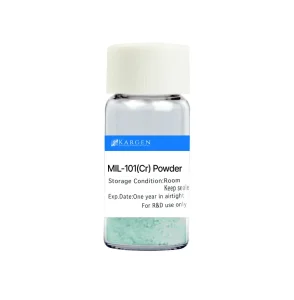
MIL-101(Cr) Powder Metal Organic Frameworks
-
View Product Details →
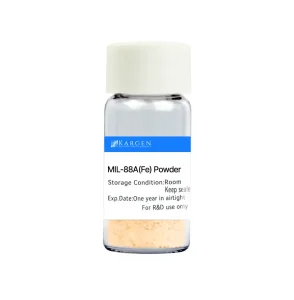
MIL-88A(Fe) Powder Metal Organic Frameworks
-
View Product Details →
High-Quality UIO-66 Powder Metal Organic Frameworks
-
View Product Details →
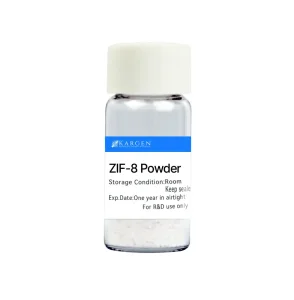
ZIF-8 Powder Metal Organic Frameworks (MOFs)
-
View Product Details →
MIL-101(Cr) High-Performance Adsorption Powder
-
View Product Details →
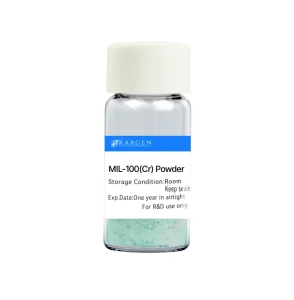
MIL-100(Cr) Powder Metal Organic Frameworks (MOFs)
-
View Product Details →
Best MIL-100(Fe) Powder Metal Organic Frameworks
-
View Product Details →
Premium HKUST-1 Powder Metal Organic Frameworks
Accelerate Your Nanotechnology Commercialization
Partner with China's pioneer in mass-produced metal-organic frameworks. Consult with our PhD technical engineers for custom formulations, volume quote requests, and sample dispatch within 24 hours.