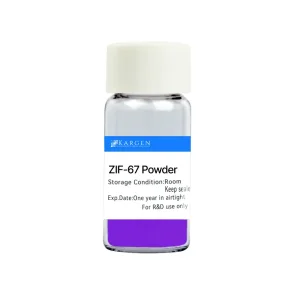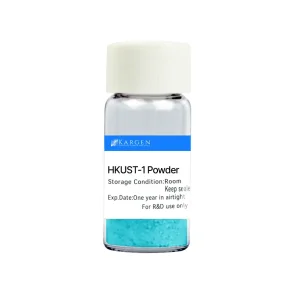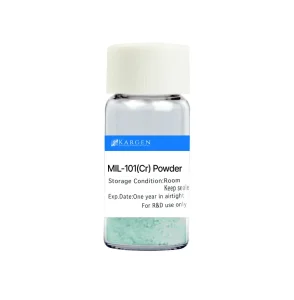
Featured Advanced HVAC & Sorption Materials (Part 1)
Explore our premium solid-state sorbents, MOF powders, and material innovations optimized for next-generation desiccant air conditioning, dehumidification, and thermal management systems.
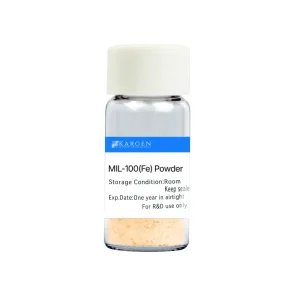
Executive Whitepaper: The Paradigm Shift in Global Commercial & Industrial HVAC Infrastructure
The global Heating, Ventilation, and Air Conditioning (HVAC) market is undergoing an unprecedented structural transition. Driven by stringent decarbonization mandates such as the European Union's F-Gas Regulation, the Kigali Amendment to the Montreal Protocol, and global Net-Zero 2050 targets, conventional vapour-compression refrigeration systems face severe regulatory and economic headwinds. Modern enterprise procurement officers and system integrators no longer evaluate equipment purely on upfront capital expenditure (CAPEX); total cost of ownership (TCO), seasonal energy efficiency ratios (SEER), coefficient of performance (COP), and operational carbon footprints now dictate procurement frameworks.
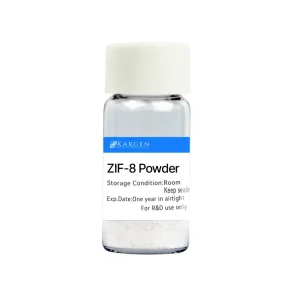
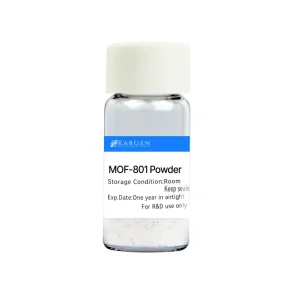
Central to this industry evolution is the breakthrough integration of advanced nanostructured materials—specifically Metal-Organic Frameworks (MOFs) such as ZIF-8, MOF-801, and Aluminium Fumarate (Al-FUM)—directly into air conditioning heat exchangers, desiccant wheels, and chillers. By decoupling humidity control (latent load) from temperature reduction (sensible load), modern air conditioners engineered with specialized MOF coatings can reduce overall electrical consumption by up to 45% to 55% in high-humidity industrial environments.
China's Industrial Supply Chain Advantage in Advanced AC Equipment & Material Synthesis
As global demand for ultra-efficient commercial air conditioning systems surges, China has cemented its position as the world's undisputed epicenter for HVAC manufacturing, component supply chain integration, and advanced nanomaterial synthesis. Partnering with top-tier Chinese manufacturers provides global procurement executives with strategic operational advantages that go far beyond basic cost metrics:
End-to-End Vertical Ecosystem
From raw metal salt extraction and organic linker synthesis to precision copper tube drawing, compressor assembly, and digital inverter board production, Chinese manufacturing hubs (such as the Guangdong Pearl River Delta region) offer unparalleled supply chain cluster density. This eliminates international component bottlenecking and drastically shortens lead times.
Advanced Mechanochemical Synthesis
Our Zhuhai manufacturing base leads the industrial scale-up of green, low-solvent mechanochemical synthesis for MOF adsorbents like ZIF-8 and MOF-801. Achieving ton-scale batch production reduces chemical precursor waste by 70%, yielding superior batch-to-batch consistency while lowering material costs for commercial HVAC OEMs.
Rigorous Quality Control & International Compliance
Modern Chinese suppliers operate under full digital traceability. Every batch of cooling equipment and core sorbent material undergoes automated powder X-ray diffraction (PXRD), Brunauer-Emmett-Teller (BET) surface area verification, and helium leak testing to guarantee compliance with AHRI, CE, UL, and ISO standards.
Localized Application Scenarios: Customized Cooling Across Global Climate Zones
Standard off-the-shelf air conditioning units frequently fail or lose energy efficiency when deployed in extreme environmental microclimates. Our engineering framework categorizes air conditioning solutions into distinct, high-impact application scenarios:
1. Tropical & Equatorial High-Humidity Regions
Geography: Southeast Asia, Central America, Coastal West Africa.
Technical Challenge: Extreme latent heat loads cause continuous evaporator coil condensation, leading to microbial fouling, mold growth, and massive energy waste from sub-cooling and reheating air.
Engineered Solution: Integration of hydrothermally stable Al-FUM and MOF-801 desiccant rotors. These materials adsorb ambient moisture at high relative humidity (>80% RH) and regenerate at ultra-low waste-heat temperatures (50°C–70°C), reducing compressor load by over 50%.
2. Arid Desert & High-Ambient Temperature Zones
Geography: Middle East (GCC region), North Africa, Southwestern USA.
Technical Challenge: Ambient temperatures exceeding 50°C degrade traditional refrigerant heat dissipation efficiency, risking compressor thermal overload and catastrophic system shutdown.
Engineered Solution: Hybrid Atmospheric Water Harvesting (AWH) air conditioners. Utilizing hydrophobic porous frameworks like ZIF-8, systems capture atmospheric moisture during cooler desert nights and utilize the harvested water for evaporative sub-cooling during peak daytime heat.
3. Semiconductor Fabs & Mission-Critical Data Centers
Geography: Global High-Tech Manufacturing Clusters.
Technical Challenge: Require 24/7/365 uninterrupted cooling with stringent volatile organic compound (VOC) removal and precise relative humidity control (±2% RH).
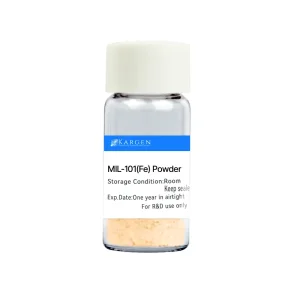
Engineered Solution: Dual-function MOF-coated heat exchangers (such as MIL-100(Fe) and MIL-53(Al)) that simultaneously deliver high-efficiency sensible cooling while capture-filtering trace airborne molecular contaminants (AMCs).
Global Enterprise Procurement: Technical Selection Matrix
To assist OEM procurement managers, mechanical engineers, and HVAC system integrators, the matrix below details the performance metrics of key structural sorbent materials applied in next-generation air conditioning equipment:
| Material / Framework Grade | Metal Node / Organic Linker | BET Surface Area (m²/g) | Water Vapor / Gas Capacity | Thermal Regeneration Temp | Primary AC / HVAC Application |
|---|---|---|---|---|---|
| ZIF-8 | Zinc / 2-Methylimidazole | 1,300 – 1,800 | Hydrophobic / High CO₂ Selectivity | 120°C – 150°C | Refrigerant gas separation, cleanroom VOC capture, battery separator cooling coatings |
| MOF-801 | Zirconium / Fumaric Acid | 800 – 1,100 | 0.35 g/g H₂O at 20% RH | 60°C – 80°C | Low-humidity desiccant air conditioning, desert atmospheric water harvesting units |
| Al-FUM | Aluminium / Fumaric Acid | 1,000 – 1,300 | 0.45 g/g H₂O at 30% RH (Steep S-Isotherm) | 55°C – 70°C | Commercial desiccant wheels, waste-heat driven adsorption chillers |
| MIL-100(Fe) | Iron / Trimesic Acid (BTC) | 1,800 – 2,200 | High Mesoporous Liquid Sorption | 80°C – 100°C | Eco-friendly, non-toxic industrial wastewater cooling and air purification |
| HKUST-1 | Copper / Trimesic Acid (BTC) | 1,500 – 2,000 | High Specific Gas Density | 100°C – 120°C | Specialty gas purification, semiconductor chiller gas filtration |
Global Air Conditioning Trends: The Next 10 Years
The commercial and residential HVAC landscape is evolving rapidly. Forward-thinking suppliers and exporters are concentrating R&D investments in four core megatrends:
1. Decarbonization via Waste-Heat Driven Cooling
Future commercial air conditioners will increasingly tap into low-grade industrial waste heat (derived from solar thermal collectors, micro-turbines, or server exhaust) to power adsorption-based cooling cycles, reducing reliance on grid electricity.
2. Transition to Low-GWP & Natural Refrigerants
With R-410A and R-22 phased out globally, next-gen systems are optimizing heat exchangers for R-32, R-290 (Propane), and CO₂ (R-744). Advanced MOF coatings prevent hydrocarbon flammability risks by capturing trace leaks instantly.
3. AI-Driven Smart Inverter & Humidity Control
Integrating IoT sensors with dynamic solid-state desiccant monitoring allows air conditioners to automatically adjust motor speeds and regeneration cycles based on real-time room occupancy and enthalpy calculations.
About Guangdong Advanced Carbon Materials Co., Ltd. (KARGEN)
Founded by returning scholars and senior materials scientists from the United States, Germany, and Sweden, KARGEN is a pioneering new-materials technology company specializing in the R&D, ton-scale production, and application development of Metal-Organic Frameworks (MOFs) and advanced nanopolymers.
10,000 m²
R&D & Ton-Scale Production Base in Zhuhai
40+ Commercial Grades
MOF Powders & Dispersions Developed
20+ Patents
Granted Intellectual Property & 100+ Papers
70+ Partners
Global Universities & Industrial Institutions
Frequently Asked Questions (FAQ) for B2B Buyers & Engineers
Find clear technical answers regarding product evaluation, OEM custom synthesis, and bulk order logistics.
Traditional air conditioners waste substantial electricity by cooling air far below the dew point just to condense moisture (latent load), then reheating it for comfort. MOF materials (such as Al-FUM or MOF-801) adsorb moisture directly from ambient air without needing overcooling. The sorbent is then regenerated using low-temperature exhaust heat (50°C–70°C), slashing compressor energy consumption by up to 50%.
Yes. Qualified enterprise development teams and HVAC research institutions can receive 1–5 gram free evaluation samples. Freight and customs duty are borne by the buyer. Email our technical engineering team with your application parameters to qualify for rapid sample dispatch.
Our core MOF and nanomaterial products are supplied as dry micro-powders (with adjustable grain sizes from nano to micron scale) and standardized liquid dispersions (water, ethanol, or organic solvents). Custom granulations, extruded pellets, and slurry-coated substrates are available under OEM terms.
We operate China's first ton-scale MOF manufacturing plant spanning 10,000 m². Standard off-the-shelf framework powders ship within 3–5 business days, while custom metric-ton orders are completed within 3–4 weeks.
Every outgoing production batch includes a Certificate of Analysis (COA) containing PXRD spectra, BET surface area metrics, TGA thermogravimetric analysis curves, and particle size distribution charts. We provide full MSDS, REACH registration assistance, and UN3077/3088 dangerous goods transport compliance documents.
We guarantee a technical response to all business inquiries within 1 business day across all international time zones.
Featured Advanced HVAC & Sorption Materials (Part 2)
Discover additional high-surface-area frameworks, catalytic adsorbents, and specialized materials engineered for gas separation, air purification, and sustainable cooling applications.