
High-Purity Standard Organic Framework Powder Series
Explore our core industrial-grade MOF powders manufactured via eco-friendly mechanochemical and continuous-flow pathways for scalable engineering integration.





The Paradigm Shift in Advanced Porous Materials Supply
In the rapidly evolving landscape of advanced functional materials, Metal-Organic Frameworks (MOFs) and Covalent Organic Frameworks (COFs)—collectively categorized under Organic Frameworks—represent the most significant architectural breakthrough in solid-state chemistry of the 21st century. Composed of inorganic metal nodes (metal ions or clusters) coordinated with organic linkers (ligands), organic frameworks feature ultra-high internal surface areas (frequently exceeding 2,000 to 7,000 m²/g), tunable pore sizes (ranging from sub-nanometer micropores to mesopores), and tailored chemical functionality.
Historically, traditional porous adsorbents such as activated carbons, zeolites, and silica gels dominated industrial gas purification, desiccant dehumidification, and heterogeneous catalysis. However, these legacy materials have reached theoretical performance ceilings due to random pore geometry, limited chemical adaptability, high thermal regeneration energy burdens, and low selectivity toward target gas molecules. The emergence of scalable organic frameworks suppliers has unlocked unprecedented thermal efficiency, operational lifetime extensions, and selective molecular separation across global carbon management, energy storage, semiconductor fabrication, and atmospheric water extraction sectors.
Information Gain Insight: The Thermodynamics of Organic Framework Advantage
Unlike conventional zeolites with rigid aluminosilicate frameworks, MOFs display dynamic host-guest structural responses (often referred to as "breathing effect" or flexible lattice dynamics). This allows organic framework structures to undergo step-like adsorption isotherms, absorbing maximal gas volumes at target partial pressures while desorbing fully under mild heating (< 80°C) or modest pressure swings—slashing industrial thermal regeneration energy consumption by up to 60%.
Industrial-Scale Manufacturing & Quality Control Protocol
Overcoming the historical "gram-to-ton" scale-up barrier through patented solvent-free mechanochemistry, continuous flow reactors, and rigorous batch QA verification.
Mechanochemical Synthesis
By replacing energy-intensive solvothermal batch reactions with solvent-free Twin-Screw Extrusion (TSE) and high-energy ball milling, our factory reduces organic solvent waste (E-factor) by 90% while dramatically lowering bulk MOF unit costs for industrial adoption.
Continuous Flow Micro-Reactors
Precise control over residence time, local micro-mixing, and heat exchange enables narrow crystal size distributions (ranging from nano-sized 100 nm particles for battery slurry coatings to micro-sized 15 µm crystals for packed beds).
Rigid Batch QA Certification
Every ton shipped undergoes automated Powder X-Ray Diffraction (PXRD) phase purity validation, N2/CO2 sorption isotherms for BET surface area determination, thermogravimetric analysis (TGA), and ICP-OES elemental trace analysis.
Macro & Micro Localized Application Scenarios
Discover how chemical design of open metal sites and pore apertures yields structural breakthrough across critical climate and industrial engineering challenges.
CO₂ Capture & Point-Source Flue Gas Decarbonization
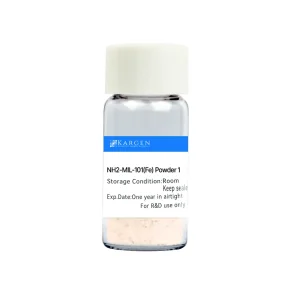
Industrial flue gas streams (typically 10-15% CO₂ at ambient pressures) demand high CO₂/N₂ selectivity and moisture tolerance. High-performance framework suppliers supply amine-functionalized materials like NH2-MIL-101(Fe) and open-metal-node structures like MOF-74(Mg). MOF-74(Mg) delivers an astonishing CO₂ volumetric capacity (~160 cm³/cm³) due to dense arrays of coordinatively unsaturated Mg²⁺ sites that strongly bind carbon dioxide molecules via dipole-quadrupole electrostatic interactions, reducing desorption temperature requirements compared to toxic liquid monoethanolamine (MEA) scrubbers.
Lithium-Ion & Solid-State Battery Separator Coatings
The rapidly growing EV sector requires battery safety enhancements and longer cycle retention. Coating zeolitic imidazolate frameworks (such as ZIF-8 powders or customized ZIF nano-dispersions) onto polyolefin battery separators dramatically enhances electrolyte wettability due to ZIF-8’s porous architecture and high thermal stability (> 400°C). Furthermore, sub-nanometer channels physically block transition metal ion migration (e.g., Mn²⁺, Fe²⁺ dissolution from cathodes) while homogenizing Li⁺ flux, effectively eliminating lithium dendrite nucleation and extending battery cycle life by up to 35%.
Atmospheric Water Harvesting (AWH) & HVAC Dehumidification
Water scarcity in arid zones and high energy consumption in building HVAC systems are addressed by hydrothermally robust aluminum-based frameworks, specifically Al-FUM (Aluminium Fumarate) and MIL-100(Al). Al-FUM exhibits a characteristic S-shaped water vapor adsorption isotherm with a sharp adsorption step between 20% and 30% relative humidity (RH). This allows desiccant wheels or water harvesting devices to capture ambient humidity efficiently overnight and release potable liquid water using low-grade solar thermal energy or waste heat (< 75°C), saving over 45% electrical power in commercial cooling installations.
Semiconductor Gas Purification & Olefin/Paraffin Separation
Cryogenic distillation of light hydrocarbons (such as ethylene/ethane and propylene/propane separations) is among the world's most energy-intensive chemical processes. Ultramicroporous organic frameworks like KAUST-7 and copper-based HKUST-1 possess precise pore windows (e.g., 3.0 to 4.5 Å) matching the kinetic diameters of hydrocarbon molecules. KAUST-7 selectively excludes ethane while allowing ethylene passage, achieving 99.99% purity in a single adsorption pass without energy-demanding refrigeration cycles.
Macro-Industry Organic Framework Solutions Matrix
Compare crystallographic structural parameters, thermodynamic stabilities, and target operational windows across primary framework families.
| Framework Class | Representative Grade | BET Surface Area (m²/g) | Pore Window Size (Å) | Thermal Stability (°C) | Primary Industrial Use Case |
|---|---|---|---|---|---|
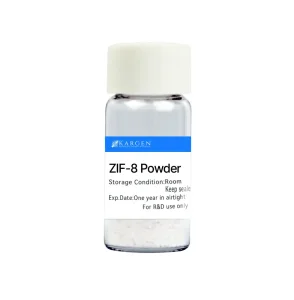
| Zeolitic Imidazolate Framework | ZIF-8 (Zn) | 1,600 – 1,900 | 3.4 | 420°C | Li-ion separator coating, CO₂ capture, catalyst support |
| Magnesium Dihydroxyterephthalate | MOF-74(Mg) | 1,300 – 1,500 | 11.0 | 380°C | Point-source CO₂ capture, low-pressure gas storage |
| Fluorinated Ultramicroporous Framework | KAUST-7 (Nb/Zn) | 600 – 800 | 3.0 – 4.2 | 300°C | Ethylene / Ethane & Propylene / Propane separation |
| Amine-Functionalized Iron Carboxylate | NH₂-MIL-101(Fe) | 2,200 – 2,800 | 12.0 – 16.0 | 320°C | Photocatalysis, VOC sensing, heavy metal adsorption |
| Aluminium Fumarate Framework | Al-FUM (Al) | 1,000 – 1,200 | 5.8 | 450°C | Atmospheric water harvesting, desiccant HVAC wheels |
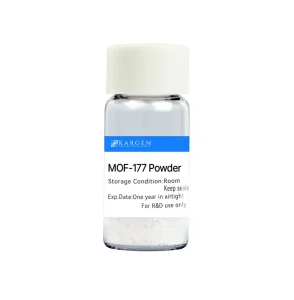
| Ultra-High Porosity Zinc Carboxylate | MOF-177 / MOF-5 | 3,500 – 4,800 | 10.8 – 15.1 | 350°C | High-capacity H₂ & CH₄ gas storage, drug delivery |
| Copper Trimesate Framework | HKUST-1 (Cu) | 1,500 – 1,850 | 9.0 & 13.5 | 280°C | Ammonia / H₂S abatement, specialty gas purification |
Technological Roadmap & Future Outlook (2025–2035)
Charting the transition from powder synthesis to structured monoliths, mixed-matrix membranes, and AI-accelerated reticular chemistry.
Phase I (2025–2027): Industrial Cost Parity & Shaping
Overcoming bulk powder handling challenges (pressure drops, dust creation) by formulating binderless extrudates, honeycomb monoliths, and expanded foam coatings. Achieving continuous mechanochemical production costs under $20/kg for core baseline frameworks (ZIF-8, Al-FUM).
Phase II (2028–2030): Mixed-Matrix Membranes (MMMs)
Seamless embedding of organic framework nanoparticles into scalable polymeric matrices (PBI, polyimides, PVDF). MMMs eliminate aging and plasticization defects in gas separation membranes, enabling high-flux CO₂ capture directly at natural gas wellheads and industrial exhaust stacks.
Phase III (2031–2035): Generative AI & Autonomous Synthesis
Integrating Generative Machine Learning models with high-throughput robotic liquid handling platforms. AI algorithms screen billions of potential reticular geometry combinations in real time, predicting precise linker modifications for hyper-selective target molecule capture.
High-Stability Specialized Framework Solutions
Explore specialized organometallic powders engineered for extreme pH environments, high-surface-area gas storage, and precision sensing applications.


Frequently Asked Technical Questions
In-depth responses from our senior materials scientists addressing integration, thermal stability, handling, and custom ODM synthesis queries.
How do Organic Frameworks (MOFs/COFs) differ from traditional synthetic zeolites and active carbons?
While traditional zeolites feature rigid, inorganic silica-alumina structures limited to ~500–800 m²/g surface areas and fixed pore geometries, Metal-Organic Frameworks offer synthetic flexibility. Organic linkers and metal nodes can be tailored atomically to achieve BET surface areas above 7,000 m²/g. Furthermore, MOFs possess lower frameworks densities, tunable pore apertures (down to 0.1 Å precision), open coordination sites for specific chemical binding, and lower thermal regeneration energies (< 80°C vs. > 250°C for zeolites).
How do you address moisture sensitivity in open-metal-center framework products like HKUST-1?
Moisture degradation in water-sensitive MOFs like HKUST-1 (Cu-BTC) occurs when water vapor ligand substitution displaces copper-coordinating carboxylates, causing lattice collapse. Our chemical engineering team offers hydrophobic post-synthetic modification (PSM) techniques, including plasma polymer deposition or fluoro-alkyl surface coating. For humid ambient operations, we recommend hydrothermally stable framework alternatives such as ZIF-8, UiO-66(Zr), or Al-FUM which remain structurally intact after prolonged exposure to boiling water and acidic media.
What shaping and packaging forms are available for large-scale bed reactors?
To eliminate excessive pressure drops and dusting in packed-bed reactors, we supply MOF products in tailored macroscopic forms beyond raw nano-powders. Options include: 1.5mm–3.0mm cylindrical extrudates with polymeric binders; spherical granules (mesh sizes 20–60); wash-coated ceramic honeycombs; and liquid dispersions in ethanol, NMP, or aqueous media optimized for battery separator slot-die coating line integration.
Can your factory formulate custom MOFs or COFs under non-disclosure OEM/ODM terms?
Yes. Supported by our 1,800 m² advanced material R&D center and 10+ PhD scientists, we offer end-to-end custom synthesis. This includes high-throughput ligand synthesis, crystal morphology engineering, lab-scale yield optimization, pilot scale-up, and ton-scale contract manufacturing under strict NDA agreements.
What evaluation sample sizes are available for commercial R&D validation?
We provide 1 g to 5 g evaluation sample lots for qualified corporate R&D projects along with comprehensive batch CoA certificates (including PXRD pattern data, BET adsorption isotherms, and SEM micrographs). Commercial trial shipments are available in 1 kg, 25 kg fiber drums, and 500 kg super-sacks.