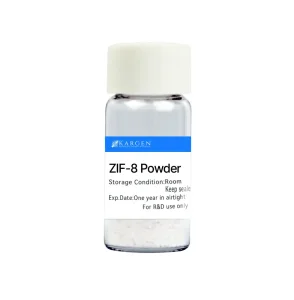
Top Commercial MOF Powders & Organic Framework Materials
Explore our flagship metal-organic framework grades engineered with ultra-pure dicarboxylic, tricarboxylic, and azole organic linkers for global industrial deployment.








1. Organic Linkers: The Structural & Chemical Backbone of MOFs
Deep dive into reticular chemistry, secondary building units (SBUs), ligand connectivity, and thermodynamic pore optimization.
Metal-Organic Frameworks (MOFs) represent a revolutionary paradigm in porous materials engineering. Unlike traditional zeolites or activated carbons, MOFs possess ultra-high surface areas (often exceeding 7,000 m²/g), crystalline pore regularity, and unprecedented chemical tunability. At the heart of this crystalline flexibility lies the organic linker—an organic molecule (typically mono-, di-, tri-, or tetratopic carboxylates, azoles, or phosphonates) that acts as a structural strut coordinating to inorganic metal nodes or clusters.
Choosing the correct MOF linker is paramount. The spatial geometry, pKa values, conjugate backbone, and functional groups (-NH₂, -NO₂, -SO₃H, -OH) of the linker dictate the final material's framework topology, pore aperture dimensions, hydrothermal stability, and chemical selectivity. Leading MOF linker exporters provide precise ligand purity (>99.5%) to prevent terminal defects, crystal growth truncation, or framework collapse during large-scale industrial activation.
Carboxylate Linkers
Dicarboxylic acids like Terephthalic Acid (BDC for UiO-66, MIL-53) and Tricarboxylic acids like Trimesic Acid (BTC for HKUST-1, MIL-100). High coordination numbers generate robust 3D networks with strong metal-oxygen bonds.
Azolate & Imidazolate Linkers
Includes 2-Methylimidazole (H-MeIM for ZIF-8) and 2-Ethylimidazole. Nitrogen-based coordination with transition metals like Zn²⁺ or Co²⁺ yields zeolitic topologies boasting exceptional thermal and chemical resistance in aqueous alkaline media.
Functionalized & Bio-Linkers
Fumaric acid (for Al-FUM & MIL-88A) and amino-functionalized linkers (2-Aminoterephthalic acid for NH₂-MIL-101). Ideal for tailoring chemical affinity toward polar molecules like CO₂, H₂O, and specific catalytic substrates.
Industrial Scale-Up Capabilities
2. Global Commercial & Industrial Landscape
Evaluating key global growth drivers, commercial adoption barriers, and high-value industrial sectors for metal-organic framework materials.
The global MOF market is undergoing a rapid transition from academic laboratory exploration to large-scale industrial integration. Historically, the commercialization of MOFs was constrained by high organic linker costs, solvent-heavy solvothermal synthesis routes, and batch-to-batch inconsistency. Today, advanced high-volume exporters have overcome these bottlenecks via continuous mechanochemical manufacturing, solvent-free reactive extrusion, and localized raw material integration.
Carbon Capture & Decarbonization (DAC / Post-Combustion)
Global net-zero mandates have accelerated the adoption of ultra-stable frameworks (such as Zr-based MOF-808, UiO-66, and KAUST-7) in point-source carbon capture and Direct Air Capture (DAC). MOF linkers with tailored basic sites or open metal coordination enable low regeneration energy (<1.5 GJ/ton CO₂ captured), outperforming traditional liquid amine scrubbing systems.
Atmospheric Water Harvesting (AWH) & Desiccant HVAC
Energy-efficient climate control relies heavily on water-stable sorbents like Al-FUM (Aluminium Fumarate) and MIL-53(Al). By tuning linker pore dimensions, these materials deliver steep S-shaped water vapor sorption isotherms at low relative humidity (10–30% RH), desorbing captured water utilizing low-grade waste heat (60–80°C).
Next-Gen Lithium Battery Separators & Solid Electrolytes
In energy storage, ZIF-8 and UiO-66 nanopowders applied as thin separator coatings modulate ion transport, trap transition metal ions leached from cathodes, and suppress lithium dendrite formation. This significantly enhances safety and cycle life in high-voltage lithium-metal and solid-state battery configurations.
Semiconductor Specialty Gas Purification & Storage
High-surface-area frameworks like HKUST-1 (Cu-BTC) and MOF-177 offer high volumetric storage capacities for hazardous gases (phosphine, arsine, silane) and selectively separate light olefins/paraffins (e.g., ethylene/ethane), eliminating energy-intensive cryogenic distillation.
3. China Factory Supply Chain Resilience & Efficiency Advantages
Why sourcing MOF linkers and powders from specialized Chinese manufacturing hubs provides unparalleled cost structure, quality, and delivery speed.
China has established an undisputed leadership position in the global advanced materials supply chain. Sourcing MOF linkers and ready-to-use framework powders from leading China exporters offers clear competitive advantages across four critical dimensions:
Upstream Chemical Integration
Direct access to world-class petrochemical precursor production (benzene derivatives, imidazole isomers, terephthalic acid) minimizes linker procurement overheads and insulates against global supply shocks.
Continuous Mechanochemistry
State-of-the-art continuous twin-screw extruders and solvent-free ball milling reduce organic solvent (DMF/DEF) usage by over 80%, lowering cost while maximizing unit output per hour.
Batch Consistency QA
Automated digital inspection pipelines record PXRD crystallinity metrics, N₂ physisorption isotherm BET surface areas, and TGA thermal degradation profiles for every single manufactured batch.
Agile Scale-Up & Shipping
Seamless scaling from 1–5g evaluation samples to multi-ton bulk orders backed by established global express logistics and comprehensive customs export compliance.
4. Localized Application Scenarios & Real-World Integration
Examining real-world industrial environments where MOF powders and structured linkers deliver measurable efficiency gains.
Deploying MOFs into industrial systems requires matching the physical material form factor (powders, extrudates, monoliths, or membrane coatings) with localized operational constraints. Below are standard localized engineering implementation scenarios:
| Application Scenario | Recommended Framework & Linker | Key Performance Target | Operational Environment |
|---|---|---|---|
| Industrial Flue Gas Carbon Capture | UiO-66-NH₂ (2-Aminoterephthalic acid) / MOF-808 | High CO₂/N₂ selectivity (>50), acid-gas tolerance (SOx/NOx trace) | Post-combustion exhaust (40–70°C, 1 bar) |
| HVAC Desiccant Dehumidification Wheels | Al-FUM (Fumaric Acid) / MIL-53(Al) | Steep water adsorption isotherm, regeneration at <80°C | Residential & commercial HVAC air streams |
| EV Battery Separator Slurry Coating | ZIF-8 (2-Methylimidazole) dispersion | High thermal stability (>400°C), thermal runaway barrier | Lithium-ion battery cell assembly line |
| Semiconductor Gas Scrubbing | HKUST-1 (Trimesic Acid / BTC) | Sub-ppm trace removal of toxic hydrides (NH₃, PH₃, AsH₃) | Semiconductor fab specialty gas cabinet |
| Heterogeneous Catalysis | MIL-101(Fe) / NH₂-MIL-101(Fe) | Lewis acid active sites, high Fenton-like reaction yield | Wastewater pollutant advanced oxidation process |
5. Technology Roadmap & Strategic Future Outlook (2025–2035)
Key technological trends shaping the next decade of metal-organic framework development, digital reticular design, and green manufacturing.
Phase 1 (2025–2027): AI-Driven Reticular Discovery & Green Synthesis
Machine learning algorithms and generative AI rapidly screen millions of hypothetical linker-metal node combinations to predict optimal pore size distributions and heat capacities. Simultaneously, green mechanochemical synthesis routes eliminate hazardous organic solvents entirely in bulk manufacturing.
Phase 2 (2028–2030): Mixed-Linker Frameworks (MTV-MOFs) & Monolith Engineering
Widespread adoption of Multivariate (MTV) MOFs containing multiple distinct organic linkers within a single crystalline lattice. Advanced shaping techniques (3D printing of binderless MOF monoliths, hollow fiber membrane spinning) overcome pressure drop issues in packed-bed industrial columns.
Phase 3 (2031–2035): Global Infrastructure Scale Integration
Giga-scale deployment of MOF capture beds in Direct Air Capture facilities worldwide, routine incorporation of MOF solid-state electrolytes in electric vehicles, and continuous water harvesting grids operating autonomously in arid planetary regions.
6. Localized Technical Support & Global Compliance Assurance
Rigorous international certification standards, safety compliance, and OEM custom formulation support for seamlessly qualifying raw materials.
Global Regulatory Compliance
Full compliance with EU REACH registration, US TSCA inventory standards, and GHS-compliant Safety Data Sheets (SDS). Complete documentation packages provided for seamless international chemical import customs clearance.
Analytical Certificate of Analysis (CoA)
Every shipment includes lot-specific CoA verified via Powder X-Ray Diffraction (PXRD), N₂ Adsorption Isotherms (BET Surface Area), Thermogravimetric Analysis (TGA), and Inductively Coupled Plasma Mass Spectrometry (ICP-MS).
OEM / ODM Custom Formulation
Collaborative R&D services tailored to customer specs—ranging from custom organic linker synthesis to particle size distribution tuning (nano to micron), particle surface modification, and solvent-free dispersion development.
Frequently Asked Questions (Q&A)
Engineering-level responses to essential questions asked by procurement officers, research directors, and industrial chemical buyers.
What is the impact of organic linker purity on MOF performance?
Organic linker purity directly governs crystal growth, framework integrity, and accessible pore volume. Impurities or monofunctional isomers act as chain terminators, introducing structural defects, reducing BET surface area, and prematurely degrading thermal stability. High-grade exporters maintain linker purity >99.5% to ensure theoretical porosity matches actual batch performance.
How do Zr-based MOFs (e.g., UiO-66, MOF-808) compare with Zn-based MOFs (e.g., ZIF-8)?
Zr-based MOFs utilize hexanuclear Zr₆O₄(OH)₄ nodes coordinated to carboxylate linkers, imparting exceptional hydrothermal stability, acid resistance, and thermal tolerance up to 500°C. Zn-based Zeolitic Imidazolate Frameworks (ZIFs) feature Zn-N tetrahedral bonds that provide outstanding resistance to alkaline environments and hydrophobic character, making them optimal for membrane coatings and water-repellent gas separation.
Can MOFs be supplied in forms other than fine dry powders?
Yes. Fine powders can create high pressure drops in industrial gas columns. Exporters provide specialized post-processing, offering MOFs as granulated extrudates, spherical beads, binder-free monoliths, thin-film membrane coatings, or liquid dispersions optimized for customer processing machinery.
What storage and handling protocols should be followed for industrial MOFs?
MOF powders should be stored in tightly sealed containers under dry, inert atmospheric conditions (or desiccated environments) to prevent pre-saturation with atmospheric humidity or ambient VOCs. Prior to operational activation, degassing under vacuum at elevated temperatures (typically 120–200°C for 6–12 hours) is recommended to evacuate guest solvent molecules from internal pore cavities.
What is the typical lead time for ton-scale custom MOF linker exports from China?
Standard commercial catalog grades (ZIF-8, UiO-66, Al-FUM, HKUST-1) are available for immediate dispatch from inventory (1–3 business days for small lots). Ton-scale custom synthesis or specialized linker functionalization typically requires 3 to 6 weeks, encompassing pilot batch validation, scale-up synthesis, QA verification, and international export logistics setup.
Additional Industrial MOF Powder Formulations
Review our full range of specialized cobalt, iron, chromium, and zeolitic imidazolate metal-organic frameworks.